Visual Perception Skills Adding Up to 5 Worksheets for Ages 5-8
4 filtered results
-
From - To
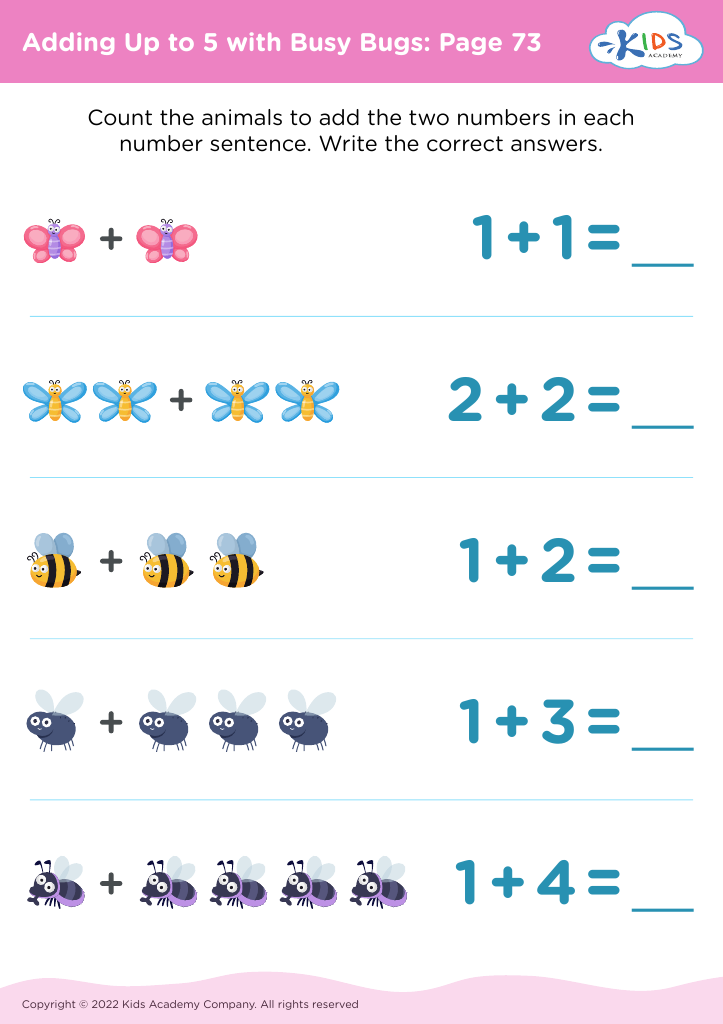
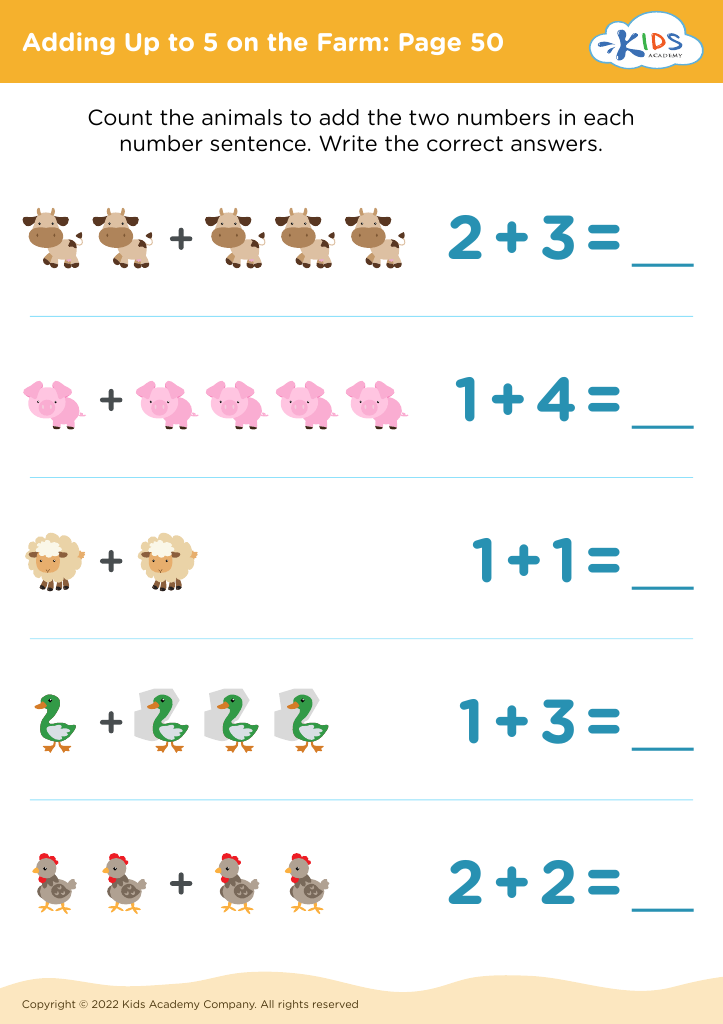
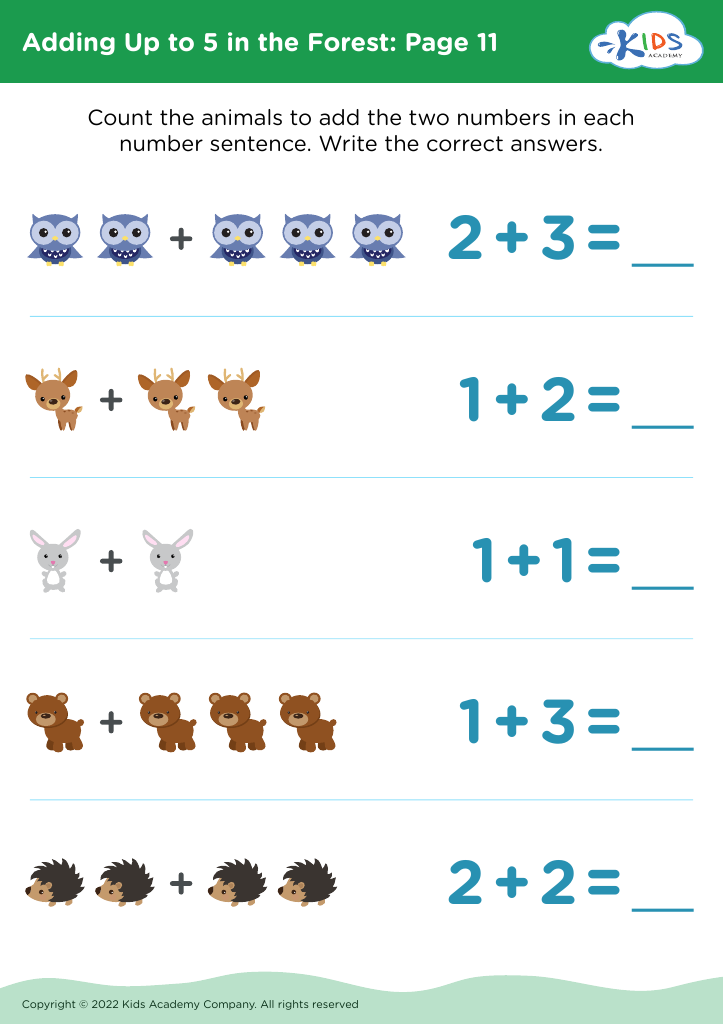
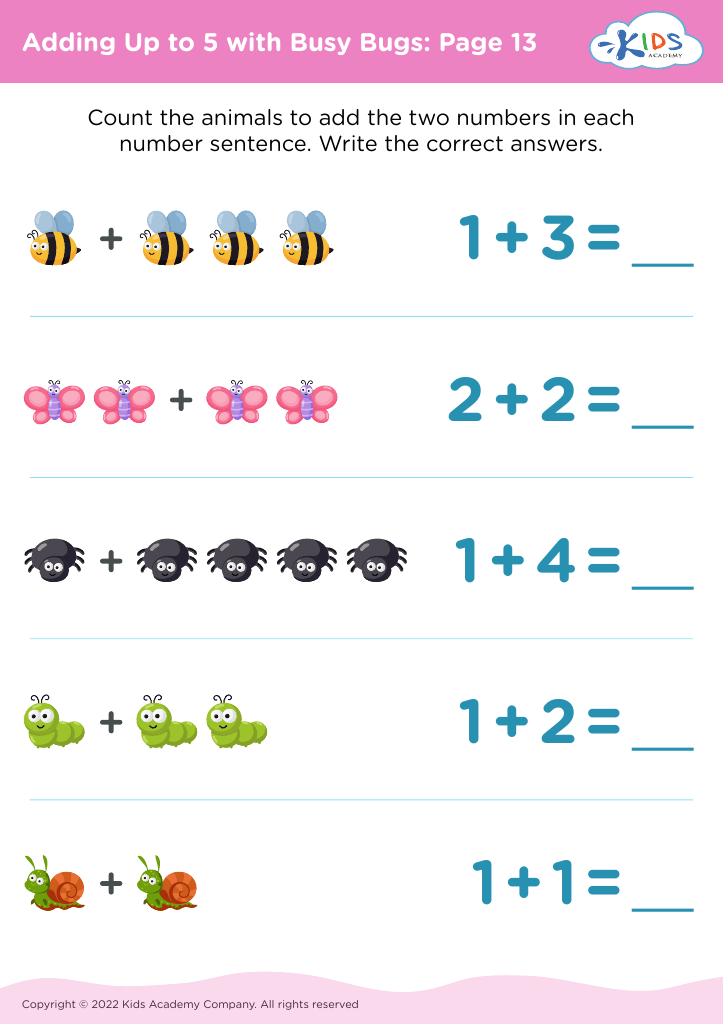
Enhance your child's visual perception skills with our engaging "Adding Up to 5 Worksheets" designed specifically for ages 5-8. These interactive worksheets incorporate fun visuals and exercises that encourage young learners to recognize patterns, shapes, and quantities while mastering basic addition. By combining visual learning with math fundamentals, these worksheets help children develop critical skills essential for early academic success. Perfect for both classroom and home learning environments, our resources spark curiosity and promote effective learning through play. Download the worksheets today to support your child's visual perception and addition skills in a fun and engaging way!






%20(1).jpg)

Visual perception skills are crucial for children aged 5-8 as they serve as the foundation for many essential learning processes. These skills enable children to interpret and make sense of the world around them, influencing their ability to recognize letters, numbers, shapes, and patterns—a vital component for mastering early math concepts like addition up to 5.
Developing strong visual perception skills helps children identify differences and similarities among objects, decode mathematical problems, and assist in their overall academic performance. For instance, when making calculations like 2+3 or 1+4, children can visualize numbers and relate quantities, enhancing their understanding of addition as they manipulate visual inputs.
Moreover, solid visual perception skills enable children to develop other critical cognitive skills, such as memory, attention, and problem-solving. Teachers and parents who focus on these skills can better prepare kids for more complex mathematical challenges and other subjects later on.
Initiating games and activities that foster visual recognition, such as puzzles or matching exercises, will keep learning engaging and fun. Recognizing the importance of visual perception is crucial for nurturing confident learners who can tackle educational challenges with enthusiasm.








