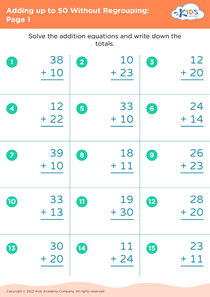
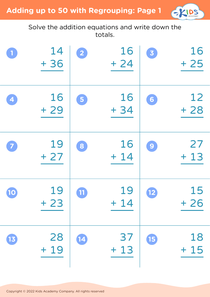
Addition Practice Adding up to 50 Misc Worksheets for Ages 5-8
5 filtered results
-
From - To
Welcome to our "Addition Practice: Adding Up to 50" worksheets, designed for children ages 5-8! These engaging worksheets help young learners develop essential addition skills through fun and interactive exercises. With a variety of formats, including number sentences, visual aids, and word problems, your child will practice adding numbers up to 50 in a supportive environment. These resources are perfect for parents and teachers looking to reinforce math concepts at home or in the classroom. Enhance your child's confidence and fluency in math by exploring our comprehensive collection of addition practice worksheets today!
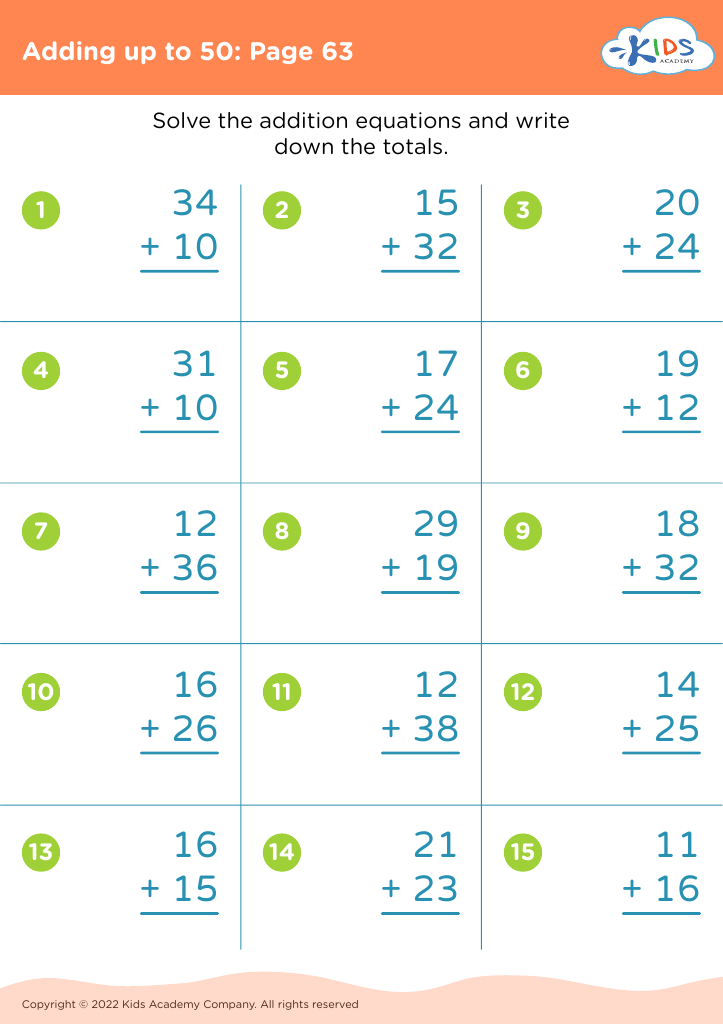
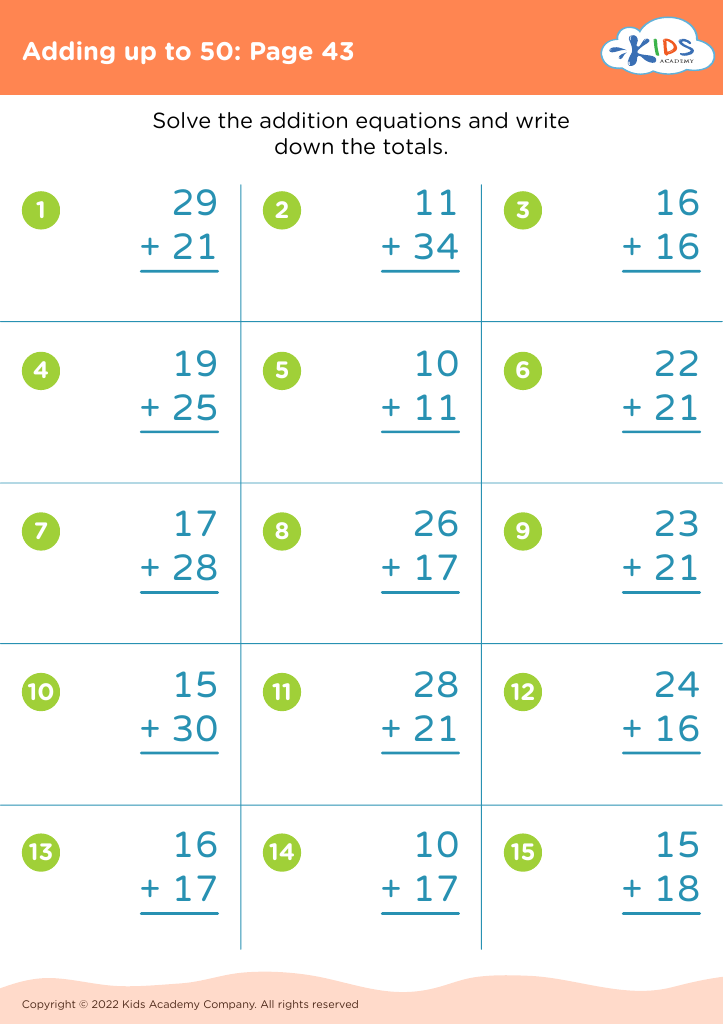
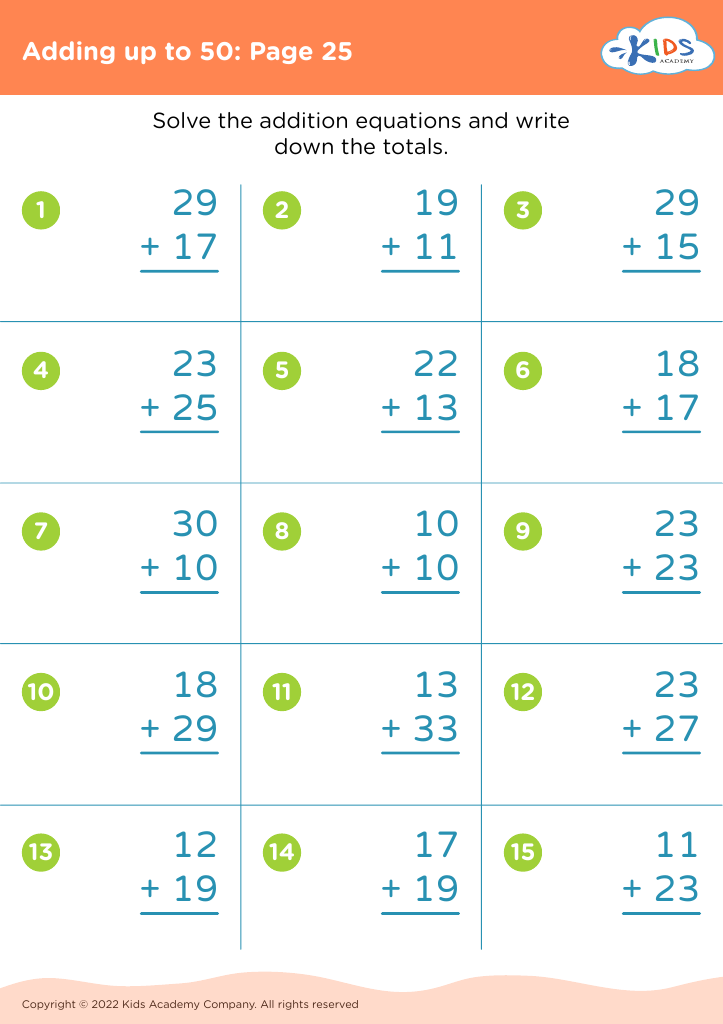
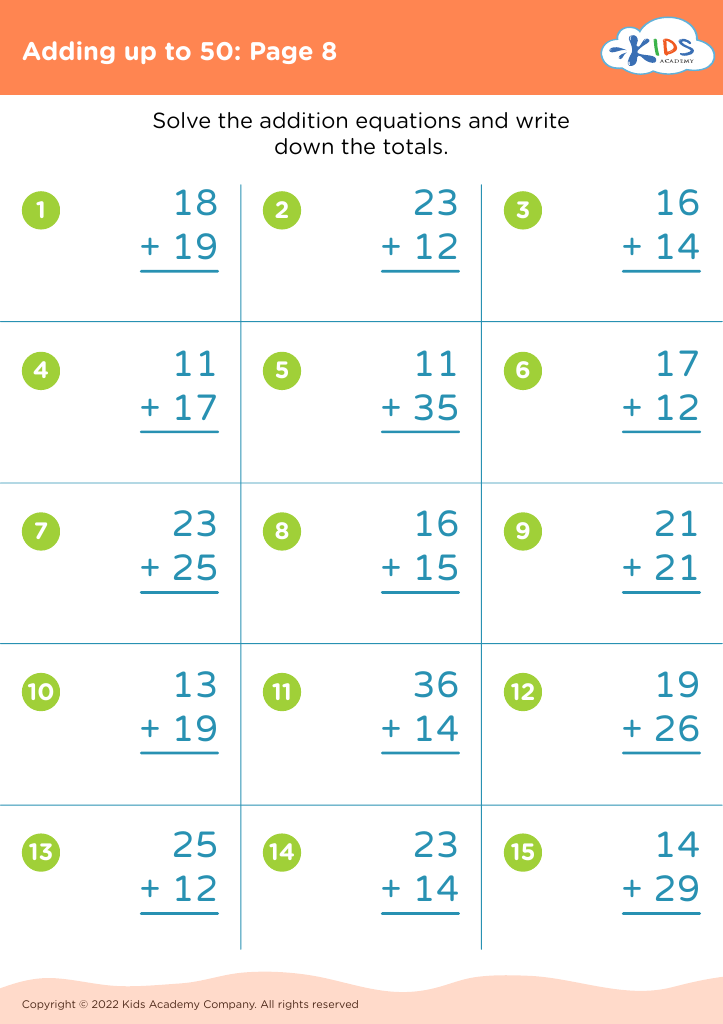
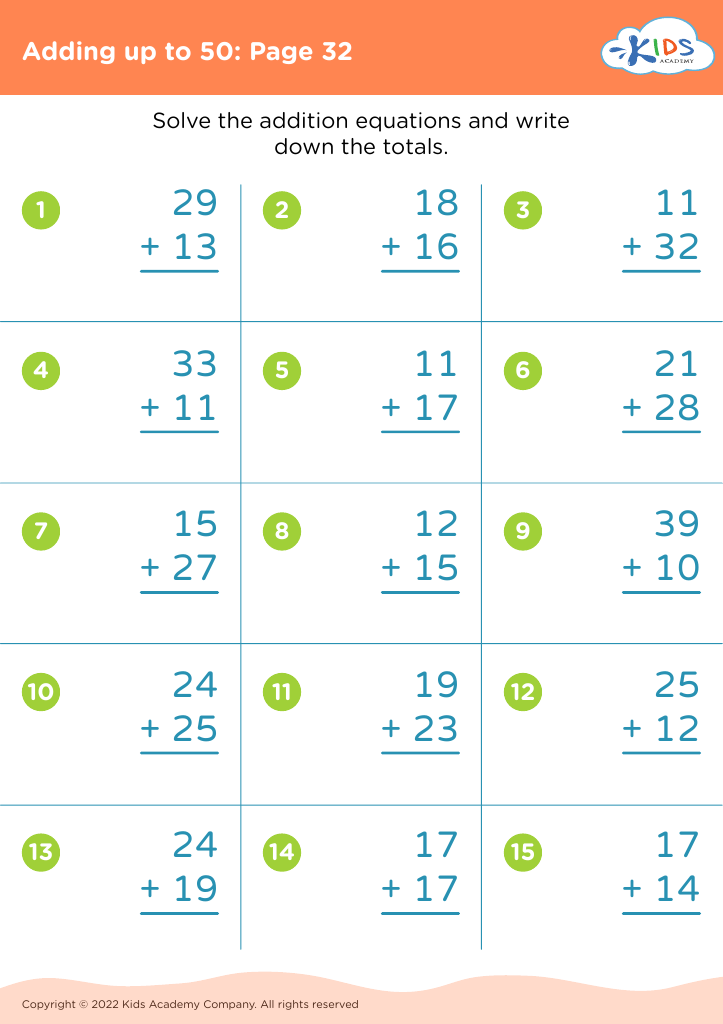


Addition practice for children ages 5-8 is crucial for several reasons, particularly in mastering the skill of adding numbers up to 50. First, this foundational skill is essential in developing a strong mathematical understanding that serves as a building block for more advanced concepts. Mastering addition helps children gain confidence in their abilities and reduces math anxiety, encouraging them to engage with more challenging problems.
Regular practice reinforces number sense, which enables children to understand relationships between numbers and to visualize addition through techniques like using a number line or manipulatives. Moreover, early proficiency in addition leads to better performance in subsequent grades, as these skills are often prerequisites for understanding complex mathematical concepts.
Additionally, strategies employed during addition practice, such as using grouping or simple word problems, help students develop critical thinking and problem-solving skills that extend beyond mathematics. It's also important for parents to be involved; their support encourages a positive attitude toward learning and fosters a collaborative environment. Ultimately, focusing on addition practice not only enhances mathematical competence but also cultivates a love for learning, setting children on a path to success in school and beyond.