Addition skills Adding up to 50 Misc Worksheets for Ages 5-8
3 filtered results
-
From - To
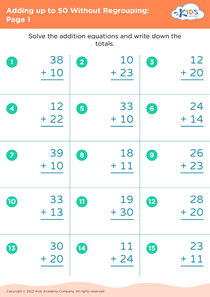
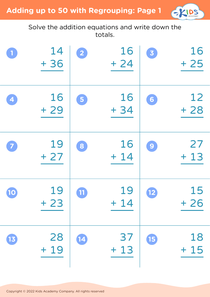
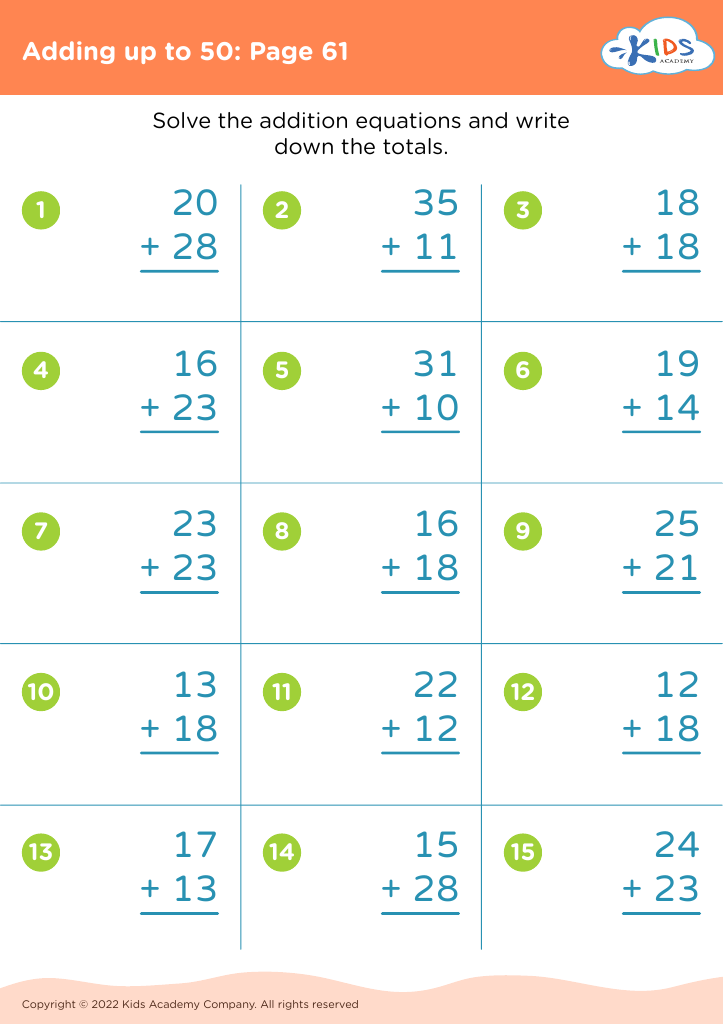
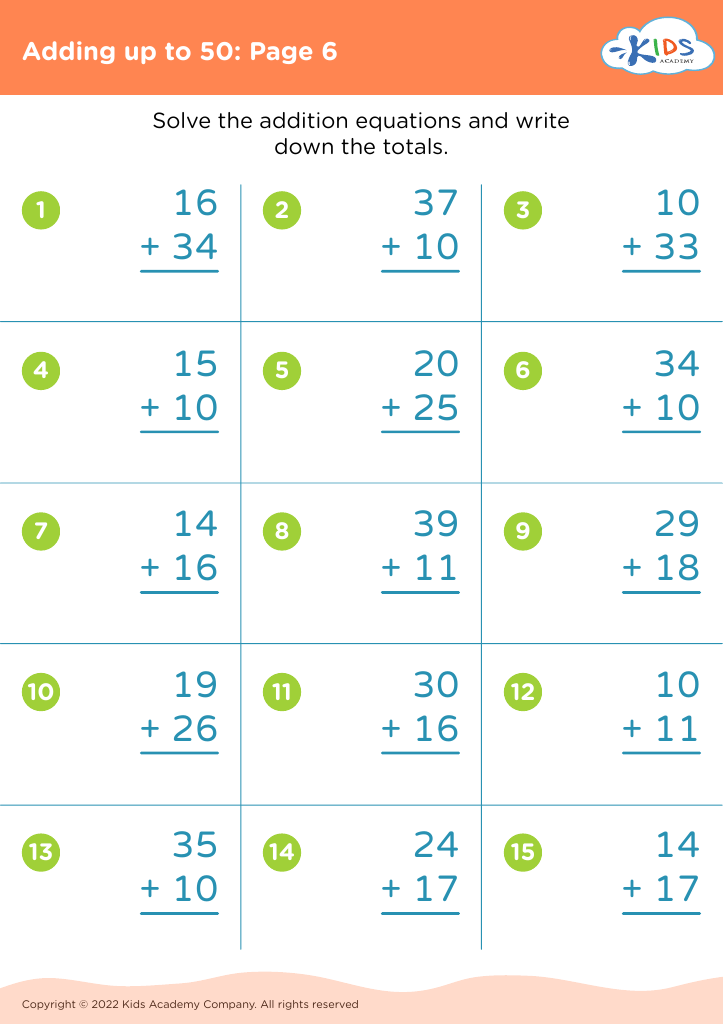
Discover our engaging "Addition Skills Adding Up to 50 Misc Worksheets" designed specifically for children ages 5-8. These worksheets offer a fun and interactive way to strengthen essential addition skills, helping young learners build a solid math foundation. With a variety of activities tailored to different learning styles, kids will practice adding numbers up to 50 while enhancing their problem-solving abilities. Each worksheet encourages critical thinking and reinforces basic arithmetic concepts, making learning enjoyable and effective. Perfect for homeschooling or classroom activities, these resources ensure that your child gains confidence in their math skills while having fun! Access and print today!
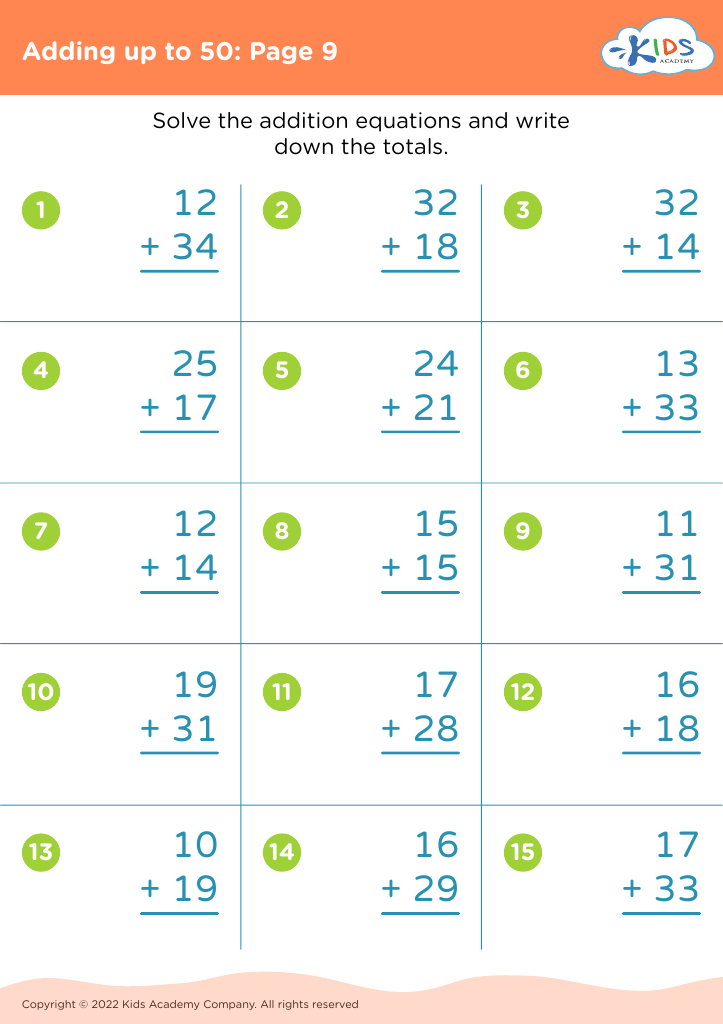


Parents and teachers should prioritize addition skills, particularly for numbers up to 50, for children aged 5-8 because these foundational mathematical abilities are crucial for overall academic success. Mastery of addition helps establish a strong number sense, which is the ability to understand and manipulate numbers fluidly. This is essential not only in mathematics but also in daily life scenarios, such as budgeting allowances or measuring ingredients for cooking.
Additionally, strong addition skills lay the groundwork for more complex mathematical concepts, such as subtraction, multiplication, and division. As children progress in their education, they will encounter more advanced arithmetic and problem-solving that rely heavily on addition abilities. Early mastery allows students to tackle these concepts with confidence, fostering a positive attitude toward math.
Furthermore, engaging children in fun addition activities stimulates cognitive development and critical thinking. By providing varied learning experiences—through games, stories, and real-life applications—teachers and parents can nurture a love for numbers that lasts a lifetime. As a result, encouraging proficiency in addition significantly benefits children's academic journeys and prepares them for future challenges in mathematics and other scientific fields.