Fraction comparison Adding up to 50 Misc Worksheets for Ages 5-8
4 filtered results
-
From - To
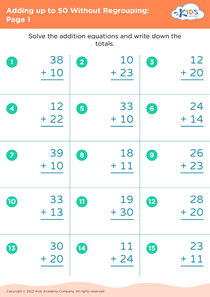
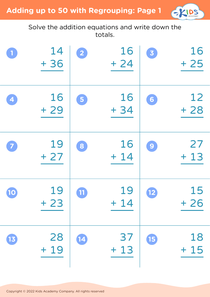
Discover our engaging "Fraction Comparison Adding Up to 50 Misc Worksheets" designed for children aged 5-8. These worksheets provide a fun and interactive way for young learners to practice comparing fractions while reinforcing their addition skills up to 50. Each exercise is crafted to stimulate critical thinking and enhance math comprehension in a playful manner. With colorful illustrations and age-appropriate problems, children will develop confidence in their math abilities as they learn to identify larger and smaller fractions. Perfect for classroom use or at-home learning, these worksheets aim to make math enjoyable and accessible for every child! Download now to get started!
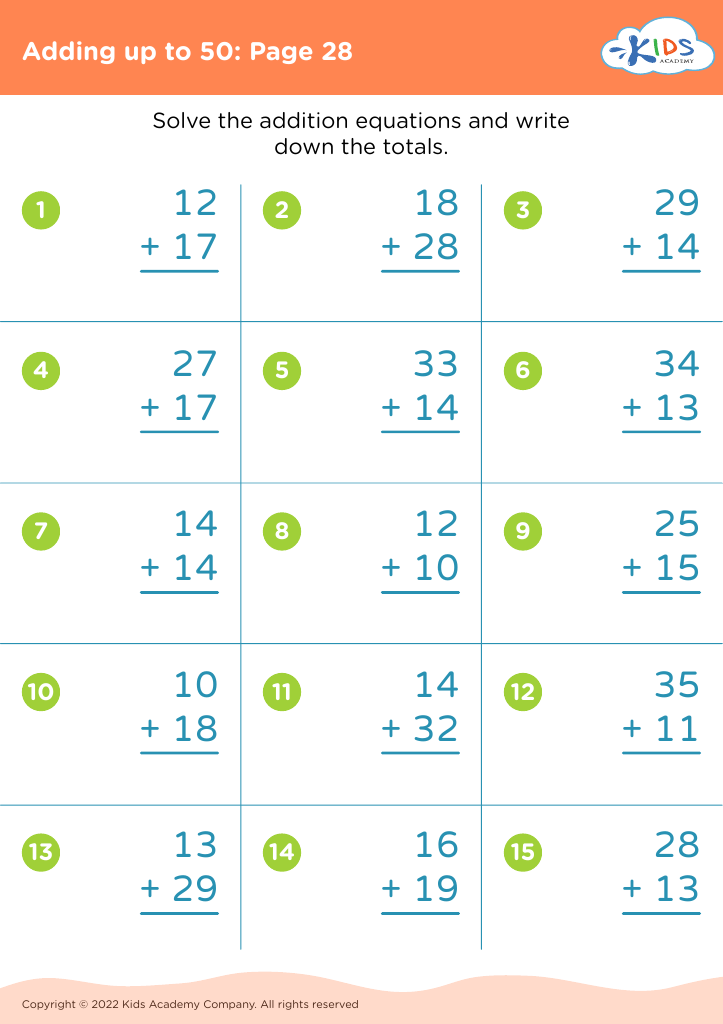
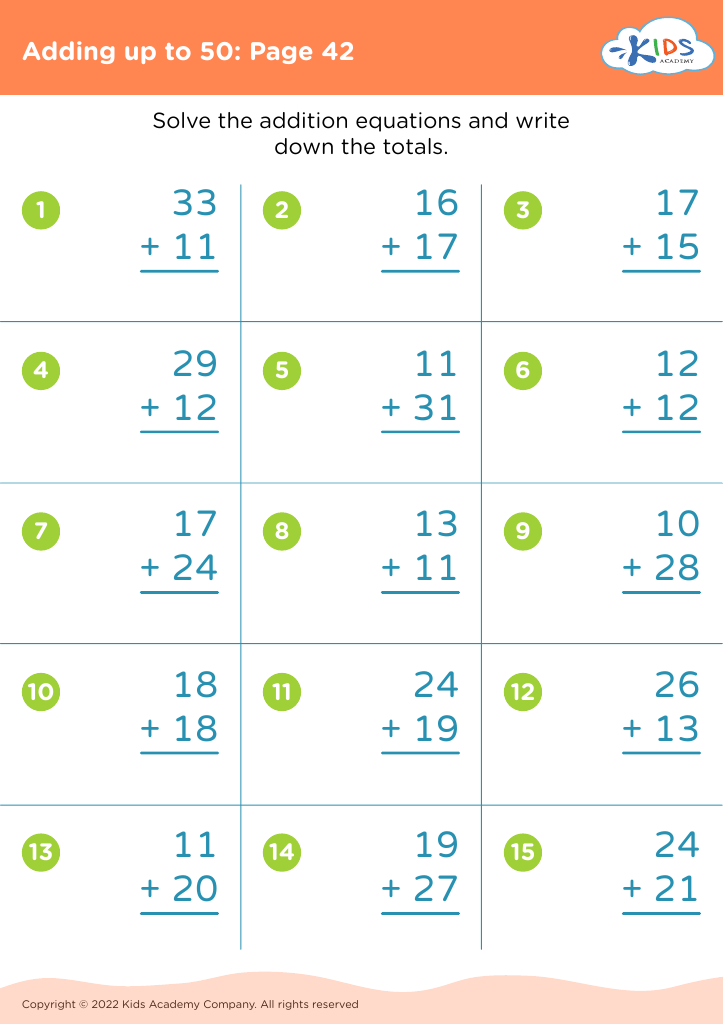
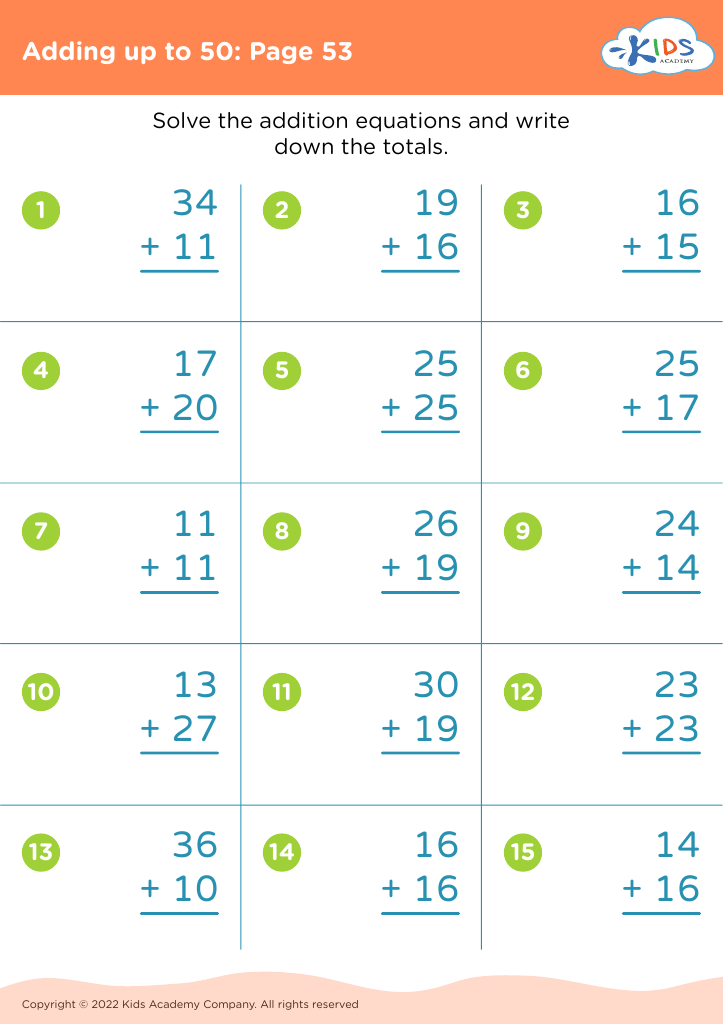
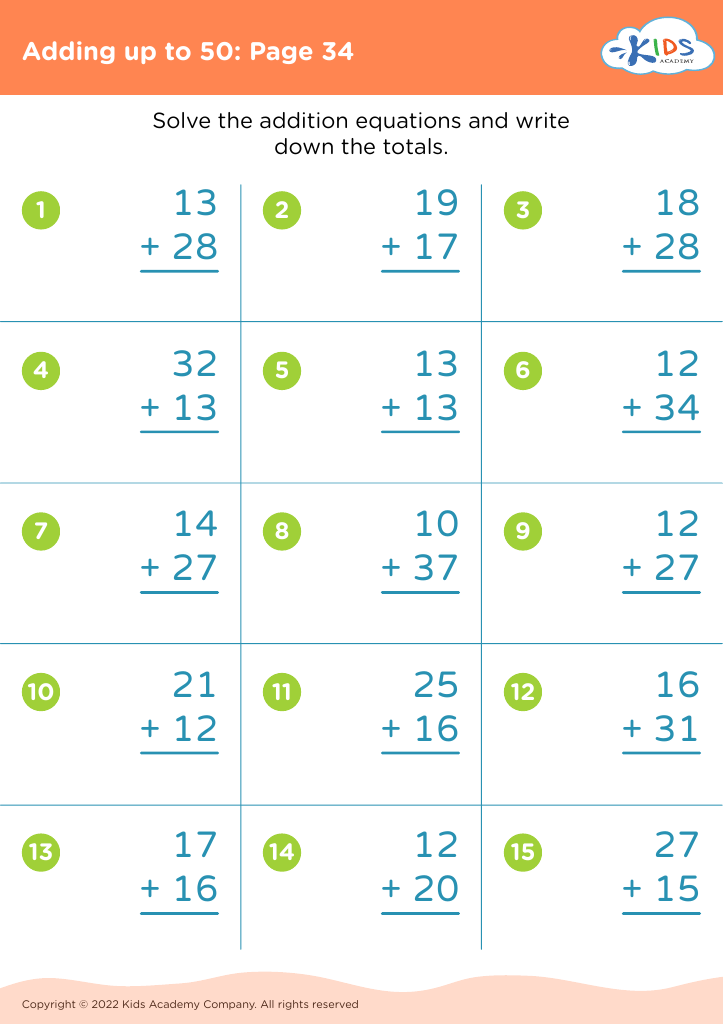


Understanding fraction comparison and addition lays the groundwork for essential math skills in young learners aged 5-8. As children begin to engage with numbers and fractions, they develop critical thinking and problem-solving skills that will benefit them throughout their academic journey. Learning to compare fractions enhances their ability to recognize similarities and differences, ultimately promoting logical reasoning.
For parents and teachers, fostering these skills is crucial as they are fundamental to more complex mathematical concepts children will encounter later. Mastery of fraction comparison and addition helps improve a child's confidence and interest in mathematics, often leading to improved performance in school. Additionally, these skills encourage the application of math in real-life situations, such as cooking, sharing, or measuring, making math relatable and practical.
When children learn to tackle problems like "Which fraction is larger?" or "How can we combine fractions?" they also cultivate perseverance and resilience. Encouraging children to engage in activities that involve adding up to 50 fosters early numeracy skills, crucial for their overall cognitive development. Ultimately, parents and teachers should care because these foundational math concepts are significant predictors of future academic success and encourage a positive attitude toward learning.