Fraction simplification Adding up to 50 Misc Worksheets for Ages 5-8
5 filtered results
-
From - To
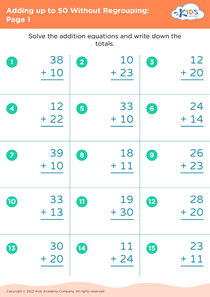
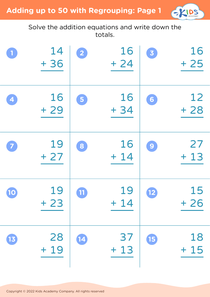
Explore our engaging collection of "Fraction Simplification and Adding Up to 50" worksheets, specifically designed for children aged 5-8. These worksheets aim to strengthen young learners' mathematical understanding and providing a solid foundation in key concepts. Your child will master the basics of fraction simplification while practicing addition up to 50, through fun and interactive exercises. Perfect for parents and educators, these worksheets make learning math enjoyable and effective, ensuring your child gains confidence and proficiency in essential math skills. Visit Kids Academy to download and print these free, high-quality resources today!
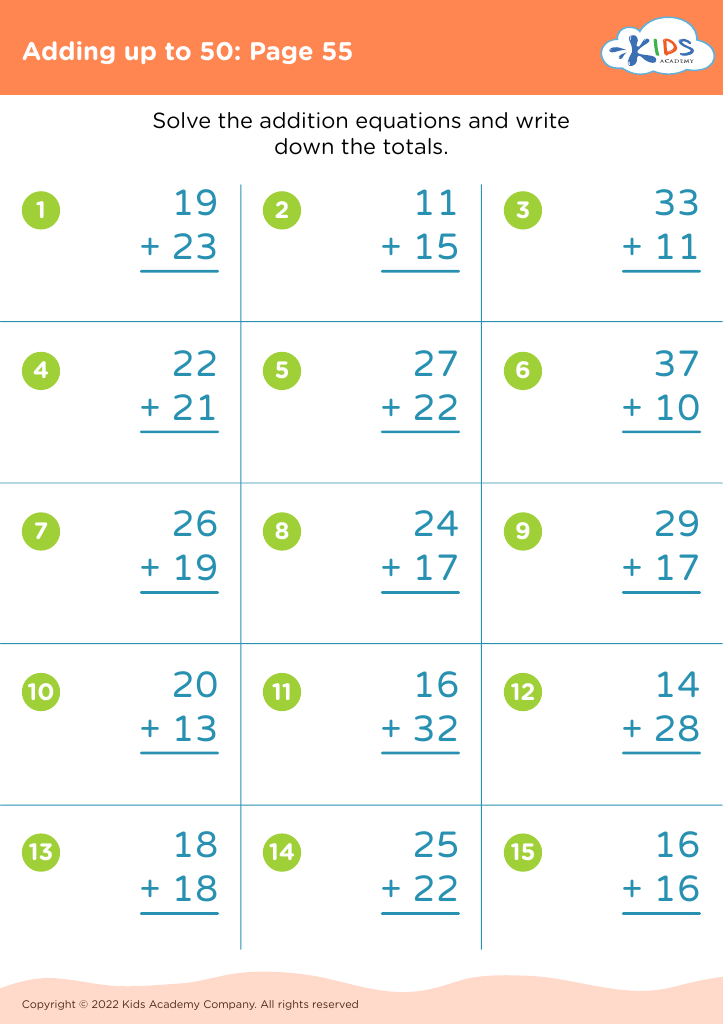
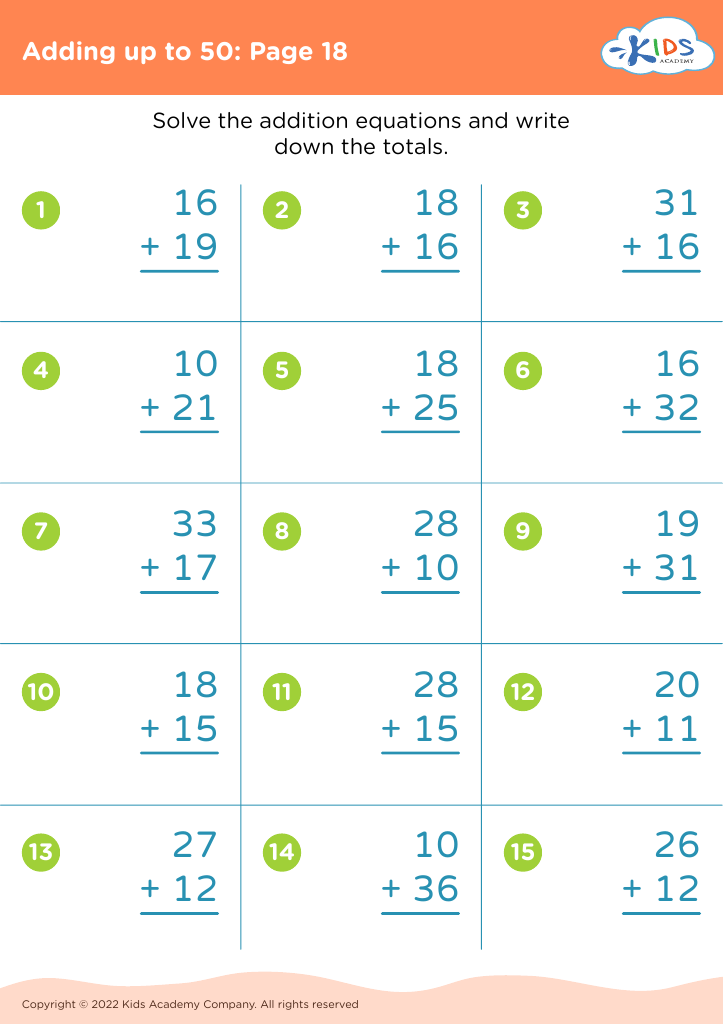
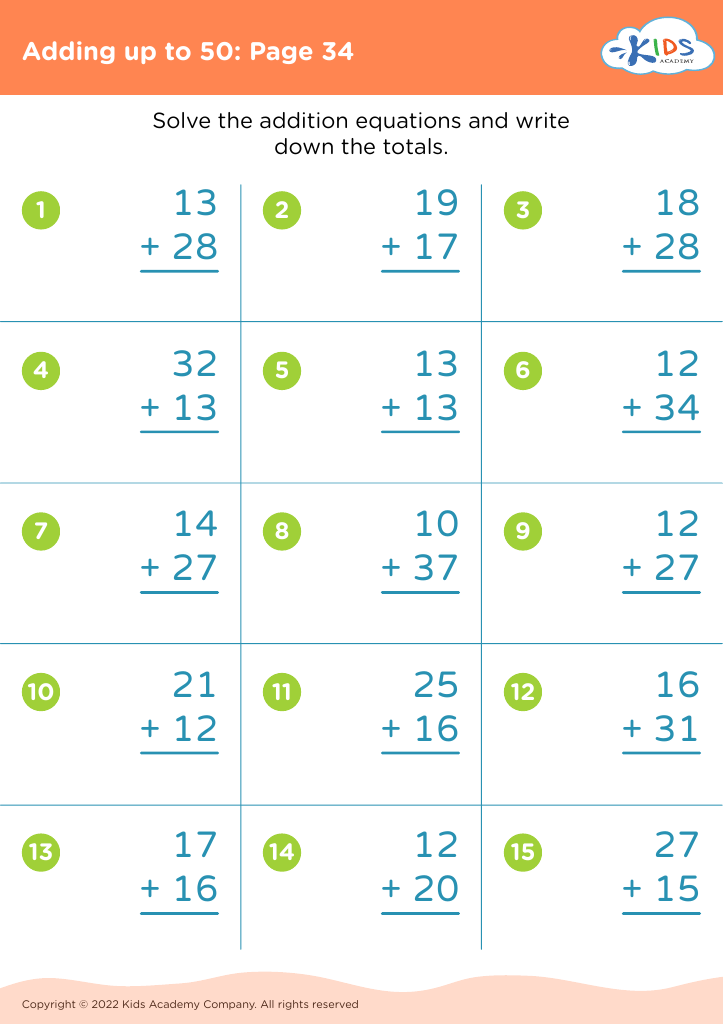


Fraction simplification, understanding sums, and miscellaneous foundational math concepts for children ages 5-8 are crucial building blocks for future academic success. At this early age, introducing fraction simplification helps students grasp the basics of how parts make up a whole, an essential idea for higher-level math topics they will encounter later. Simplifying fractions also promotes critical thinking and problem-solving skills as students learn to identify patterns and relationships within numbers.
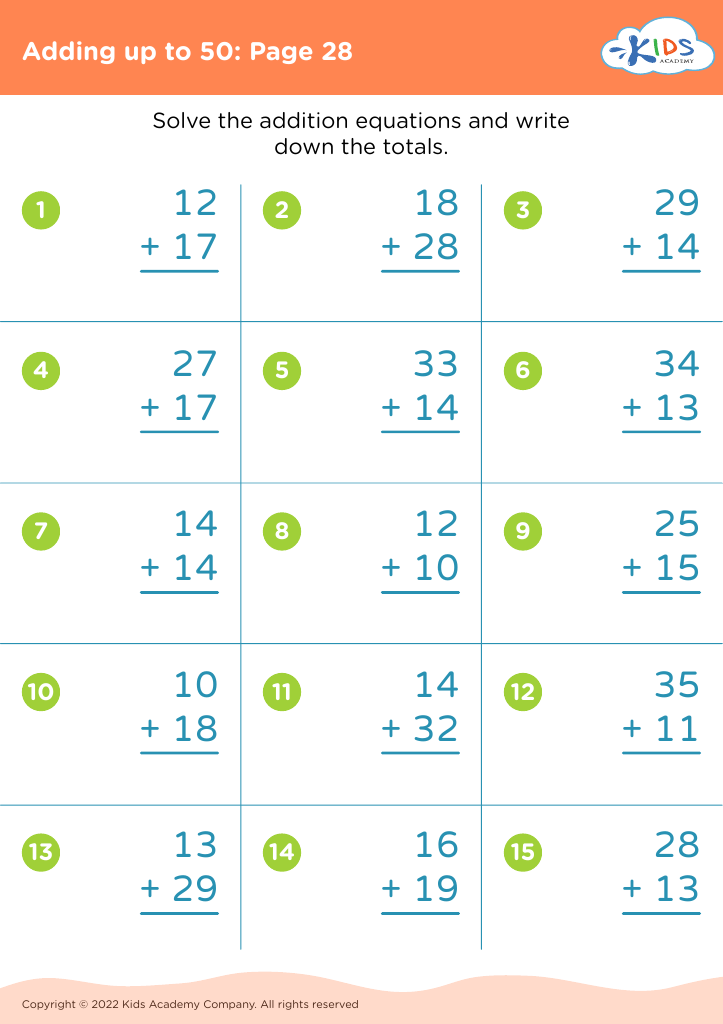
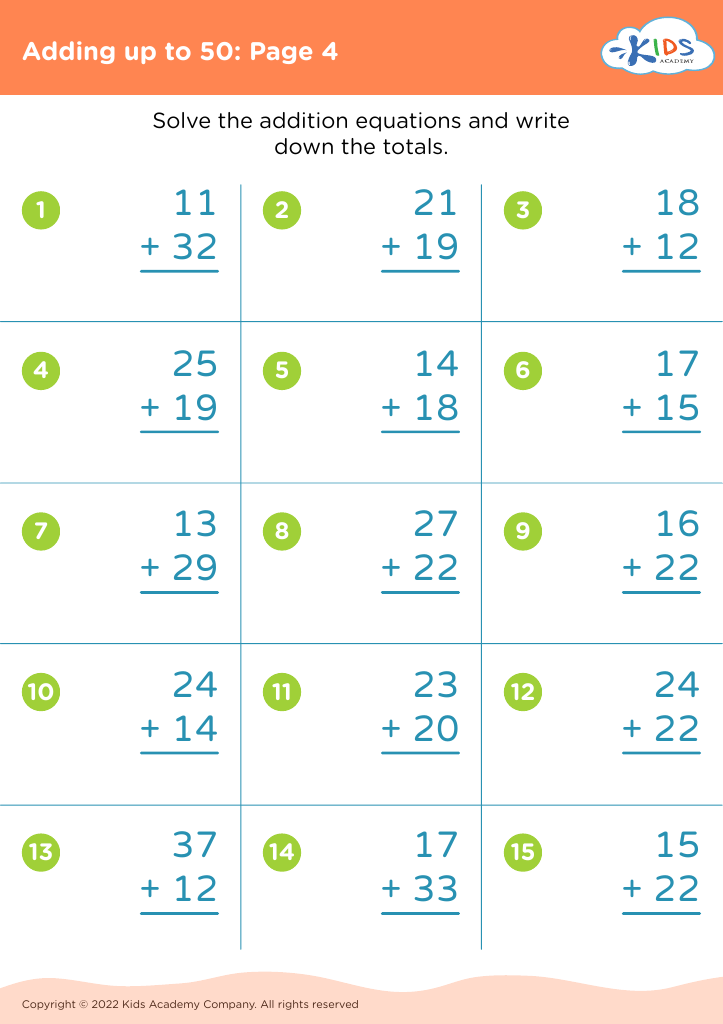
Introducing sums that add up to 50 helps children develop their addition skills, but it also lays the groundwork for more complex arithmetic, such as multiplication and division. Beyond pure arithmetic, understanding these sums enhances children’s number sense, which is their intuitive understanding of numbers and their relationships. This foundation is necessary for both math confidence and proficiency.
For parents and teachers, focusing on these areas means empowering students with a sturdy mathematical base that supports future academic learning. Practical math skills transform into real-world competencies, enhancing children's ability to handle everyday tasks such as money management and time estimation. In sum, paying attention to fractions, summation up to 50, and other core math skills equips young learners with crucial tools that make subsequent learning both smoother and more engaging.