Simplifying Fractions Adding up to 50 Misc Worksheets for Ages 5-8
4 filtered results
-
From - To
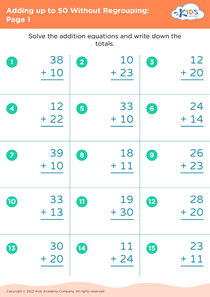
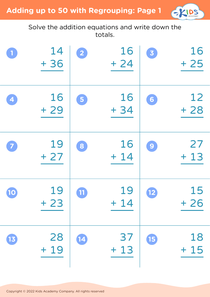
Discover our engaging "Simplifying Fractions Adding up to 50 Misc Worksheets," designed for children aged 5-8! These printable worksheets focus on simplifying fractions, helping young learners develop foundational math skills in a fun and interactive way. Each worksheet features colorful illustrations and a variety of exercises that promote understanding of fractions within the context of addition up to 50. By solving these problems, kids will boost their confidence in math and spark their interest in learning. Perfect for classroom activities or at-home practice, these worksheets provide a valuable resource for teachers and parents alike. Equip your child with essential math skills today!
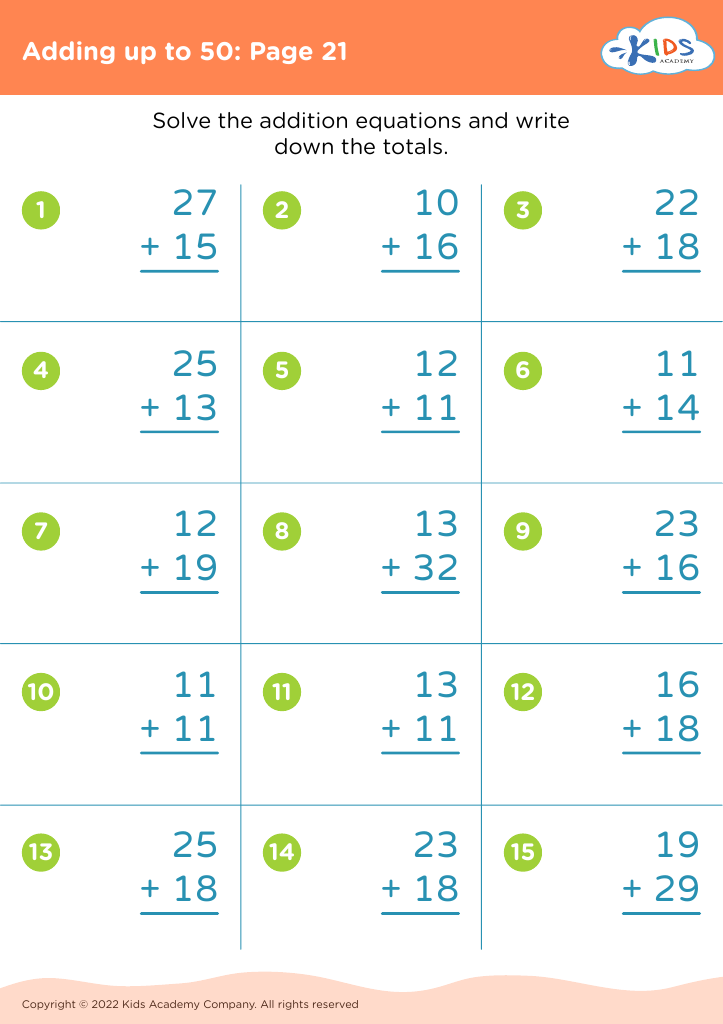
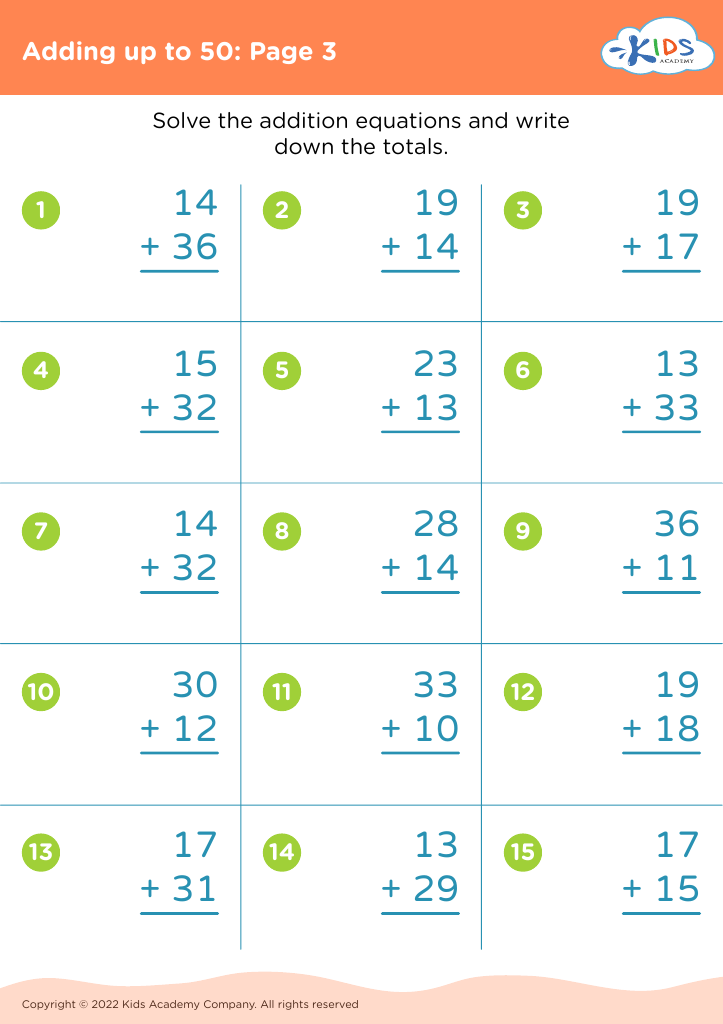
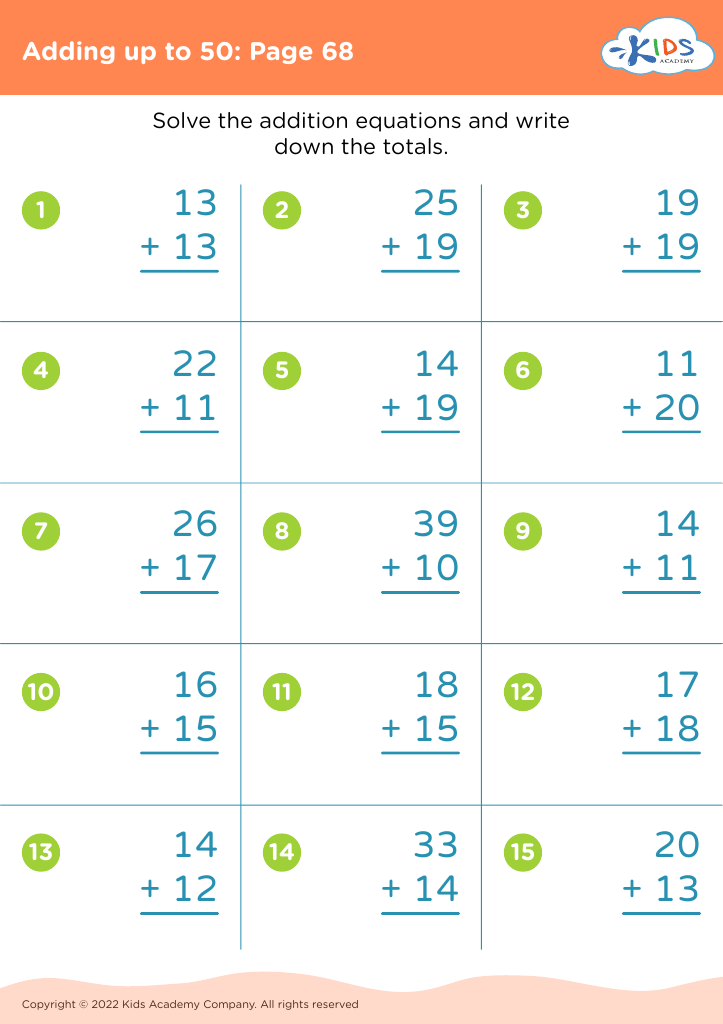
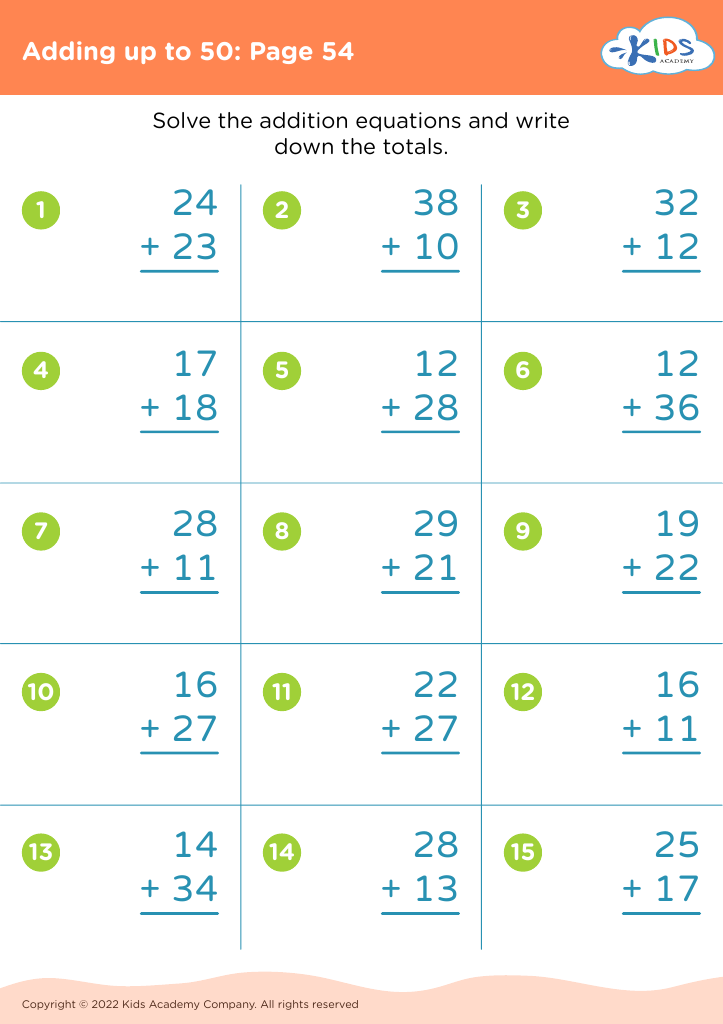


Parents and teachers should care about simplifying fractions and basic addition skills like "adding up to 50" for young learners aged 5-8 because these concepts form the foundation of numerical literacy and mathematical problem-solving. Simplifying fractions helps children understand the idea of equivalent values, which promotes essential skills such as reasoning and critical thinking. When they learn to recognize that different fractions can represent the same quantity, they become more adept at working with numbers in various contexts, laying the groundwork for more complex math topics in the future.
Moreover, learning to add numbers up to 50 introduces essential arithmetic skills. Mastering this fundamental ability supports overall mathematical reasoning and enhances confidence in dealing with numbers. As children grasp these concepts, they develop a sense of accomplishment that encourages positive attitudes towards math.
By providing students with engaging and age-appropriate resources to explore these skills, parents and teachers play a crucial role in fostering a strong mathematical foundation, nurturing lifelong learners. Ultimately, equipping young children with these essential skills leads to greater academic success, enabling them to tackle increasingly challenging math concepts with ease and confidence.