Understand fractions Adding up to 50 Misc Worksheets for Ages 5-8
3 filtered results
-
From - To
Explore our "Understand Fractions - Adding Up to 50 Misc Worksheets" designed for children ages 5-8! These engaging worksheets provide fun and interactive ways for young learners to grasp the concept of fractions. With a variety of activities, students will practice identifying, adding, and understanding fractions in a playful context. Our worksheets are tailored to match early math skills, ensuring that children build a solid foundation in fractions while enjoying their learning experience. Perfect for both classroom use and at-home learning, these resources will equip your child with essential math skills. Start exploring today and make fractions enjoyable!
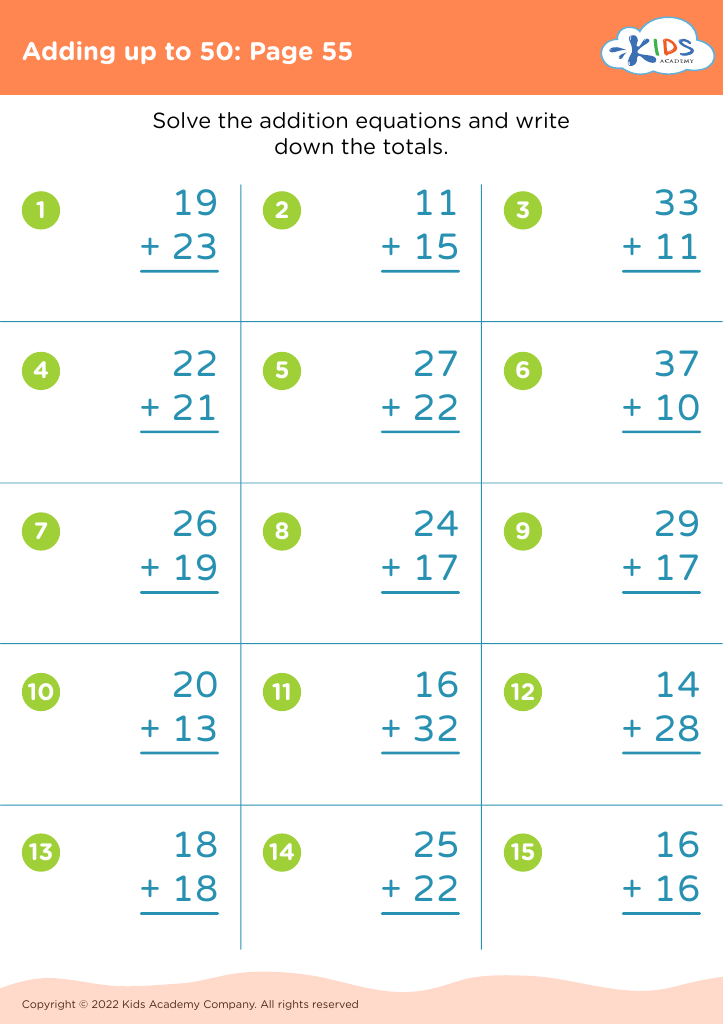
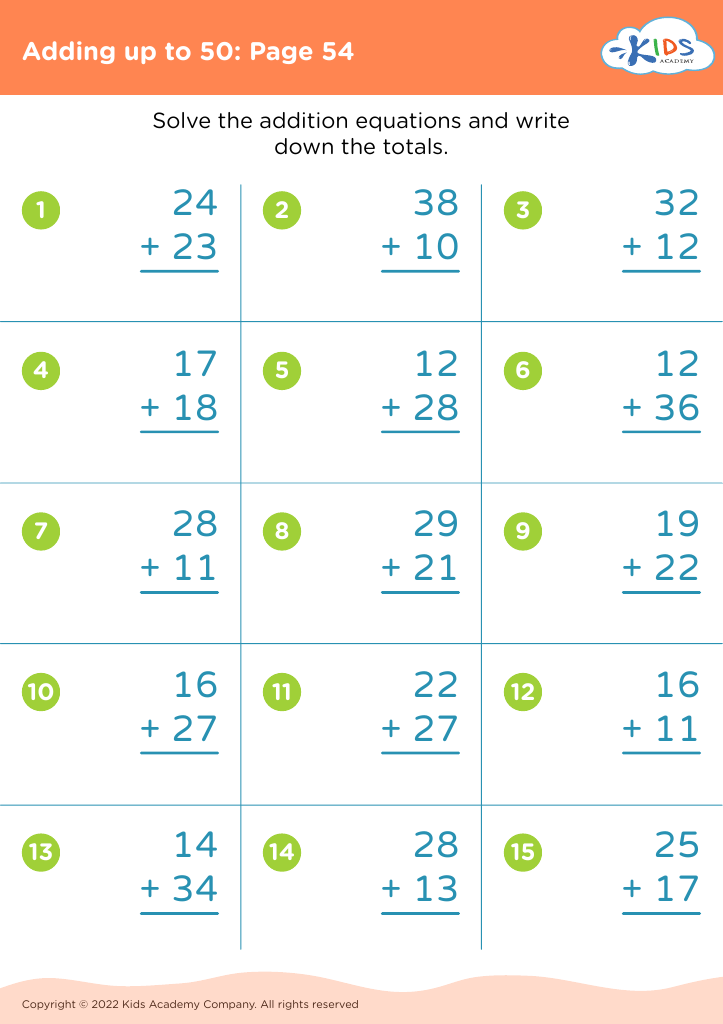
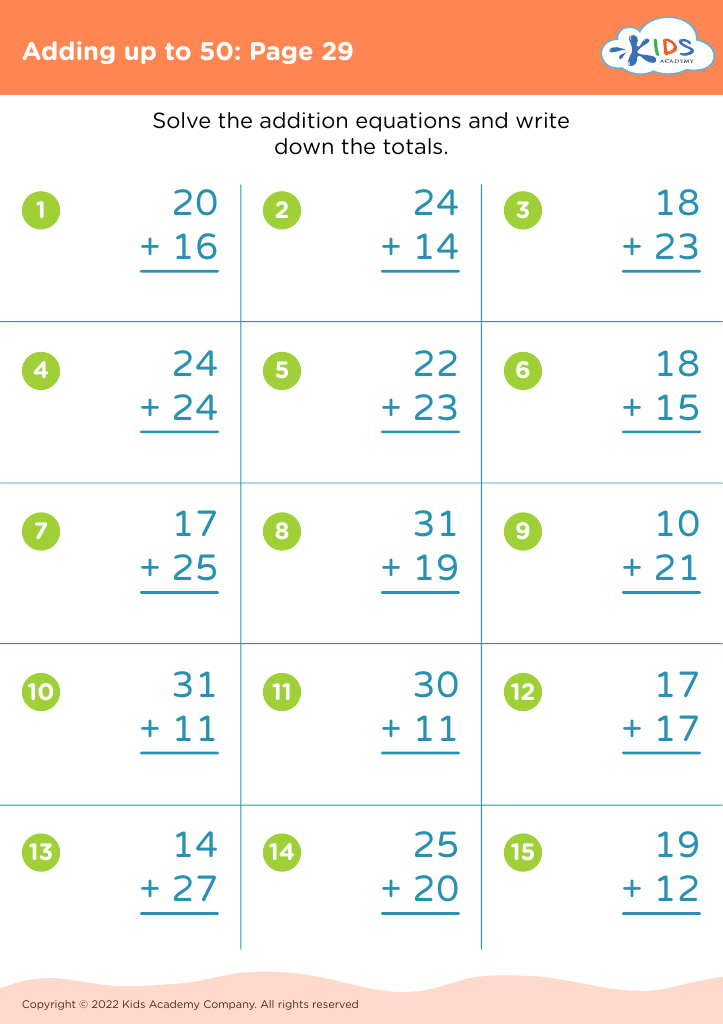


Understanding fractions is a foundational mathematical skill critical for children's cognitive development, especially for ages 5-8. Parents and teachers should prioritize this learning area because it promotes essential problem-solving abilities and number sense. By engaging with fractions through activities such as adding up to 50, children learn to grasp the concept of parts of a whole, which is vital for their mathematical literacy.
At this age, children are naturally curious and inclined to explore mathematical concepts through hands-on experiences. Incorporating fractions into playful learning activities can significantly enhance their understanding and engagement. For instance, using everyday objects, like fruit slices or measuring cups, helps visualize fractions, making abstract concepts tangible.
Fractions form the basis for more complex mathematics in later years, including addition, subtraction, and even algebra. A robust grasp of fractions also builds a child's confidence and interest in math, reducing anxiety towards the subject.
Moreover, this early understanding aids in real-life situations, such as cooking or sharing, promoting cooperative skills and comprehension of equality and fairness. By prioritizing fractions in early education, parents and teachers cultivate both mathematical proficiency and essential life skills, equipping children for future academic success.