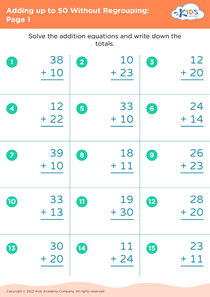
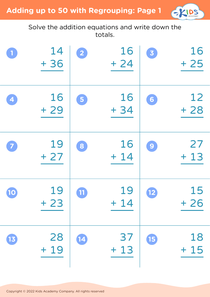
Understanding adjectives Adding up to 50 Misc Worksheets for Ages 5-8
4 filtered results
-
From - To
Discover the essential "Understanding Adjectives: Adding up to 50 Misc Worksheets for Ages 5-8" on Kids Academy. This delightful collection of worksheets intertwines fundamental math skills and language learning, designed specifically for young learners. Children aged 5-8 will engage in activities that sharpen their ability to add numbers up to 50 while enriching their vocabulary with colorful adjectives. The thoughtfully crafted worksheets inspire interactive learning, ensuring kids have fun as they practice. Ideal for both classroom and at-home learning, these resources bolster essential academic skills, making Math and English an exciting adventure for every child. Explore now and enrich your child's educational journey!
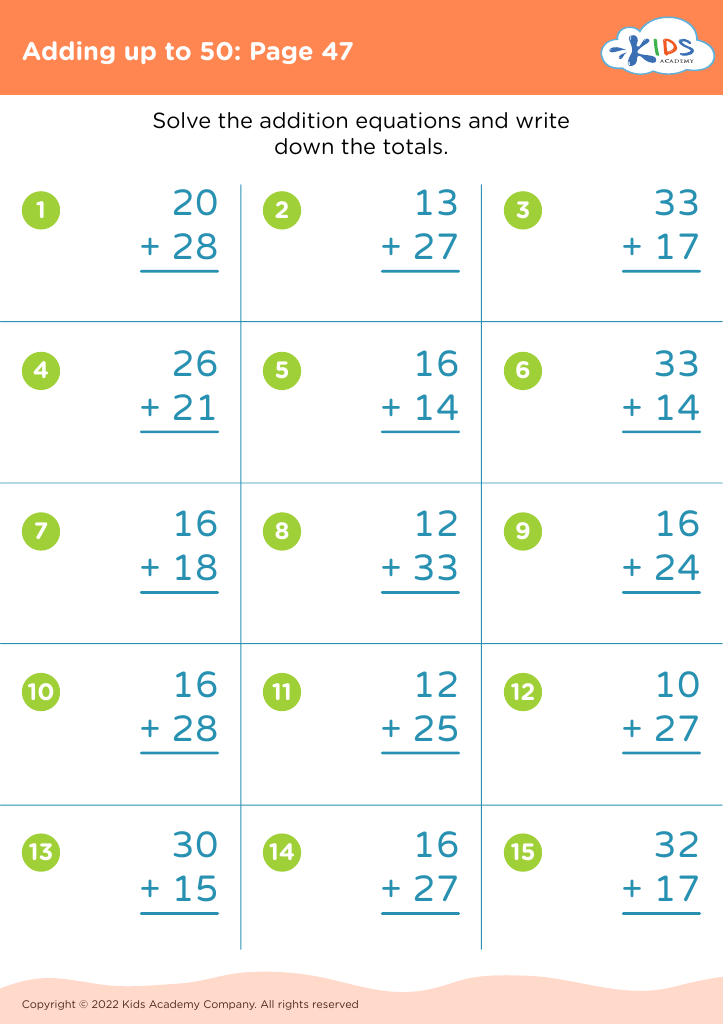
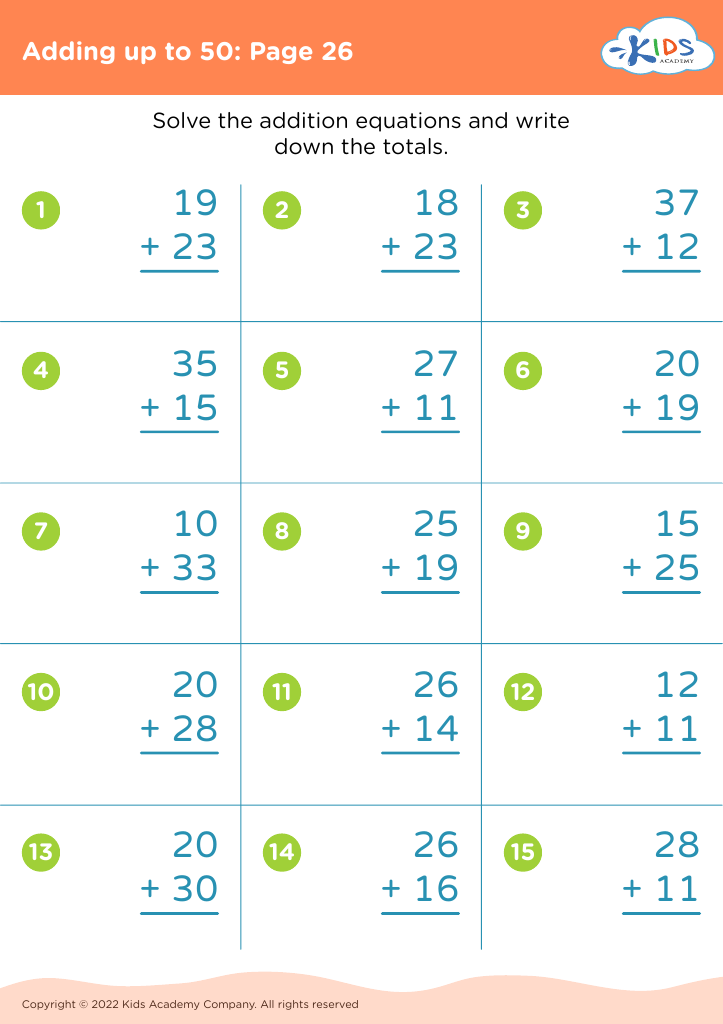
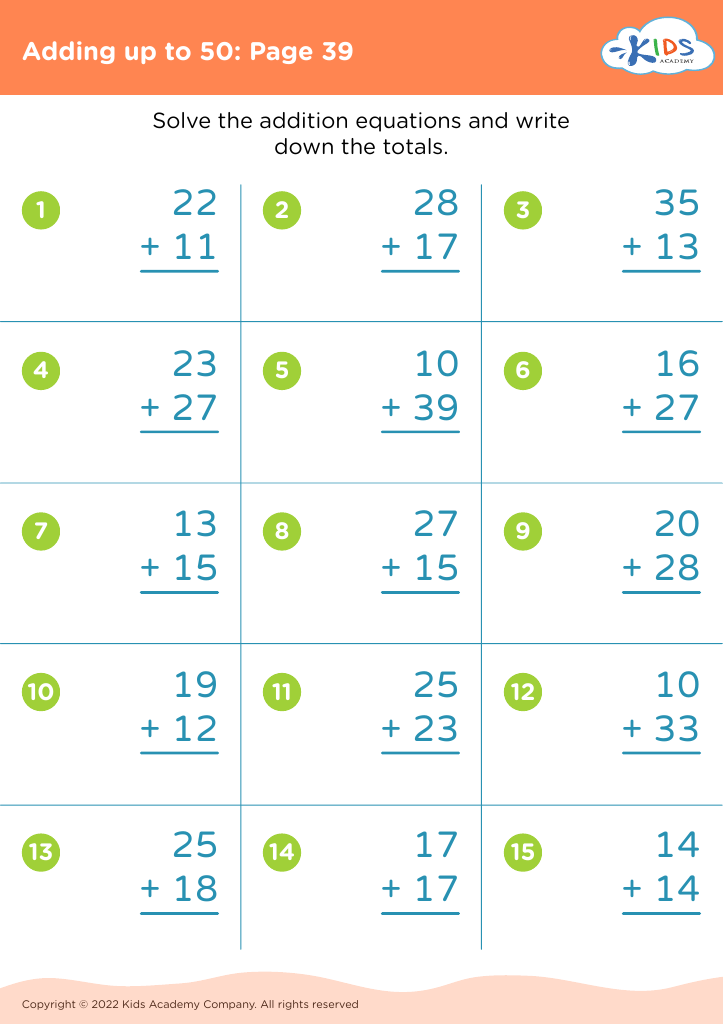
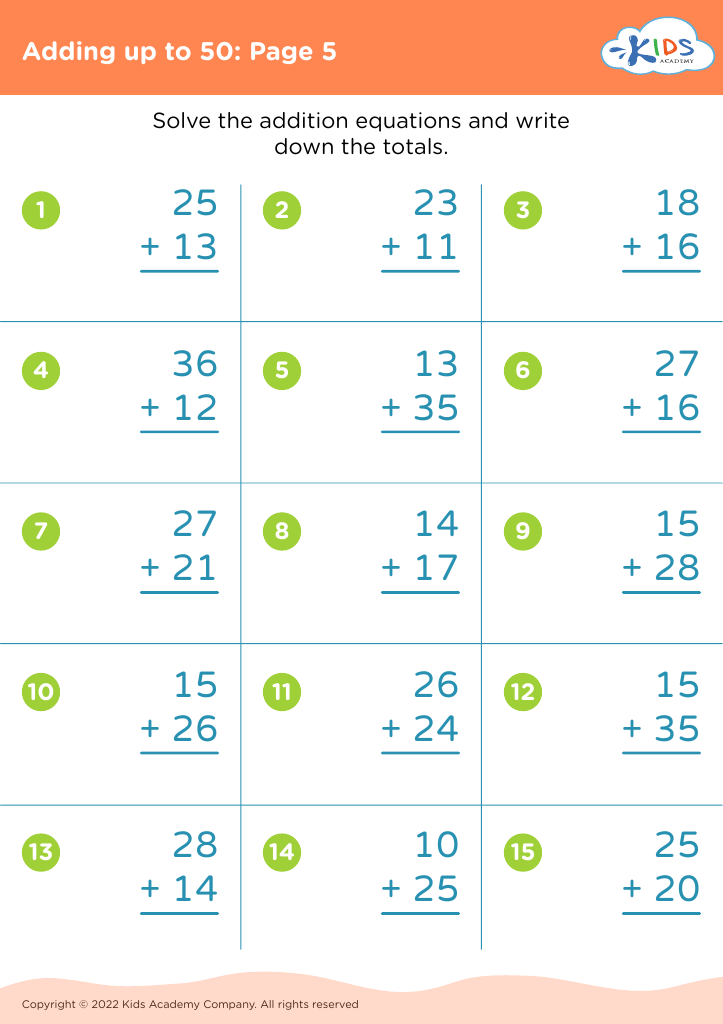


Understanding adjectives and basic addition for children aged 5-8 is foundational for language and math skills, which are crucial for their overall development.
Adjectives enhance a child's descriptive abilities, enriching their vocabulary and allowing them to express thoughts and emotions more vividly. This skill is essential for reading comprehension and creative writing, helping children describe characters and settings, making storytelling more compelling. It also promotes better communication, as kids learn to articulate their thoughts with more detail and precision.
In math, mastering addition up to 50 builds a strong arithmetic foundation. This knowledge is essential not only for more complex math concepts but also for everyday tasks such as handling money, telling time, and understanding quantities. Conceptualizing numbers and performing simple math operations at an early age fosters logical thinking and problem-solving skills. A solid grasp of basic addition prepares children for future math success, influencing their academic confidence and enthusiasm for learning.
In nurturing both language and math skills from a young age, parents and teachers lay a solid groundwork for academic and personal growth. These skills form the building blocks for future learning, equipping children with the tools they need to navigate the world around them effectively.