Understanding fractions Adding up to 50 Misc Worksheets for Ages 5-8
17 filtered results
-
From - To
Explore our "Understanding Fractions Adding up to 50 Misc Worksheets for Ages 5-8," crafted to make learning both effective and enjoyable. These worksheets offer a blend of visual aids and engaging problems to help young learners grasp fractional concepts and practice addition up to 50. Ideal for ages 5-8, each sheet is designed to cater to different learning styles, ensuring a comprehensive understanding of basic math skills. Perfect for classroom use or home study, these worksheets are a valuable resource for building a solid foundation in fractions and addition. Make math fun and accessible with these thoughtfully designed activities!
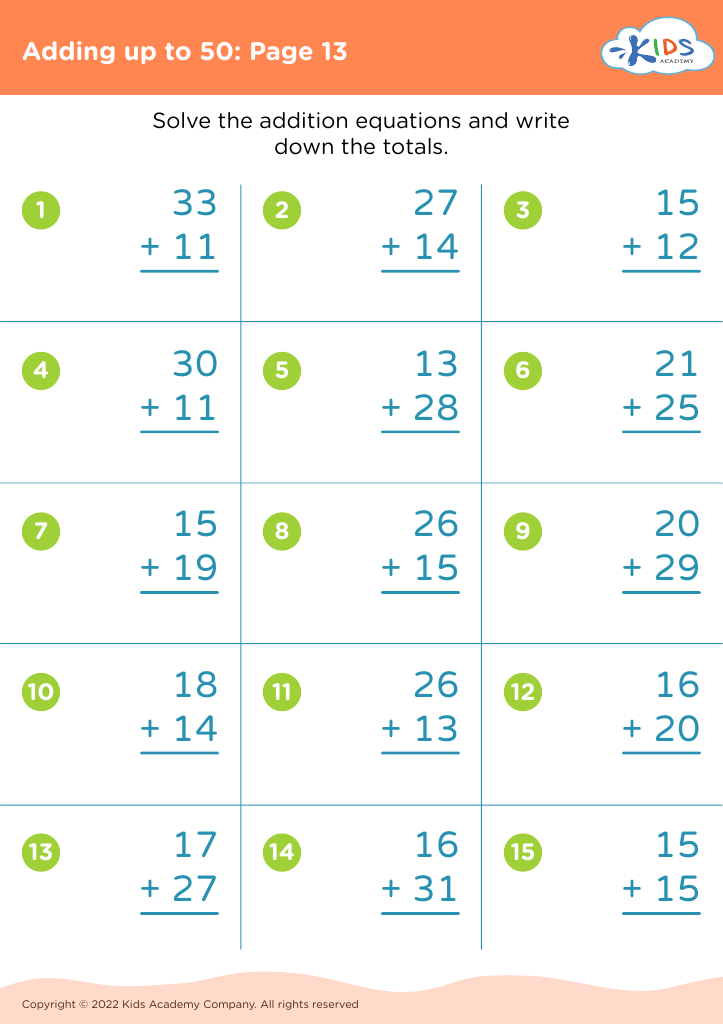
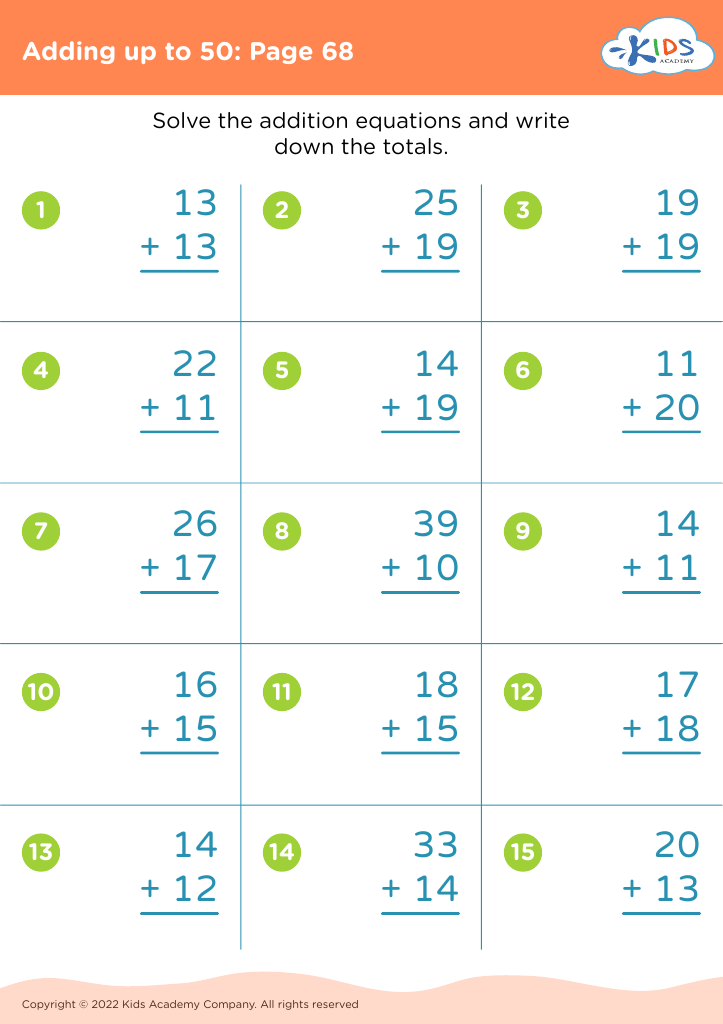
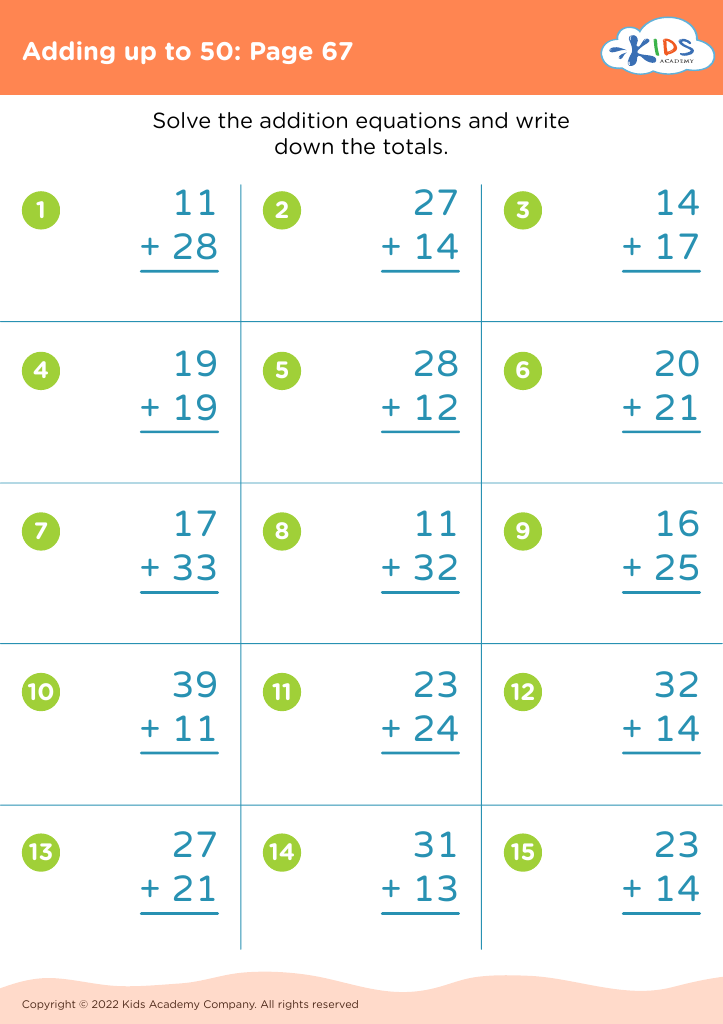
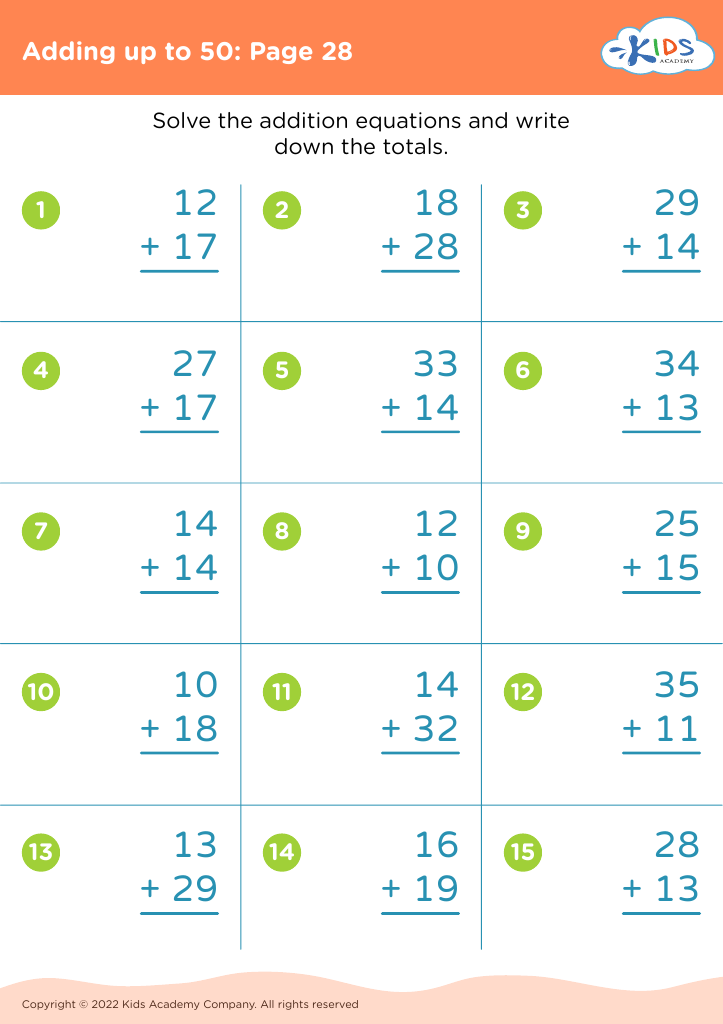
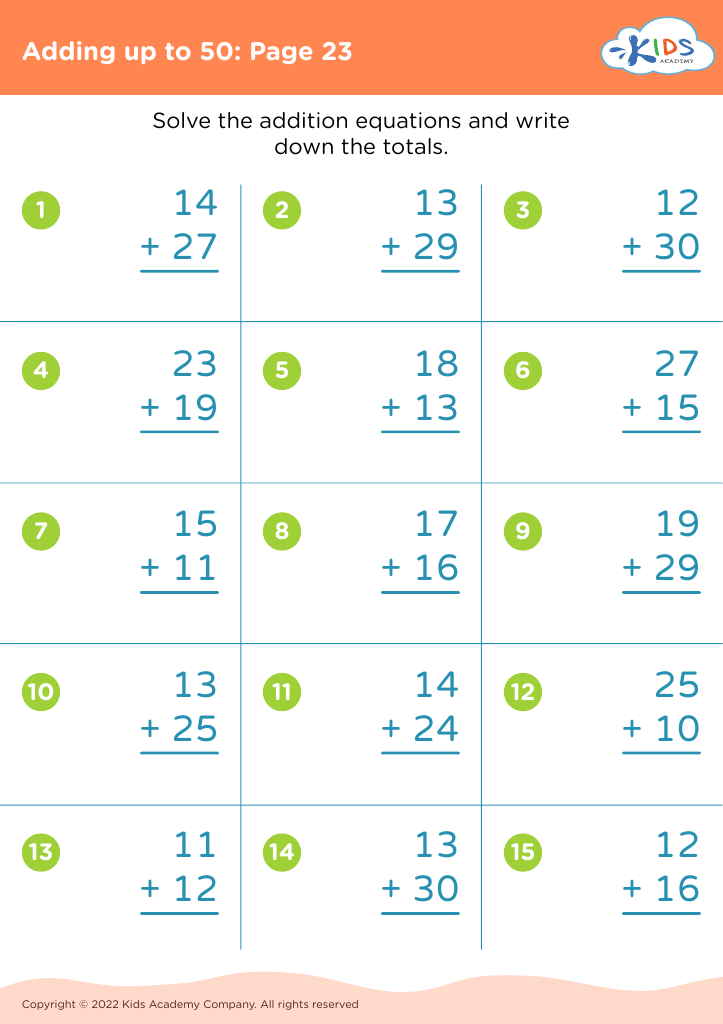
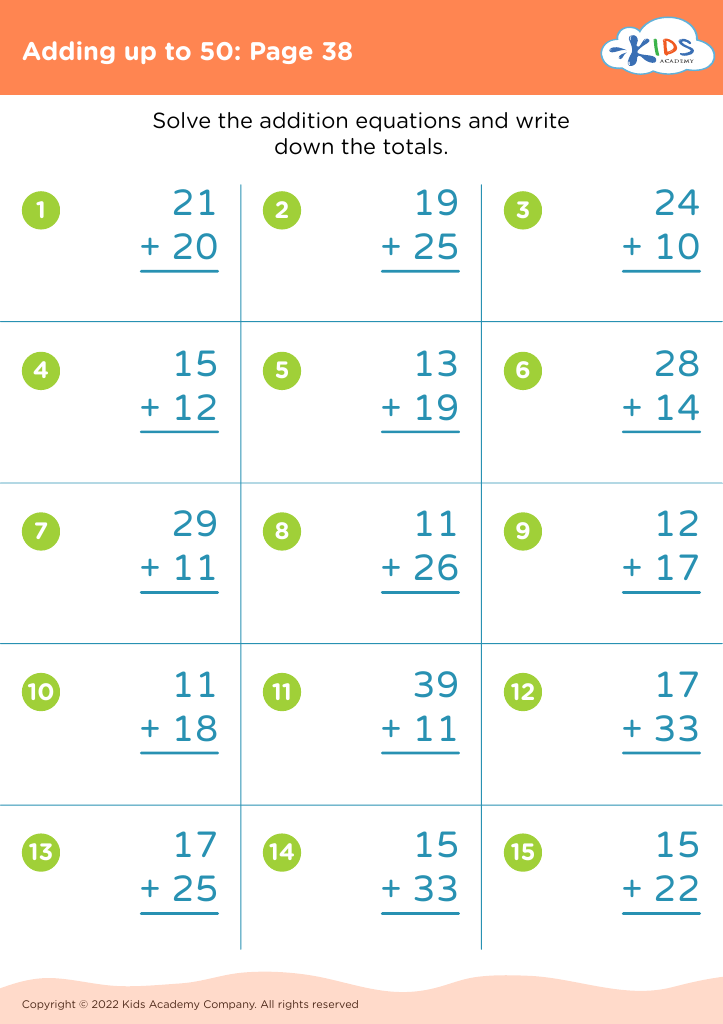
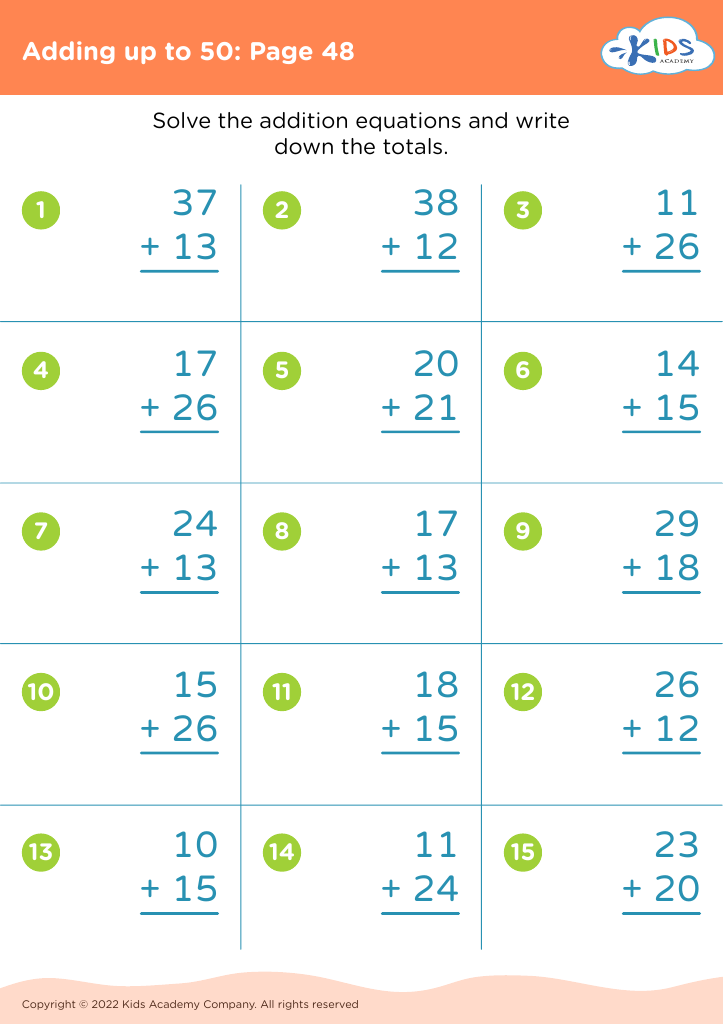
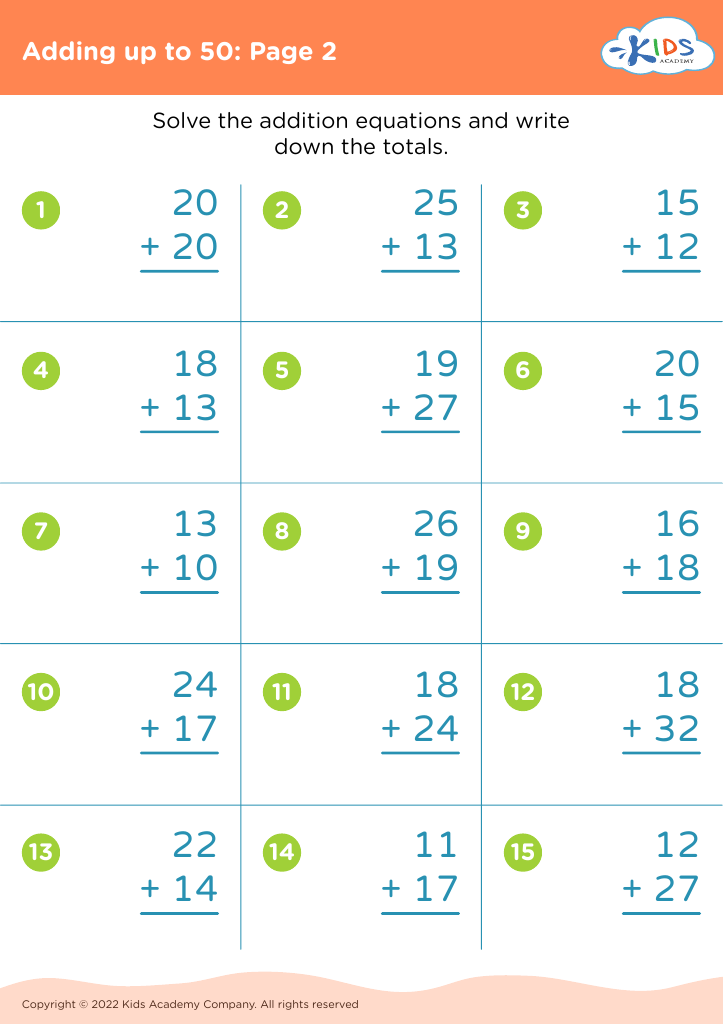
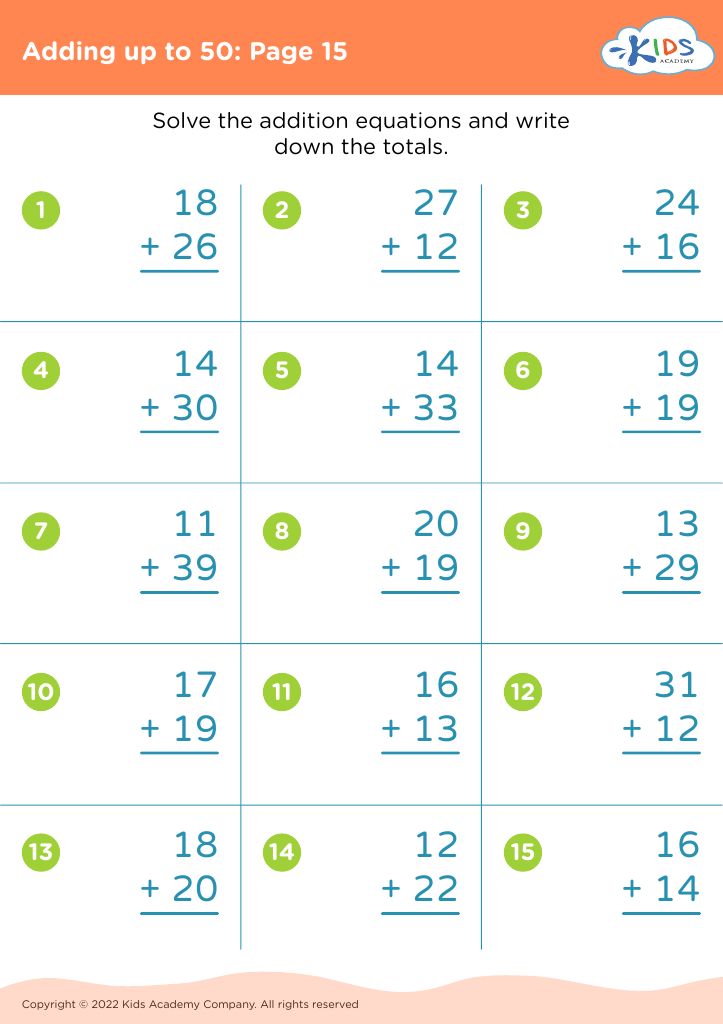
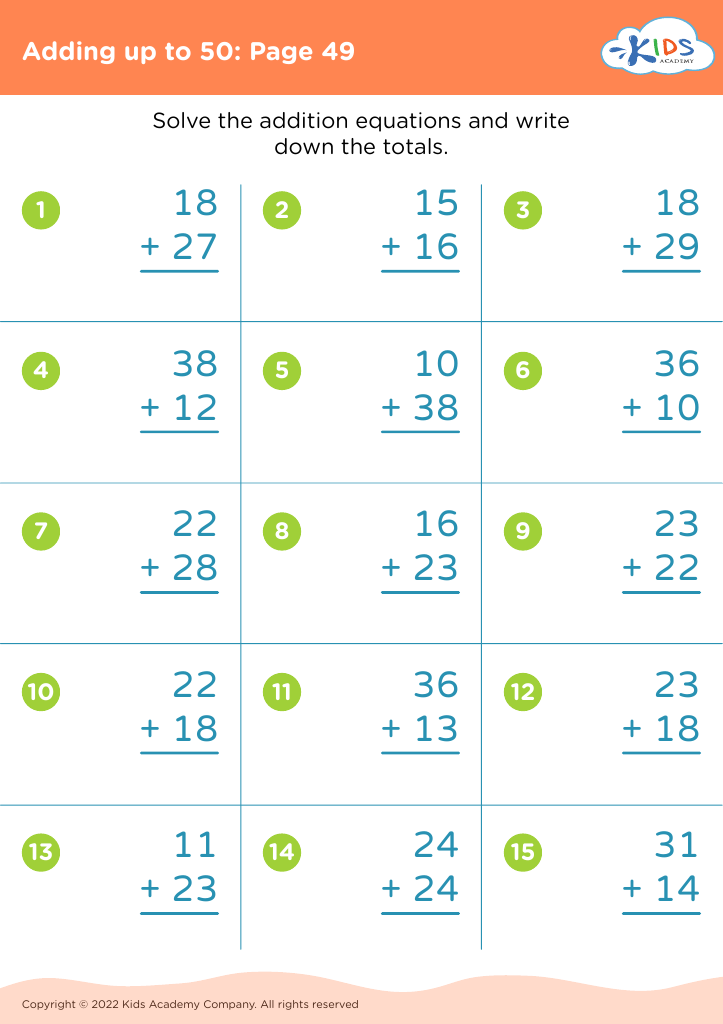
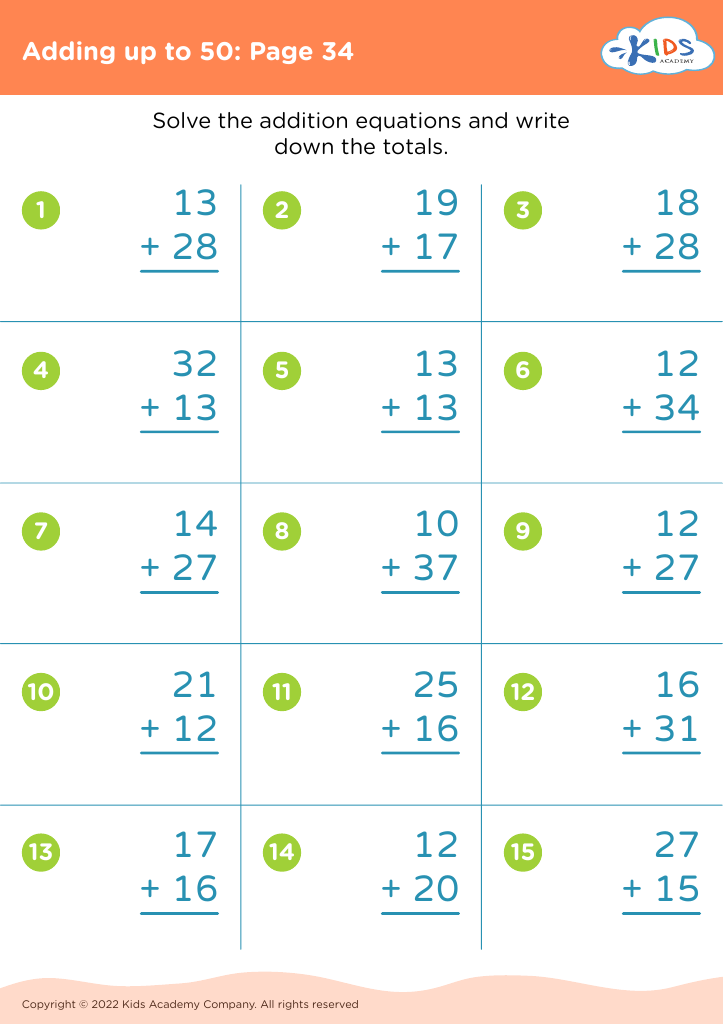


Understanding fractions, adding up to 50, and miscellaneous math concepts are foundational skills crucial for young children aged 5-8. These early math skills form the basis for more complex mathematical reasoning, problem-solving, and critical thinking that children will encounter in later school years.
Teaching fractions helps children grasp the idea of parts making up a whole, which is essential for understanding percentages, ratios, and proportions. Familiarity with fractions enhances their ability to link physical and conceptual understanding of how things fit together.
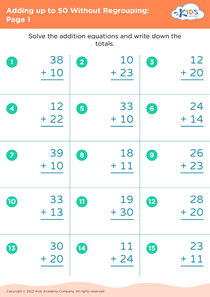
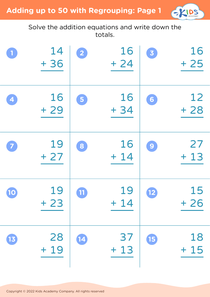
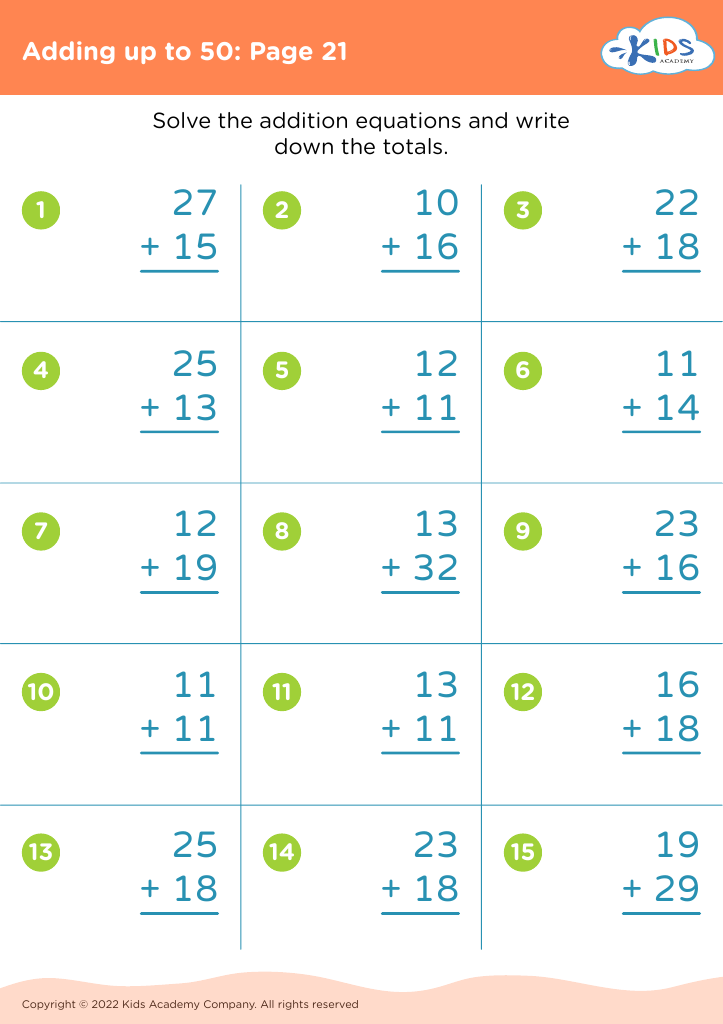
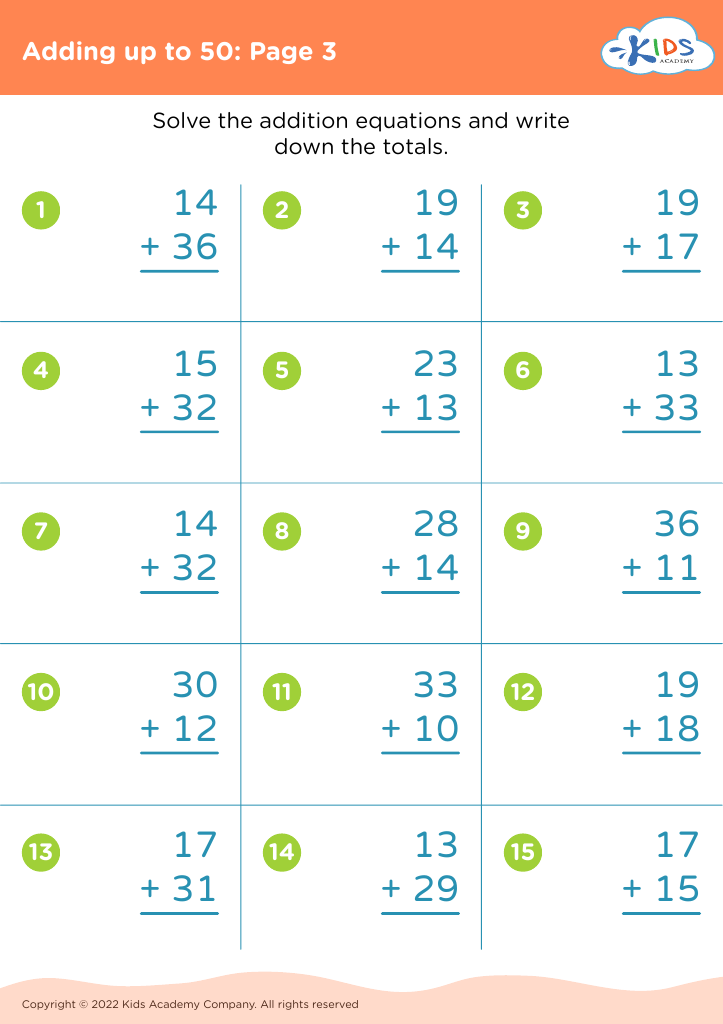
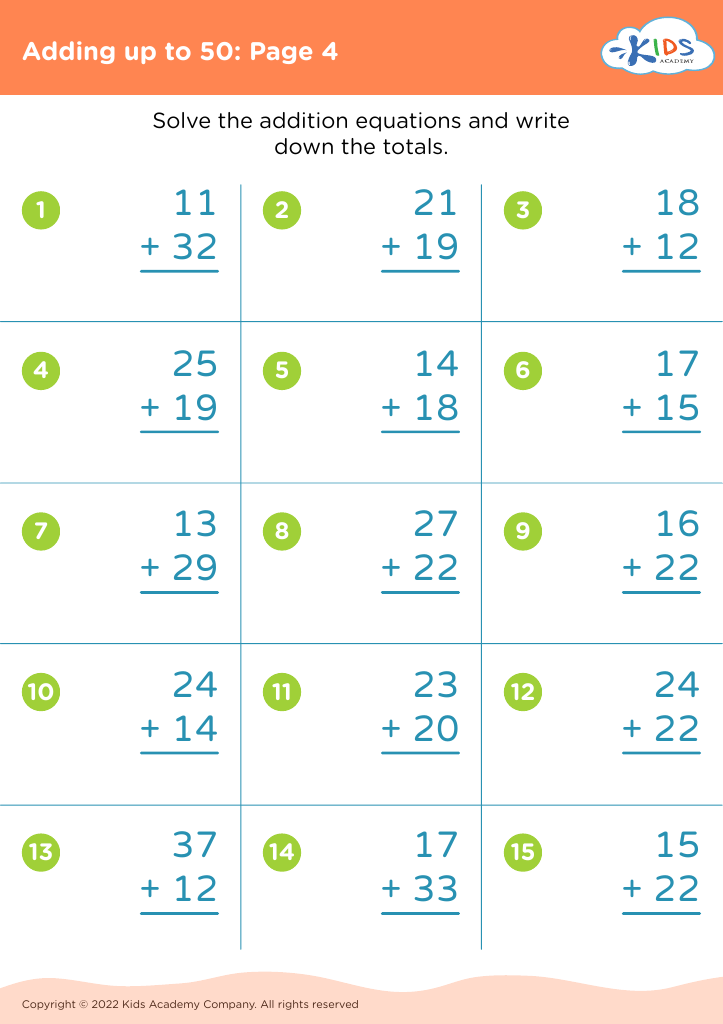
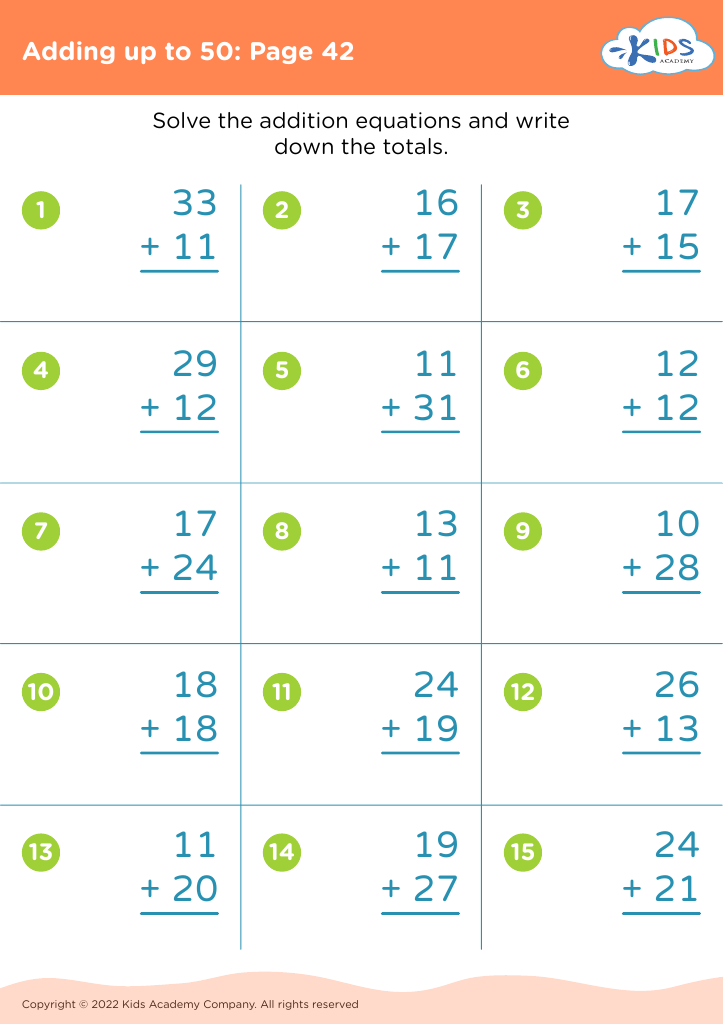
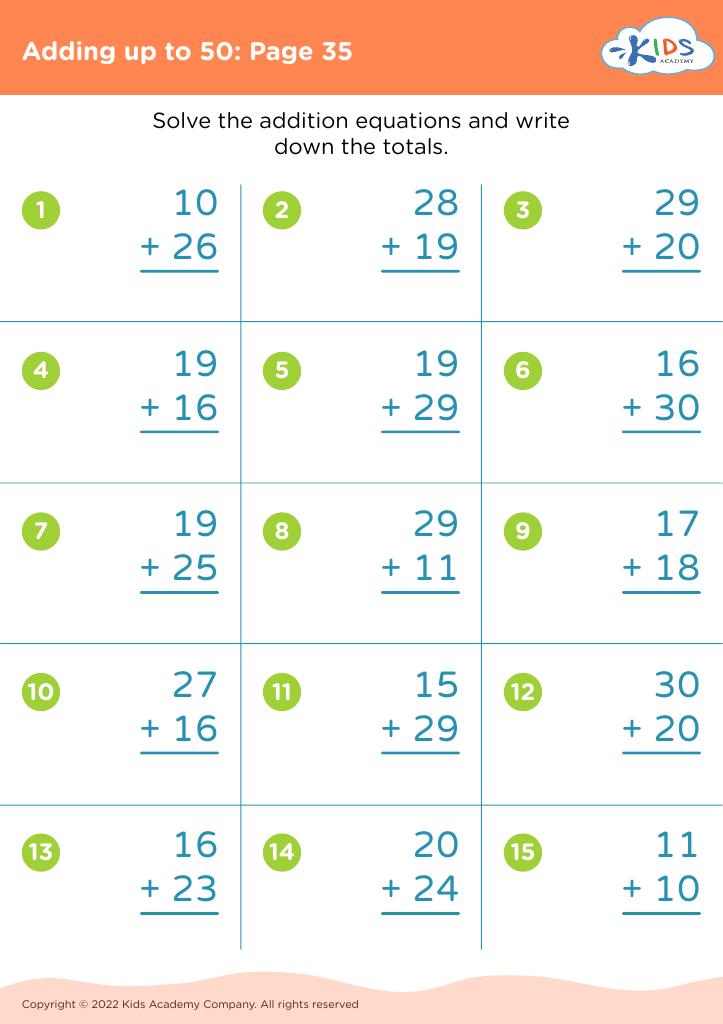
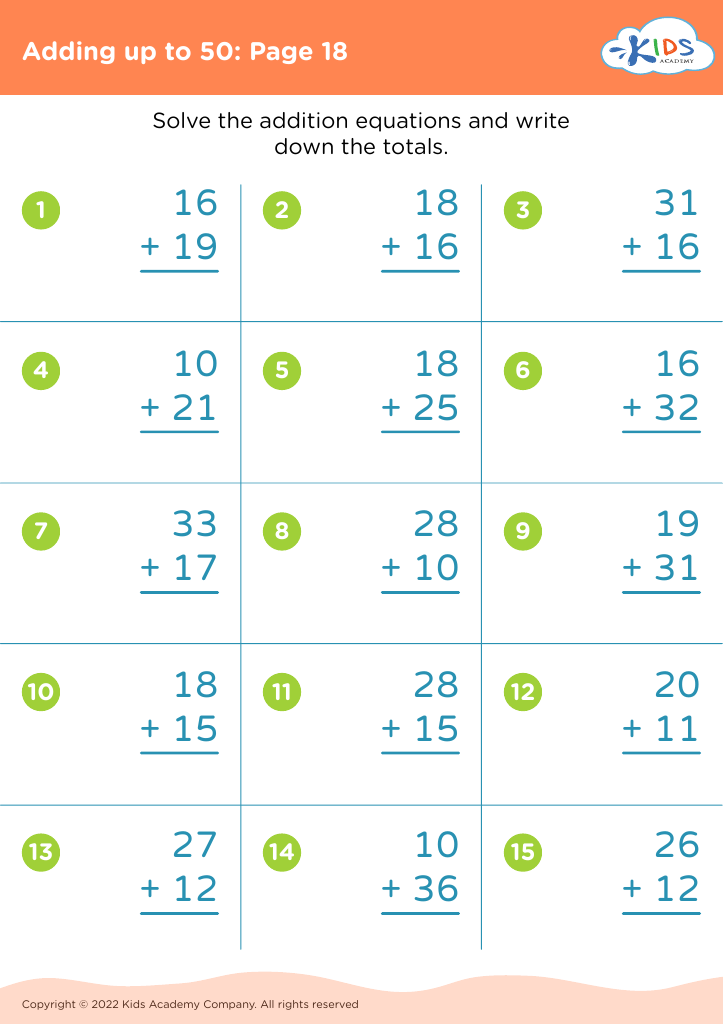
Adding up to 50 is another fundamental skill. Mastery of basic addition builds arithmetic fluency, enabling children to tackle more significant numbers and algebraic concepts with ease. This kind of practice develops mental math skills, crucial for everyday tasks and more challenging math problems in the future.
Miscellaneous math concepts, such as shapes, patterns, and measurements, round out a child’s early math education. Identifying shapes and understanding spatial relationships are important for geometry. Recognizing patterns fosters the ability to predict and analyze information logically.
Parents and teachers play a vital role in nurturing a genuine interest in these basic concepts. Early competence and confidence in math not only enhance academic performance but also develop problem-solving skills critical for life. Engaging and supportive learning environments ensure a strong mathematical foundation.