Shape Recognition Adding up to 50 with Regrouping Worksheets for Ages 5-8
6 filtered results
-
From - To
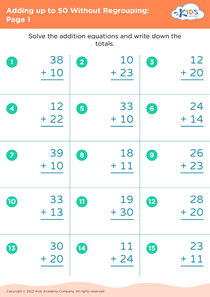
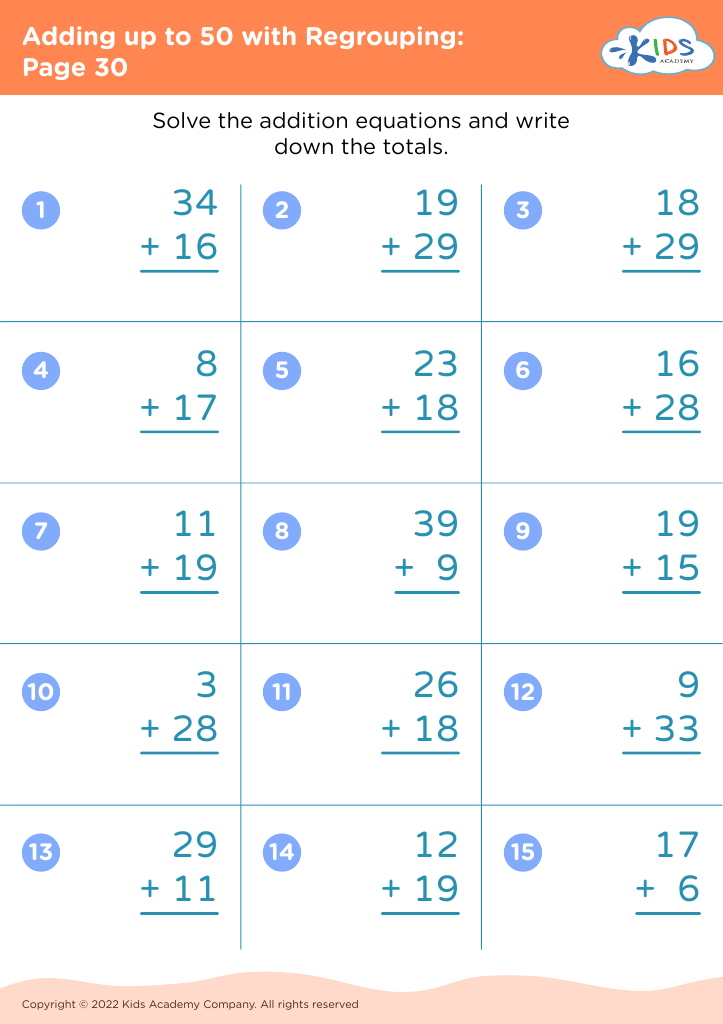
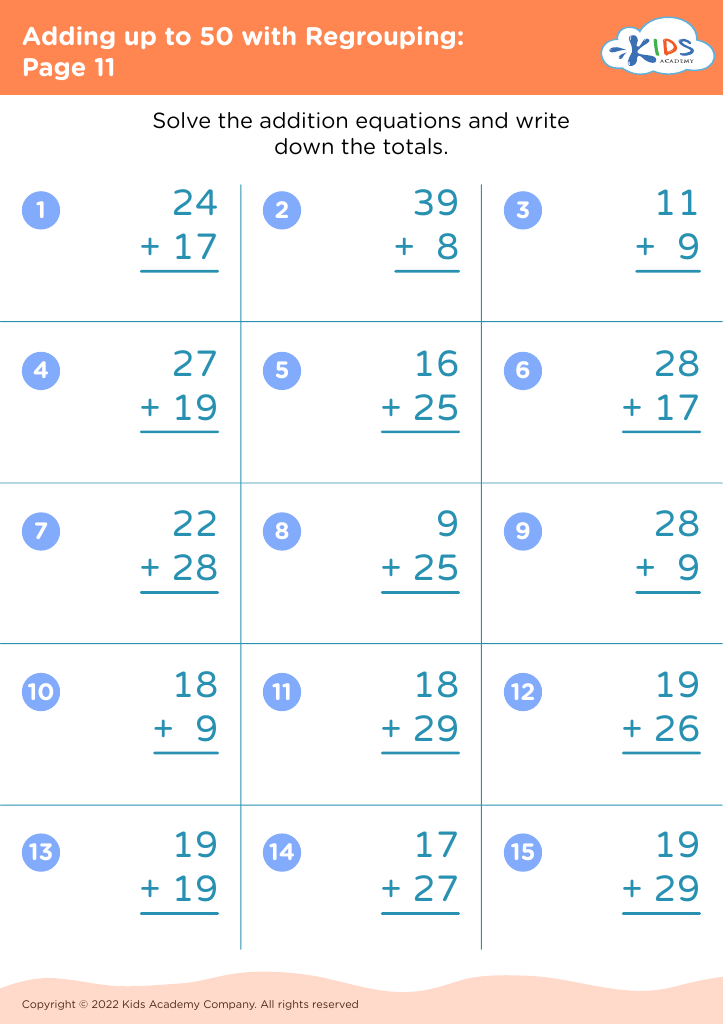
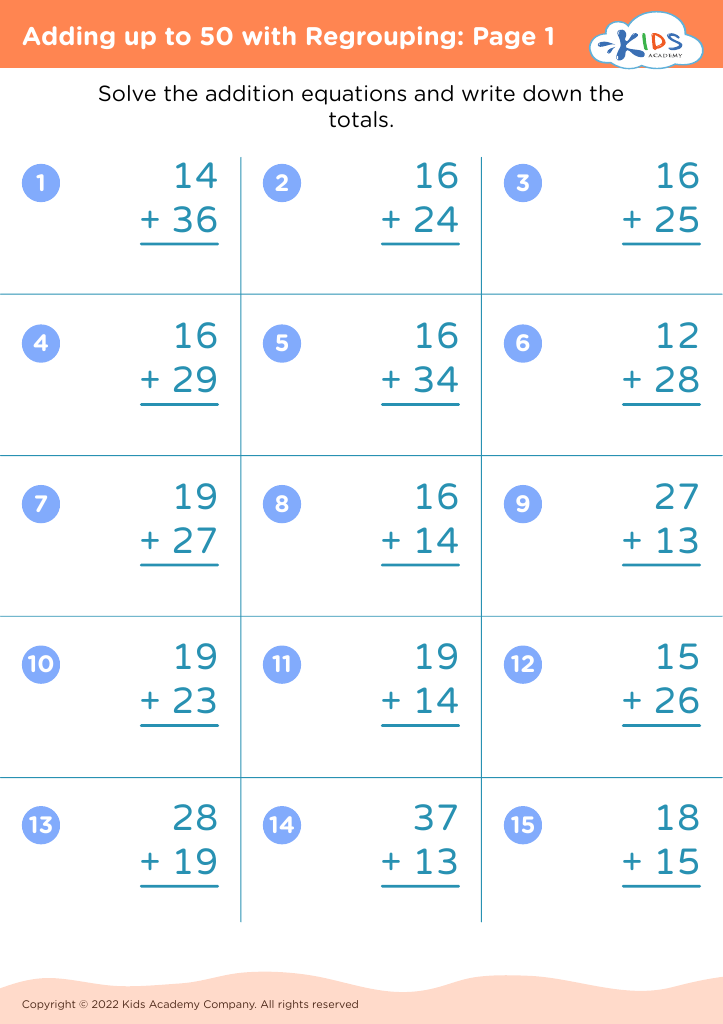
Discover our engaging "Shape Recognition Adding up to 50 with Regrouping Worksheets" designed specifically for children aged 5-8! These worksheets seamlessly combine essential math skills with shape recognition, making learning fun and interactive. Your little ones will enhance their understanding of numbers while exploring various geometric shapes. By practicing regrouping strategies in addition problems up to 50, kids will build a strong foundation in both math and spatial awareness. Our colorful and visually appealing worksheets are perfect for classroom activities or at-home learning. Encourage your child to develop their skills with this wonderful resource that fosters both creativity and critical thinking!
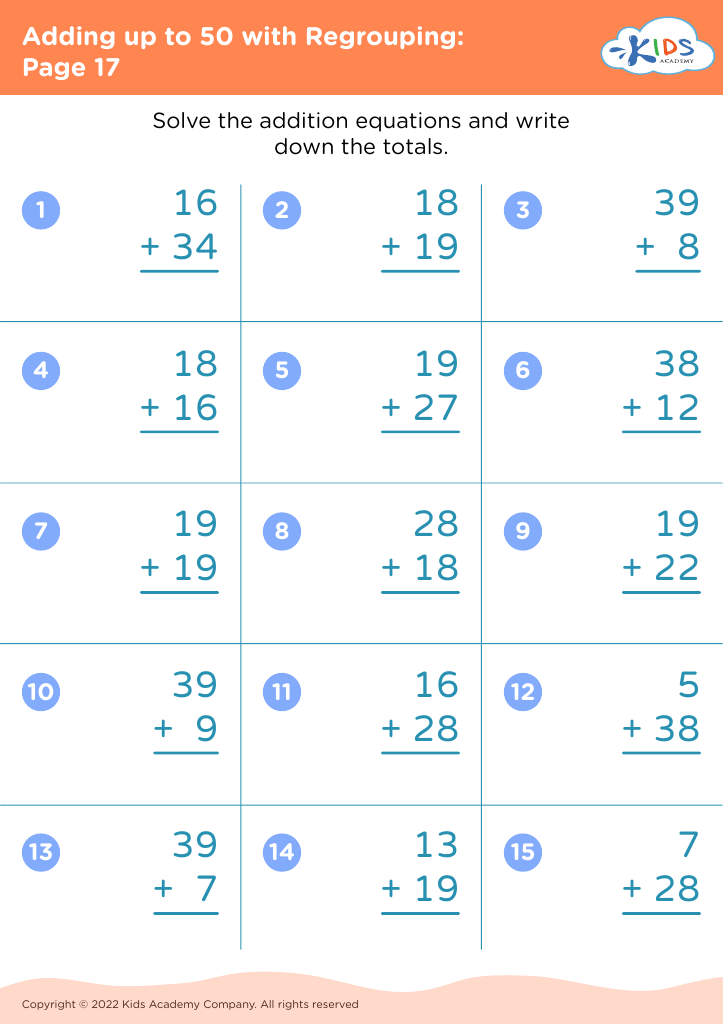
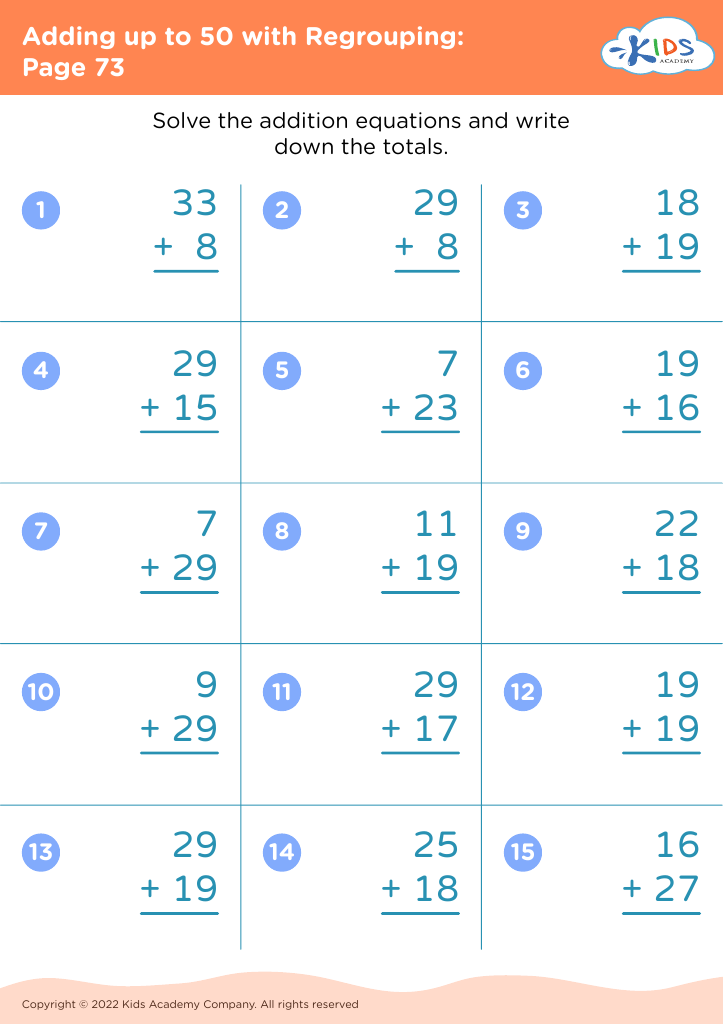
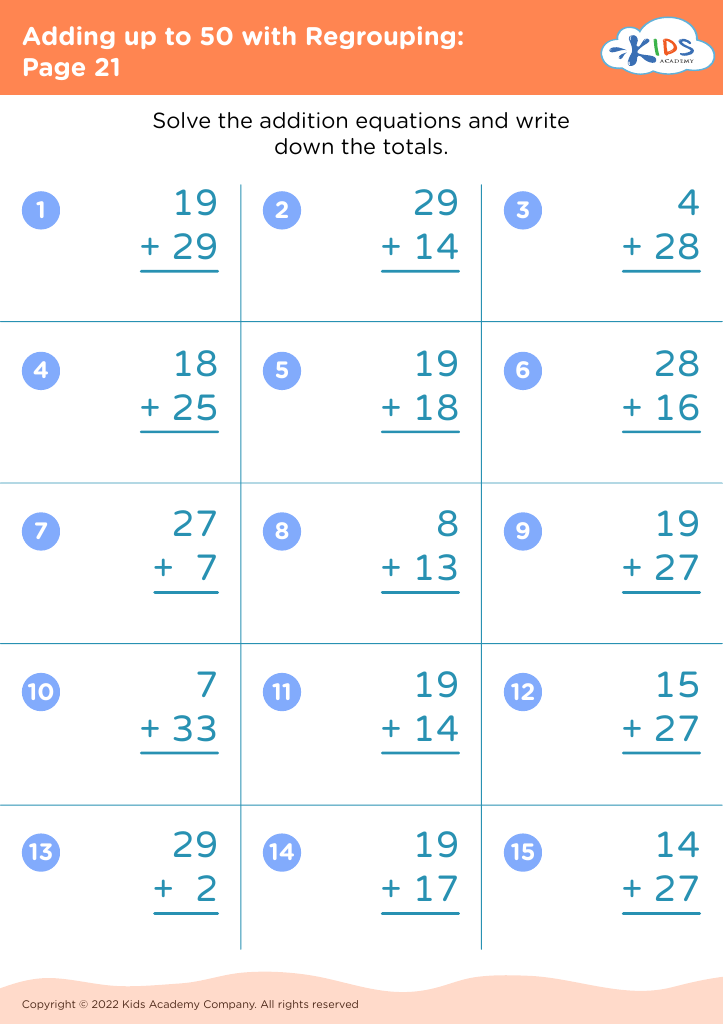


Shape recognition and the ability to add numbers up to 50 with regrouping are crucial skills for children aged 5-8. These foundational concepts not only support early mathematics but also enhance cognitive development and spatial awareness.
Shape recognition helps children identify various forms, which fosters critical thinking and problem-solving skills. Understanding shapes is essential for everyday tasks, from recognizing road signs to envisioning spatial relationships in art and geometry. This foundational knowledge inspires creativity and boosts confidence in young learners as they navigate their environments.
On the other hand, mastering addition—especially with regrouping—sets the stage for more advanced mathematical concepts. Regrouping teaches children the importance of place value and how to manipulate numbers effectively. When students grasp this skill, they enhance their numerical fluency and build a strong framework for future mathematical learning, including multiplication and division.
Both shape recognition and addition up to 50 promote logical reasoning and pattern recognition, essential skills that extend beyond academics into life skills. Therefore, parents and teachers should prioritize these areas of learning, as they equip children with the tools needed for future success in a variety of disciplines, ultimately nurturing well-rounded problem solvers.