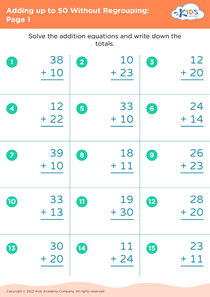
Simplifying Fractions Adding up to 50 with Regrouping Worksheets for Ages 5-8
4 filtered results
-
From - To
Discover our engaging "Simplifying Fractions Adding up to 50 with Regrouping" worksheets, specifically designed for children aged 5-8. These interactive resources help young learners master the concept of simplifying fractions while adding numbers up to 50 through the essential skill of regrouping. With colorful visuals and age-appropriate challenges, these worksheets provide a fun and effective way to build a strong mathematical foundation. Encourage critical thinking and problem-solving as kids are guided through step-by-step exercises that make learning exciting. Perfect for classroom activities or at-home practice, these worksheets will ignite a love for math in your child!
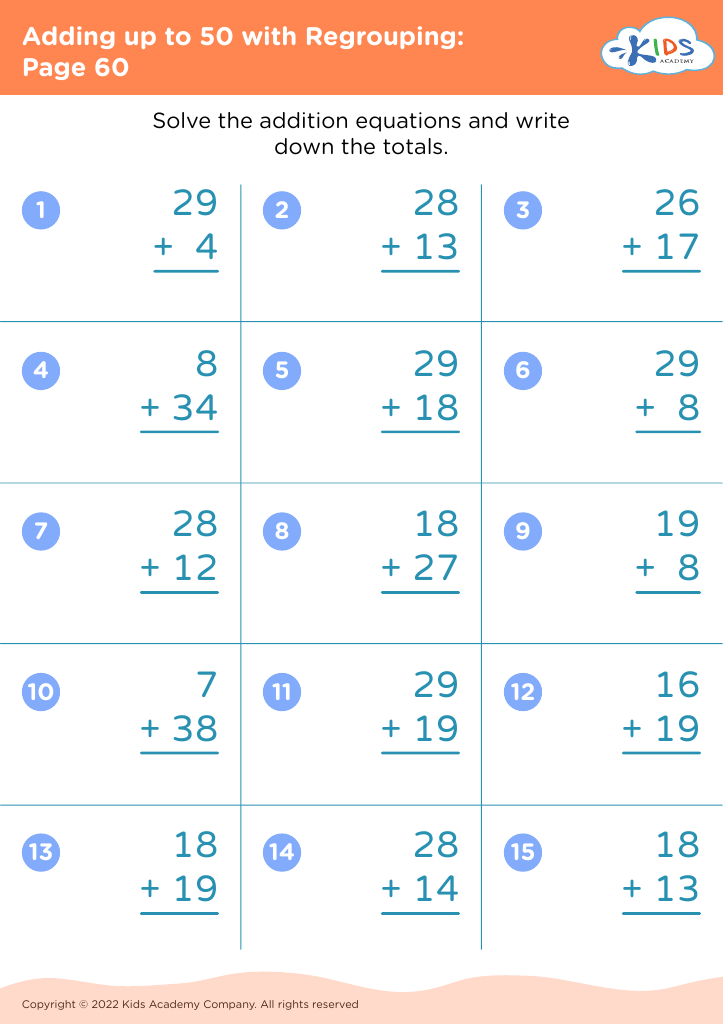
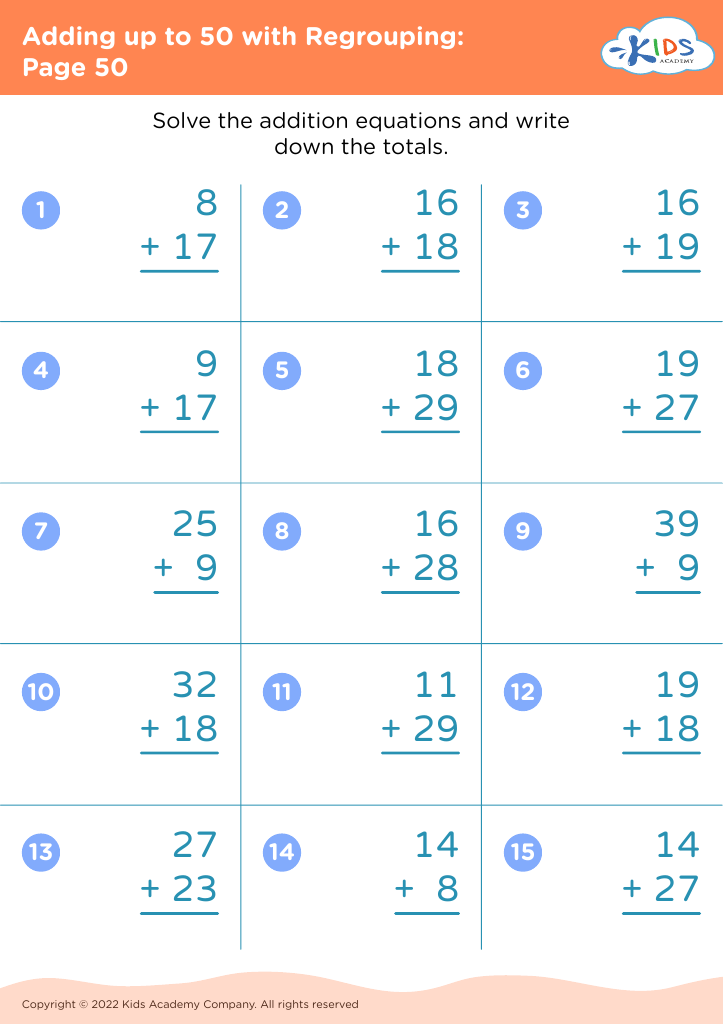
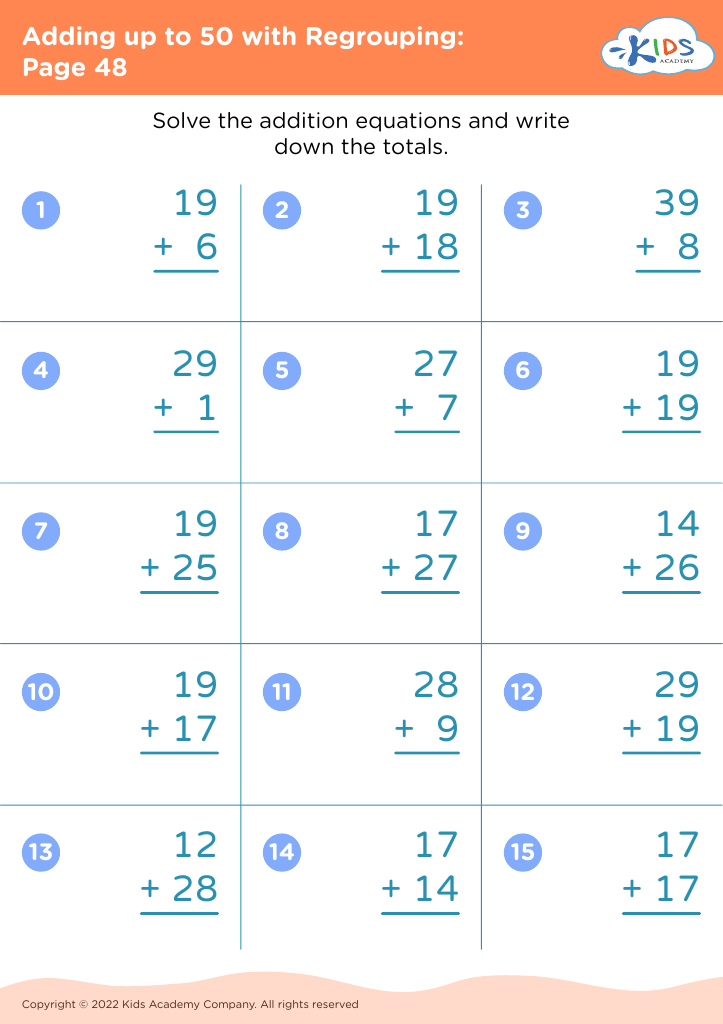
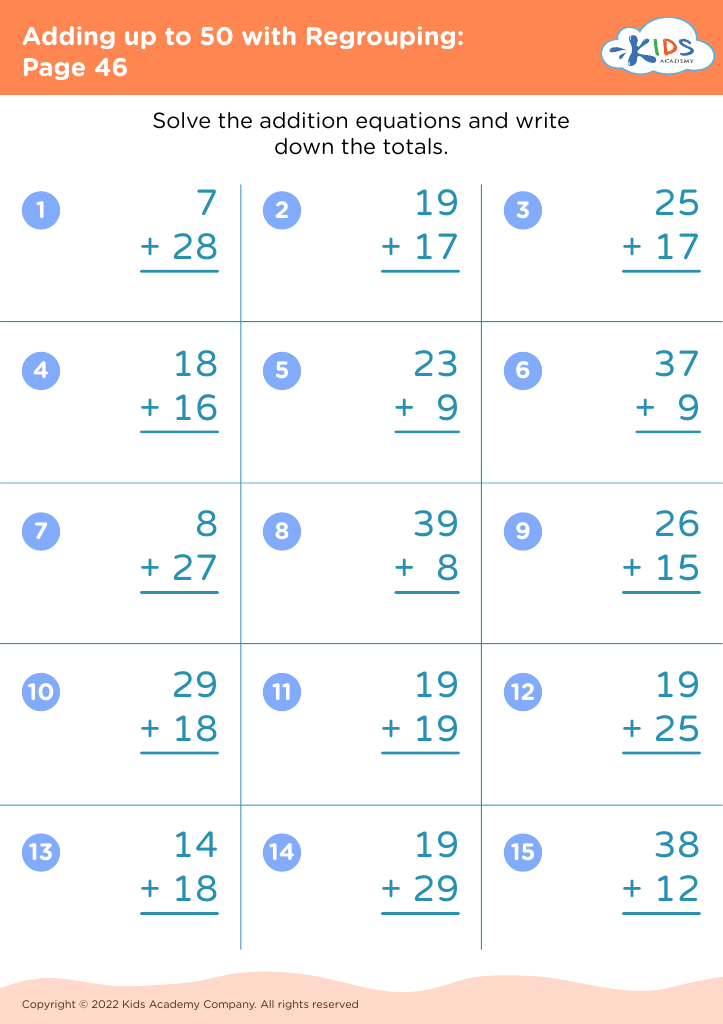


Teaching young children about simplifying fractions and regrouping in addition is fundamental for their mathematical development, particularly for learners aged 5-8. Understanding these concepts helps children build a strong foundation for more advanced mathematics later in their education.
Firstly, simplifying fractions introduces children to the notion of equivalence, teaching them how different representations can be parts of the same whole. This understanding nurtures critical thinking and problem-solving skills. Furthermore, learning to add fractions that total up to 50 — such as 25 + 25 — helps build their number sense, promoting familiarity with numerical relationships.
Regrouping in addition enhances their ability to manage larger numbers and reinforces the concepts of place value and carrying. This skill is essential for increasing their fluency with addition and subtraction, making future operations easier and more intuitive.
Moreover, mastering these math concepts cultivates confidence in young learners. When children feel successful, they are more likely to engage in complex problem-solving activities in the future. Therefore, parents and teachers play a crucial role in supporting these foundational skills, ultimately empowering children with the tools they need for a lifetime of mathematical understanding and enjoyment.