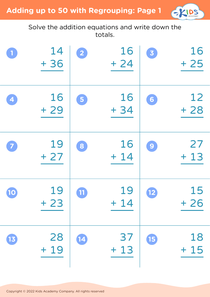
Addition Practice Adding up to 50 Without Regrouping Worksheets for Ages 5-8
6 filtered results
-
From - To
Enhance your child's math skills with our engaging "Addition Practice Adding up to 50 Without Regrouping Worksheets" designed for ages 5-8. These printable worksheets provide a fun and educational way for kids to practice and master simple addition. Each worksheet focuses on building confidence and accuracy in adding numbers up to 50, while eliminating the complexities of regrouping. Perfect for classroom use or at-home learning, our resources offer a variety of problems to keep young learners challenged and motivated. Foster a love for math in your child with these easy-to-use and resourceful worksheets today!
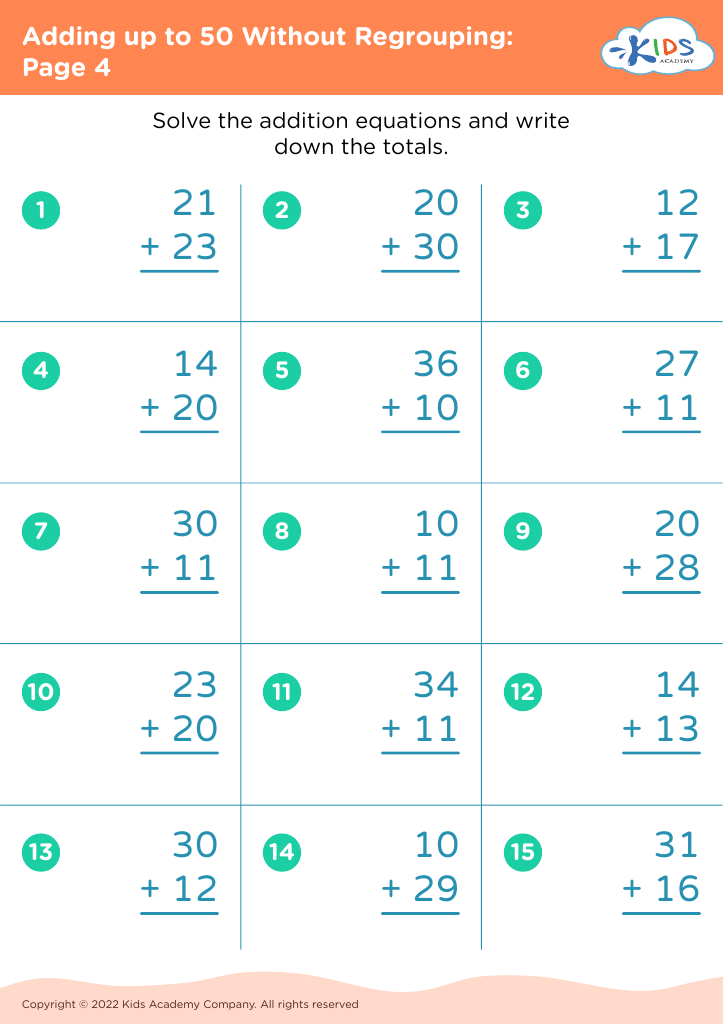
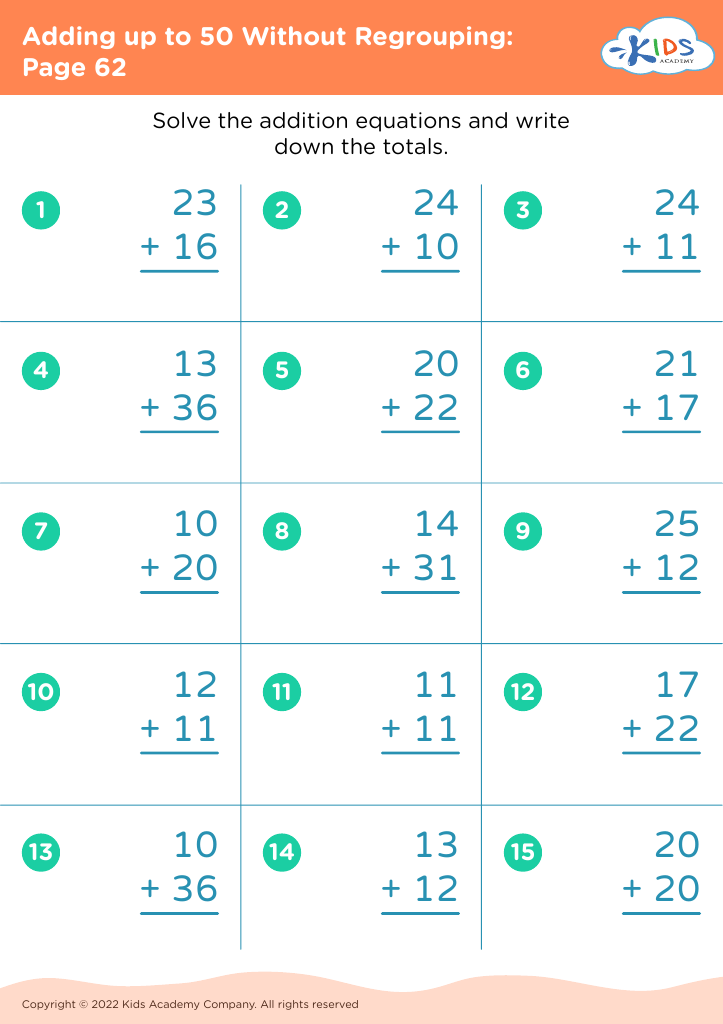
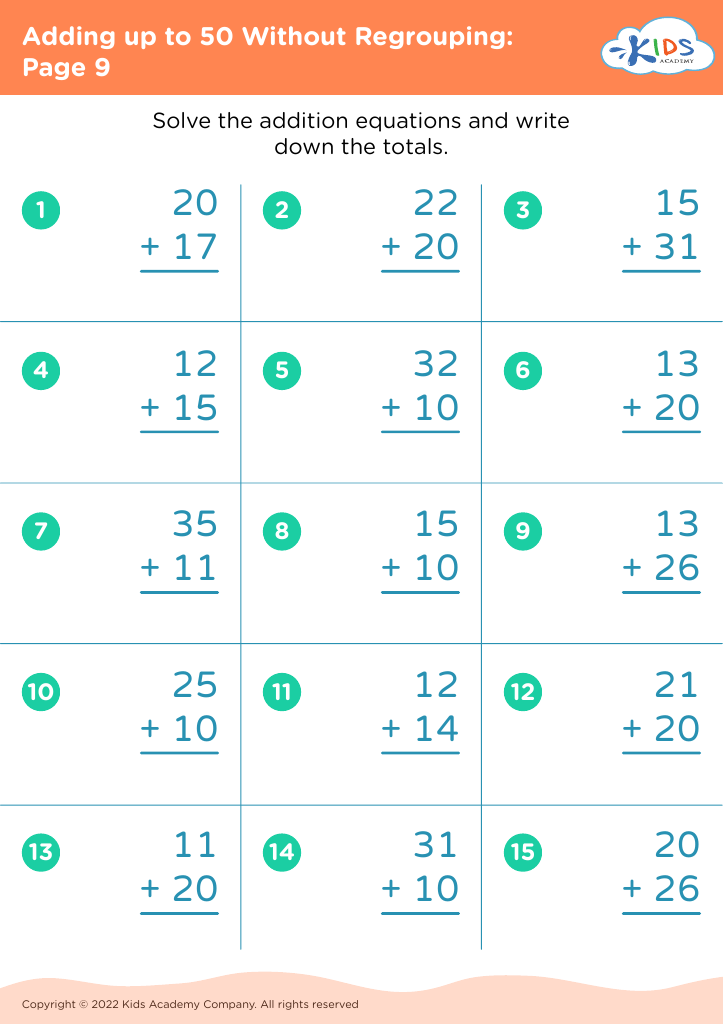
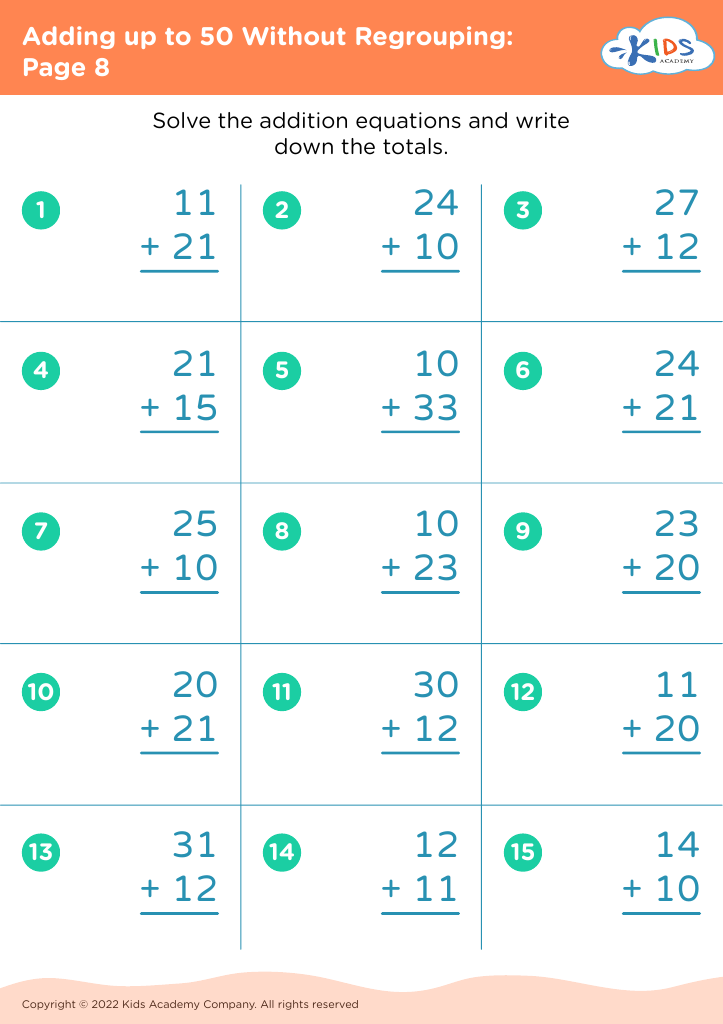
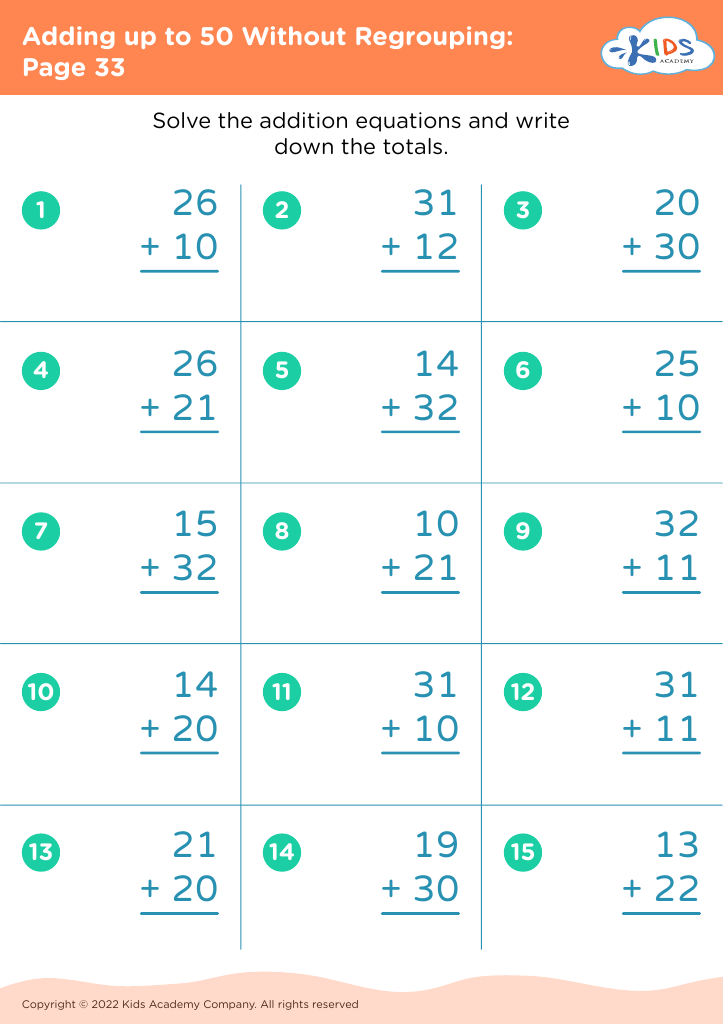
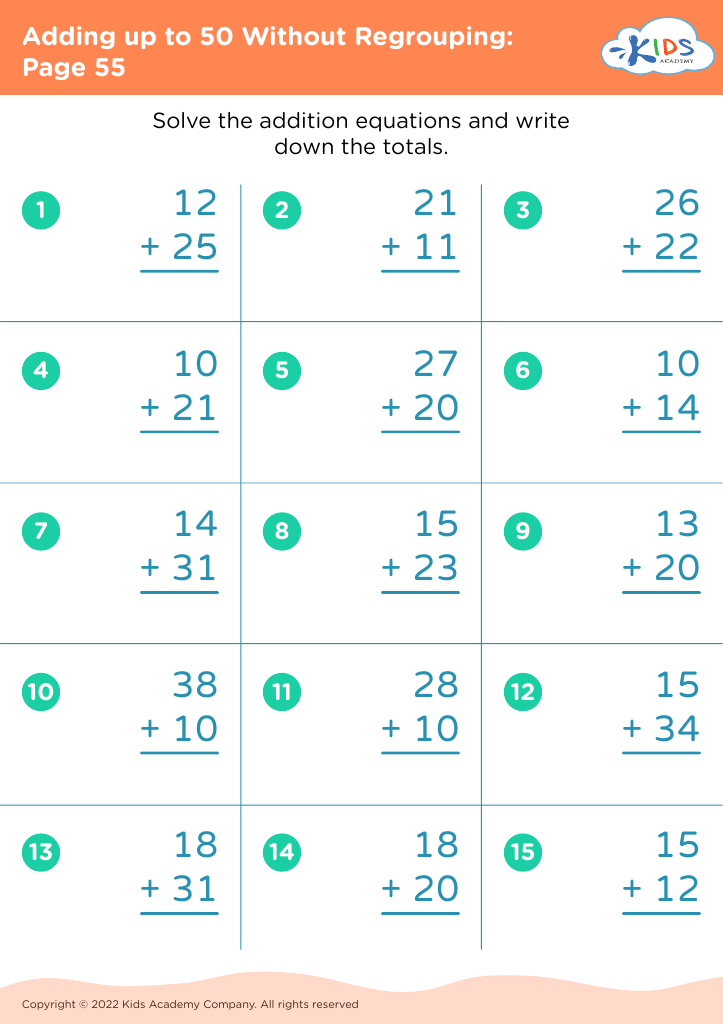


Ensuring young learners master addition practice, especially adding up to 50 without regrouping, is crucial for parents and teachers alike. For children ages 5-8, this foundational arithmetic skill bolsters mathematical confidence and sets the stage for more advanced concepts. Mastery in this area promotes number sense, helping kids understand the relationship between numbers and their values, which is essential for higher-level math operations such as subtraction, multiplication, and division.
By practicing addition within this range, children learn to recognize patterns and develop problem-solving strategies. It enhances their mental math capabilities, enabling quicker and more accurate calculations in everyday situations, from counting change to measuring ingredients. This competence builds a positive attitude toward math, reducing anxiety and making the subject feel more approachable.
For teachers, early proficiency in addition simplifies classroom management, as students who are comfortable with basic arithmetic are less likely to struggle with new material, allowing for smoother progression through the curriculum. Parents can support this learning at home, reinforcing what is taught in school and fostering a cohesive educational experience. Overall, solid addition skills by age 8 create a strong mathematical foundation, crucial for academic success and everyday life skills.