Comparing Fractions Adding up to 50 Without Regrouping Worksheets for Ages 5-8
7 filtered results
-
From - To
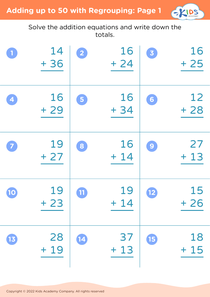
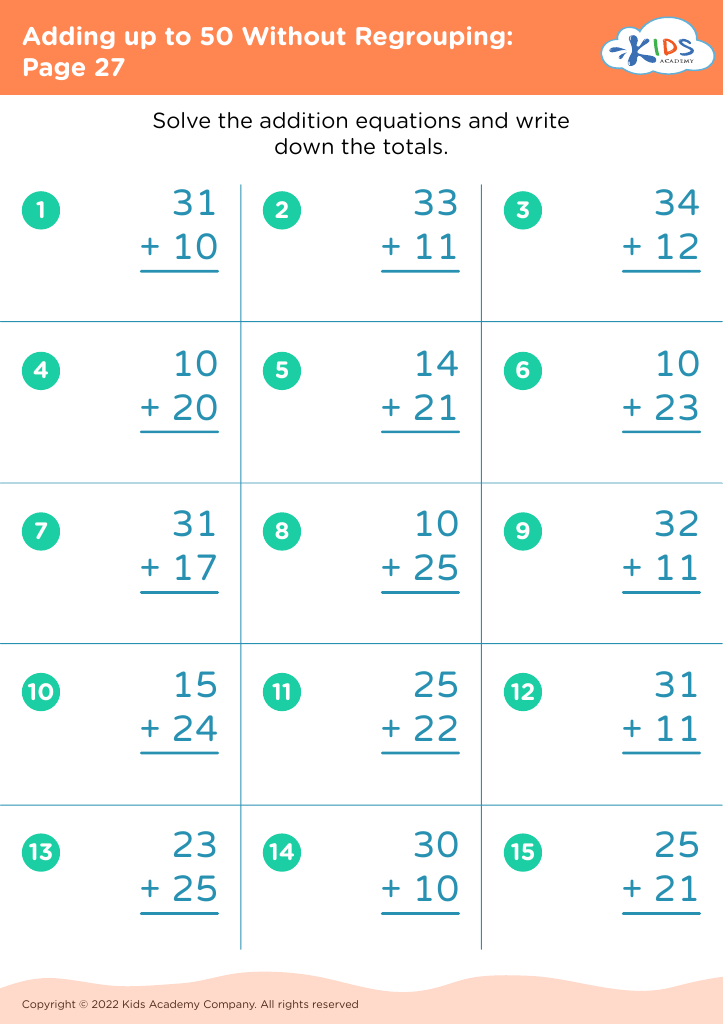
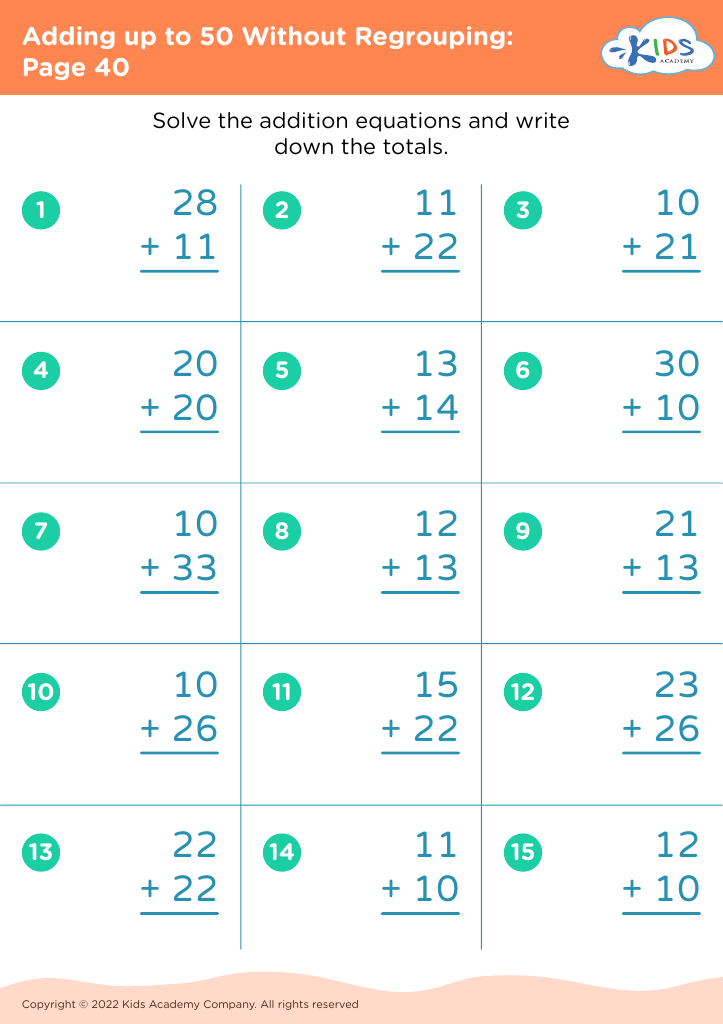
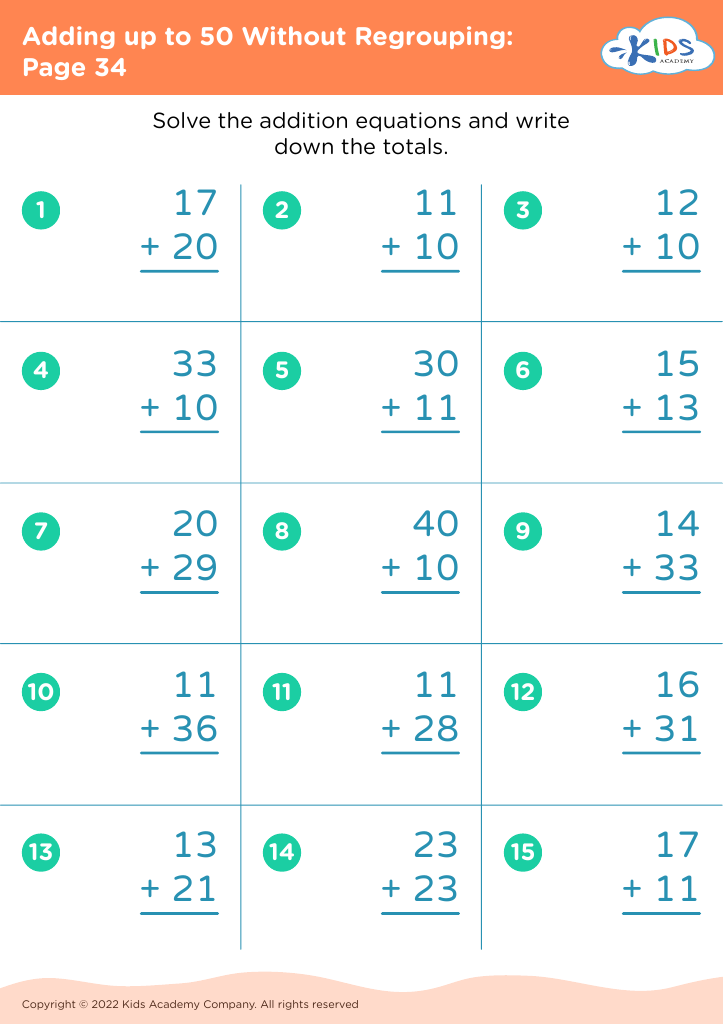
Looking for engaging worksheets tailored to children aged 5-8 to master comparing fractions that add up to 50 without regrouping? Our carefully crafted resources enhance young learners' understanding of fractions and addition through fun, visually appealing exercises. These worksheets are designed to build foundational math skills by providing plentiful practice with comparing simple fractions in a clear and accessible way. Perfect for classroom or home use, they make learning fractions enjoyable and straightforward. Help your child excel in math with our expertly designed, easy-to-follow fractions worksheets, ensuring a strong mathematical foundation from an early age!
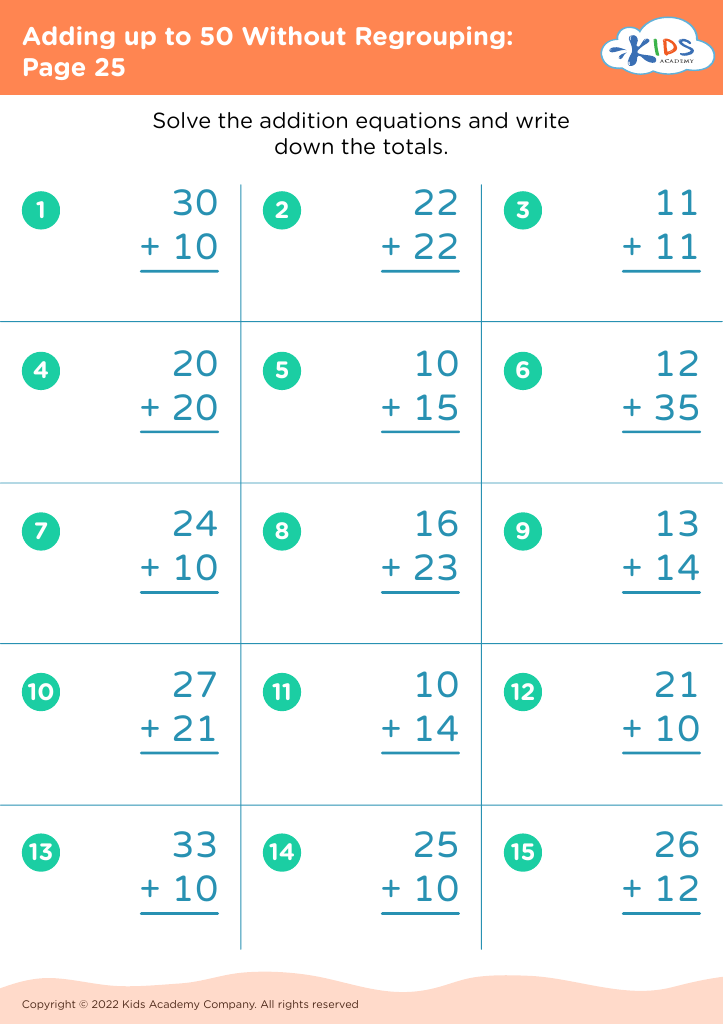
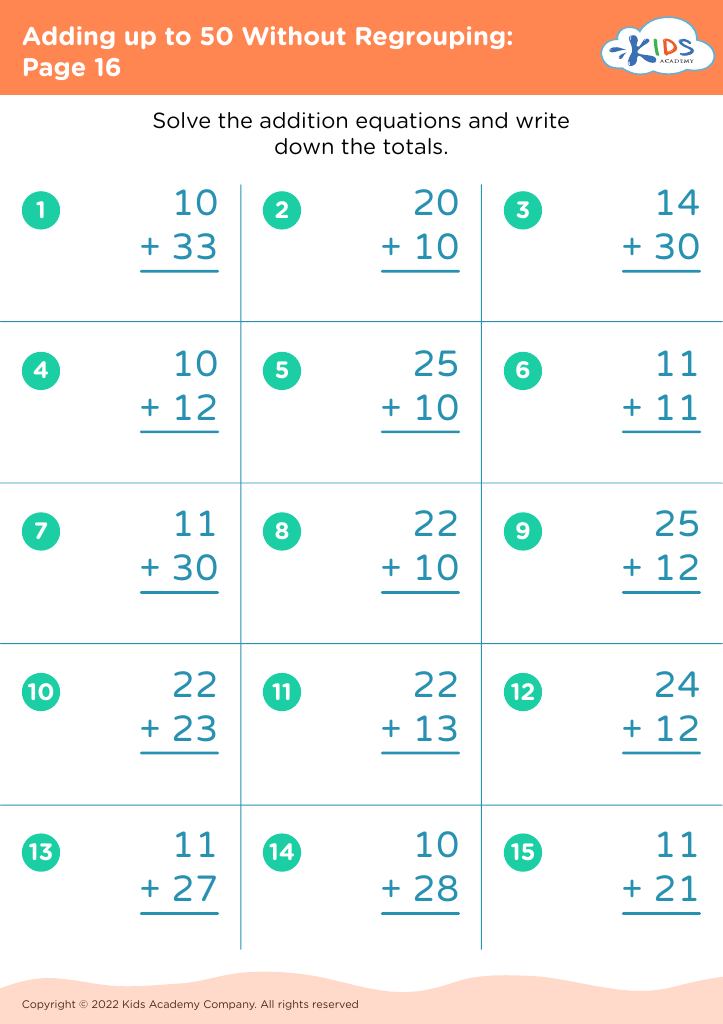
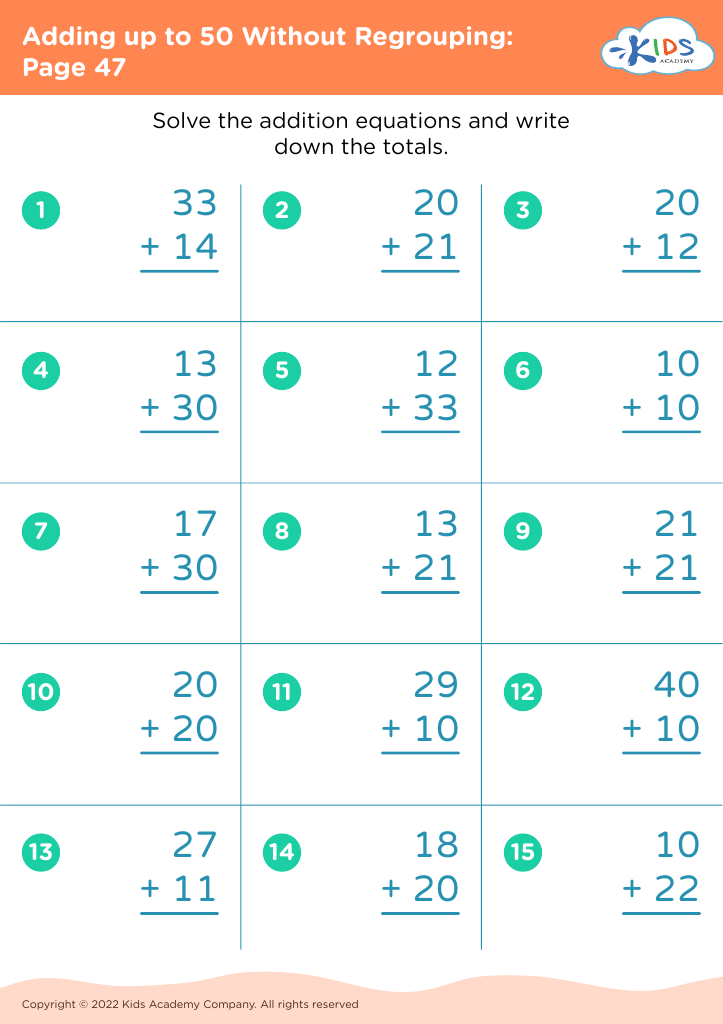
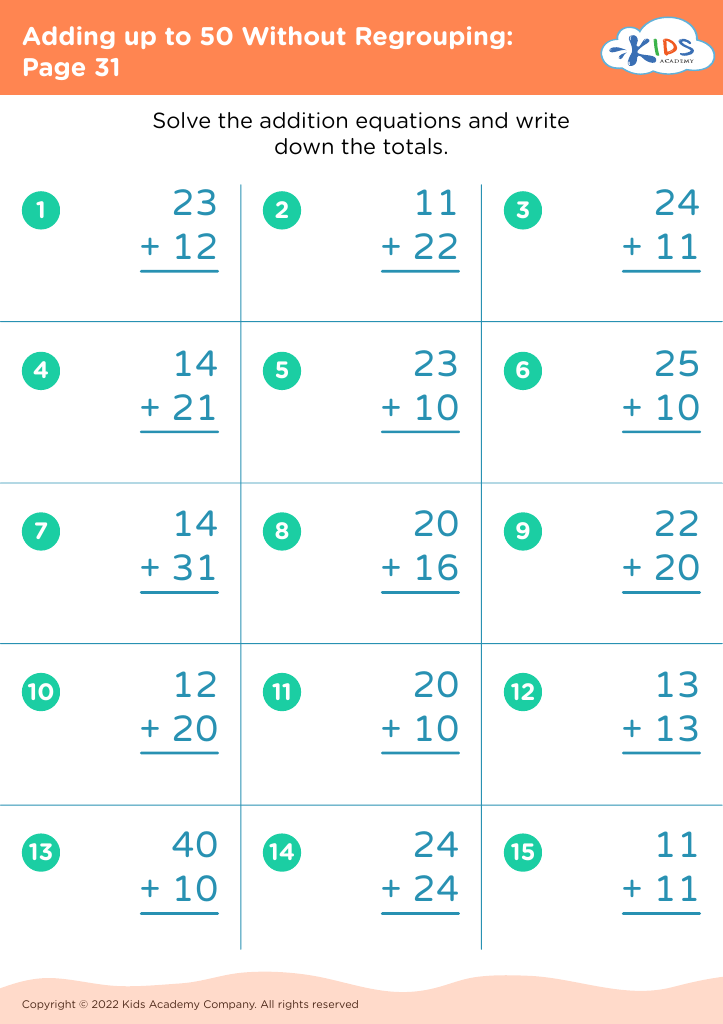


Comparing fractions and understanding addition concepts without regrouping are foundational skills that parents and teachers should prioritize for children aged 5-8. During these formative years, young learners are building their basic understanding of math, a critical part of their cognitive development and academic success.
First, comparing fractions helps children develop number sense, an essential aspect of early mathematics. It enables them to grasp how fractions represent parts of a whole, an important concept that underlies more complex math topics they will encounter later. By learning to compare fractions, children refine their ability to make judgments about relative sizes and quantities, which enhances their overall mathematical reasoning.
Secondly, mastering addition up to 50 without regrouping equips children with confidence in handling basic arithmetic operations. It builds their fluency with numbers and fosters computational skills without the added complexity of carrying over numbers, thus making the initial learning process smoother and less intimidating.
Prioritizing these skills also encourages a positive attitude towards mathematics by making early experiences both engaging and successful. Educators and parents should care about these foundational skills to lay a solid groundwork, enabling children not just to perform well in future math disciplines, but to approach learning as an enjoyable and rewarding journey.