Identifying shapes Adding up to 50 Without Regrouping Worksheets for Ages 5-8
6 filtered results
-
From - To
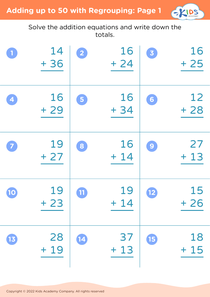
Enhance your child's math and geometry skills with our specially designed "Identifying Shapes Adding up to 50 Without Regrouping Worksheets for Ages 5-8." These engaging worksheets are perfect for young learners, helping them master basic addition while also introducing them to various geometric shapes. Ideal for ages 5-8, our worksheets focus on practicing addition without regrouping, ensuring a strong foundation in math. The inclusion of shape identification further enriches the learning experience, making math both fun and educational. Foster confidence and proficiency with our printable worksheets and watch your child succeed. Visit us today to download and start learning!
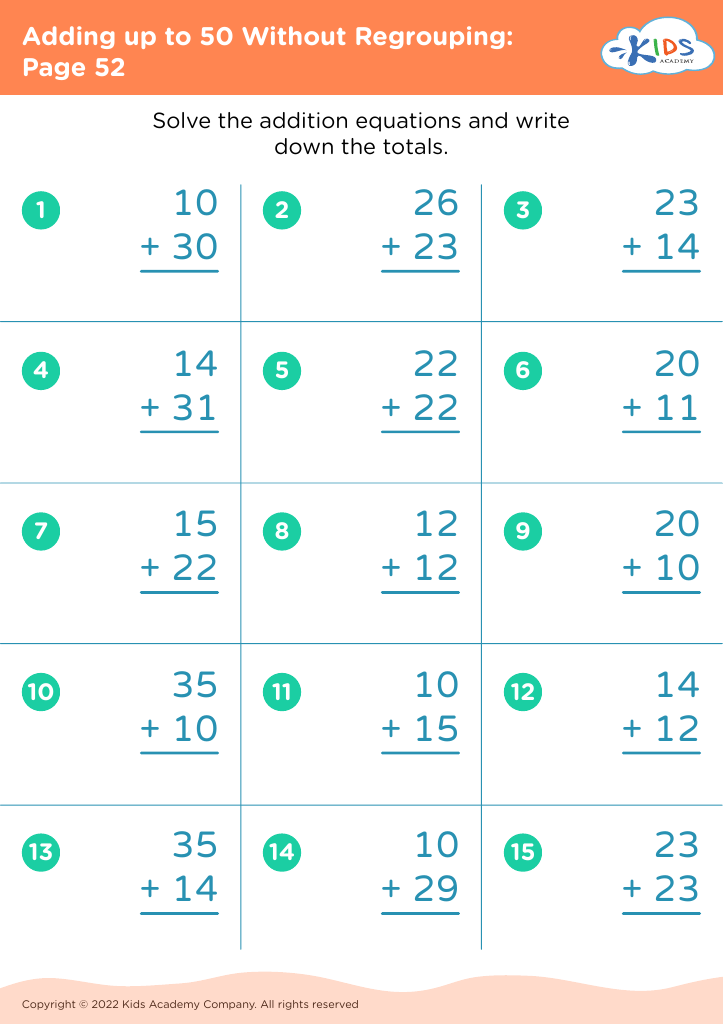
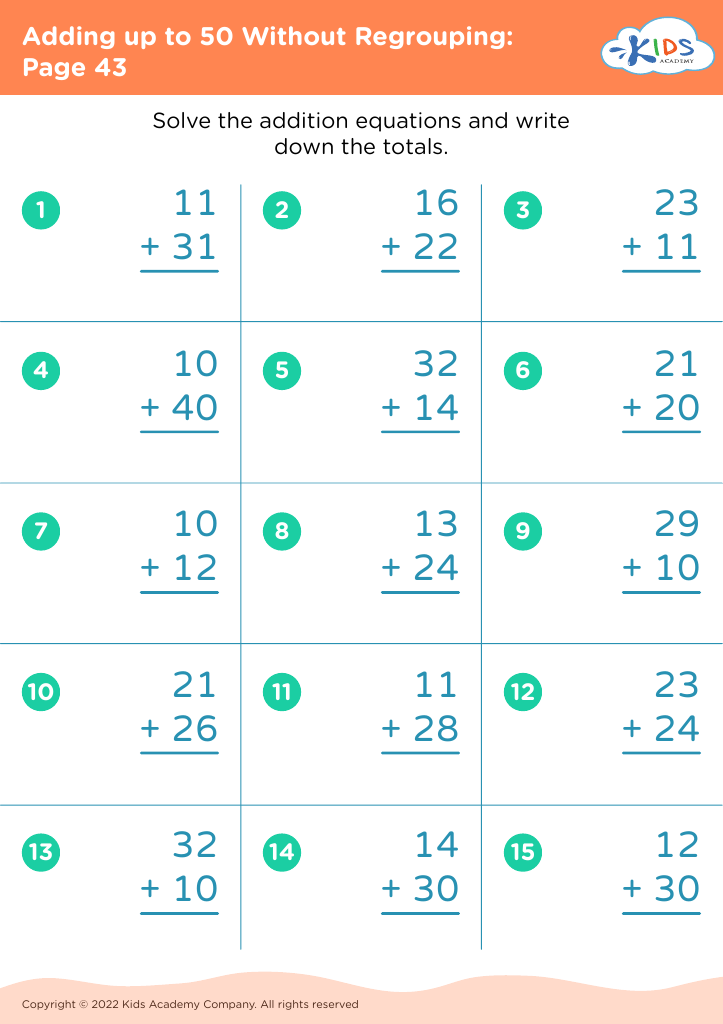
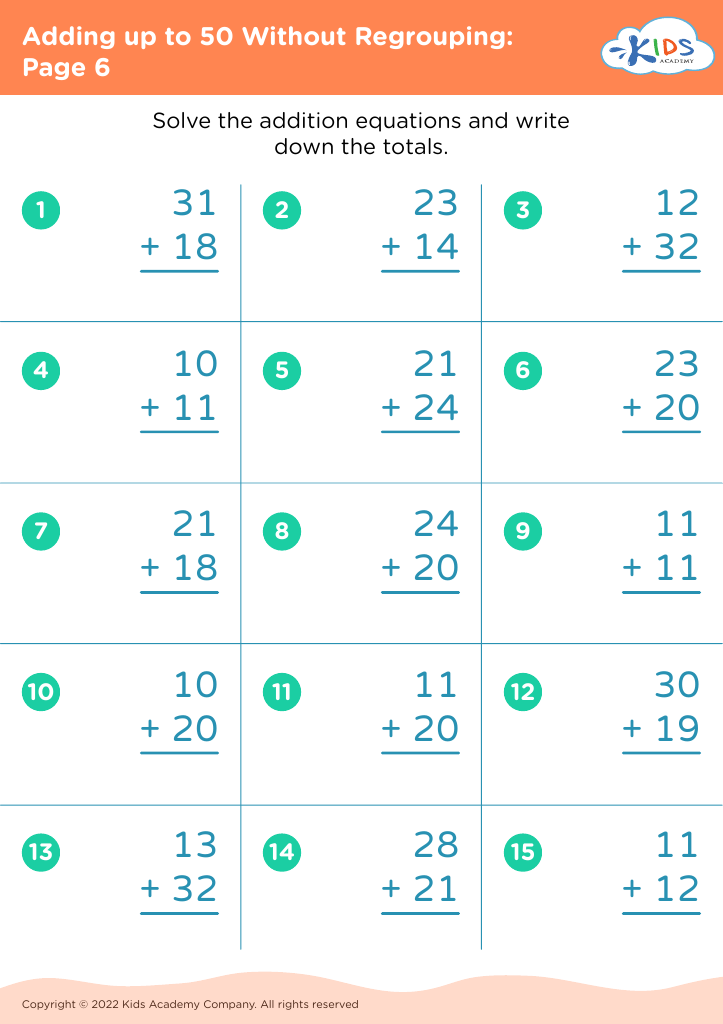
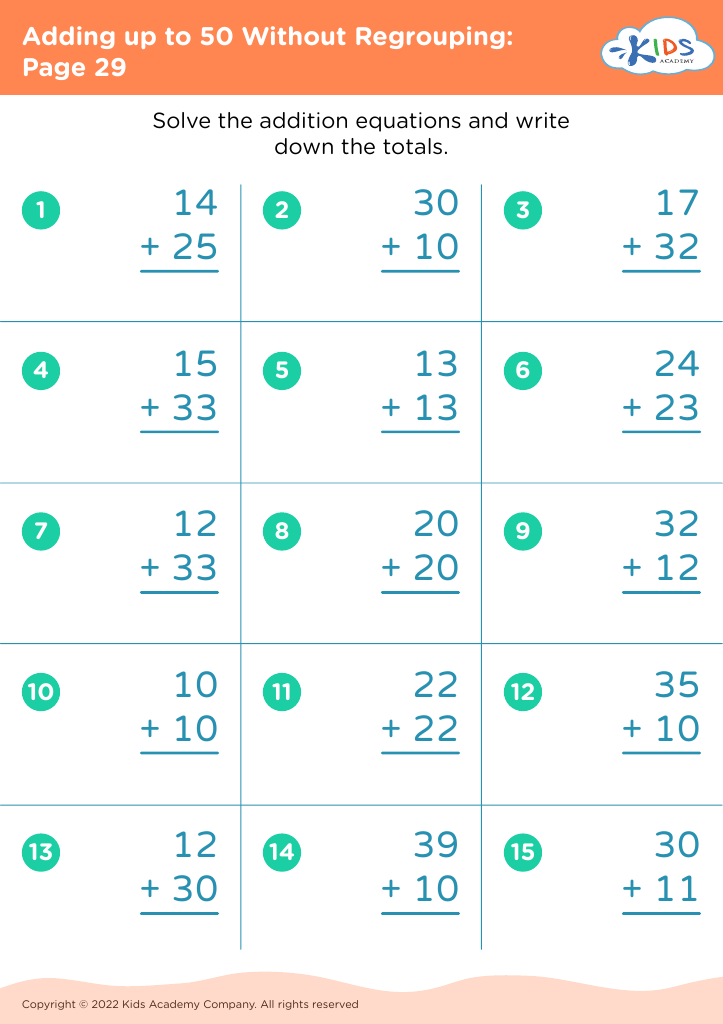
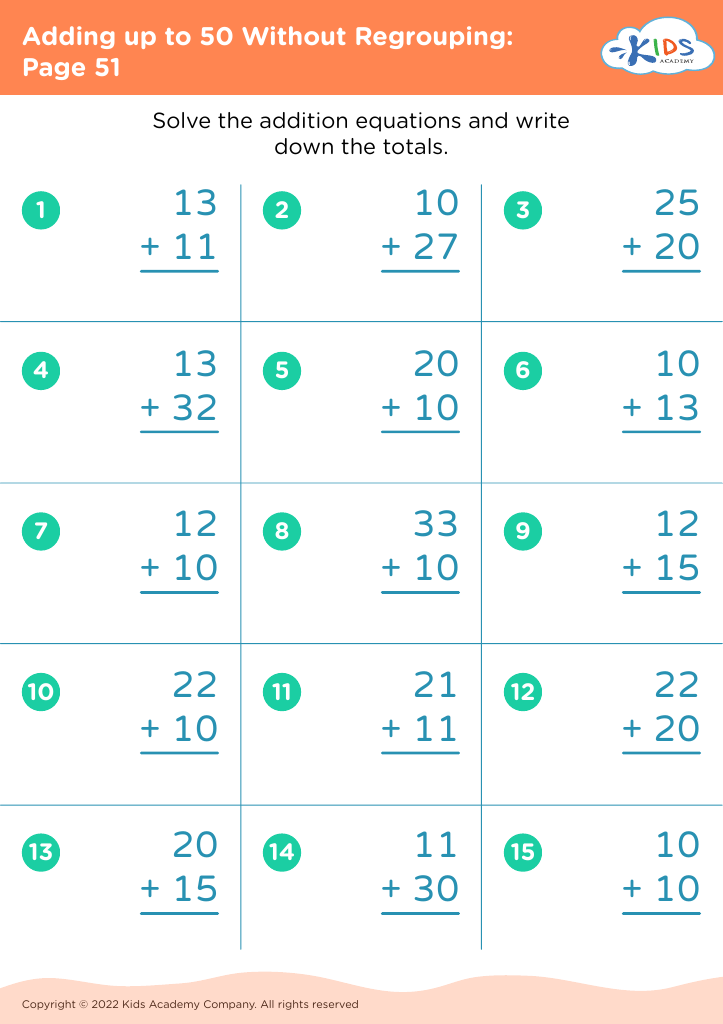
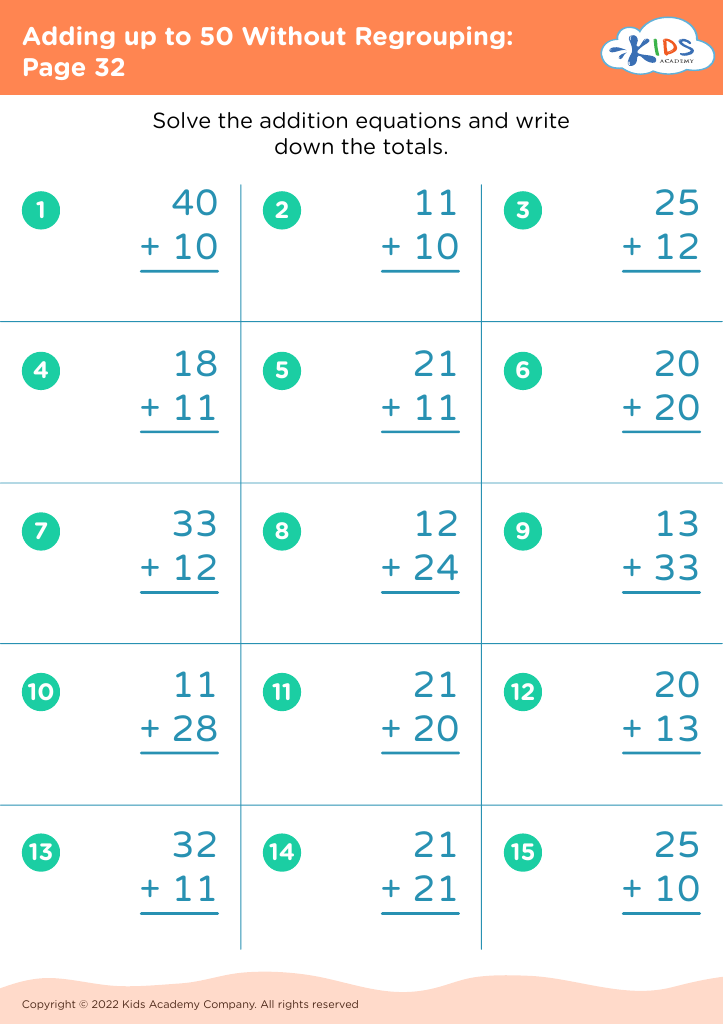


Identifying shapes and adding numbers up to 50 without regrouping are foundational skills critical for young learners aged 5-8, and both parents and teachers should prioritize these areas to ensure robust cognitive development.
Firstly, recognizing and distinguishing shapes (such as circles, squares, and triangles) is vital for early visual-spatial skills. These skills help children understand and organize the world around them, making sense of different objects, patterns, and structures. Mastery of shapes paves the way for more complex geometry concepts in later years and enhances their ability to follow written instructions and diagrams.
Secondly, adding numbers up to 50 without regrouping builds essential arithmetic skills. This practice lays down a solid numerical foundation that promotes confidence with numbers and mental math. By achieving fluency in straightforward addition, children develop accuracy and efficiency, reducing anxiety around more complex mathematical concepts they'll face in higher grades. Moreover, reinforcement through practical exercises home and school strengthens problem-solving and critical thinking skills, essential for academic progress across subjects.
Therefore, integrating these foundational skills into early education helps create well-rounded, confident young learners prepared for challenge-filled educational journeys. Parents and teachers play a crucial role in nurturing these skills, ensuring children enjoy a smooth and successful transition into more advanced studies.