Reading comprehension Adding up to 50 Without Regrouping Worksheets for Ages 5-8
3 filtered results
-
From - To
Explore our engaging "Reading Comprehension Adding Up to 50 Without Regrouping Worksheets," designed for children ages 5-8. These worksheets blend essential math skills and reading comprehension, making learning fun and effective. Young learners will enhance their understanding of addition without regrouping while developing their reading and comprehension abilities. Each activity presents age-appropriate problems paired with short passages, encouraging kids to practice their reading skills in a math context. Perfect for classroom activities or at-home learning, our worksheets support foundational math concepts and promote critical thinking. Start your child's educational journey today with our colorful and interactive worksheets!
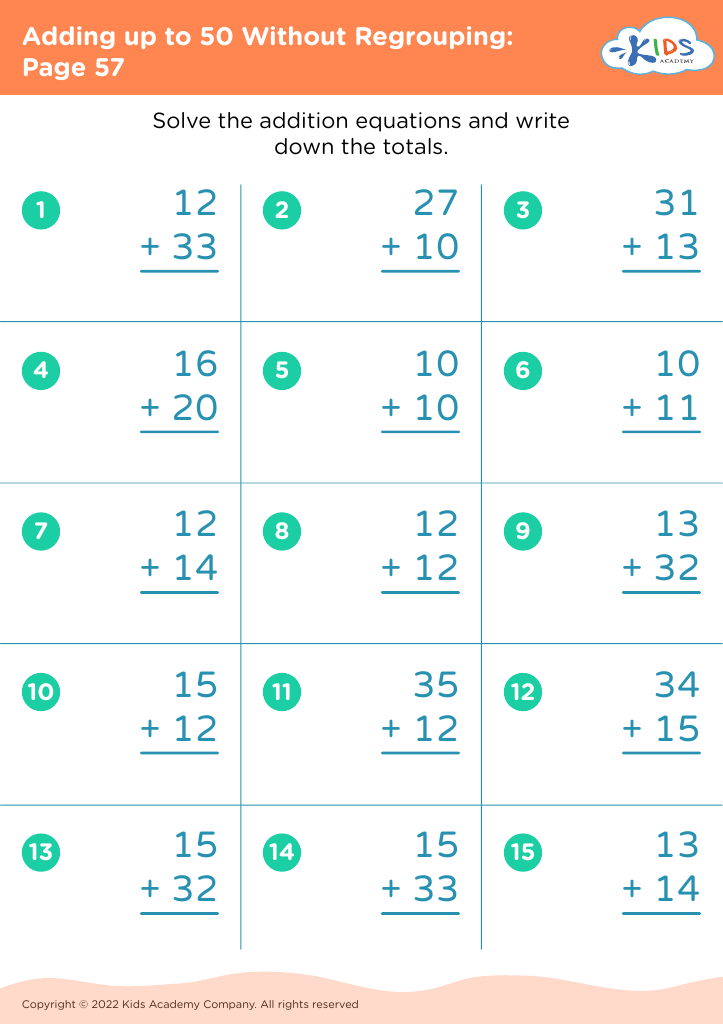
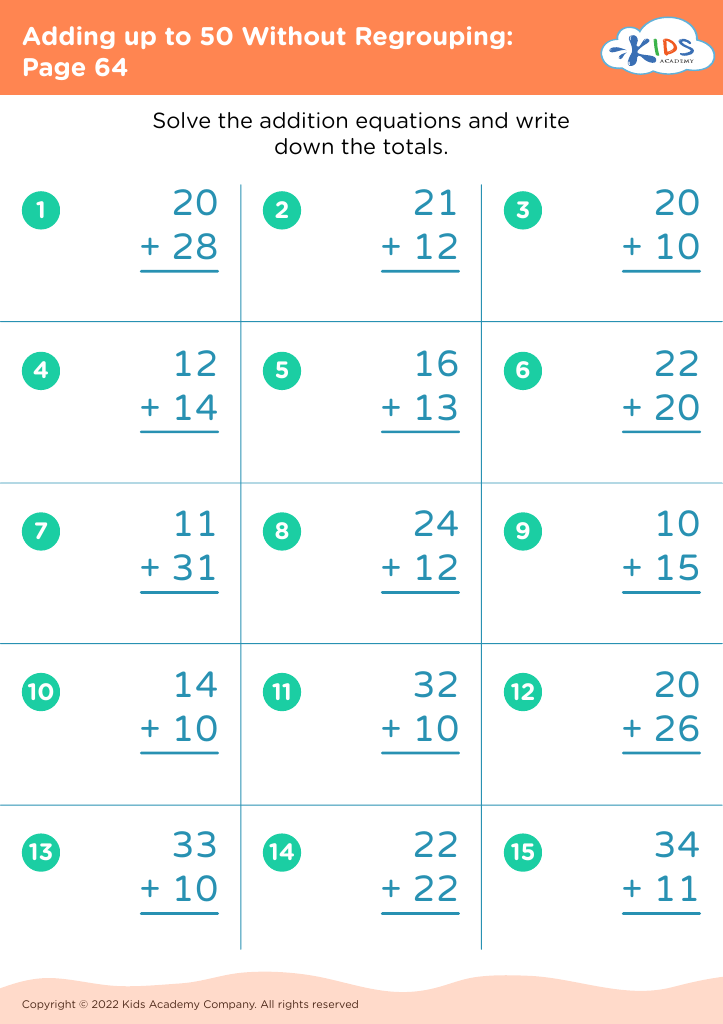
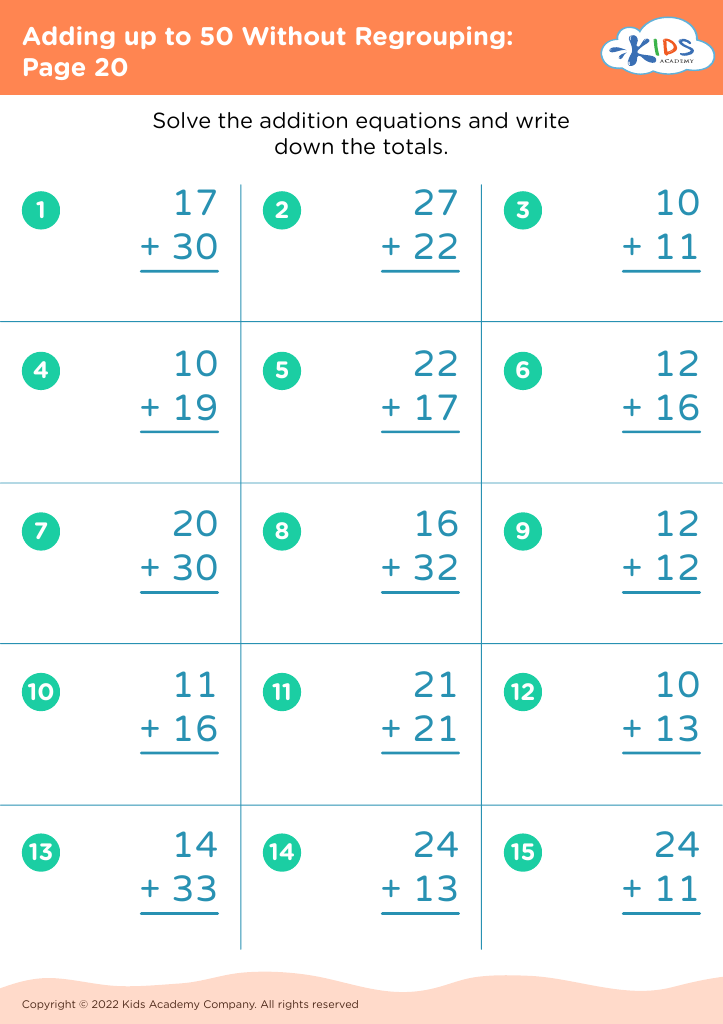


Reading comprehension and mathematical skills such as adding up to 50 without regrouping are crucial for children aged 5-8, and here's why parents and teachers should care.
Firstly, reading comprehension forms the foundation for a child's overall learning journey. When children understand what they read, it enhances their critical thinking and problem-solving skills, which are essential across all subjects. For young learners, strong reading skills increase their engagement and curiosity about the world, fostering a love for reading that can last a lifetime.
On the other hand, the ability to add up to 50 without regrouping is a key arithmetic skill that lays the groundwork for more complex mathematics. It helps children develop number sense and increases their confidence in handling numbers. Mastering this skill at an early age can prevent difficulties later on, as it is fundamental in everyday situations like budgeting or measuring.
When both reading comprehension and basic addition skills are emphasized, it creates a well-rounded educational experience, allowing children to connect dots across different subjects. Parents and teachers should promote both skills to equip children with the tools they need for academic success and life challenges ahead.