Recognizing Patterns Adding up to 50 Without Regrouping Worksheets for Ages 5-8
4 filtered results
-
From - To
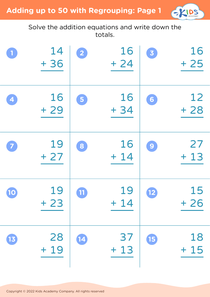
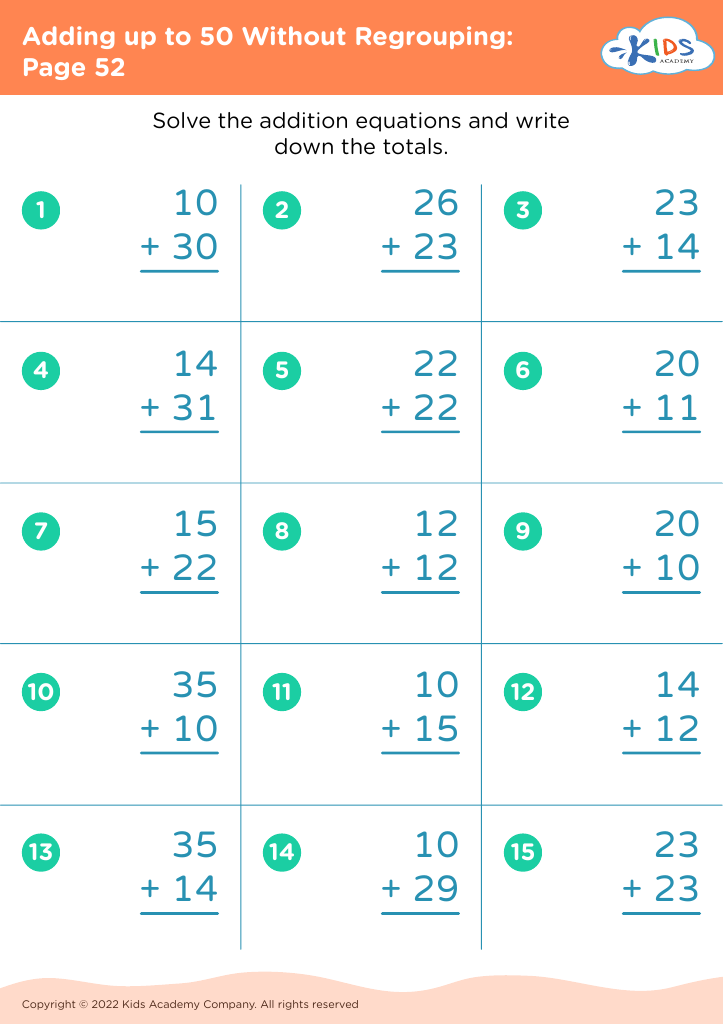
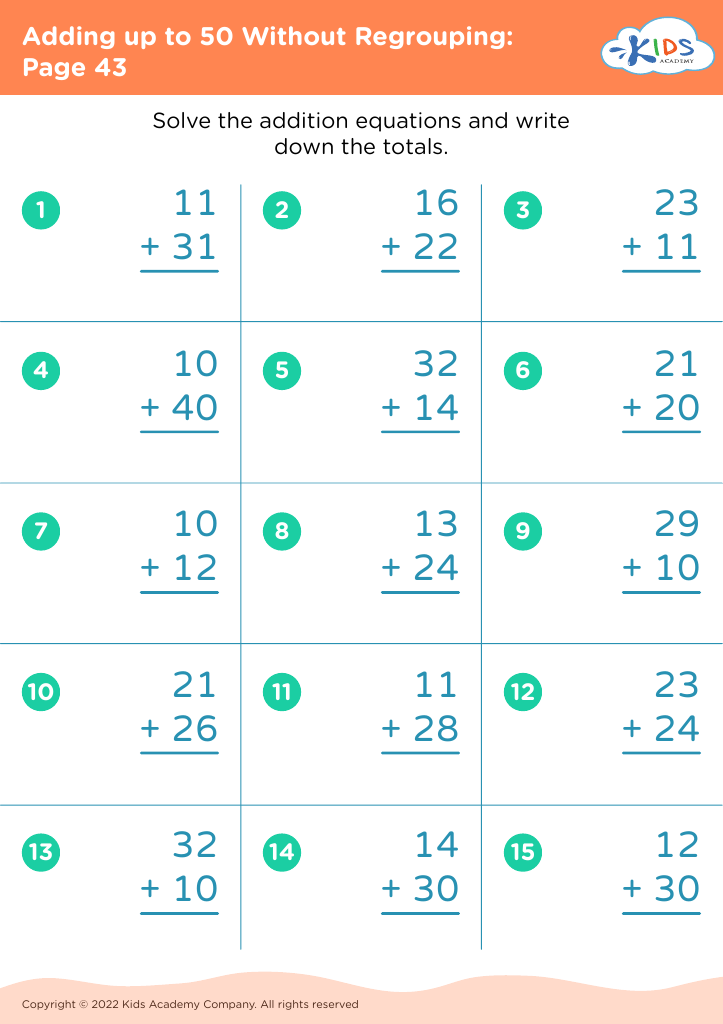
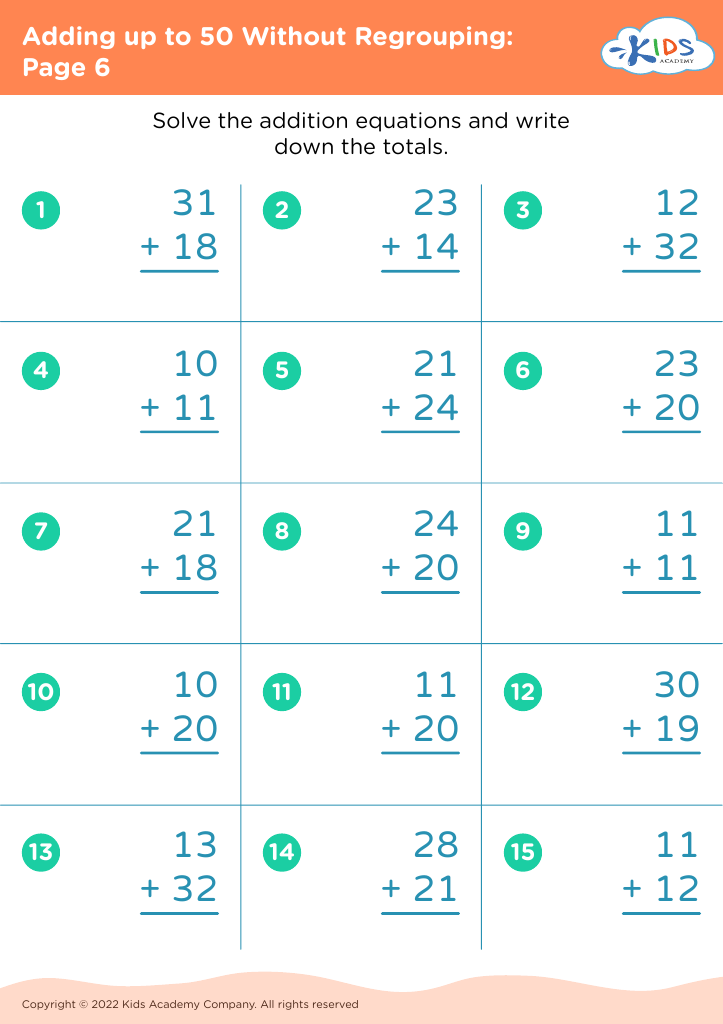
Discover our engaging “Recognizing Patterns Adding Up to 50 Without Regrouping” worksheets tailored for children ages 5-8. These worksheets support young learners in developing essential math skills through pattern recognition while ensuring they can add numbers without regrouping. By exploring colorful exercises and fun activities, students enhance their understanding of basic addition by identifying repetitive patterns, making math enjoyable. Ideal for classroom use or at-home practice, our resources provide a solid foundation in mathematics, fostering confidence and enthusiasm in young learners. Begin your child's math journey today and watch them excel in adding up to 50 effortlessly with our structured worksheets!
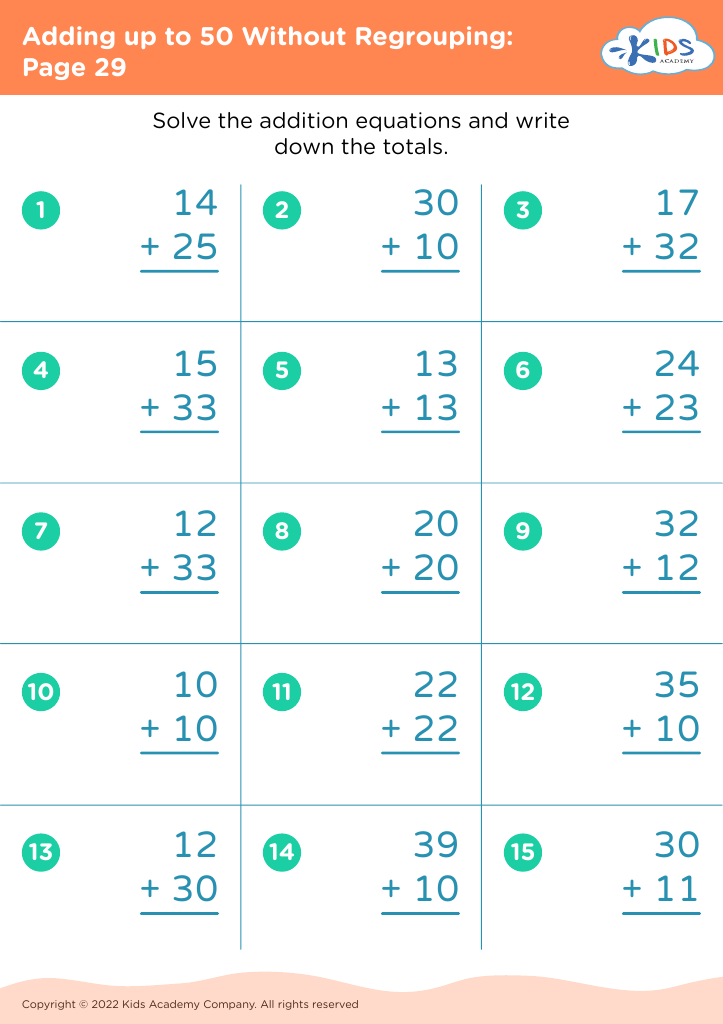


Recognizing patterns when adding up to 50 without regrouping is crucial for children ages 5-8, as it lays the foundation for their mathematical development and overall cognitive skills. At this stage, children are naturally curious and eager to explore the world of numbers. Understanding patterns helps them see relationships between numbers, enhancing their ability to solve problems and perform calculations with confidence.
When teachers and parents prioritize this skill, they facilitate deeper conceptual understanding rather than rote memorization. For instance, learners can identify patterns such as pairs of numbers that add up to 10 (like 1+9, 2+8), and extend this concept to finding combinations that total 50, leading to insights about number relationships that are crucial in later math topics like addition, subtraction, multiplication, and division.
Moreover, recognizing these patterns nurtures critical thinking and logical reasoning skills, which are applicable across subjects. Engaging with patterns optimally prepares children for more complex mathematical concepts in the future. Teachers and parents play a vital role in making learning interactive and enjoyable, thus fostering a positive attitude toward math that can last a lifetime. Ultimately, this foundational skill not only supports academic growth but also builds confidence and a love for learning.