Understanding patterns Adding up to 50 Without Regrouping Worksheets for Ages 5-8
5 filtered results
-
From - To
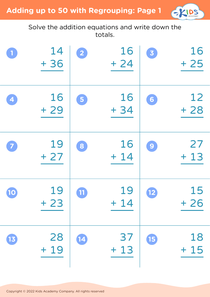
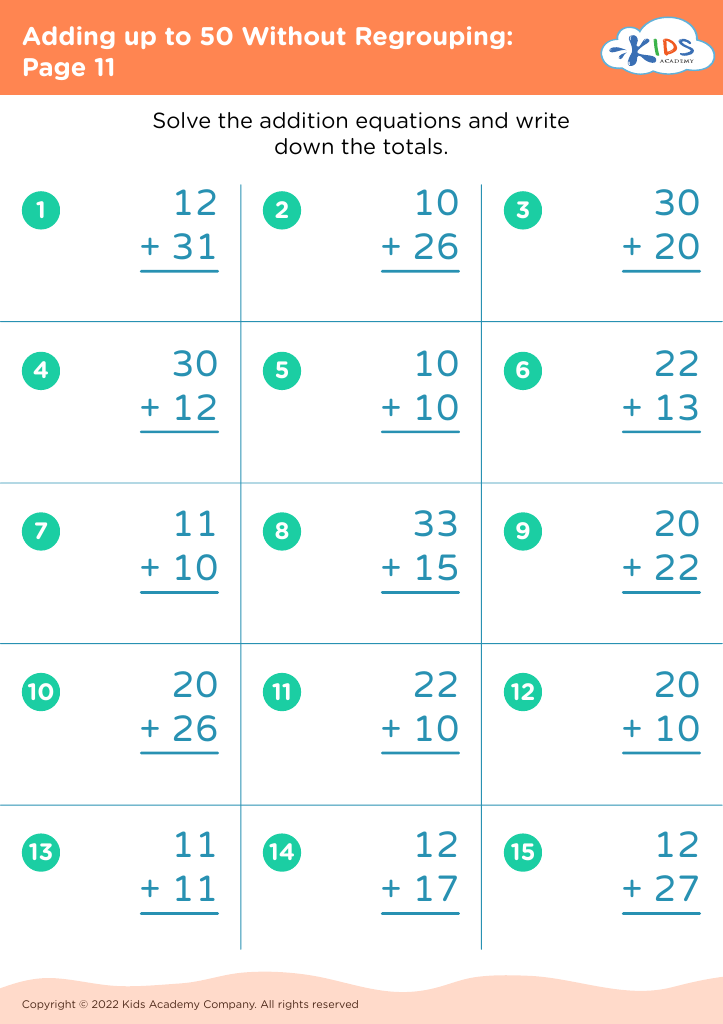
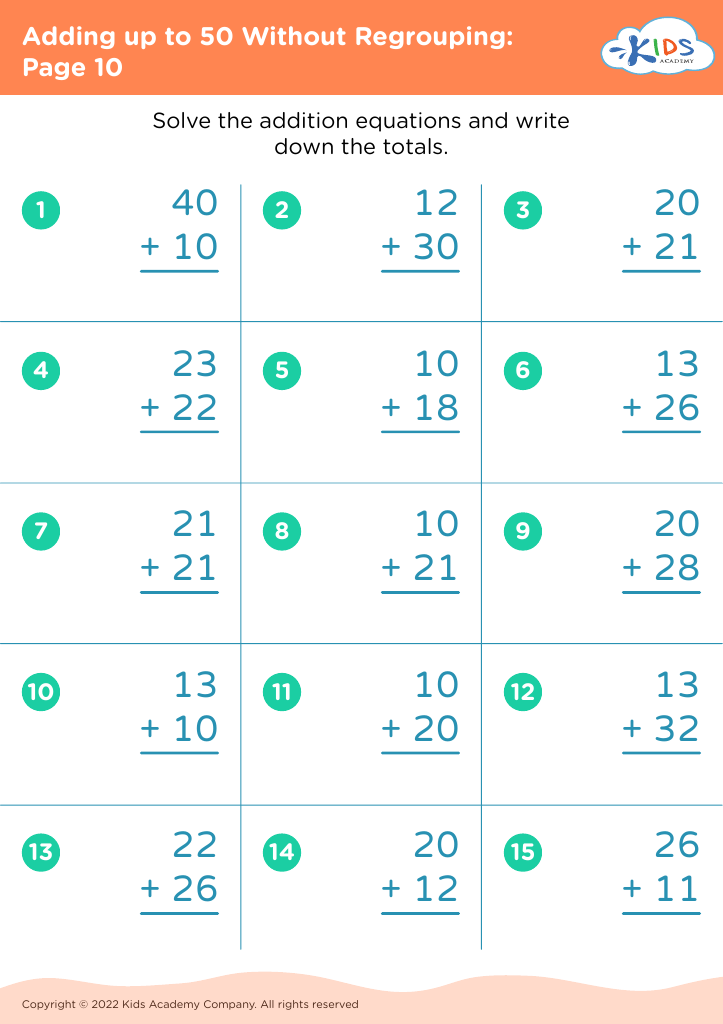
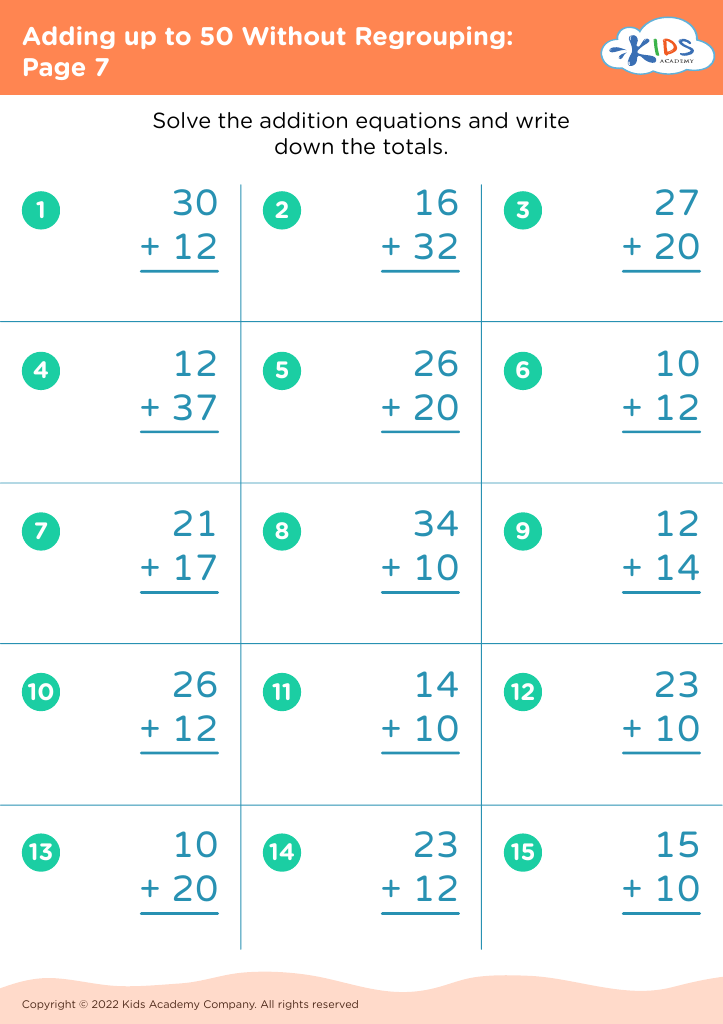
Explore our "Understanding Patterns Adding Up to 50 Without Regrouping" worksheets, designed for children aged 5-8. These engaging resources help young learners grasp foundational math concepts by identifying and mastering patterns in addition. With a focus on adding numbers up to 50 without the need for regrouping, these worksheets foster critical thinking and strengthen number sense. Kids will enjoy colorful illustrations and age-appropriate exercises that make learning fun and interactive. Perfect for teachers and parents, these printable worksheets encourage practice, build confidence, and reinforce skills essential for math success. Discover the joy of patterns in math with Kids Academy today!
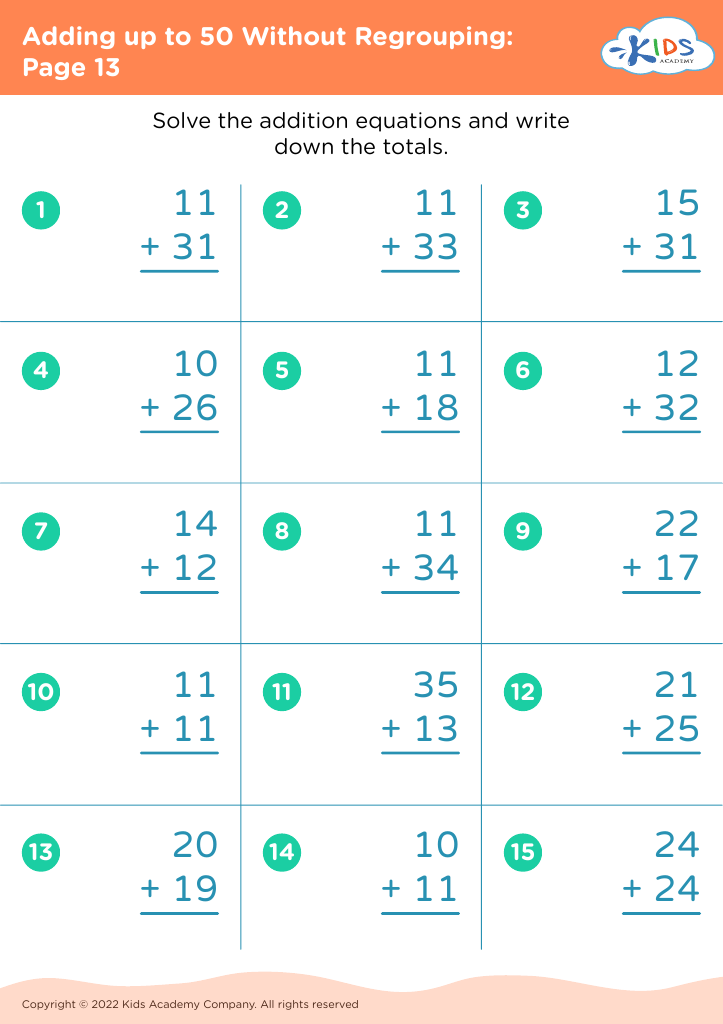
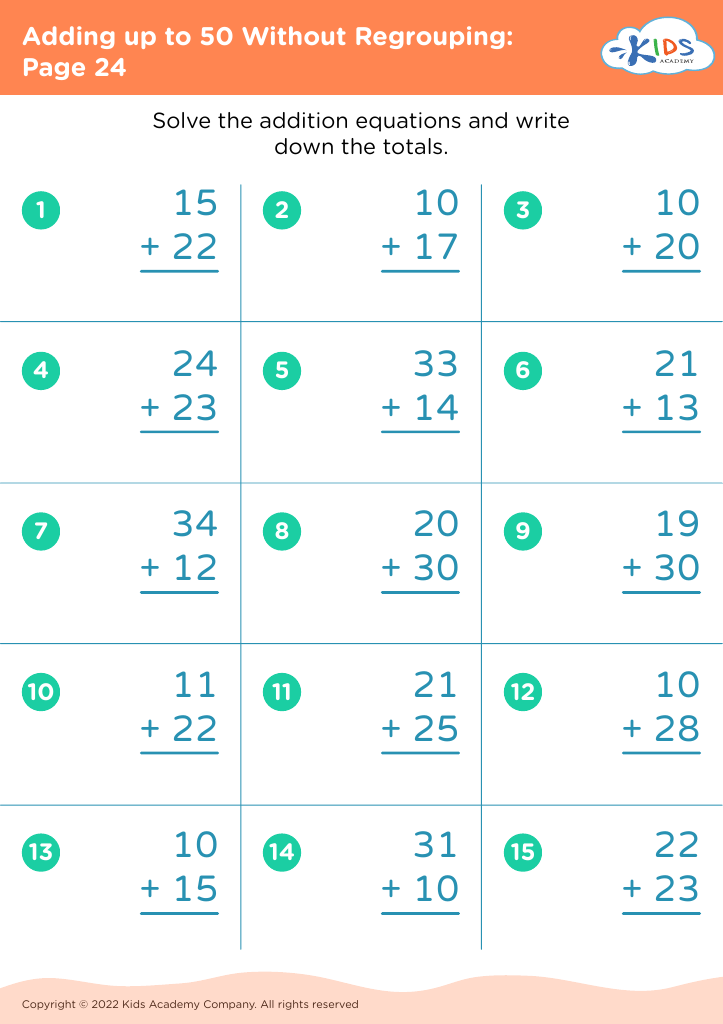


Understanding patterns in adding up to 50 without regrouping is crucial for ages 5-8, as it lays the foundational skills necessary for more complex mathematical thinking. This age range is a developmental sweet spot where children are beginning to explore numbers and operations. When parents and teachers emphasize pattern recognition in addition, children can grasp concepts such as number relationships and the commutative property, making addition more intuitive.
By identifying patterns, children learn to predict outcomes which strengthens their problem-solving skills. For example, recognizing that 20 + 30 equals 50 can lead to deeper understanding, as children learn to model similar equations. This skill also fosters confidence, allowing young learners to tackle mathematical problems independently.
Moreover, understanding these patterns without regrouping helps children to focus on numbers in a manageable way, reducing anxiety associated with more complex math. As they refine their ability to add within 50, they will be better prepared for future math challenges that require regrouping or working with larger numbers. In summary, fostering pattern recognition in early math education supports cognitive development and builds a strong foundation for lifelong mathematical skills.