Compare fractions Addition & Subtraction Worksheets for Ages 5-8
6 filtered results
-
From - To
Introducing our Compare Fractions Addition & Subtraction Worksheets for ages 5-8, these worksheets are designed to make learning fractions fun and engaging. Tailored to young learners, each worksheet offers exercises that help children connect the concepts of addition and subtraction with fractions, building a solid mathematical foundation. Activities include visual aids, real-world problems, and colorful graphics, helping kids to easily grasp comparing, adding, and subtracting fractions. Parents and educators will appreciate the clear instructions and the progression in difficulty, ensuring that students not only enjoy the lessons but also master essential skills for future math success.
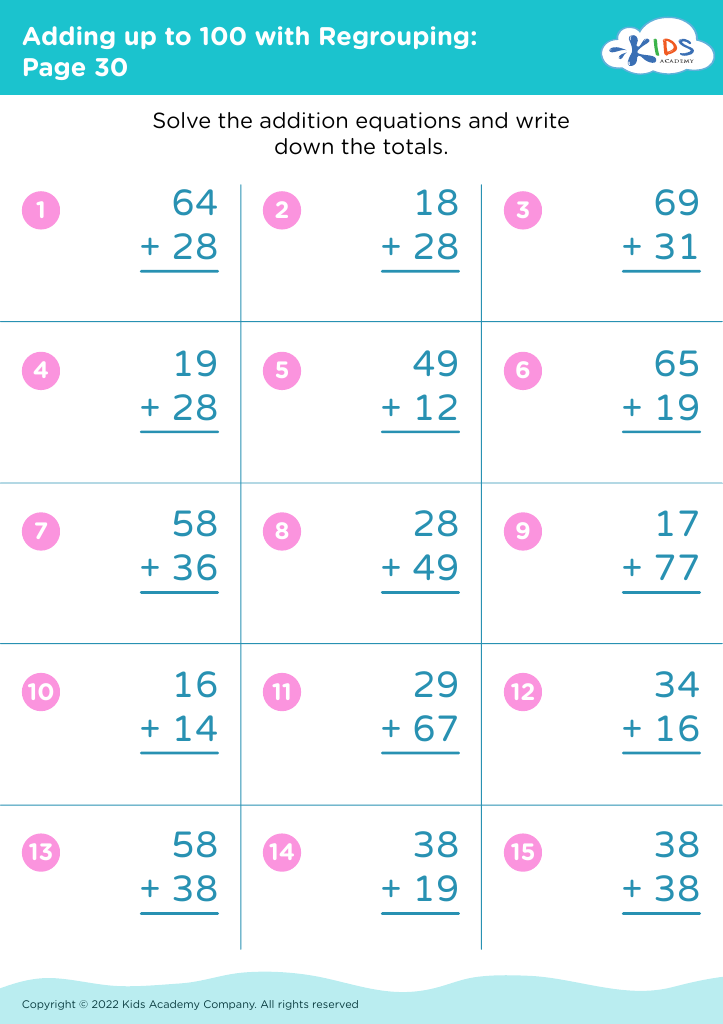
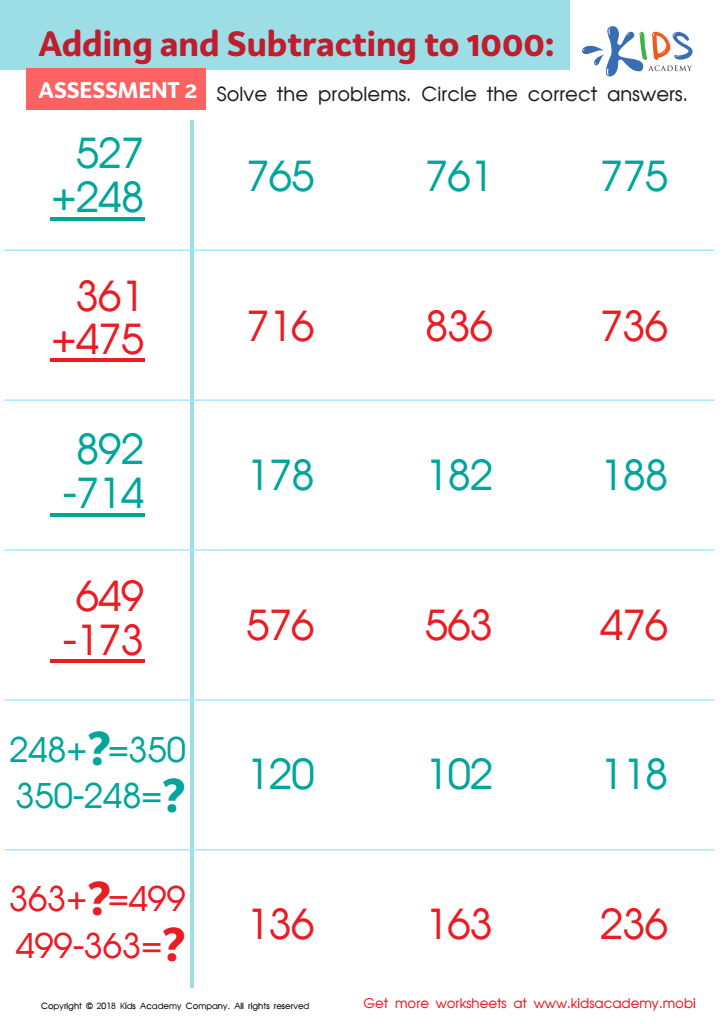
Adding and Subtracting to 1 Worksheet: Assessment 2
 Assign to My Students
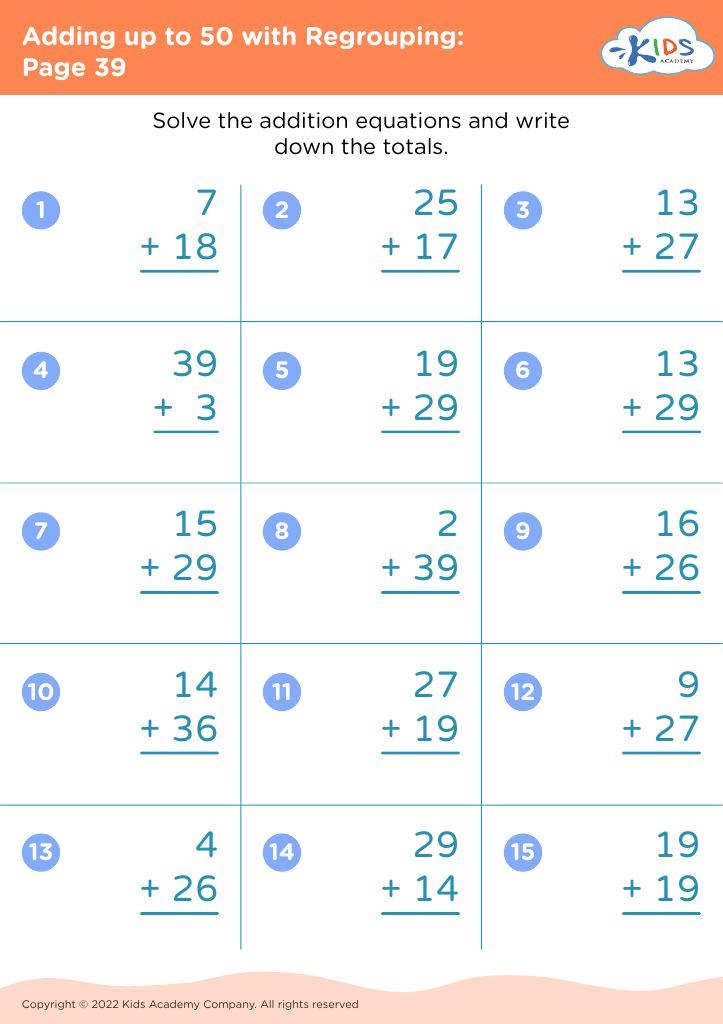
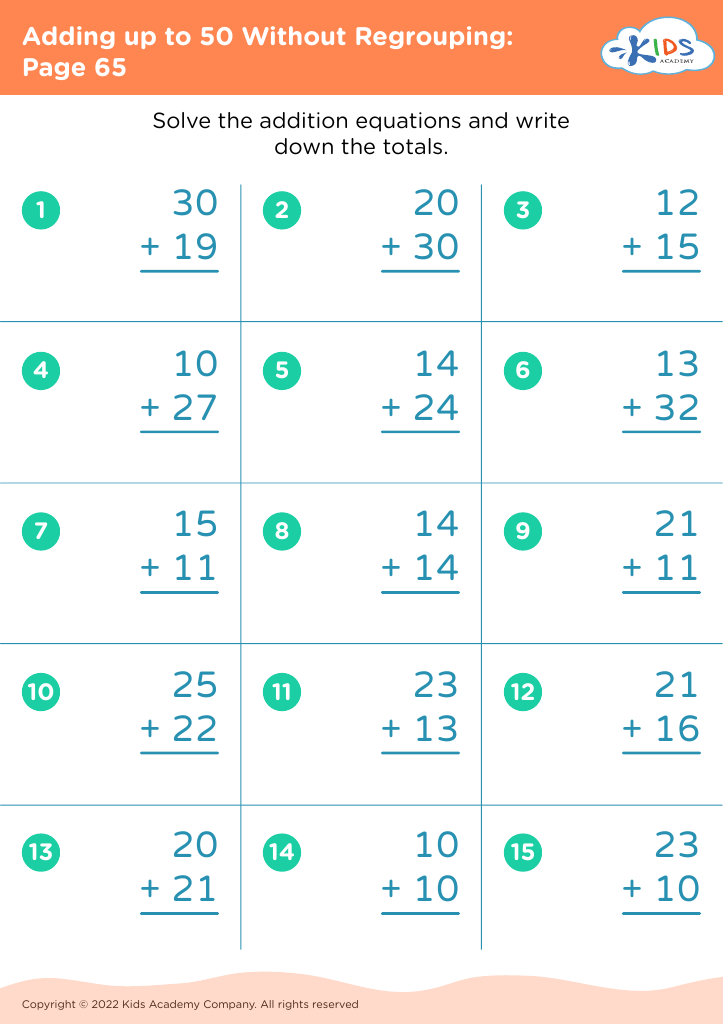








Understanding compare fractions, addition, and subtraction at an early age is crucial for the foundational math skills of children aged 5-8. Establishing a solid base in these concepts equips young learners with essential tools for future mathematical problem-solving and enhances their logical reasoning ability.
First, comparing fractions helps children understand the concept of parts to whole relationships, which is fundamental not only in mathematics but in real-world situations as well. Imagine slicing a pizza and needing to determine which portion is larger. Comprehending fractions allows kids to make these comparisons intuitively.
Second, the skills of addition and subtraction are cornerstones for more advanced mathematical operations. Mastering these basics ensures that young learners will be better prepared for challenges involving multiplication, division, and even algebra. Furthermore, understanding these concepts helps in practical life scenarios, such as managing allowances or dividing snacks equally among friends.
Moreover, engaging young children in activities related to fractions and basic operations fosters cognitive development, enhances critical thinking skills, and promotes persistence and attention to detail. Practice in these areas also boosts their confidence, making the subject seem approachable rather than daunting.
Therefore, by caring about teaching compare fractions, addition, and subtraction, parents and teachers foster a competence in math that benefits students throughout their entire educational journey.








