Numerical reasoning Addition & Subtraction Worksheets for Ages 5-8
3 filtered results
-
From - To
Unlock your child's mathematical potential with our engaging Numerical Reasoning Addition & Subtraction Worksheets designed for ages 5-8. These interactive resources help children develop essential problem-solving skills while mastering addition and subtraction fundamentals. Each worksheet is crafted to provide a fun learning experience that reinforces numerical reasoning, allowing kids to tackle various math challenges confidently. Our colorful illustrations and varied exercises cater to different learning styles, ensuring that every child finds joy in math. Perfect for at-home practice or classroom use, these worksheets will make learning math an entertaining journey. Sign up today and watch your child's skills soar!
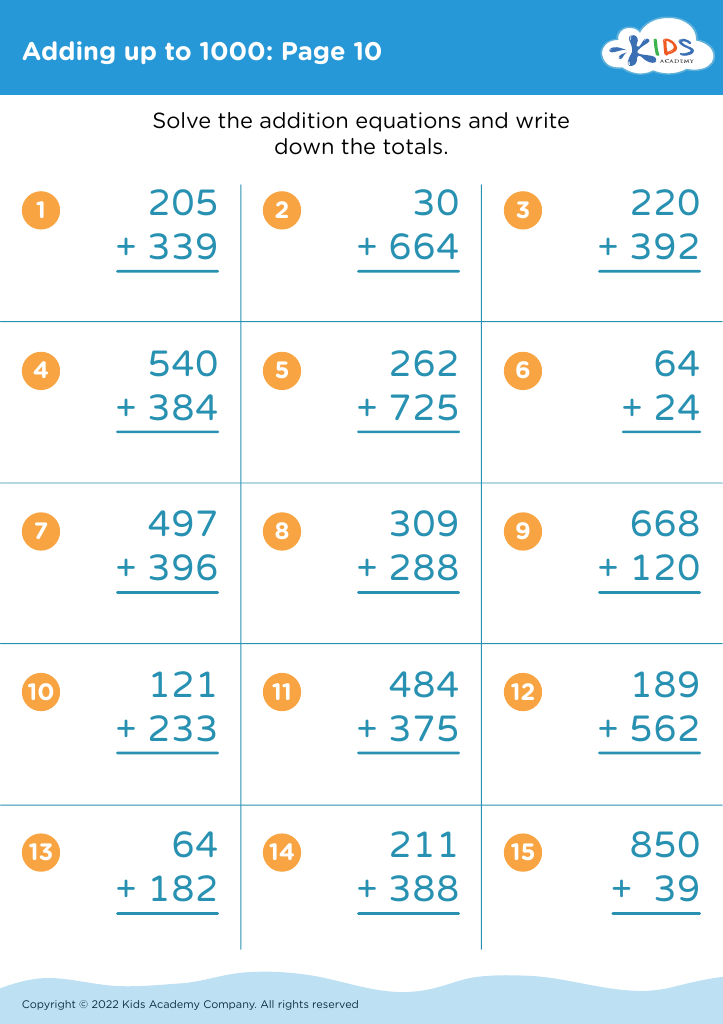
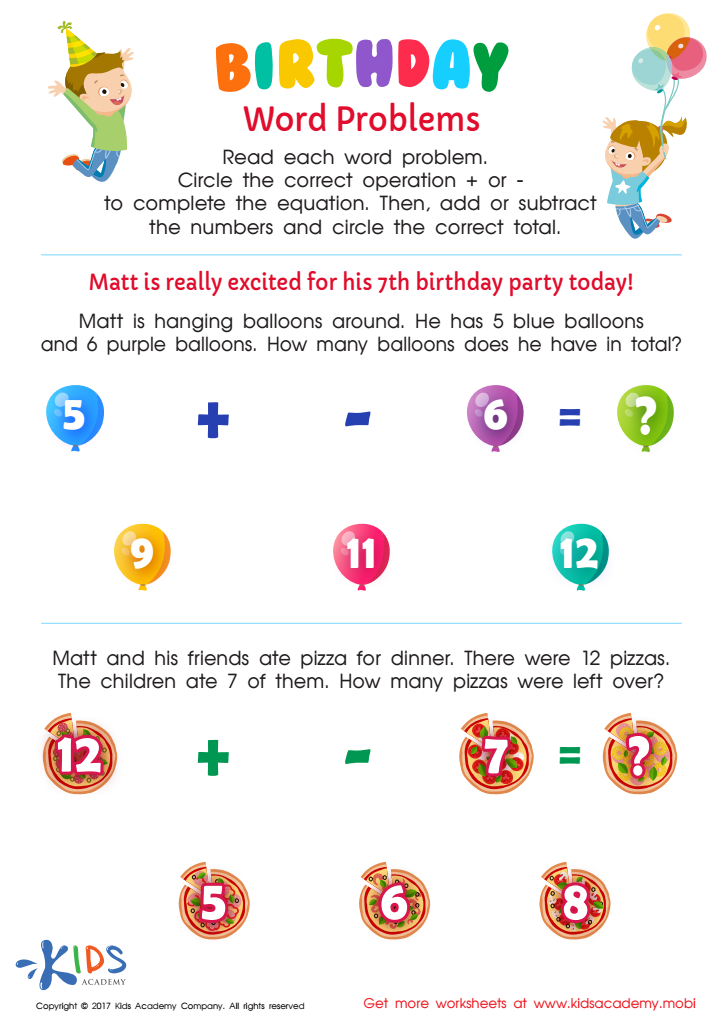
Birthday Word Problems Substraction Worksheet
 Assign to My Students
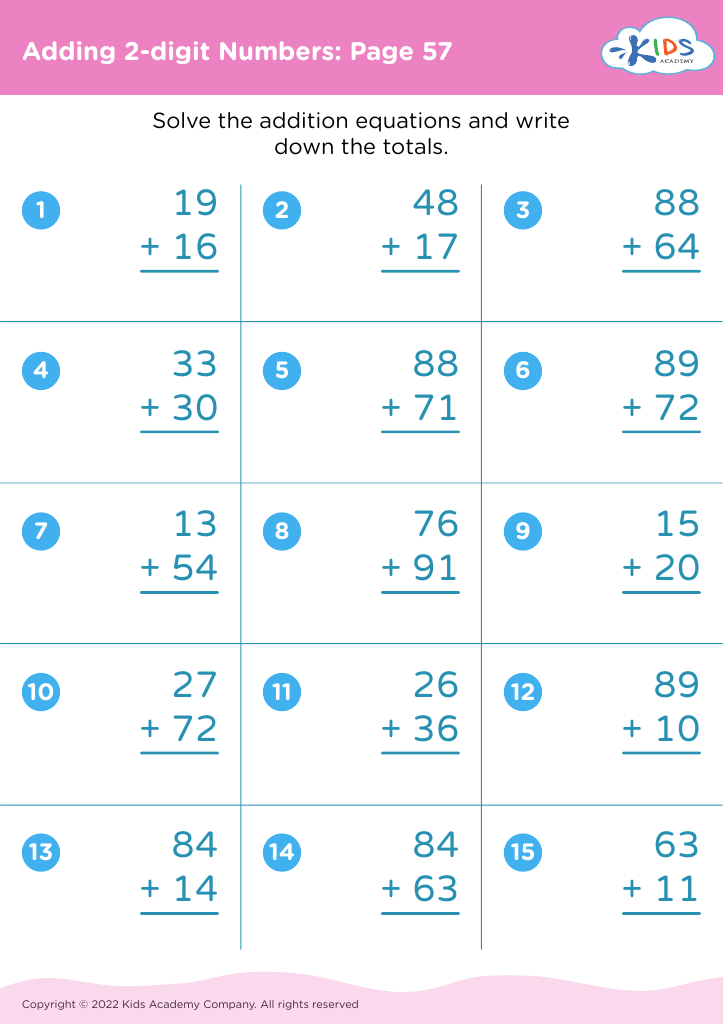








Numerical reasoning in addition and subtraction for children ages 5-8 is crucial for their cognitive and academic development. During these formative years, children develop foundational math skills that not only enhance their mathematical fluency but also support critical thinking and problem-solving abilities. Proficiency in addition and subtraction lays the groundwork for more complex arithmetic operations and mathematical concepts that they will encounter in later grades.
Additionally, strong numerical reasoning skills bolster confidence in students, making them more inclined to engage in math-related activities. Understanding basic operations helps children make sense of the world around them, from managing money to measuring ingredients for recipes, fostering life skills that extend beyond the classroom.
Furthermore, early exposure to these concepts can help address potential learning gaps and promote equity in education. Parents and teachers can work collaboratively to provide a supportive environment that encourages exploration and practice, ensuring that all children build a positive relationship with math.
In essence, emphasizing addition and subtraction not only prepares young learners for future academic success but also equips them with essential skills that contribute to their overall growth and development as critical thinkers and informed citizens.








