
Real-life application Addition & Subtraction Worksheets for Ages 5-8
3 filtered results
Difficulty Level
Grade
Age
-
From - To
Subject
Activity
Standards
Discover engaging, real-life application Addition & Subtraction Worksheets designed for kids ages 5-8 at Kids Academy! Our printable worksheets make learning fun by incorporating everyday scenarios to boost your child's math skills. From counting apples to calculating pocket money, each activity helps children understand the practical use of addition and subtraction. Ideal for young learners, these worksheets develop problem-solving skills, enhance numerical fluency, and build a solid mathematical foundation. Visit Kids Academy to download and print these valuable resources that make education an adventure and see your child’s confidence grow in math!
Favorites
With answer key
Interactive
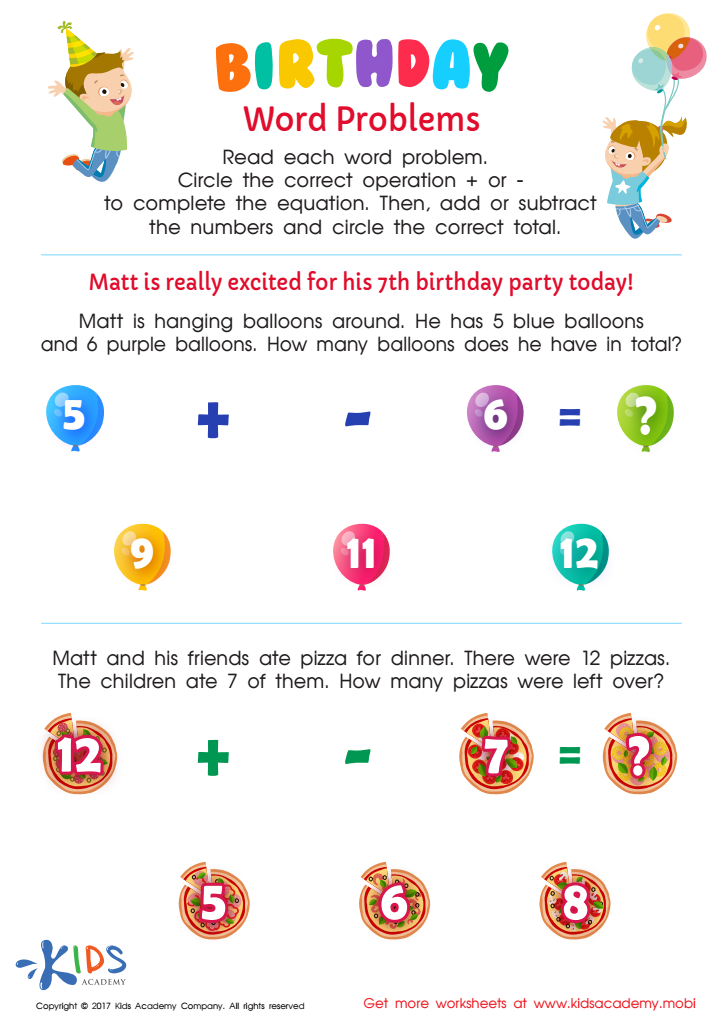
Birthday Word Problems Substraction Worksheet
This worksheet, Birthday Word Problems, is a great way to improve your child's math and literacy skills. It features tricky subtraction equations based on a birthday celebration - perfect for kids who love birthdays!
 Assign to My Students
Birthday Word Problems Substraction Worksheet
Worksheet
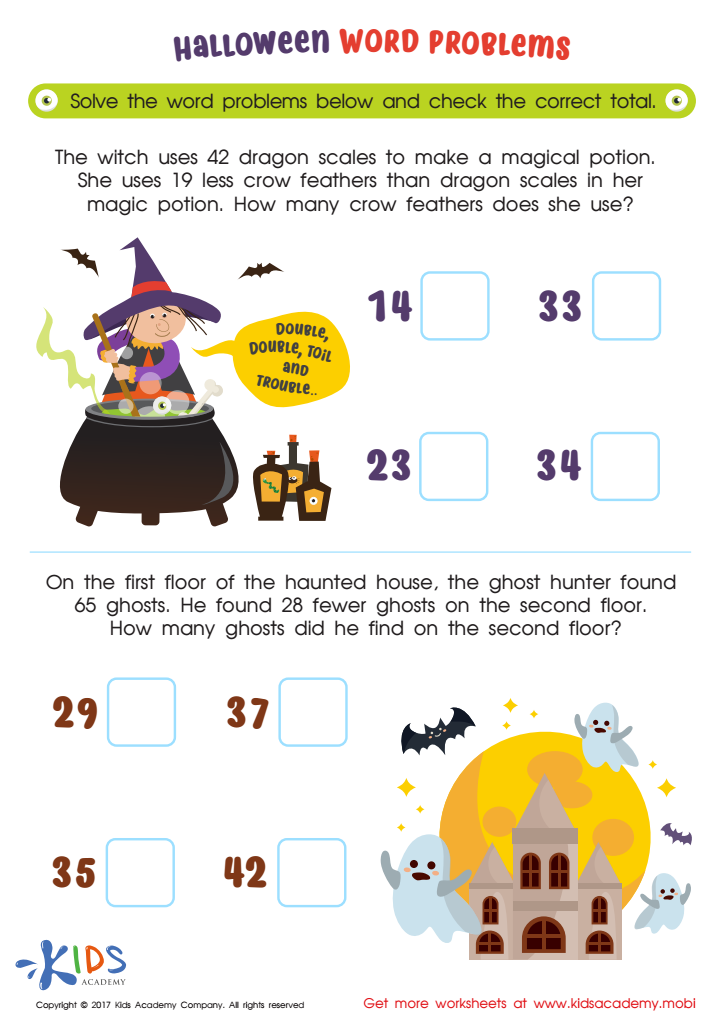
Halloween Word Problems Printable
Ghosts, witches, and other spooky characters make these problems exciting and interactive. Get ready to have some math fun!
Halloween Word Problems Printable
Worksheet
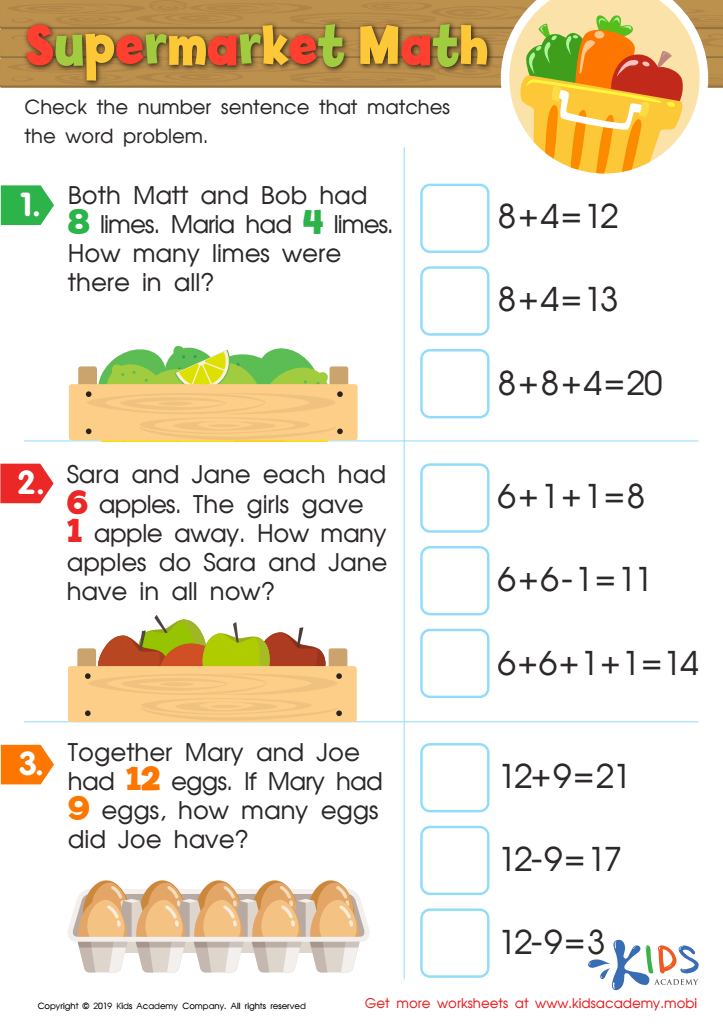
Supermarket Math Worksheet
Take your kids to the supermarket and ask what they're looking forward to buying. Help them solve the three questions in the worksheet by interpreting each one into an equation, then choose the right answer.
Supermarket Math Worksheet
Worksheet
Join Kids Academy for Free
Who is primarily going to use this learning content?








Caring about real-life applications of addition and subtraction for children ages 5-8 is crucial for several compelling reasons. First, these fundamental math skills are part of everyday life and help children make sense of the world around them. When young learners see how adding and subtracting numbers relates to real-life scenarios—like sharing snacks, counting toys, or budgeting their pocket money—they develop a practical understanding and appreciation for math.
Second, using real-life examples to teach addition and subtraction fosters engagement and excitement. Traditional drills can often feel monotonous, but a child’s intrigue heightens when their lessons are tied to activities they find enjoyable or interesting. This engagement boosts motivation and retention.
Third, early exposure to practical math applications builds a strong foundation for future academic success. Understanding the importance of these skills also cultivates critical thinking and problem-solving abilities, essential traits not just in math but in all areas of learning and personal development.
Lastly, teaching these skills through everyday situations encourages teamwork and social interaction, as parents and teachers can involve children in decision-making and collaborative problem-solving. This inclusion helps foster life skills that go beyond numbers, such as sharing, fairness, and cooperation. Investing in the real-life application of addition and subtraction has a multi-layered impact on a young child's growth and development.








