Understanding patterns Addition & Subtraction Worksheets for Ages 5-8 - Page 2
34 filtered results
-
From - To
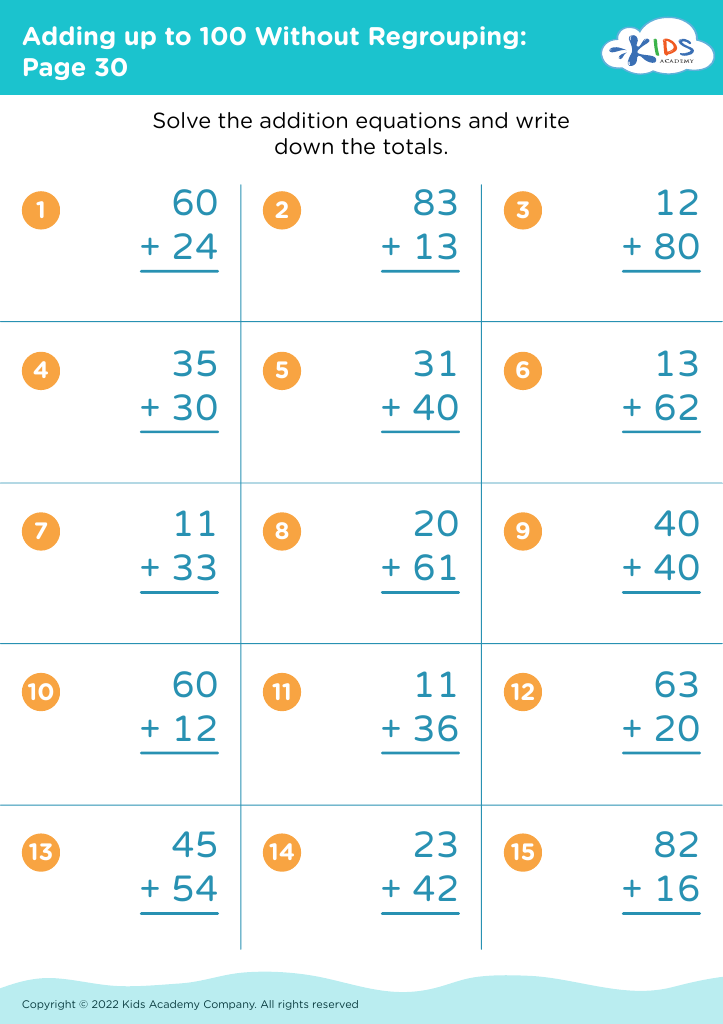
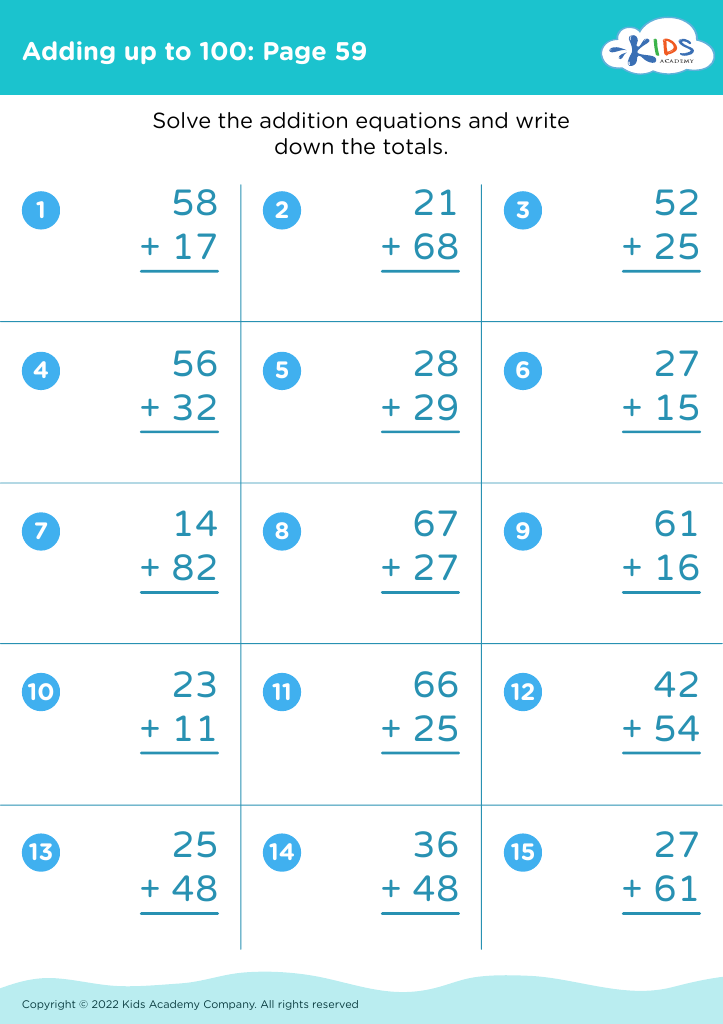
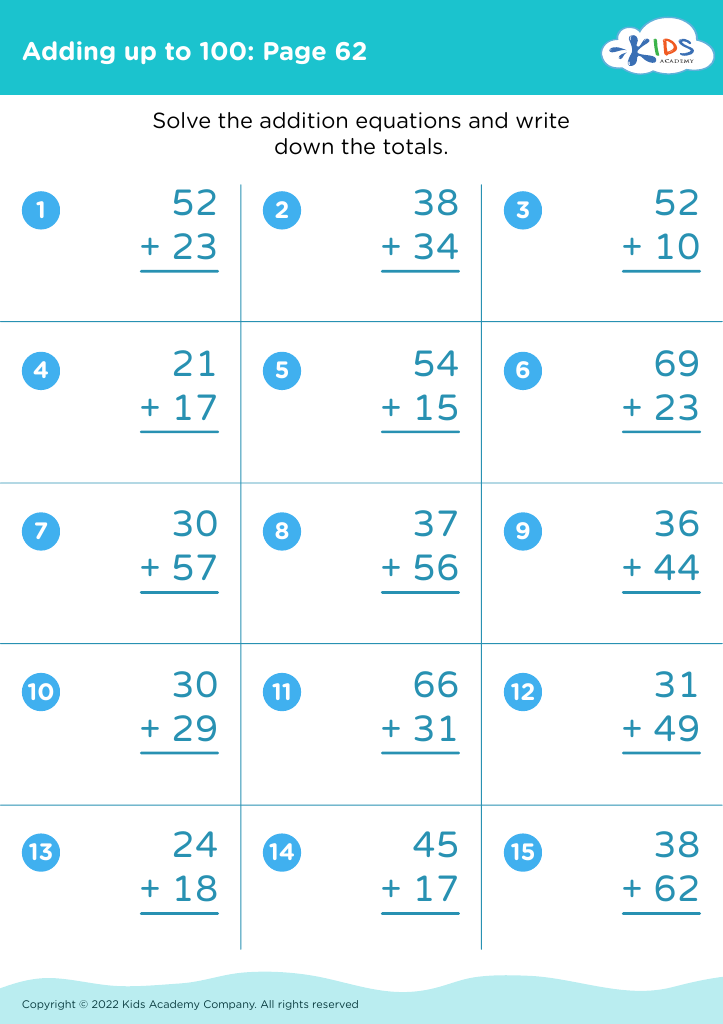
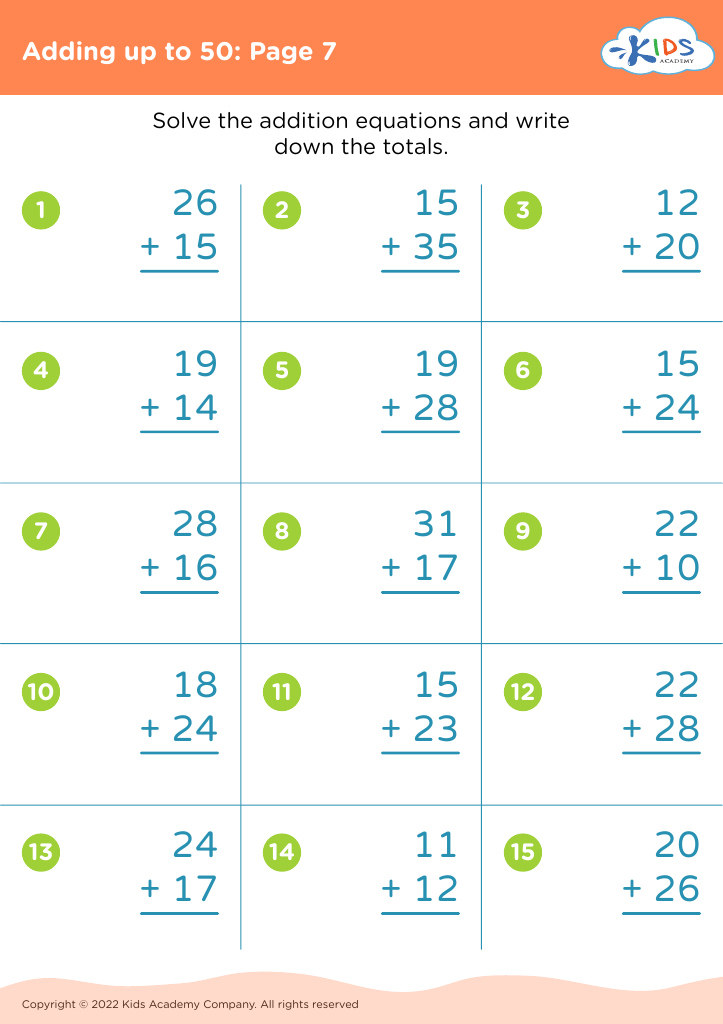
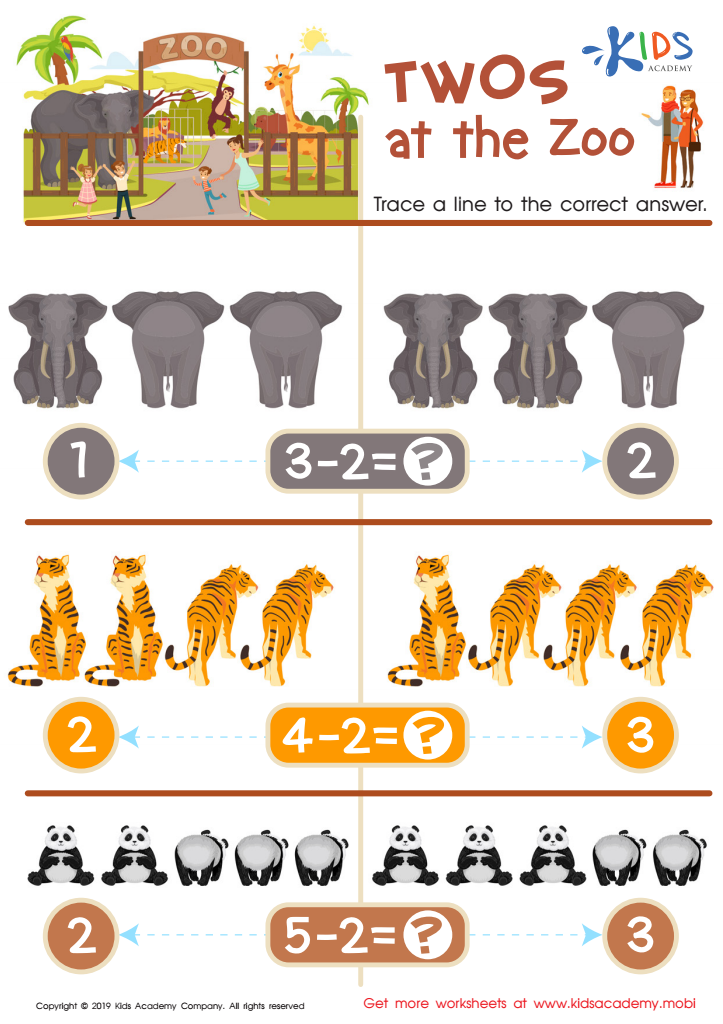
Twos at the Zoo Worksheet
 Assign to My Students







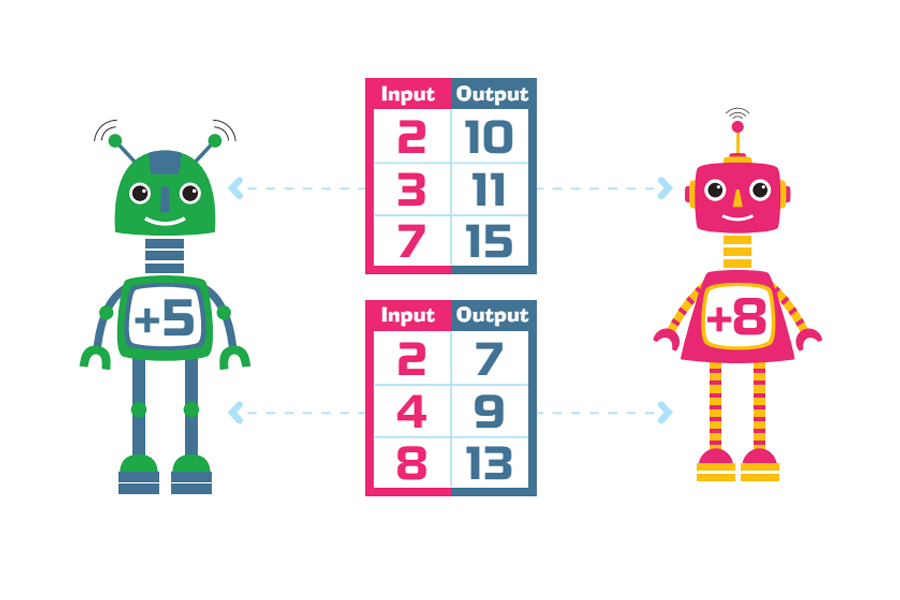
Understanding patterns in addition and subtraction for children ages 5-8 forms a critical foundation for their entire mathematical education. At this stage, young minds are especially receptive to recognizing and making sense of patterns, which fosters cognitive development and problem-solving skills. When parents and teachers emphasize these basic arithmetic skills, they help children develop number sense—a crucial component for tackling more complex mathematical concepts in the future.
Patterns themselves are present everywhere in mathematics, and recognizing them can demystify seemingly complicated problems. By understanding patterns in simple addition and subtraction, children learn to predict outcomes, identify relationships between numbers, and apply logical reasoning. These skills are not only fundamental to math but are also transferable to other subjects like science, programming, and even daily decision-making tasks.
Moreover, mastery of basic addition and subtraction through patterns encourages self-confidence and a positive attitude towards learning. It also sets up a scaffold upon which more advanced arithmetic, such as multiplication and division, are constructed. Parents and teachers that invest time in teaching these foundational skills pave the way for a lifetime of mathematical fluency and critical thinking. Therefore, ensuring children have strong fundamental understandings early on is an investment in their overall academic and cognitive development.








