Underwater animal identification Addition & Subtraction Worksheets for Ages 5-8
3 filtered results
-
From - To
Introduce your little learners to the exciting world of underwater animals with our engaging Addition & Subtraction Worksheets designed for ages 5-8! These carefully crafted worksheets not only enhance math skills but also immerse children in fascinating marine life, fostering curiosity and learning. Each activity encourages students to identify various underwater creatures while practicing essential addition and subtraction concepts. With vibrant illustrations and age-appropriate challenges, kids will love solving problems that make math fun! Perfect for homeschooling, classroom use, or extra practice, these worksheets support foundational skills while inspiring a love for nature. Dive into math learning with our underwater adventure today!
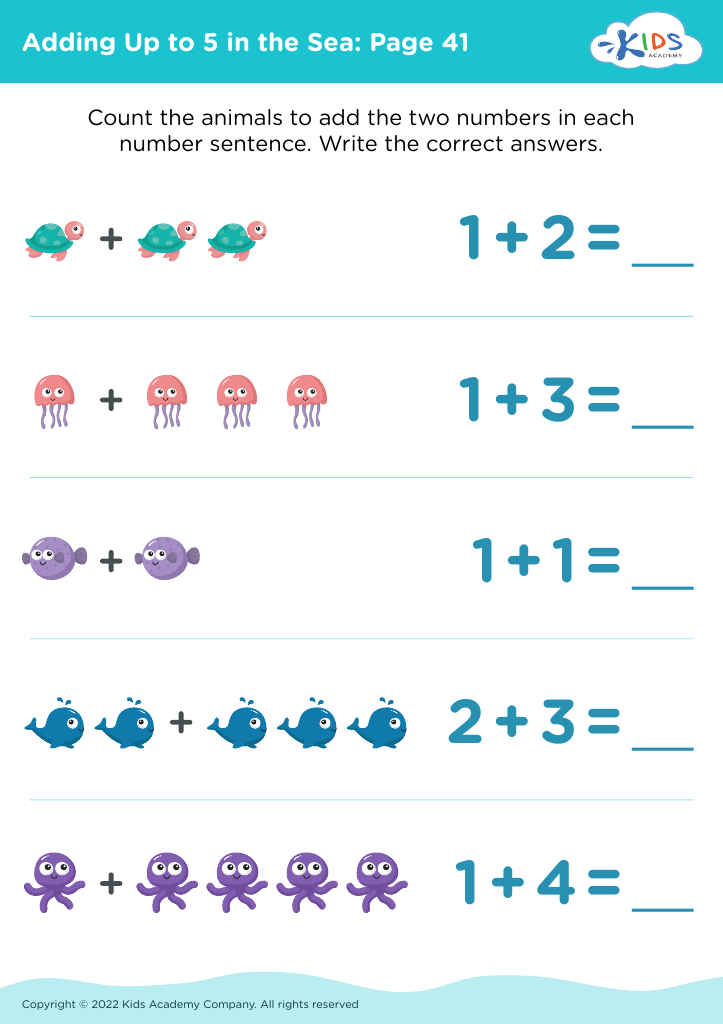
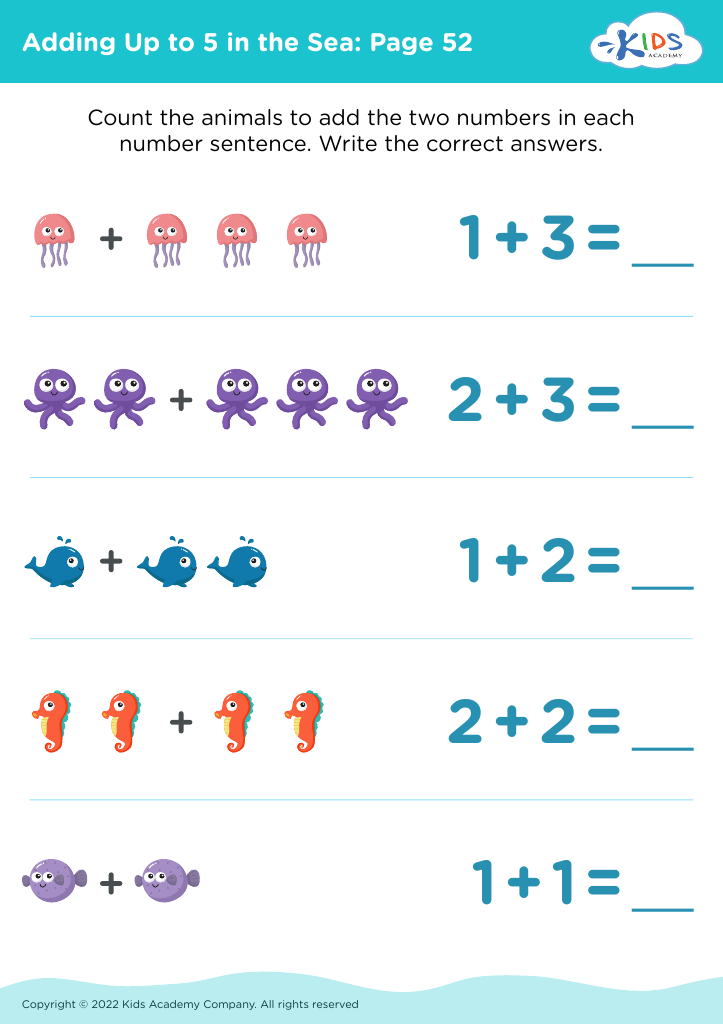
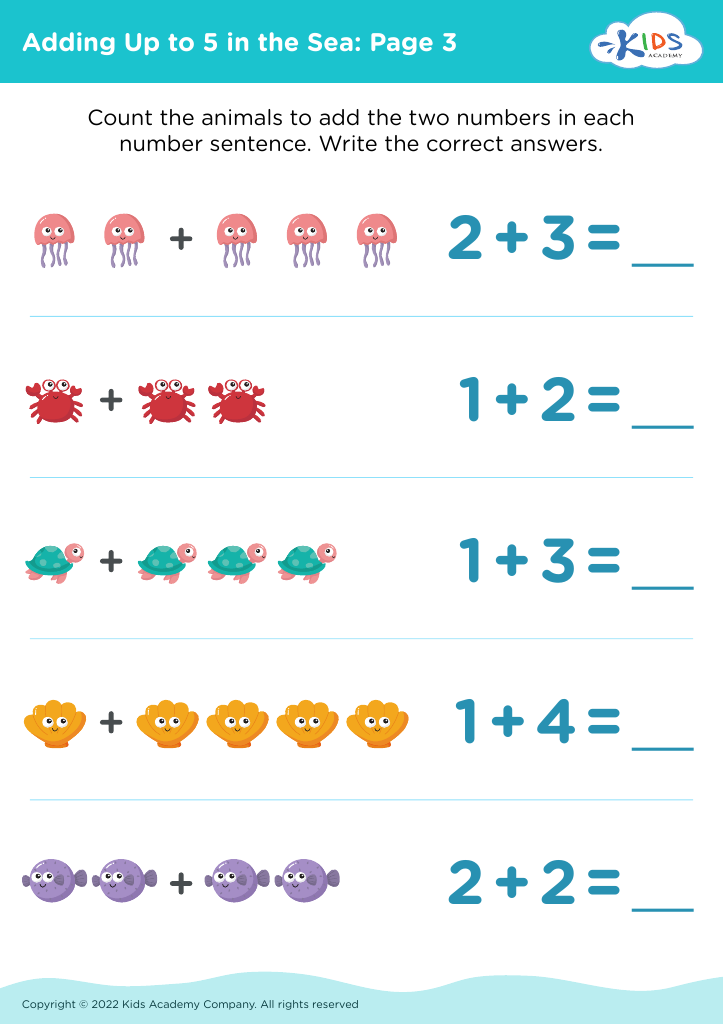








Parents and teachers should care about Underwater Animal Identification Addition & Subtraction for ages 5 to 8 because it promotes a multidimensional approach to early education that enhances both math skills and environmental awareness. At this developmental stage, children are naturally curious about the world around them, making it an ideal time to introduce concepts that integrate nature and numeracy.
By incorporating underwater animals into addition and subtraction activities, educators can capture students' interest and inspire a love for learning. Identifying various creatures—from dolphins to jellyfish—can create engaging stories or scenarios where mathematical problems come to life. For example, if a child knows there are 3 clownfish and 5 starfish, they can seamlessly learn basic addition while acknowledging biodiversity.
Additionally, understanding marine life fosters an appreciation for the environment and encourages responsible stewardship. As children learn to identify animals and understand their habitats, they also develop empathy and respect for wildlife.
This combined focus not only strengthens foundational math skills but also nurtures a sense of wonder about ecological systems, making education more relevant and significant. Ultimately, such engaging learning experiences lay the groundwork for well-rounded, informed individuals who value both mathematics and the natural world.








