Filters

95 filtered results

Clear all filters
Favorites
With answer key
Interactive

95 filtered results

Difficulty Level

Grade


Check out this FREE Trial Lesson on Addition for age 5-8!

T

Favorites
With answer key
Interactive
  • 5-8
  • Animal recognition
  • Addition
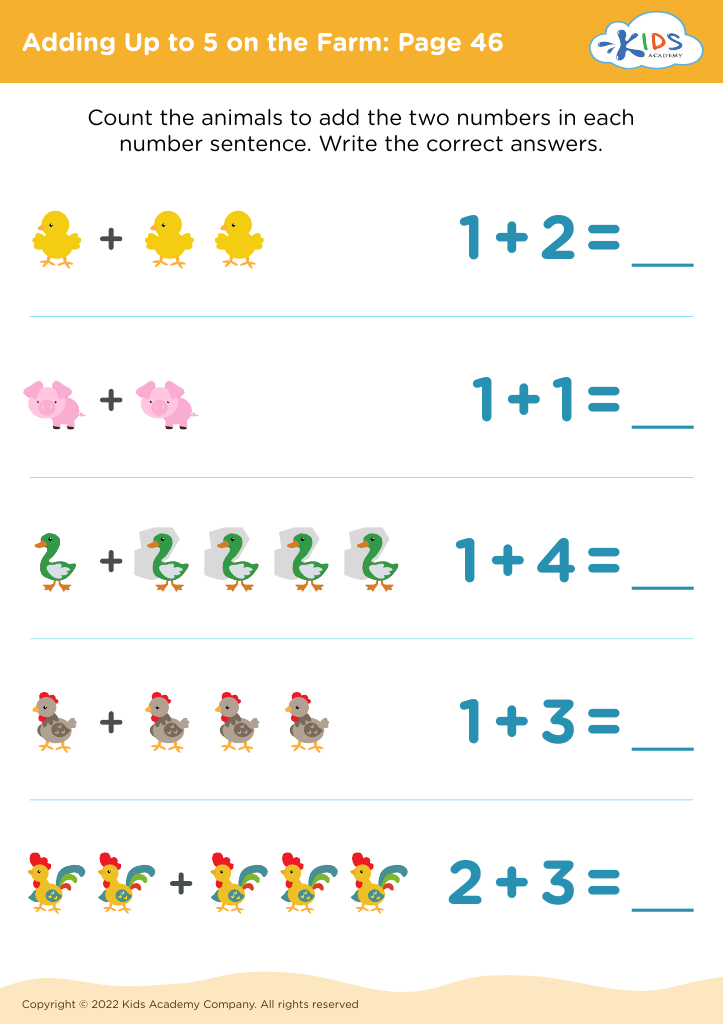
Adding Up to 5 on the Farm: Page 46
Worksheet
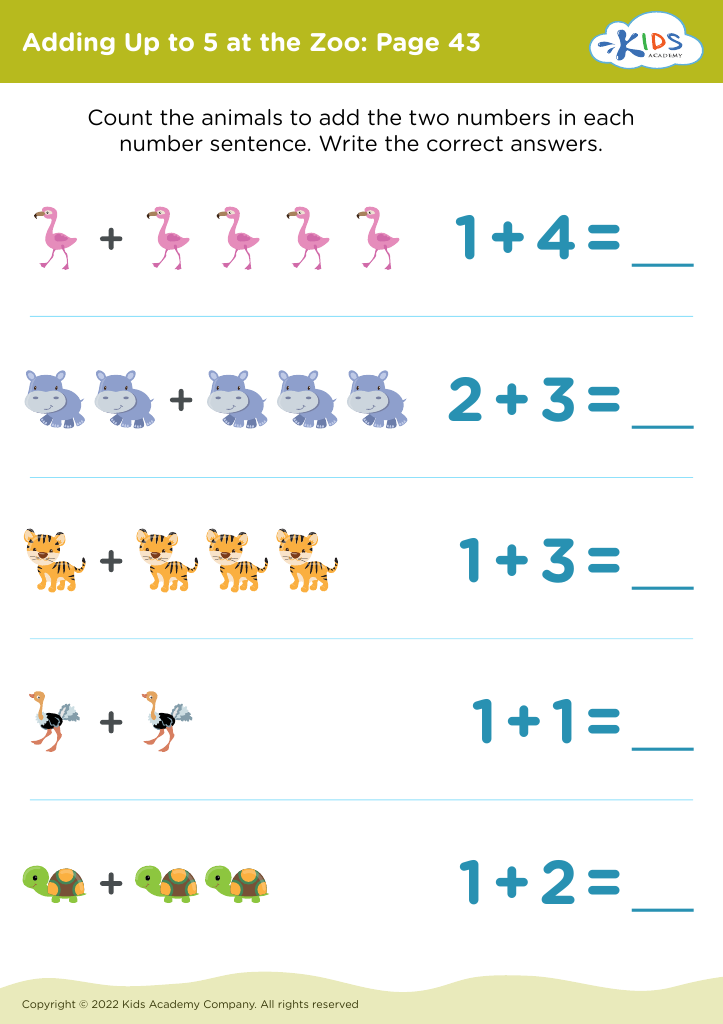
Adding Up to 5 at the Zoo: Page 43
Worksheet
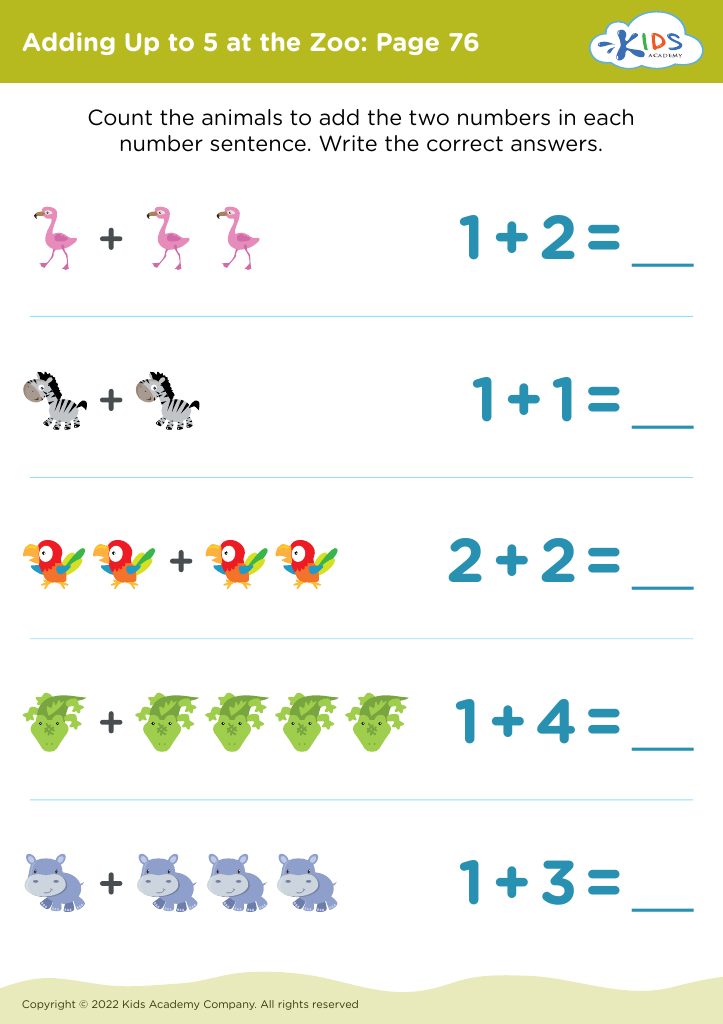
Adding Up to 5 at the Zoo: Page 76
Worksheet
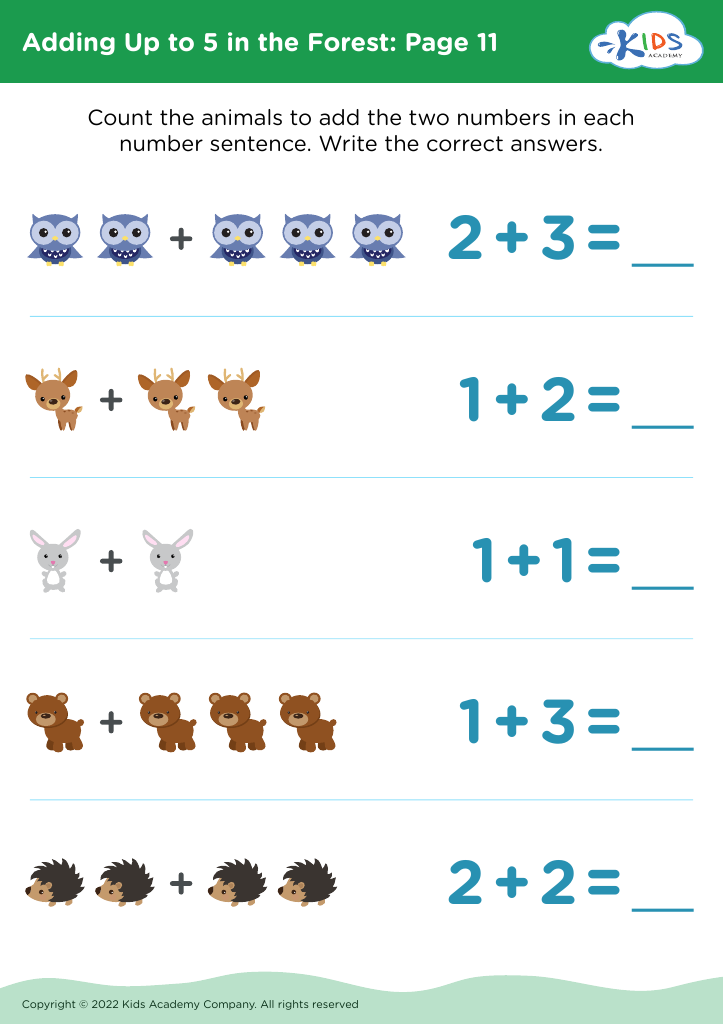
Adding Up to 5 in the Forest: Page 11
Worksheet
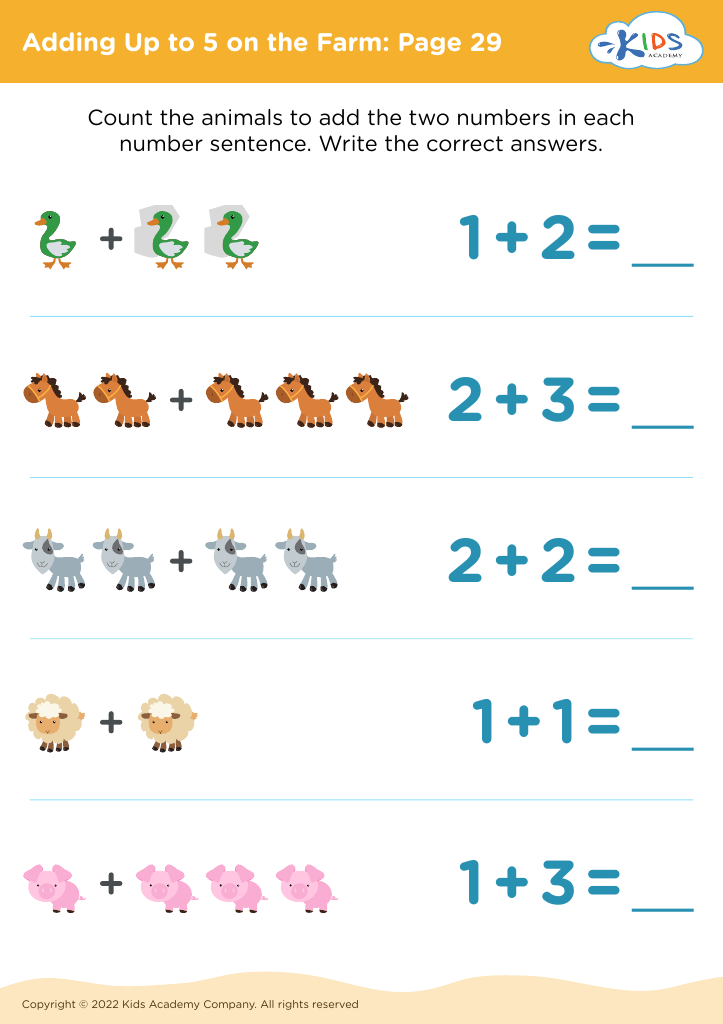
Adding Up to 5 on the Farm: Page 29
Worksheet
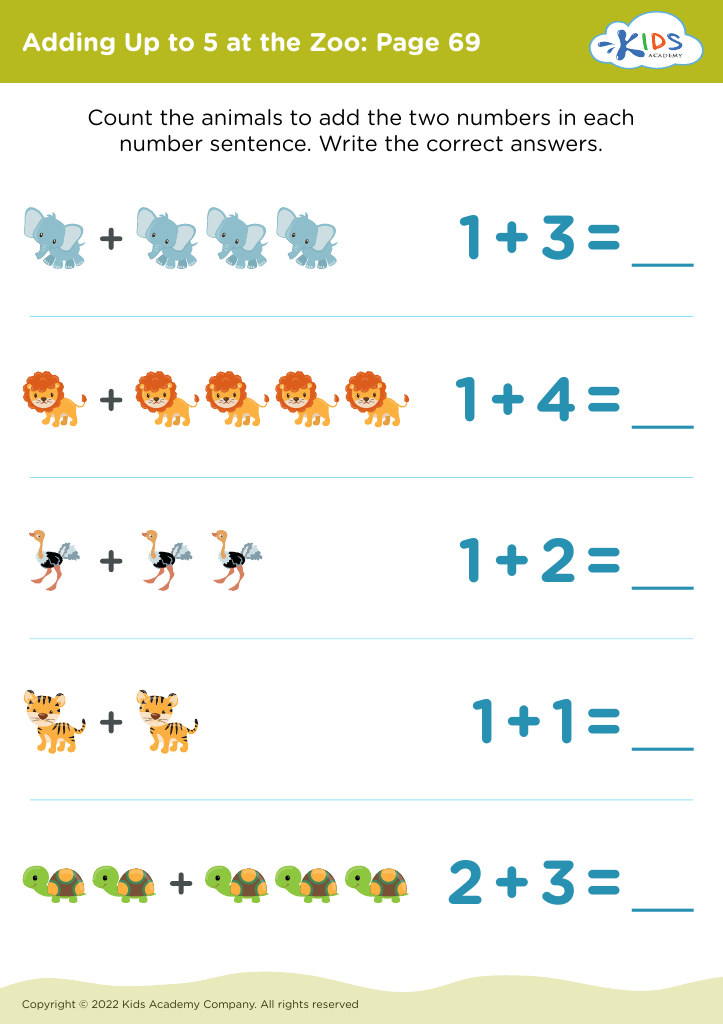
Adding Up to 5 at the Zoo: Page 69
Worksheet
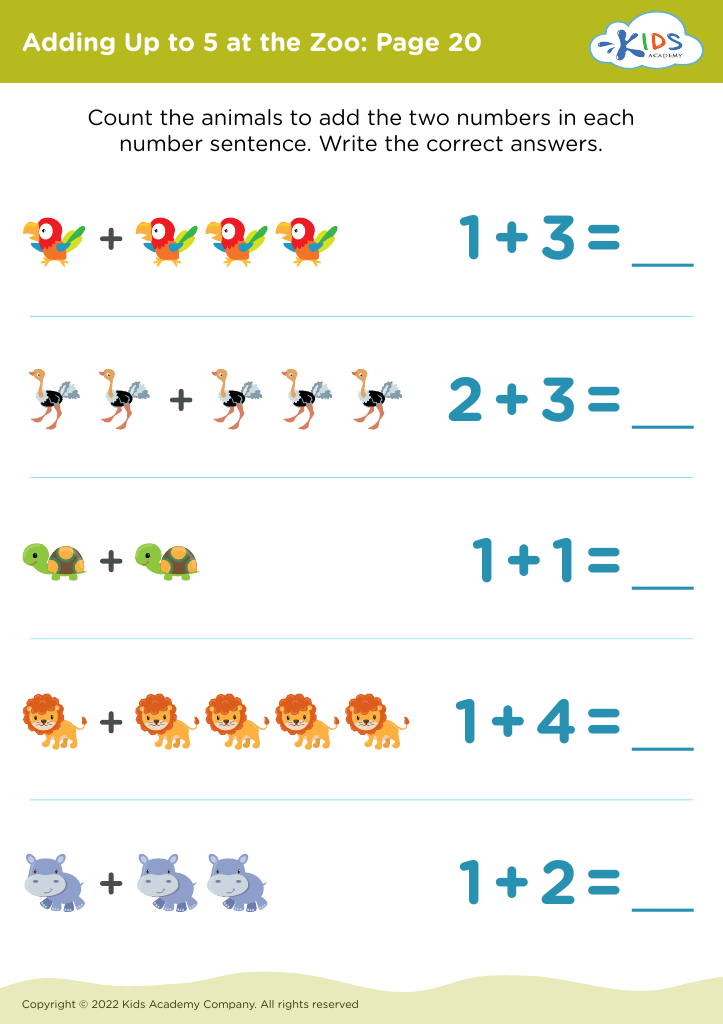
Adding Up to 5 at the Zoo: Page 20
Worksheet
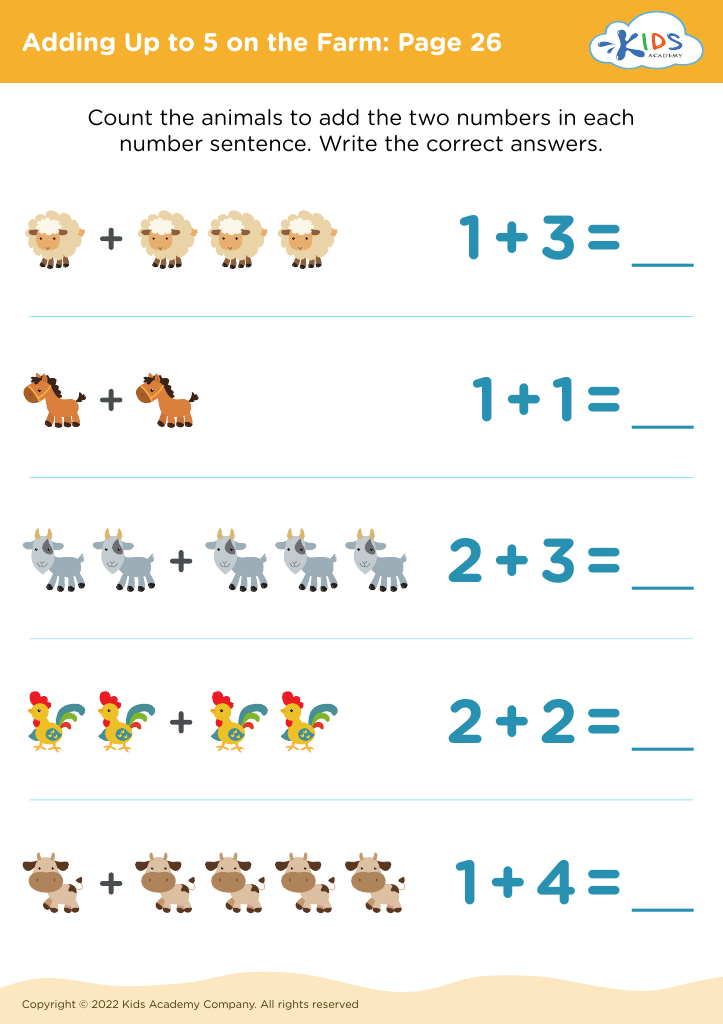
Adding Up to 5 on the Farm: Page 26
Worksheet
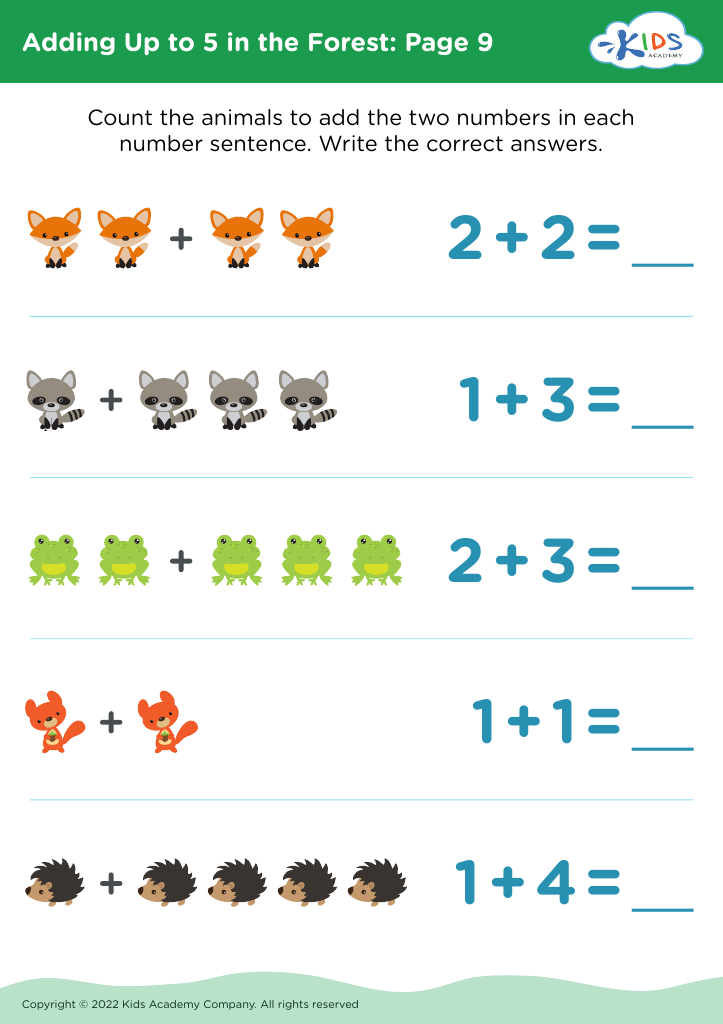
Adding Up to 5 in the Forest: Page 9
Worksheet
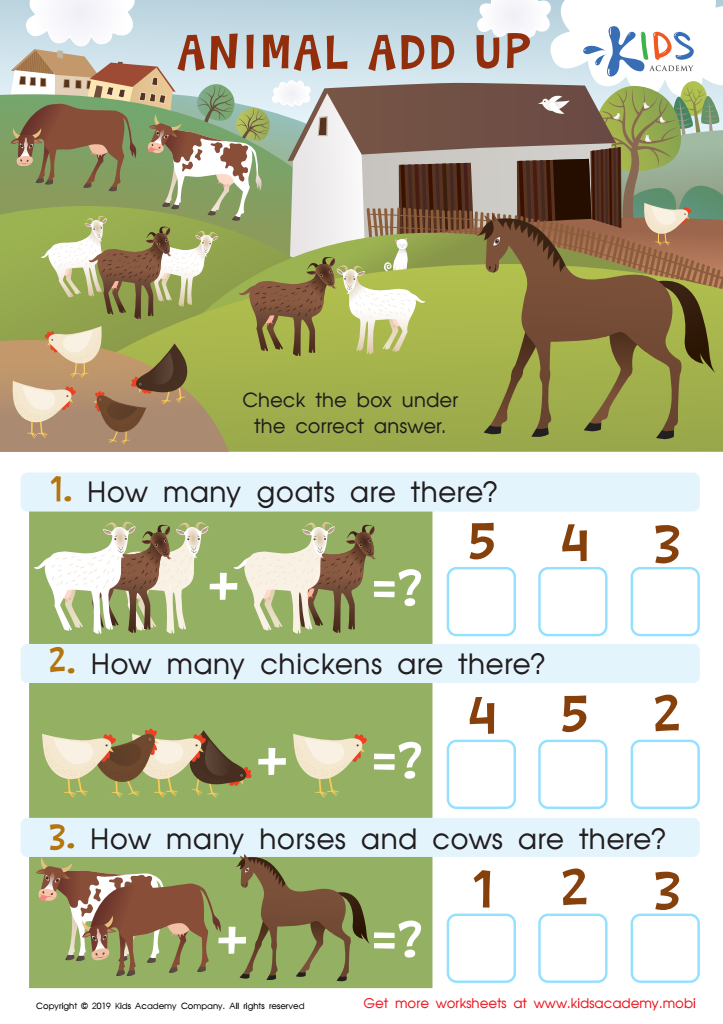
Animal Add Up Worksheet

Animal Add Up Worksheet

Animals are fun to observe and interact with. They can be seen at the zoo, parks, farms and in homes with pets. This worksheet helps kids identify animals, and build addition skills. Look at the picture with them and help name each animal. After that, add the animals up and check the box for the correct answer. 80 words.
Animal Add Up Worksheet
Worksheet
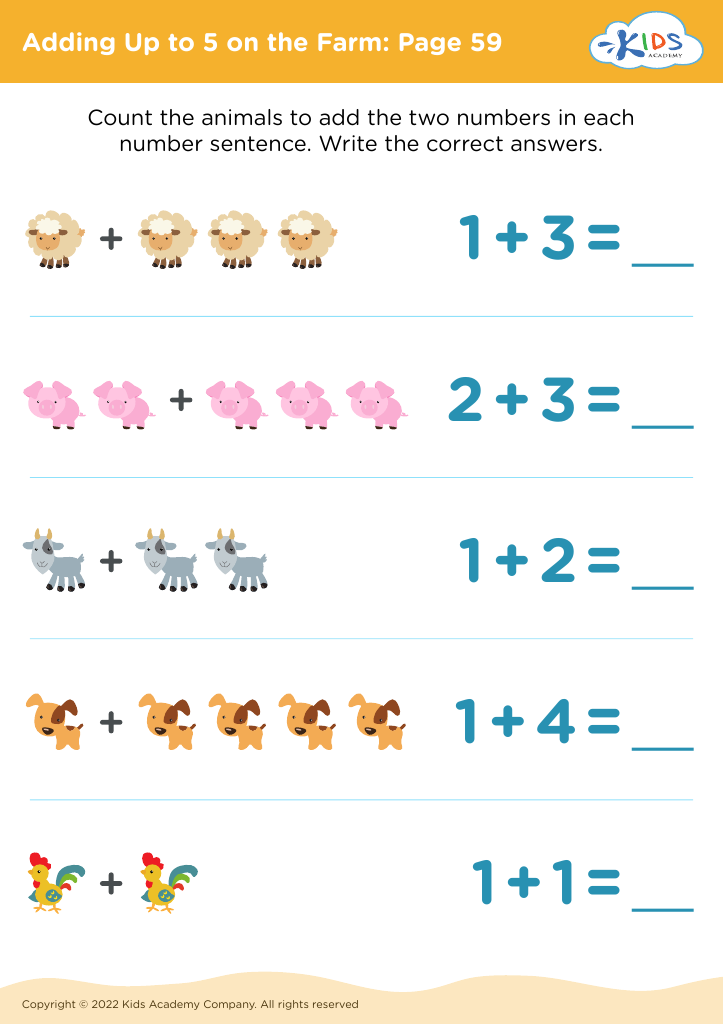
Adding Up to 5 on the Farm: Page 59
Worksheet
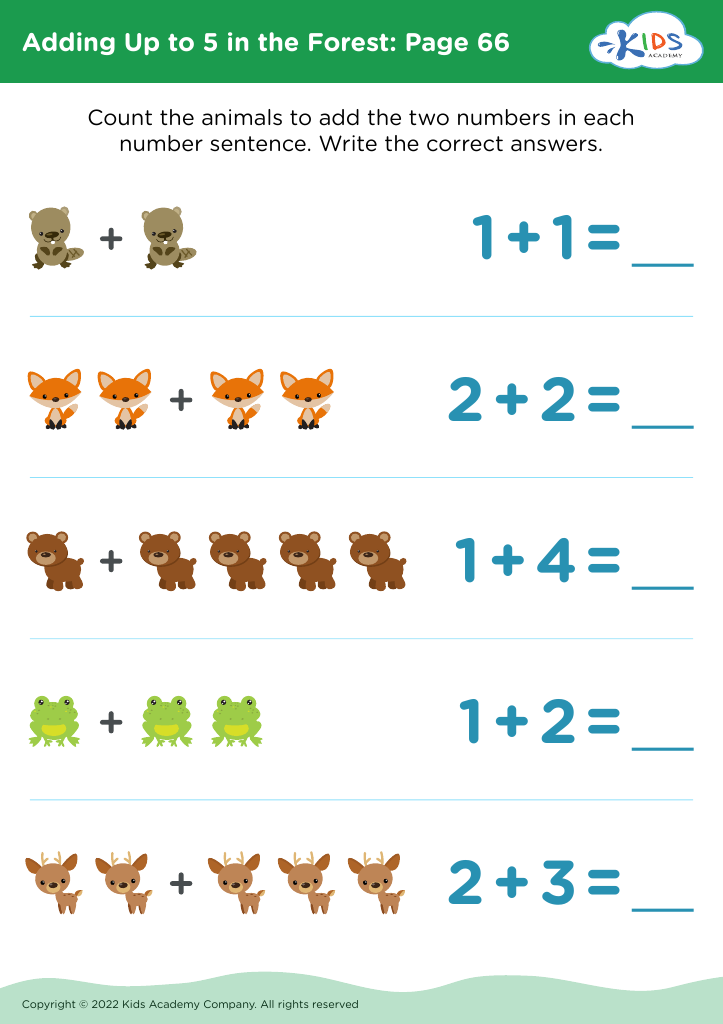
Adding Up to 5 in the Forest: Page 66
Worksheet
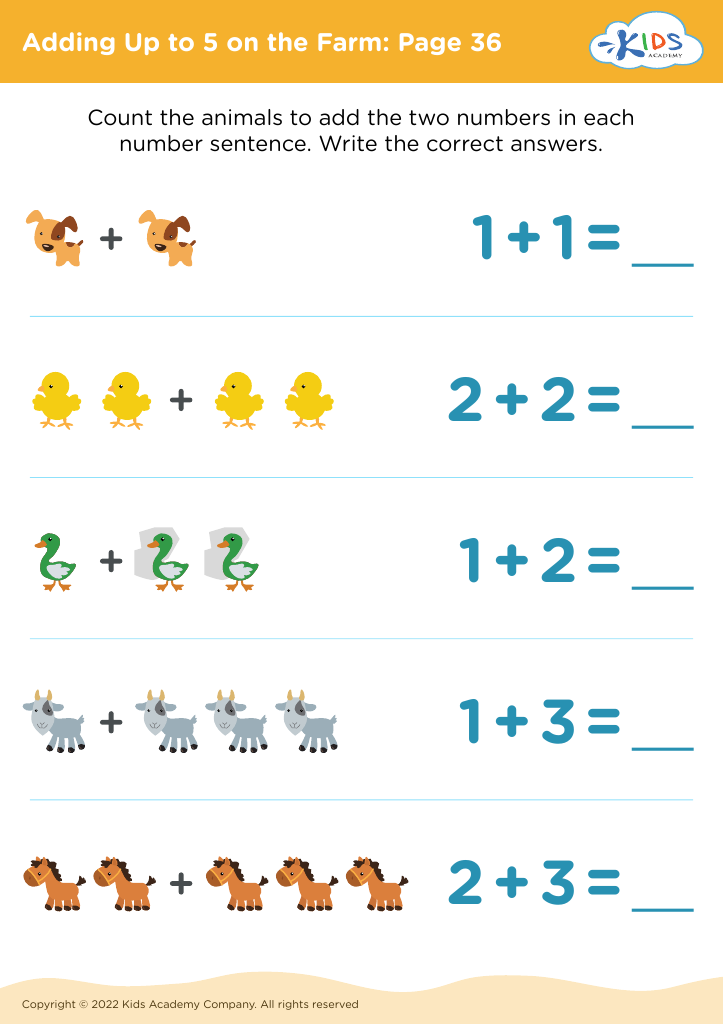
Adding Up to 5 on the Farm: Page 36
Worksheet
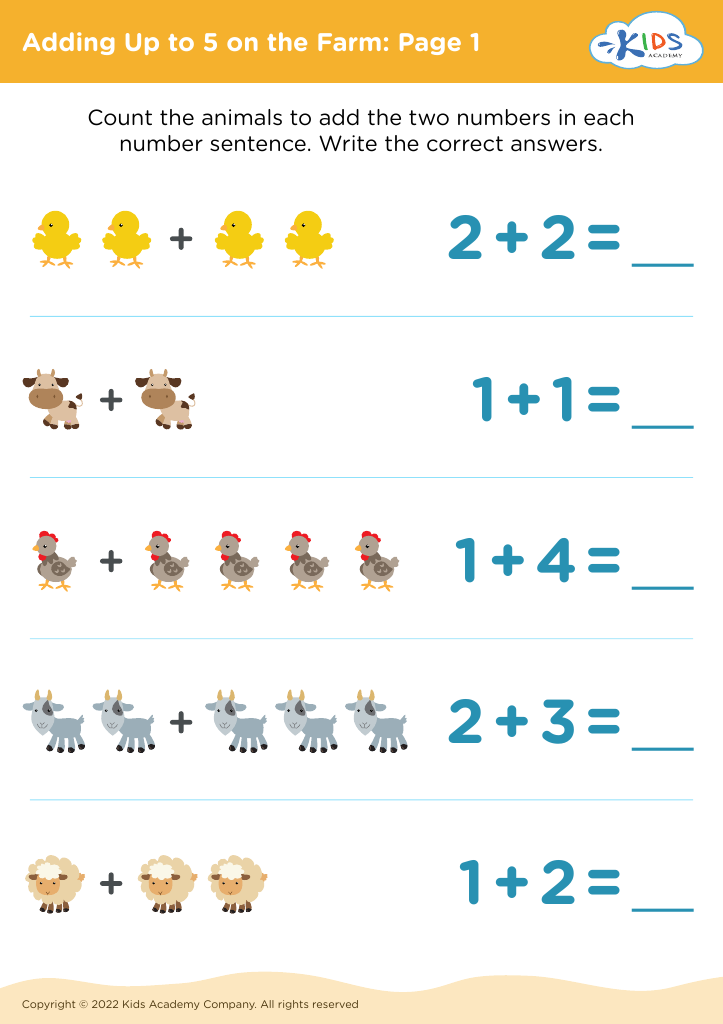
Adding Up to 5 on the Farm: Page 1
Worksheet
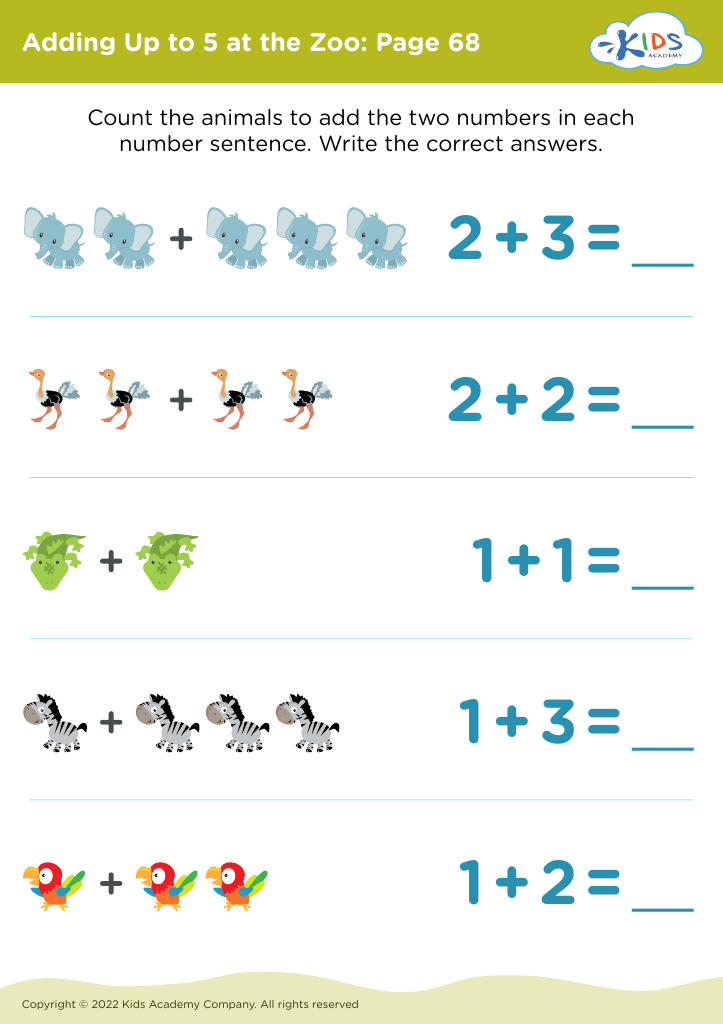
Adding Up to 5 at the Zoo: Page 68
Worksheet
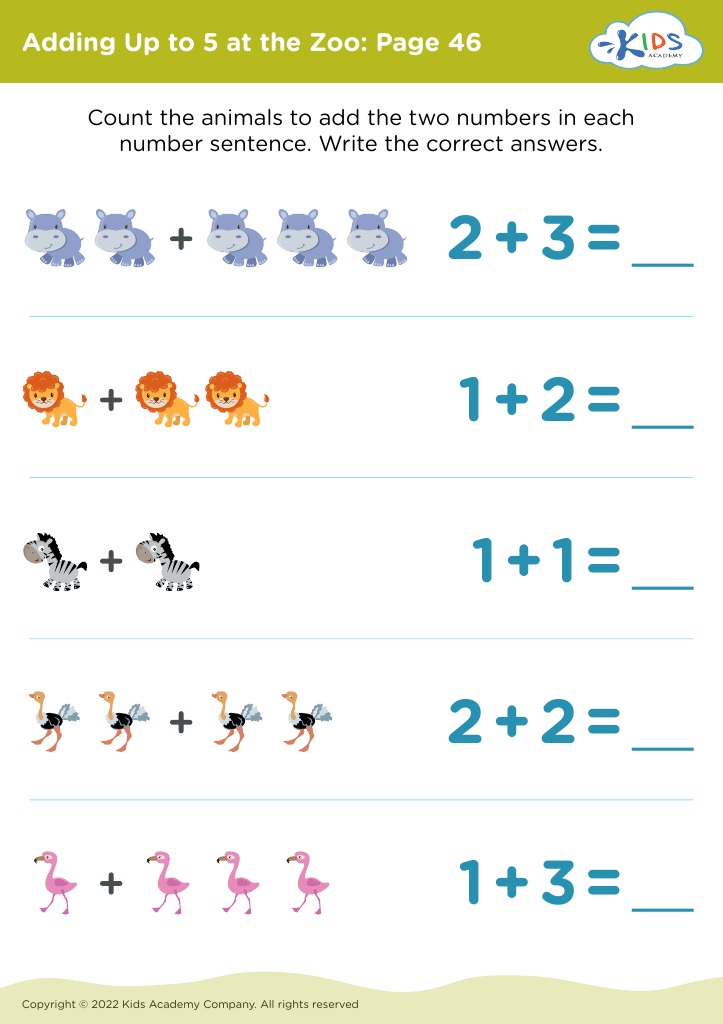
Adding Up to 5 at the Zoo: Page 46
Worksheet
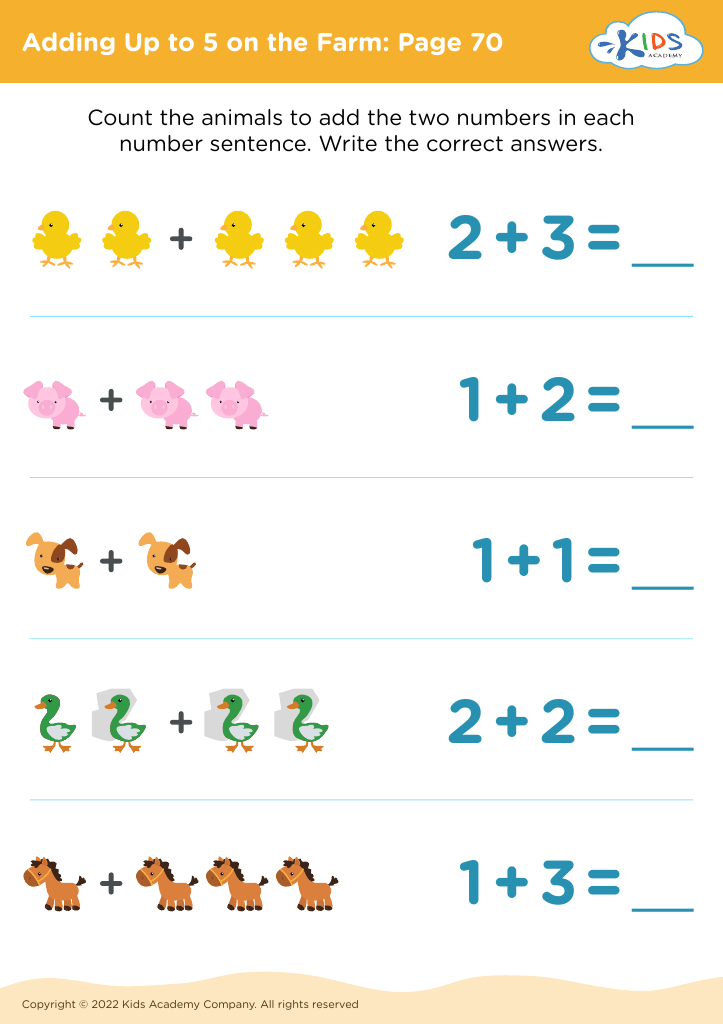
Adding Up to 5 on the Farm: Page 70
Worksheet
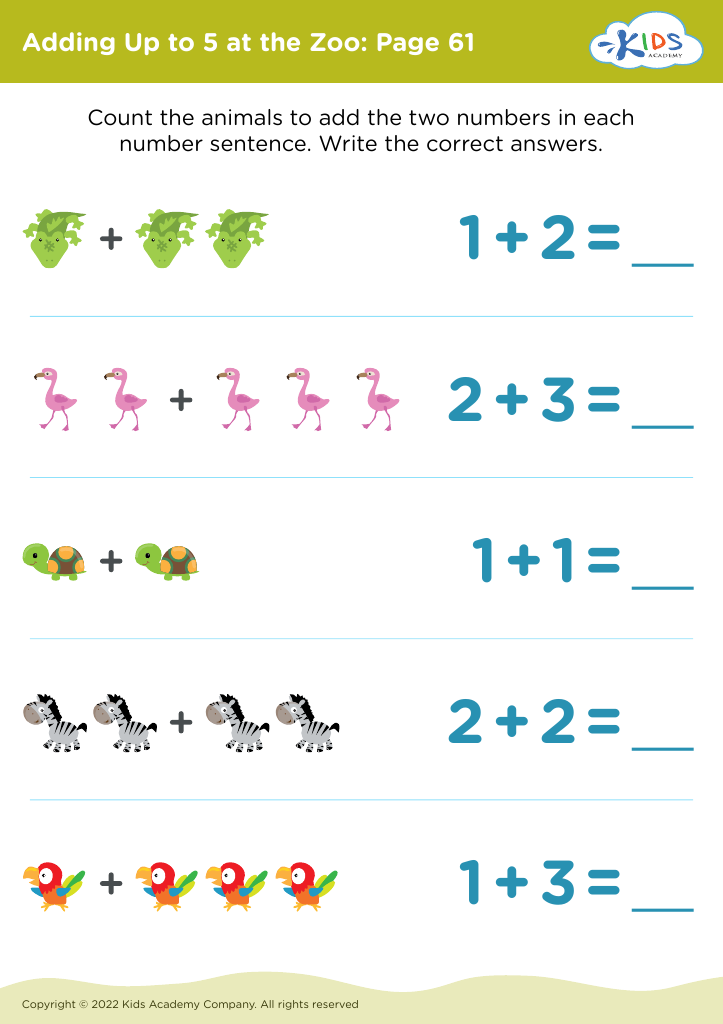
Adding Up to 5 at the Zoo: Page 61
Worksheet
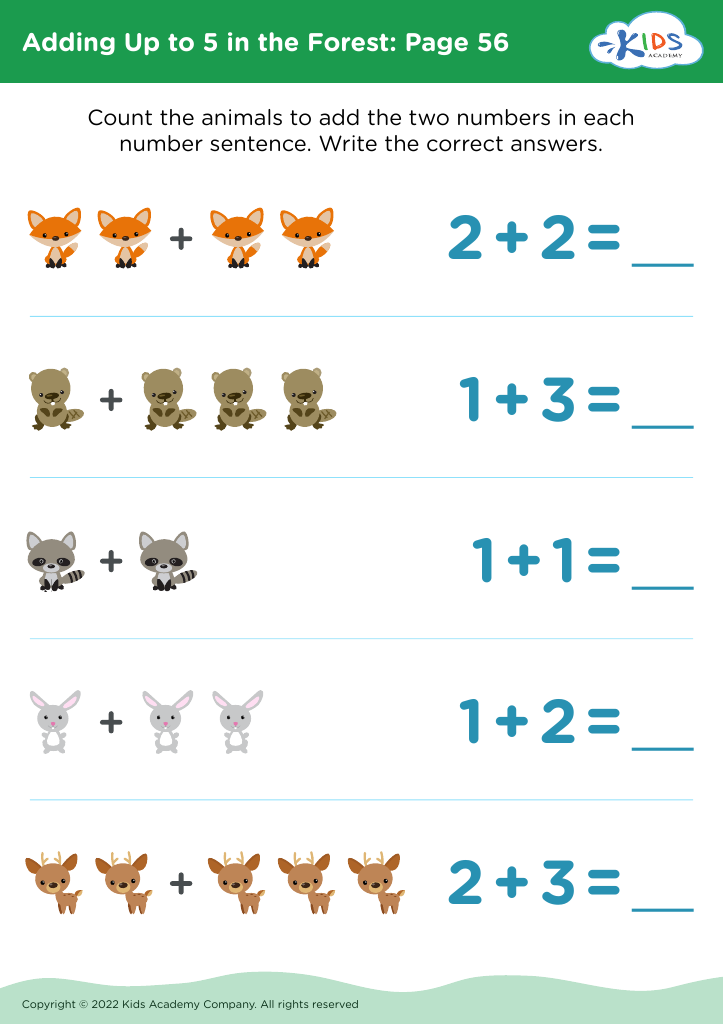
Adding Up to 5 in the Forest: Page 56
Worksheet
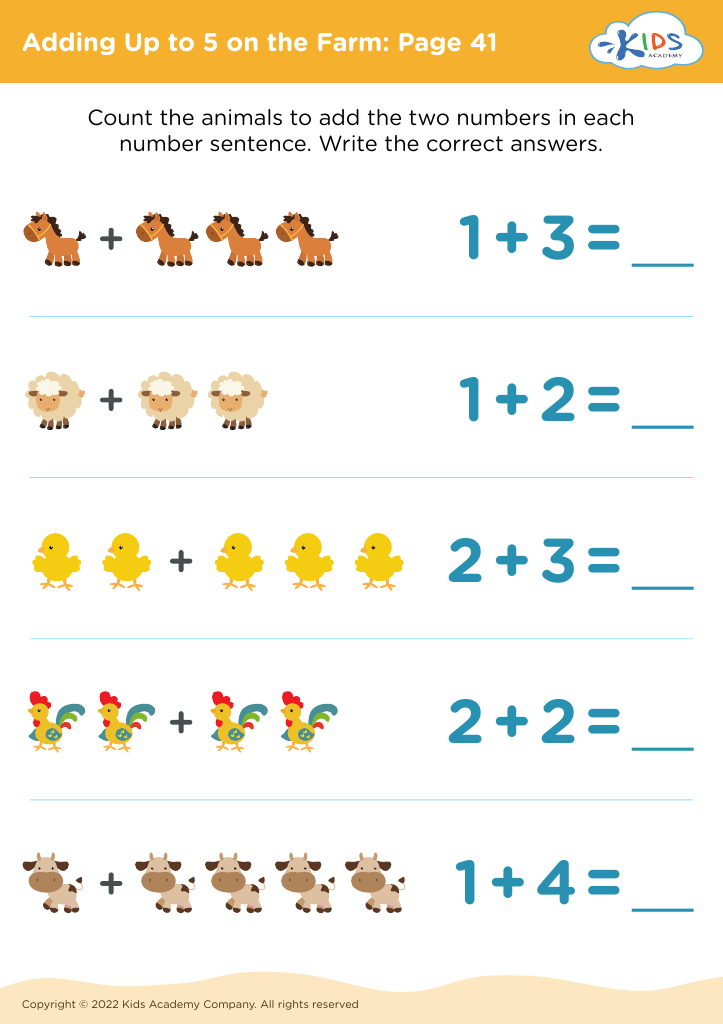
Adding Up to 5 on the Farm: Page 41
Worksheet
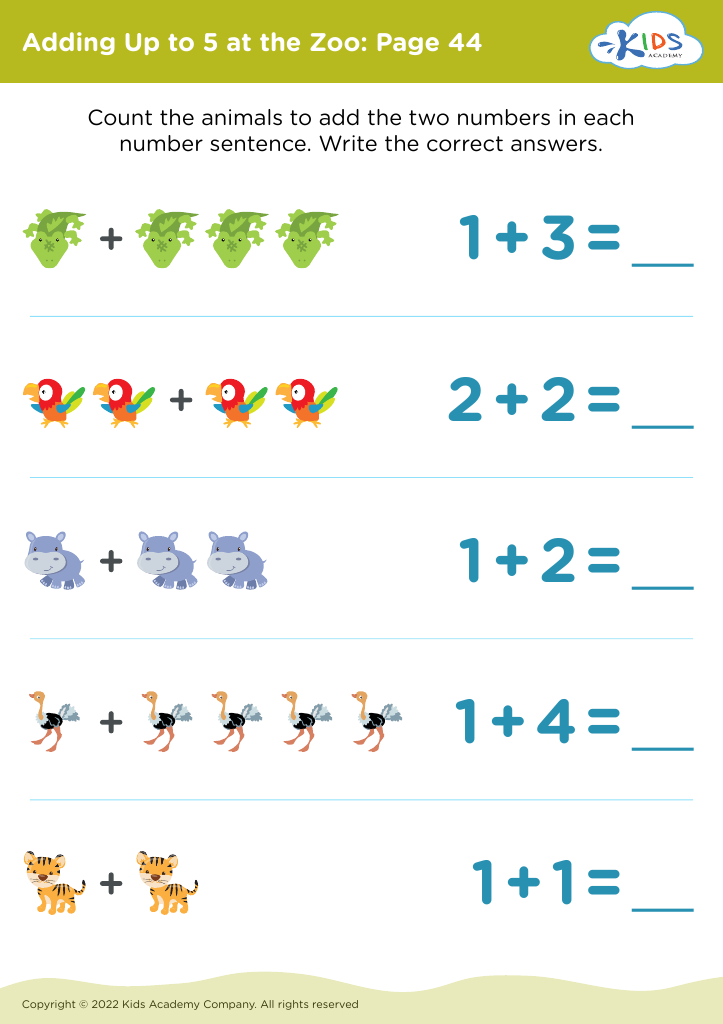
Adding Up to 5 at the Zoo: Page 44
Worksheet
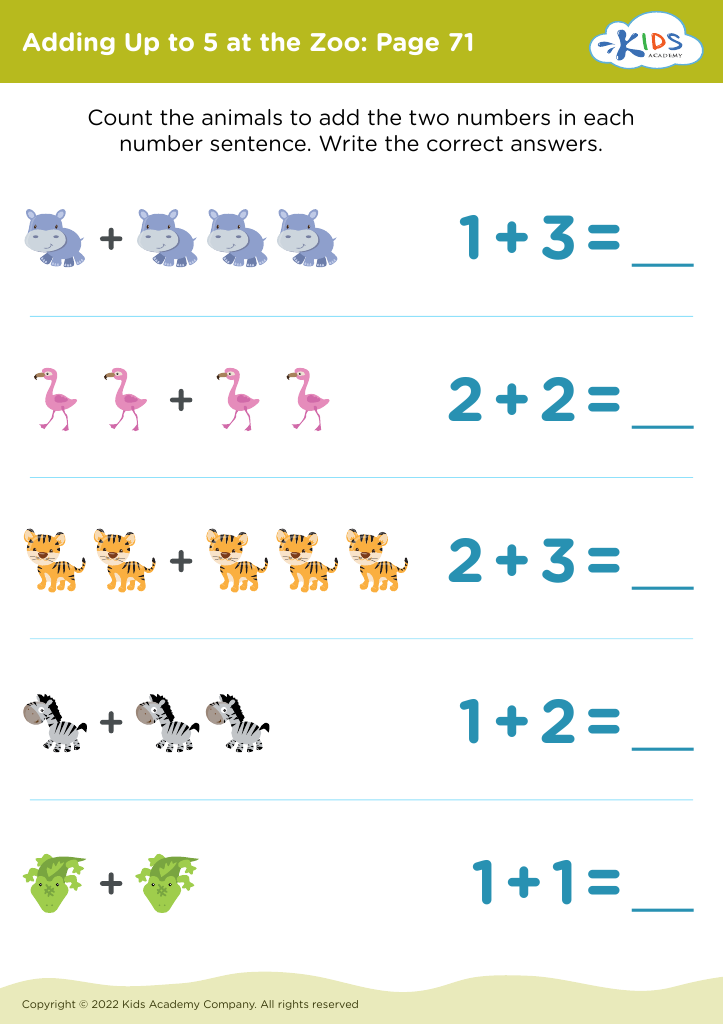
Adding Up to 5 at the Zoo: Page 71
Worksheet
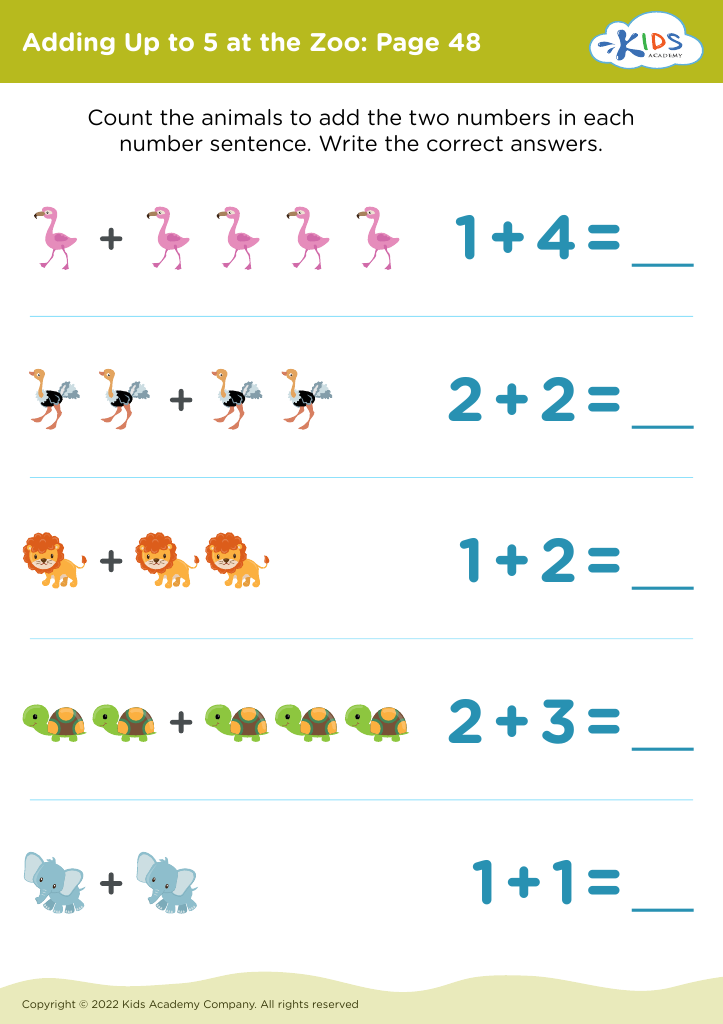
Adding Up to 5 at the Zoo: Page 48
Worksheet
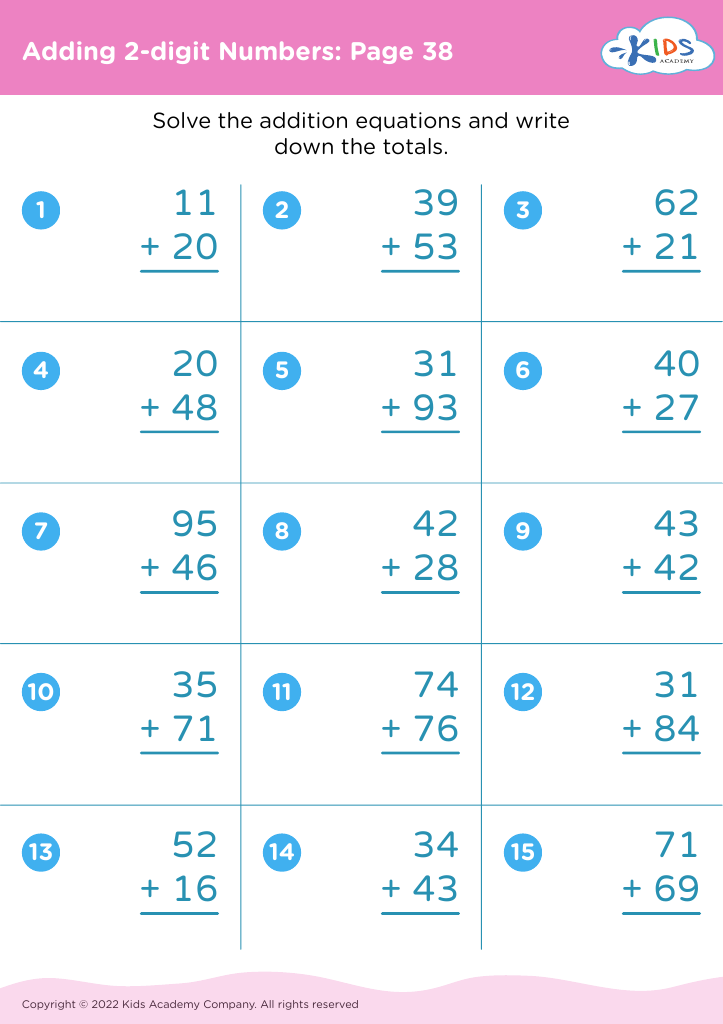
Adding 2-digit Numbers: Page 38

Adding 2-digit Numbers: Page 38

Adding 2-digit Numbers: Page 38
Worksheet


Animal recognition addition for ages 5-8 is a highly beneficial educational tool that deserves attention from parents and teachers. At this critical stage of development, young children are rapidly building their cognitive and numerical skills, and integrating familiar and engaging elements like animals can significantly enhance their learning experience.

First, animals capture children's interest and imagination, making learning more enjoyable and engaging. When kids are excited and motivated by the material, they are more likely to participate actively and retain information. This intrinsic motivation can be pivotal in fostering a love for learning that will benefit them throughout their educational journey.

Second, incorporating animals into addition exercises can help children understand mathematical concepts in a concrete and relatable way. For example, when children see pictures of three lions combined with two lions and then added together to make five lions, the addition becomes a tangible and easily understood process. This practical approach grounds abstract concepts in real-world experiences.

Finally, animal recognition addition also incorporates important cross-curricular learning. While practicing math, children simultaneously enhance their knowledge of the animal kingdom, learning about different species, their appearances, and habitats. This multidisciplinary approach broadens their horizons, developing both their mathematical acumen and their understanding of the natural world.

In summary, by integrating animal recognition into addition exercises, parents and teachers can create a more engaging, effective, and well-rounded learning experience for young children.