Counting accuracy Addition Worksheets for Ages 5-8
3 filtered results
-
From - To
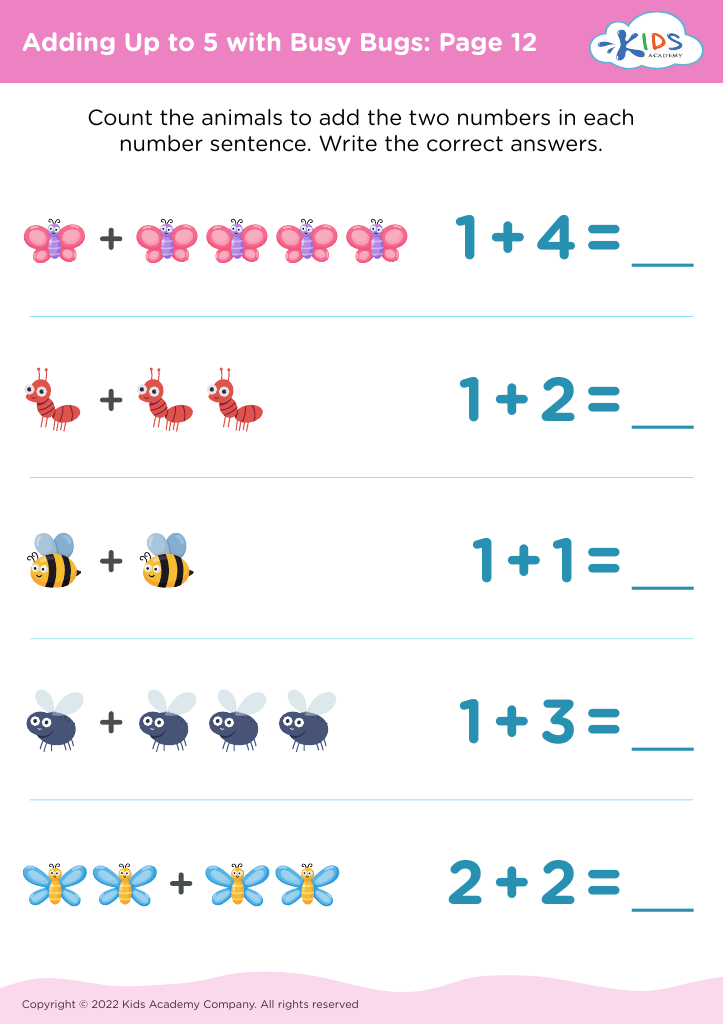
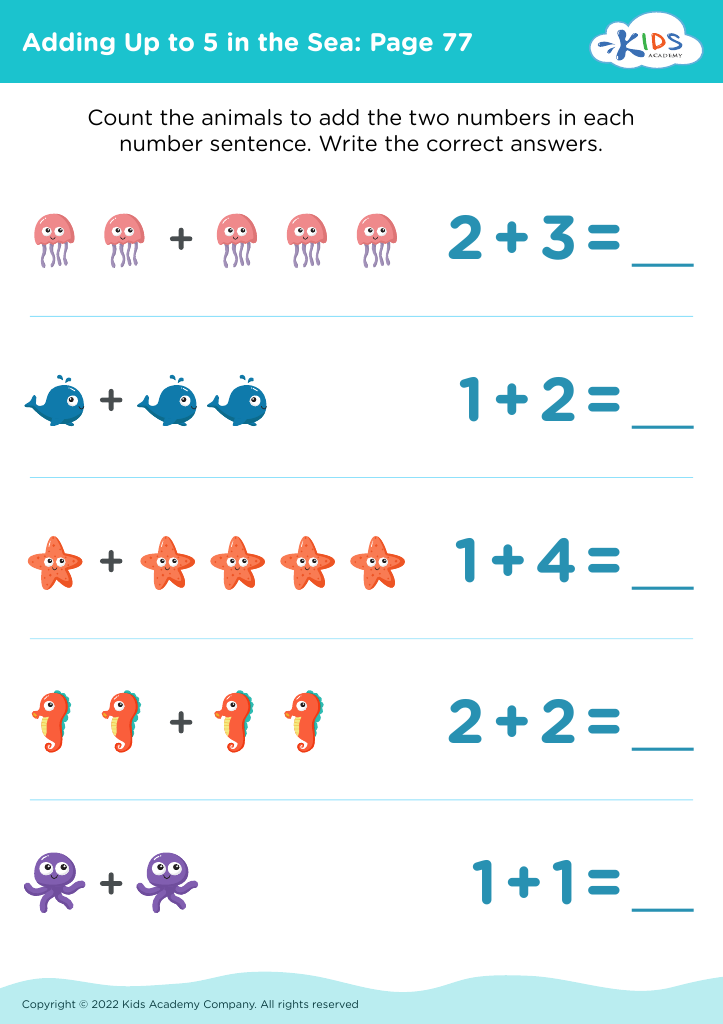
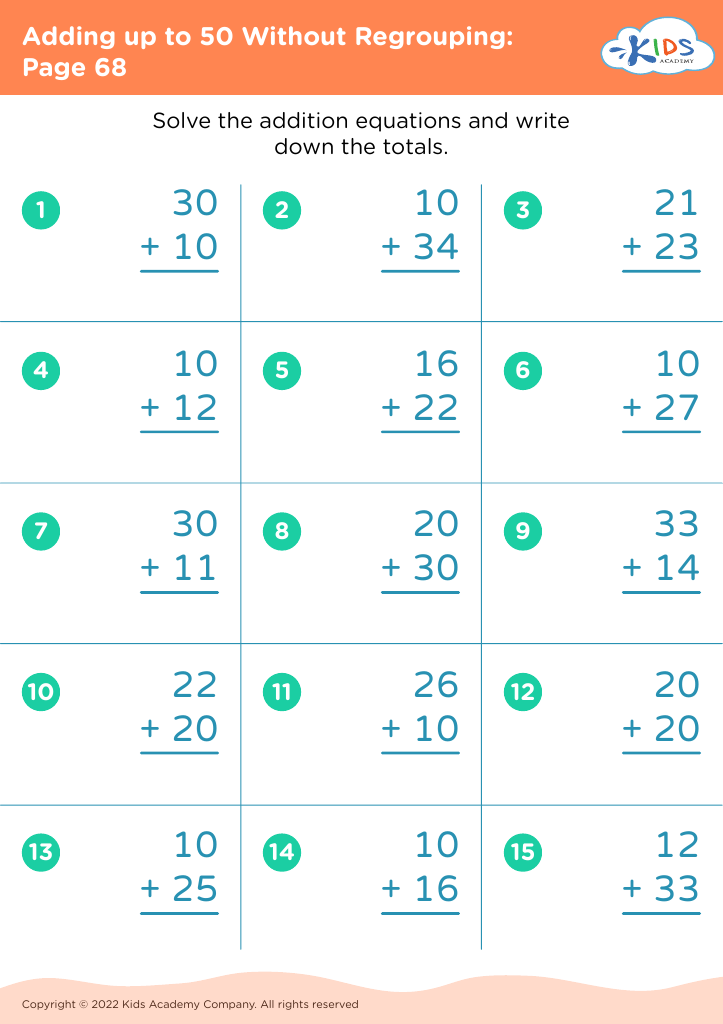
Enhance your child’s math skills with our "Counting Accuracy Addition Worksheets for Ages 5-8". Designed to improve counting precision and build a strong foundation in addition, these worksheets are perfect for young learners in preschool through second grade. Each activity is crafted with fun and engaging problems that help kids master basic math concepts while enjoying the learning process. With visually appealing designs and age-appropriate challenges, our worksheets make math exciting and accessible. Boost your child's confidence and competence in math today with our expertly designed counting accuracy addition worksheets. Join us at Kids Academy for limitless learning adventures!




.jpg)



Counting accuracy and addition form the foundation of mathematical understanding for children aged 5-8, and it's crucial for parents and teachers to prioritize this learning. Accurate counting helps young learners develop number sense, which is their ability to understand, relate, and connect numbers. Without this basic skill, children may struggle with more complex mathematical concepts as they advance academically.
When children confidently count and perform simple addition, they sharpen their problem-solving skills and develop a positive attitude toward math. This proficiency influences how they approach mathematical tasks, promoting resilience and persistence. Moreover, these skills have real-world applications—managing money, telling time, and even in everyday decision-making, building essential life skills.
Precise counting and early addition also support cognitive development. These activities improve memory, enhance attention to detail, and promote logical thinking. Engaging in these exercises creates neural pathways that facilitate future learning.
Lastly, math confidence at an early age removes anxiety and fosters a love for the subject. By prioritizing counting accuracy and addition, adults can ensure that children view math not as a chore but as an intriguing and manageable challenge, setting the stage for lifelong success in various disciplines.








