Develop problem-solving skills Addition Worksheets for Ages 5-8
7 filtered results
-
From - To
Boost your child's mathematical confidence with our engaging Addition Worksheets designed for ages 5-8. These carefully crafted worksheets focus on developing essential problem-solving skills through interactive and effective exercises. Each worksheet blends fun with learning, ensuring young learners grasp addition concepts while enhancing their analytical thinking and critical reasoning abilities. Perfect for use at home or in the classroom, our worksheets provide a solid foundation for future mathematical success. Give your child the gift of a brighter mathematical future with our expertly designed addition worksheets, tailored to turn math practice into an enjoyable adventure.
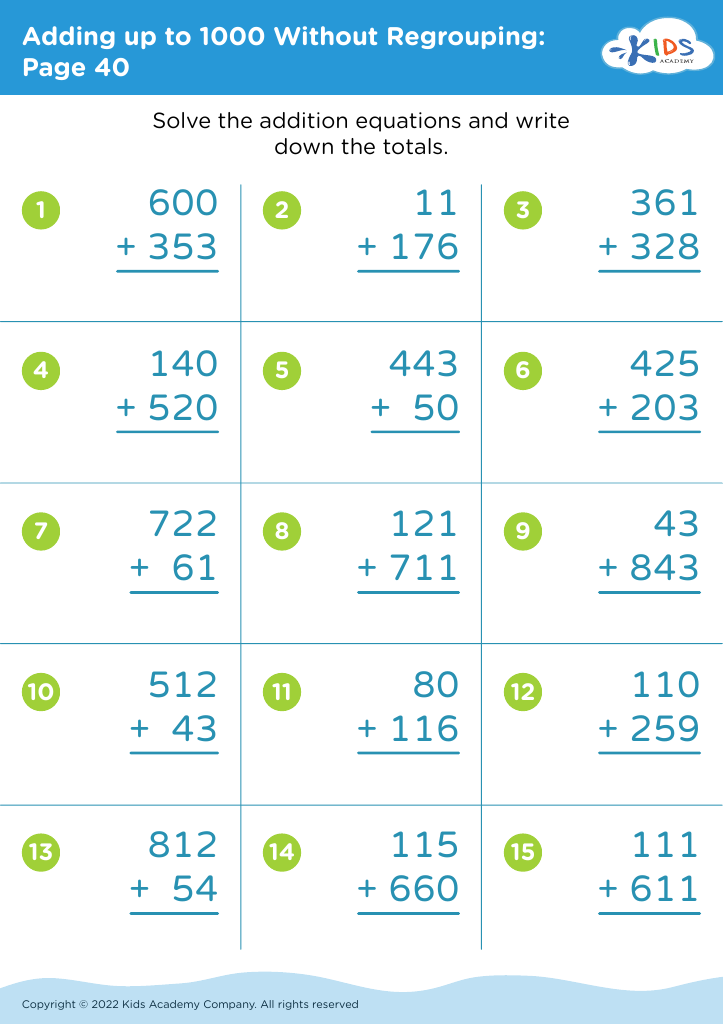
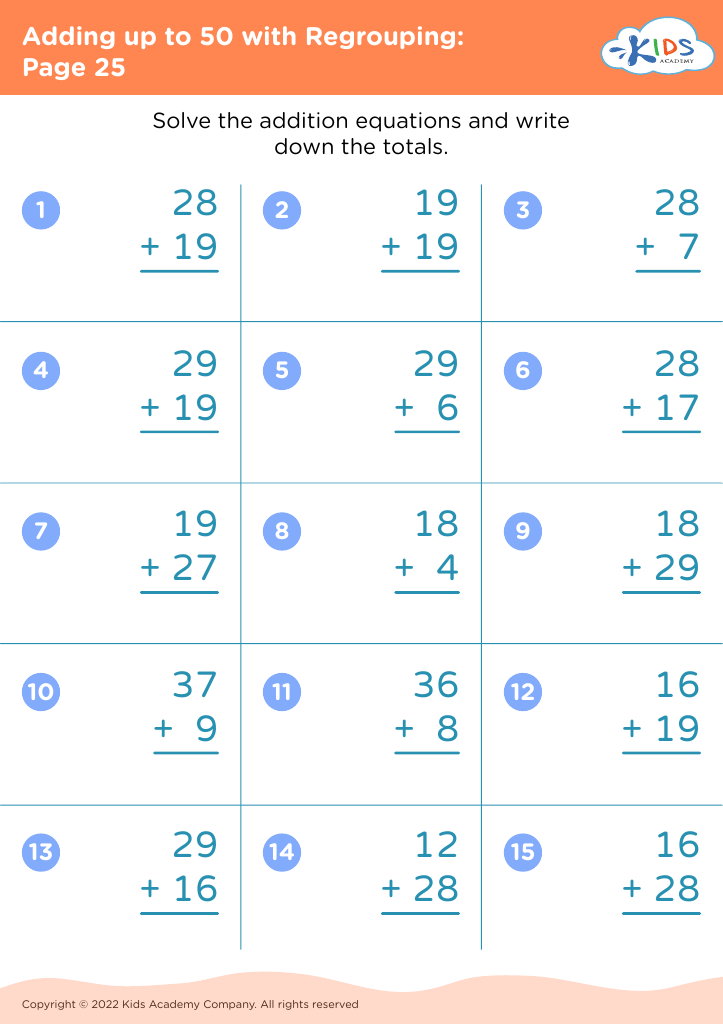
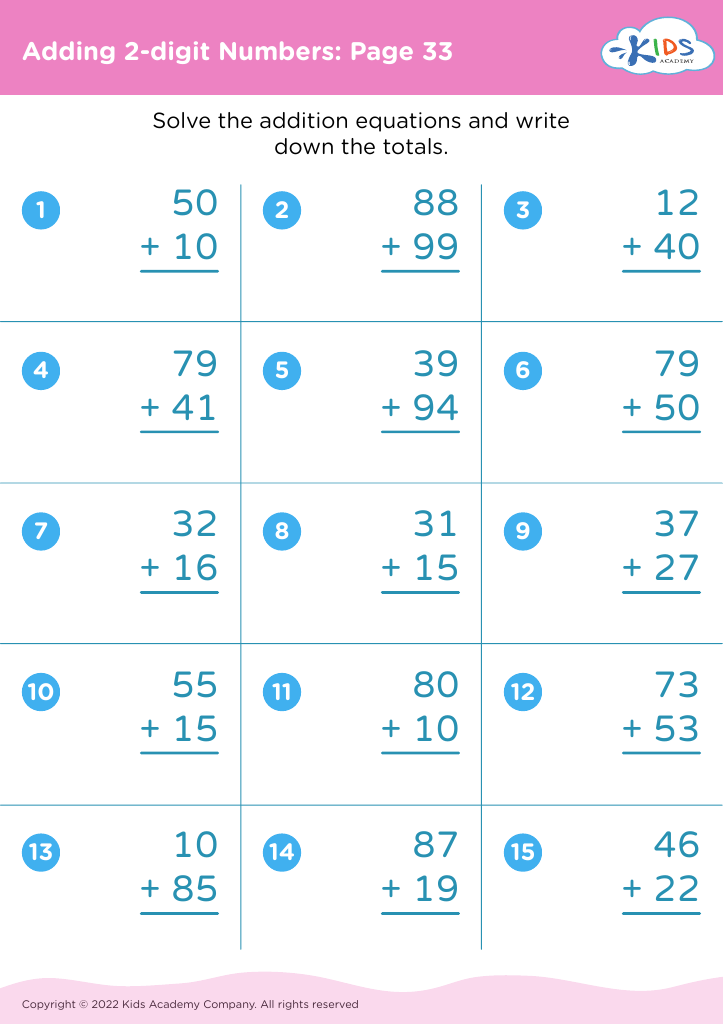
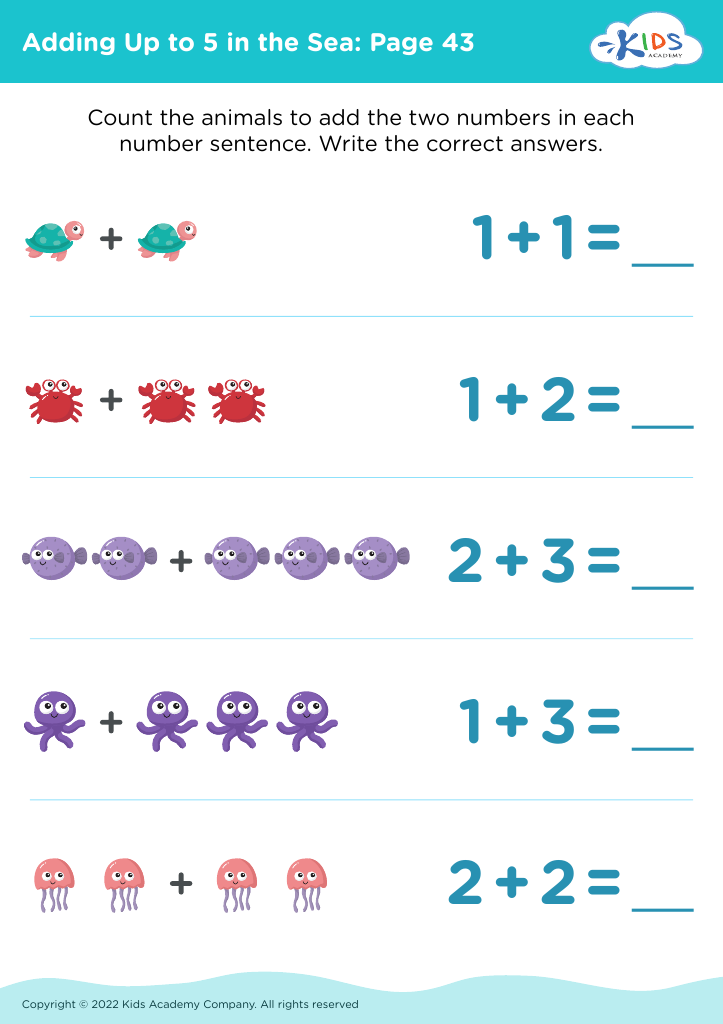
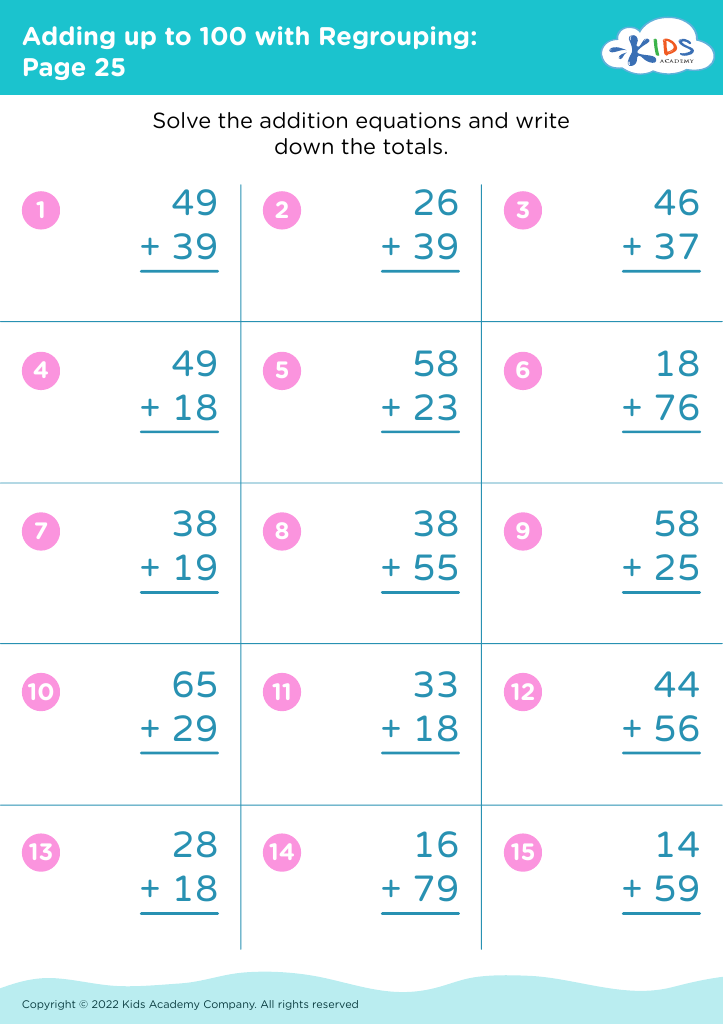
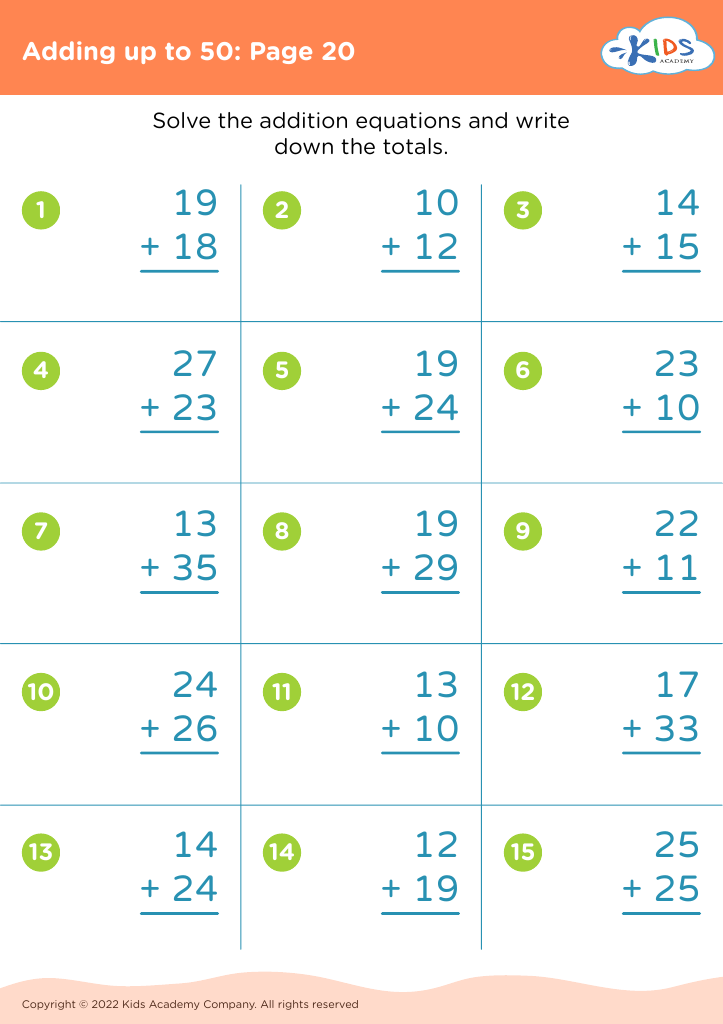
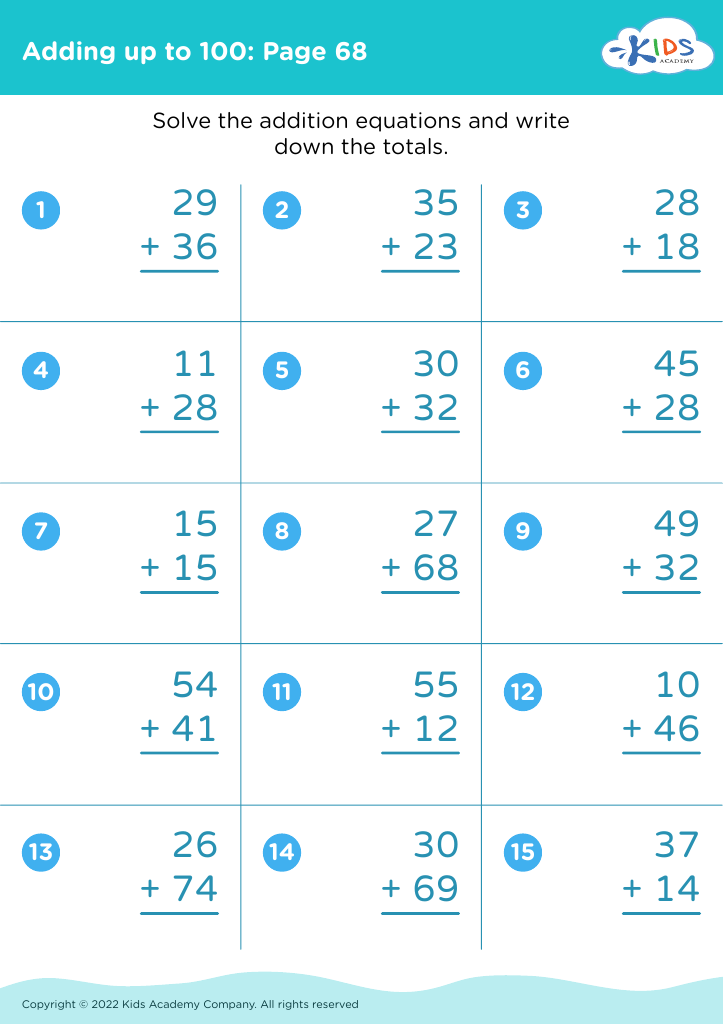








Parents and teachers should prioritize the development of problem-solving skills through addition for children ages 5-8. This foundational math skill is critical for several reasons. First, addition is a basic building block for all future mathematics learning. By mastering addition early, children gain the confidence and competence needed to tackle more complex mathematical operations as they grow.
Second, addition teaches critical thinking and logical reasoning. When children solve addition problems, they learn to process information and find solutions, which enhances their overall cognitive development. These problem-solving skills are not limited to mathematics but are transferable to everyday life situations, such as making decisions and solving puzzles.
Moreover, understanding addition helps children develop a sense of number relationships and quantities, which is crucial for more advanced math concepts such as subtraction, multiplication, and division. It also fosters a foundational sense of how numbers interact in the world around them.
Finally, the ability to add can significantly boost a child's confidence in their academic abilities. Celebrating their successes in addition builds a positive relationship with learning, encouraging a lifelong curiosity and enthusiasm for education. Therefore, nurturing problem-solving skills through addition during early childhood sets the stage for academic success and practical, everyday competence.








