Developing logical thinking Addition Worksheets for Ages 5-8
4 filtered results
-
From - To
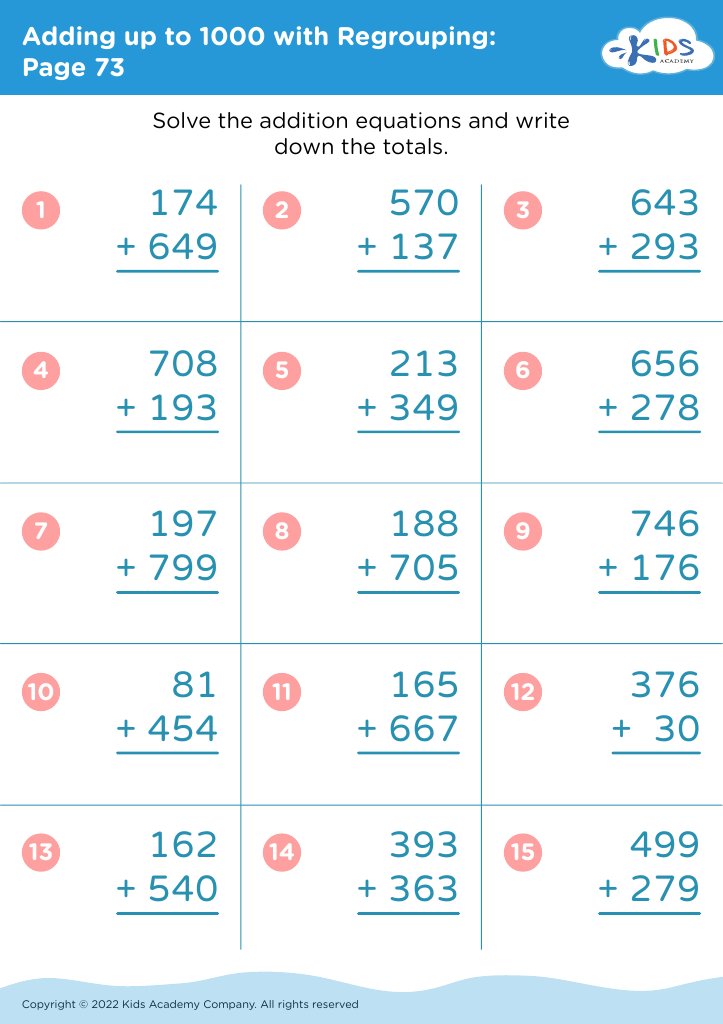
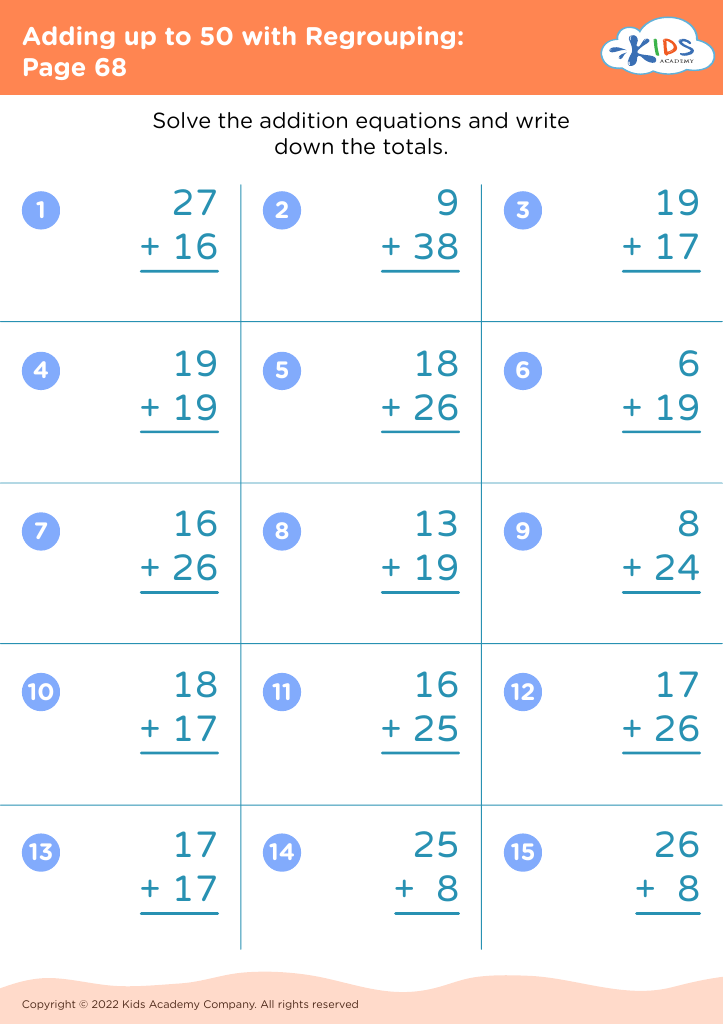
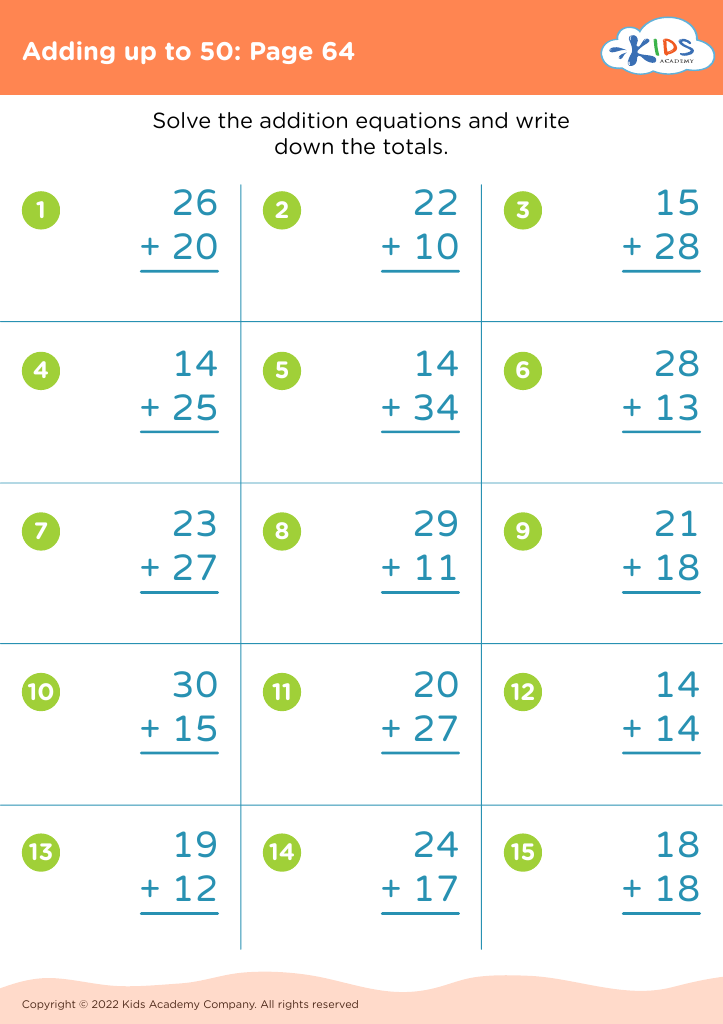
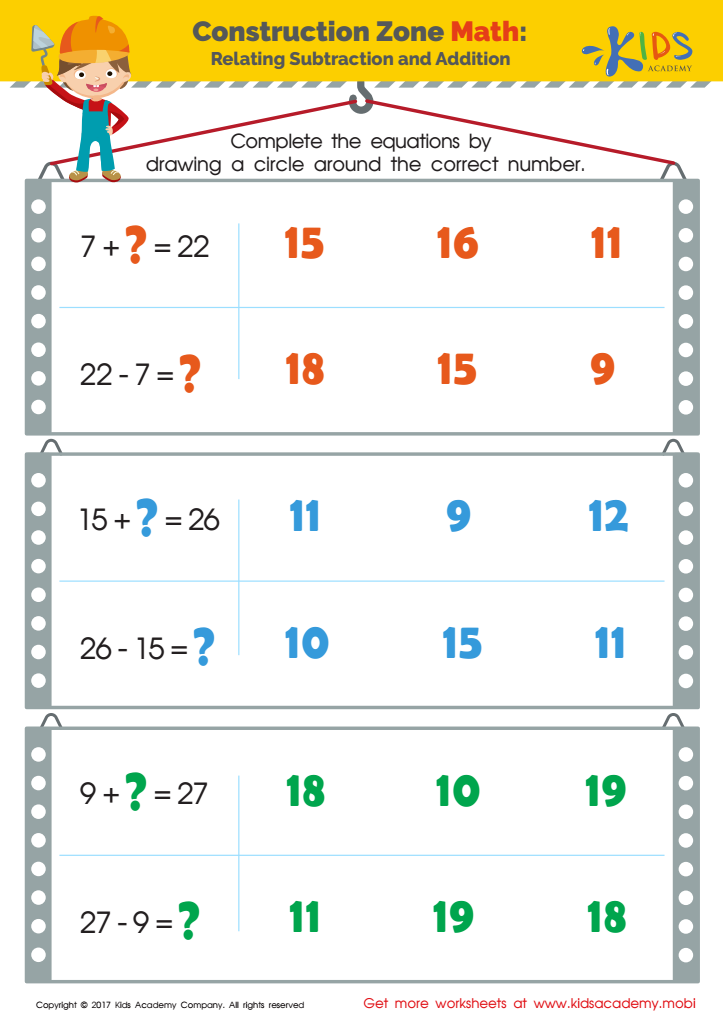
Unlock your child's potential with our "Developing Logical Thinking Addition Worksheets for Ages 5-8." Designed to engage young minds, these worksheets blend fun and learning, helping kids master essential addition skills. With visually appealing exercises and brain-boosting activities, children will improve their problem-solving abilities and foster a robust logical thinking foundation. Suitable for various learning styles, these resources are perfect for both classroom and home use, offering step-by-step guidance to ensure a comprehensive understanding of basic math concepts. Empower your child to excel in math while having fun with our expertly crafted addition worksheets.
Related Addition and Subtraction Facts Worksheet
 Assign to My Students








Logical thinking and addition are essential skills for children aged 5-8 for several compelling reasons. First, developing logical thinking helps youngsters understand patterns, relationships, and sequences, which are foundational for all areas of learning. When children practice logical thinking, they improve their ability to solve problems, make decisions, and understand cause and effect, which are invaluable life skills.
Incorporating addition into learning at this early age further reinforces logical thinking. Addition teaches children how numbers interact and provides a basis for more complex mathematical concepts they will encounter later. For instance, understanding that 2 + 3 equals 5 not only improves numeracy but also helps children grasp concepts of quantity and value, essential for everyday tasks such as time management and money handling.
Moreover, learning these skills early fosters confidence and a positive attitude towards learning and challenges. Children who develop strong logical thinking and arithmetic skills are generally better prepared for the structured thinking required in subjects like science, technology, and engineering.
Parents and teachers play a pivotal role in nurturing these skills by integrating fun, thought-provoking activities into the children's routines. Such activities not only engage them but also make learning a natural and enjoyable part of growing up, forming a solid foundation for their future academic and personal success.








