Enhance critical thinking Addition Worksheets for Ages 5-8
4 filtered results
-
From - To
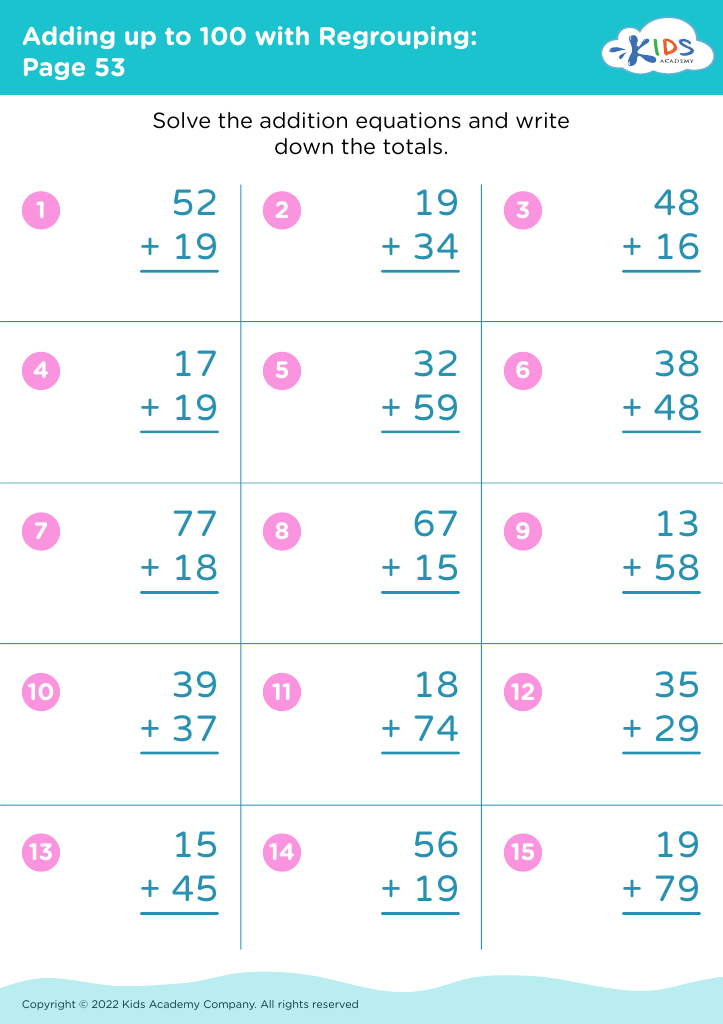
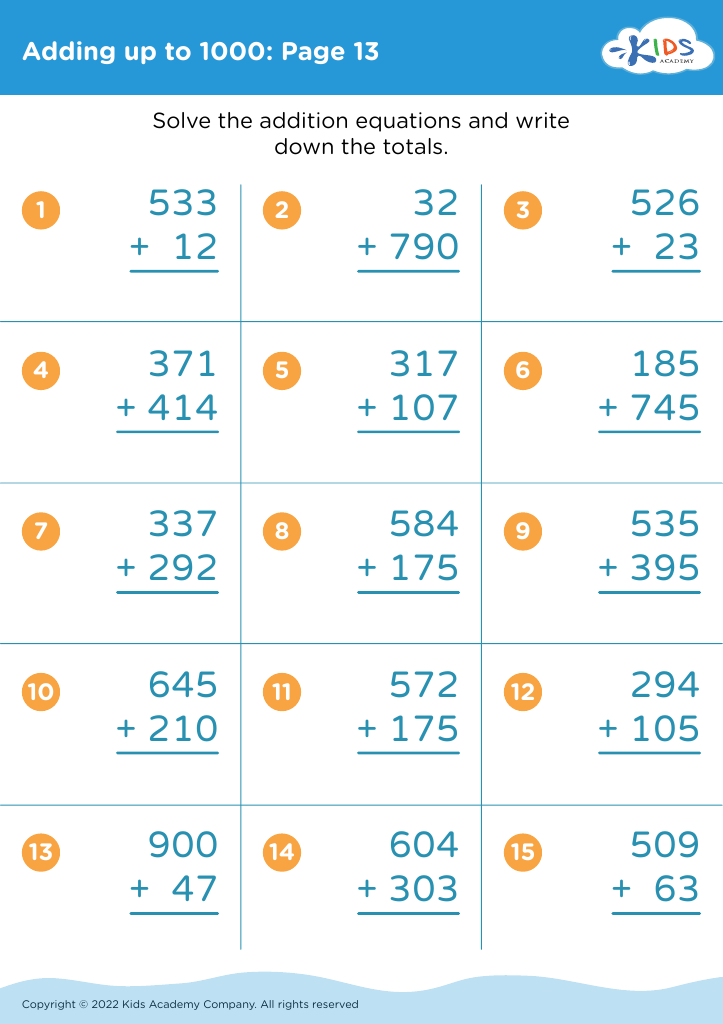
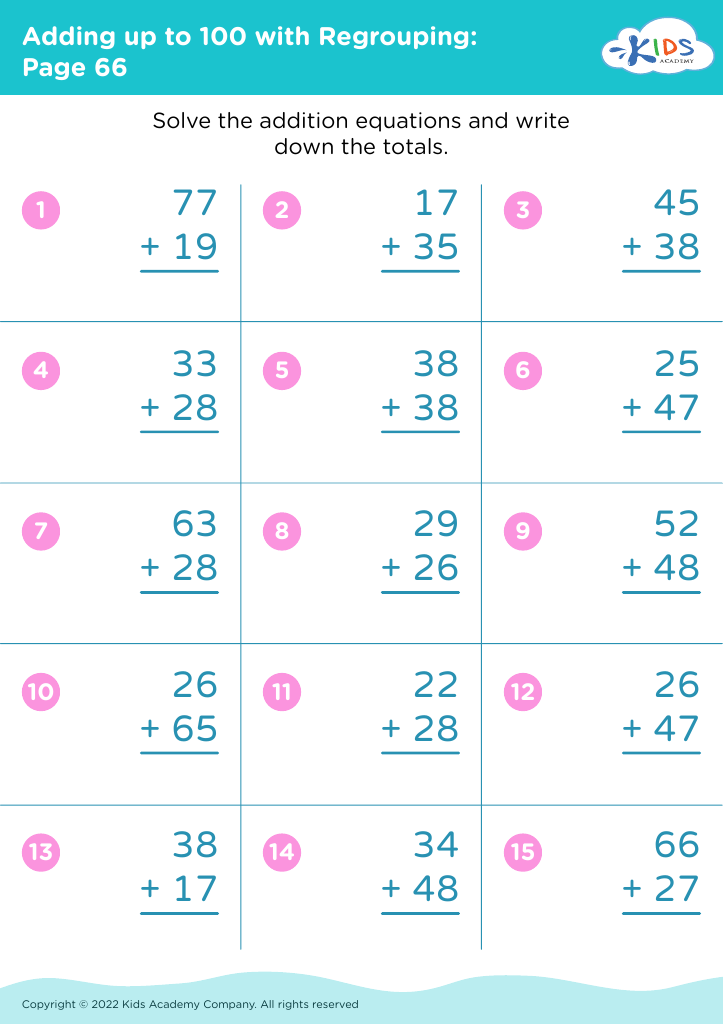
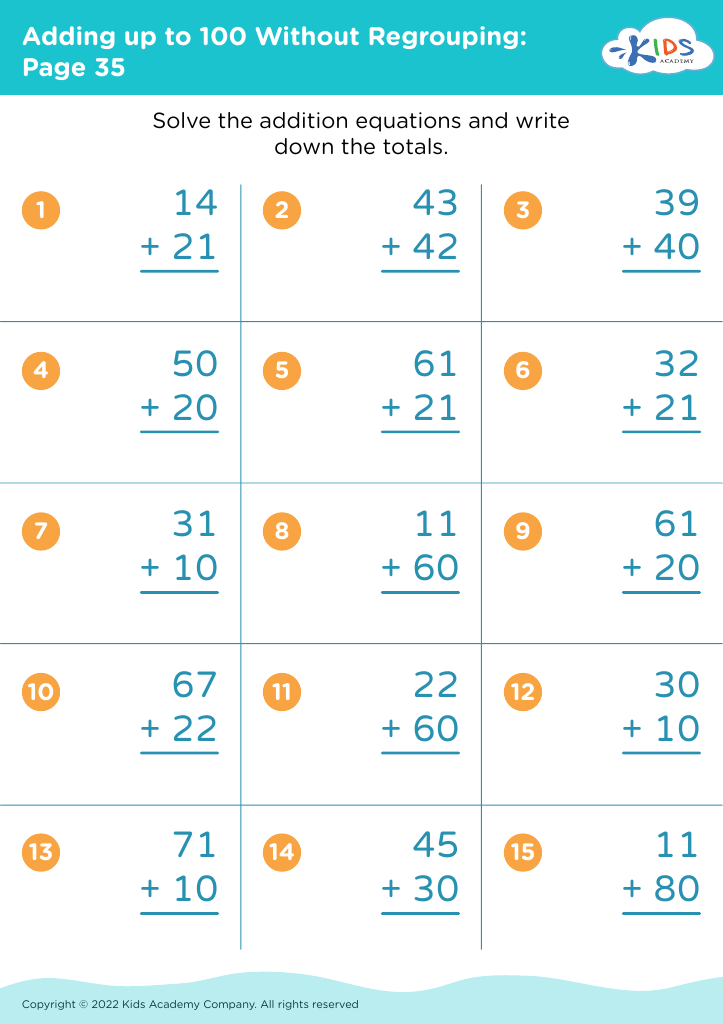
Enhance your child's critical thinking skills with our engaging Addition Worksheets for ages 5-8! At Kids Academy, we’ve designed dynamic, hands-on activities that integrate addition challenges to stimulate cognitive development and problem-solving abilities. Through colorful and interactive exercises, children not only practice essential math skills but also enhance their logical reasoning and analytical thinking. Perfect for home or classroom use, these worksheets make learning addition fun and effective. Foster a love for math in your young learners while sharpening their minds with our expertly crafted resources. Visit Kids Academy today and give your child the critical thinking edge they need!








Parents and teachers should care about enhancing critical thinking skills in children ages 5-8 because it is a foundational aspect of cognitive development that significantly influences a child's ability to learn and problem-solve. Critical thinking helps children not just absorb information, but understand and analyze it, allowing them to make better decisions and understand the world around them.
Introducing critical thinking at an early age aids in the development of logical reasoning, encourages curiosity, and promotes independence. For example, through activities like puzzles and story problems, children learn to interpret information, ask questions, and seek answers systematically. This not only makes math and reading more comprehensible but also teaches children how to approach various life challenges methodically.
Moreover, children who develop critical thinking skills are better communicators. They learn to express their thoughts clearly and listen to others’ ideas, fostering improved social interactions and empathy.
Engaging younger children in critical thinking tasks strengthens their brain’s neural pathways, leading to long-lasting benefits in academic performance and beyond. Fostering these skills now equips them with tools that are crucial for higher education and everyday decision making, setting a strong foundation for lifelong learning and success. Therefore, prioritizing critical thinking in early education opens doors to a brighter, more capable future for children.








