Enhance problem-solving abilities Addition Worksheets for Ages 5-8
5 filtered results
-
From - To
Boost your child's problem-solving skills with our engaging Addition Worksheets designed specifically for ages 5-8! These expertly crafted resources provide a fun and interactive way for young learners to master addition concepts while developing critical thinking abilities. Our worksheets feature a variety of exercises, including visual aids, word problems, and puzzles that encourage children to apply their math knowledge in real-world contexts. Each worksheet is aligned with educational standards, ensuring that your child builds a strong foundation in mathematics. Help your little ones enjoy learning and become confident problem solvers with these essential addition activities. Download and start exploring today!
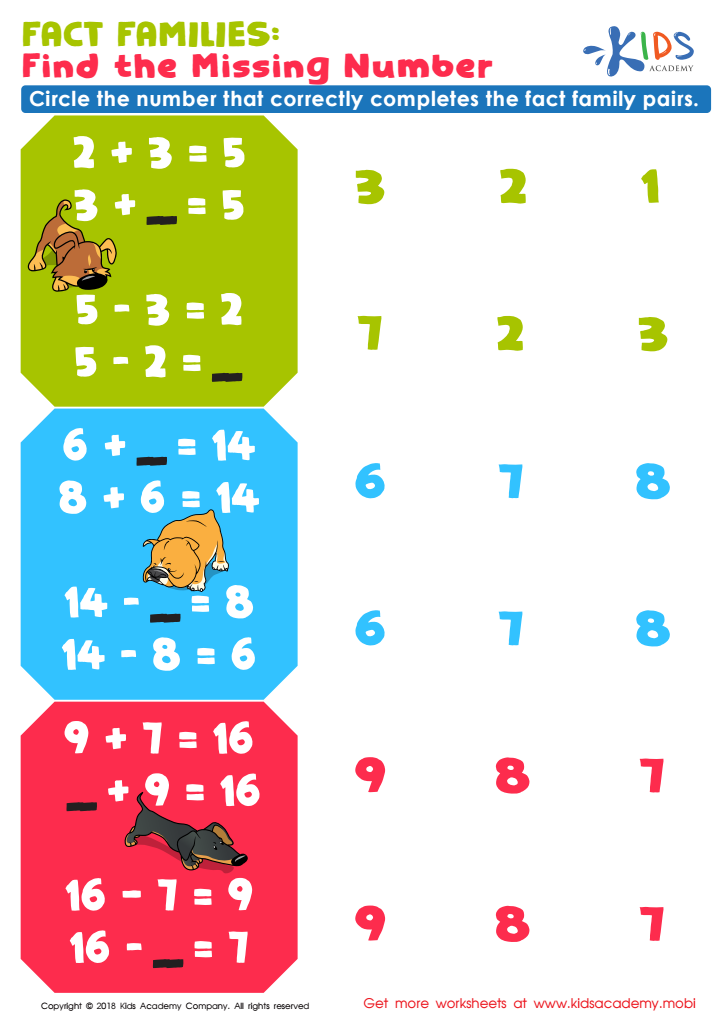
Fact Families: Find Missing Number Worksheet
 Assign to My Students
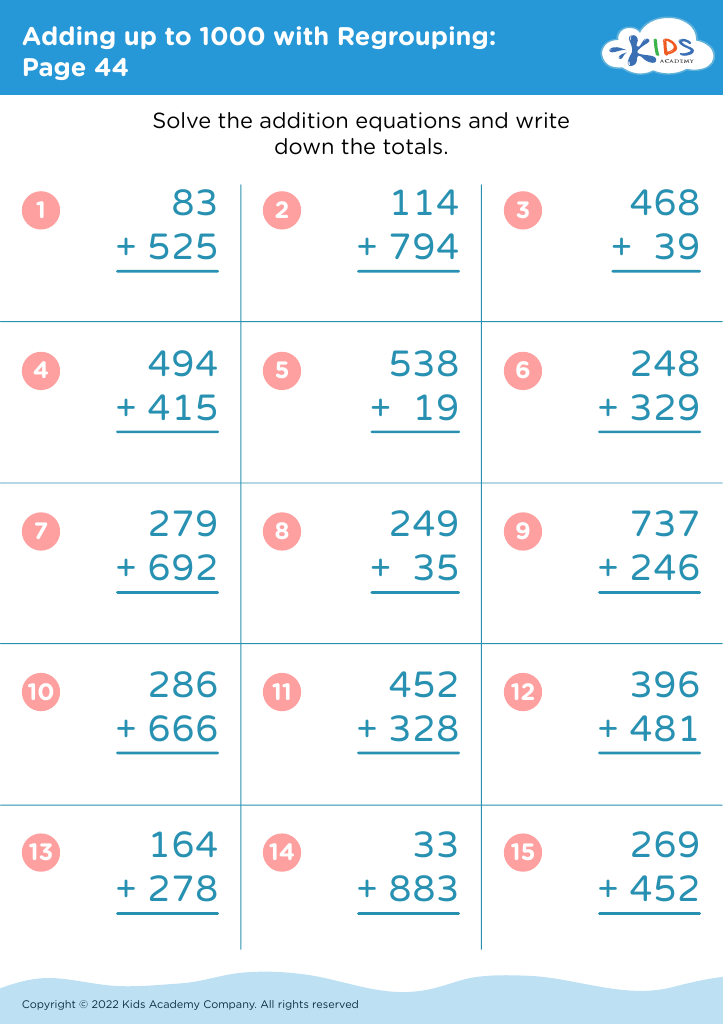








Enhancing problem-solving abilities in children aged 5-8, particularly in addition, is vital for their cognitive and social development. During these formative years, children develop foundational math skills, identifying patterns and concepts critical for future learning. Strong problem-solving abilities help children approach mathematical challenges with confidence, fostering a growth mindset that encourages them to tackle difficulties rather than shy away.
Moreover, mastering addition through problem-solving promotes critical thinking and analytical skills essential not only in mathematics but in real-life scenarios. For instance, when understanding how to group objects or share resources equally, children learn lessons in collaboration and empathy, essential for social interactions.
Additionally, by engaging in problem-solving activities, children enhance their perseverance and resourcefulness, skills that will serve them throughout their education and beyond. Parents and teachers play a key role in this development by providing varied and stimulating experiences, whether through games, puzzles, or practical applications of math in everyday life.
Encouraging these skills nurtures self-esteem and a curiosity for learning, creating a solid foundation for a lifetime of academic and personal success. Therefore, fostering strong problem-solving abilities in young children is a worthwhile investment for their future.








