Enhances concentration Addition Worksheets for Ages 5-8
4 filtered results
-
From - To
Boost your child’s math skills with our "Enhances Concentration Addition Worksheets" designed for ages 5-8! These engaging worksheets not only help children master fundamental addition concepts but also actively improve their concentration and focus. Each activity is carefully crafted to provide a fun, interactive experience, fostering both learning and retention. Your child will enjoy practicing essential math skills while developing their cognitive abilities in a stimulating environment. With a variety of colorful designs and challenging exercises, these worksheets are perfect for classroom use or at-home learning. Start your child on the path to becoming a confident math learner today!
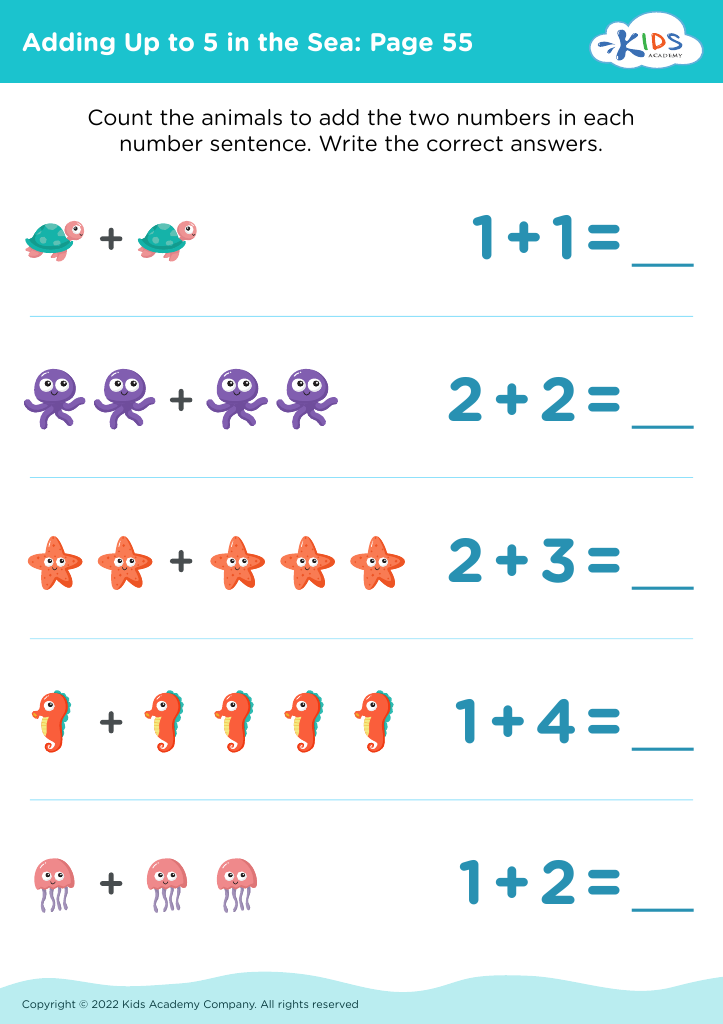
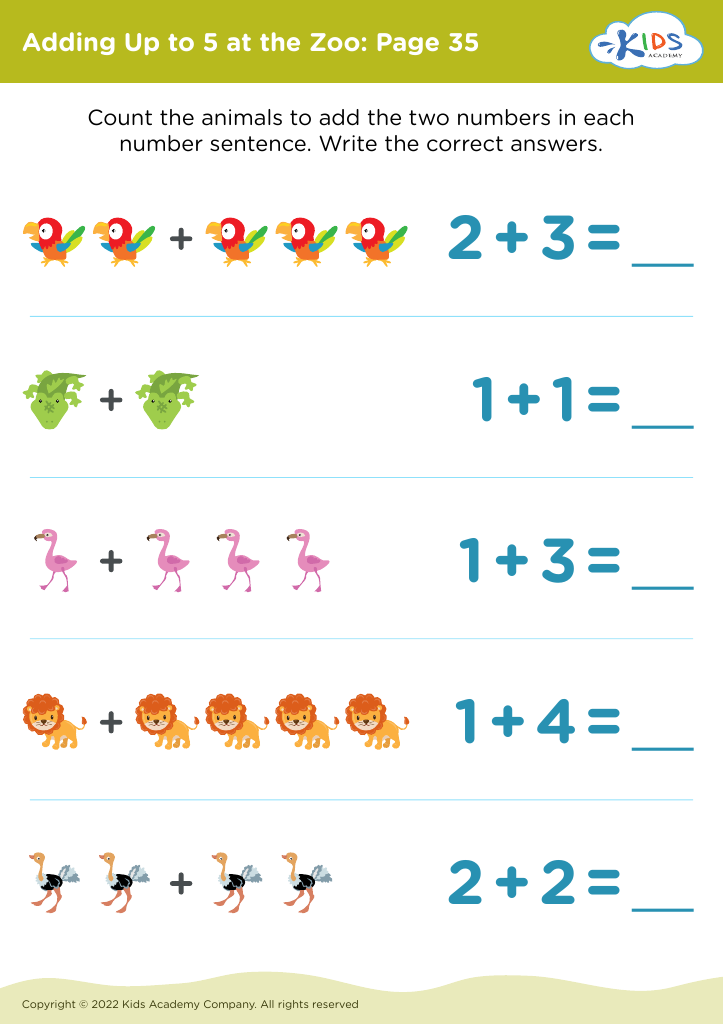
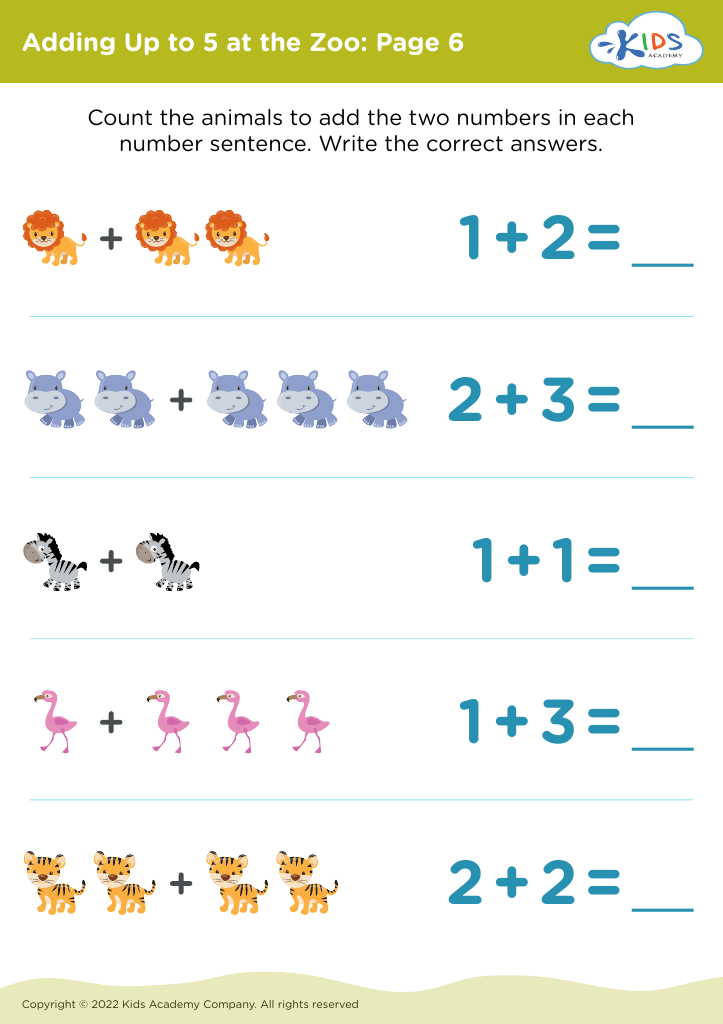
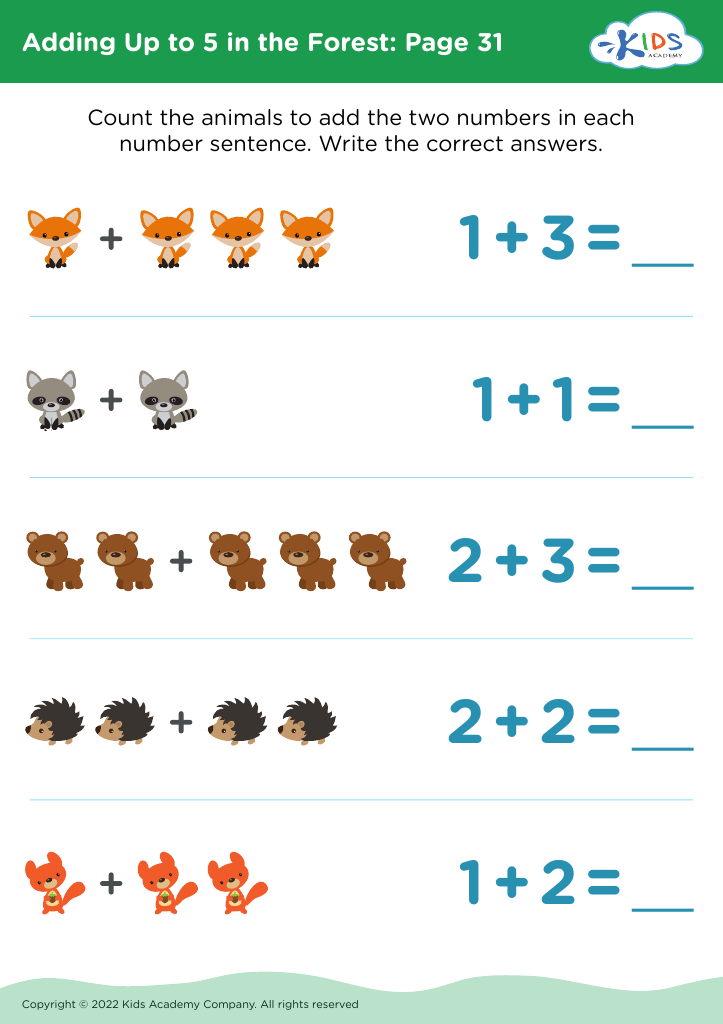







.jpg)
Enhancing concentration in children aged 5-8 is crucial for their academic and personal development. At this early stage, children are developing foundational skills that will serve them throughout their educational journey. Concentration is vital for effective learning; it allows children to focus on tasks, absorb information, and follow instructions.
For parents and teachers, fostering concentration can lead to improved academic performance, as students who can concentrate tend to complete assignments more efficiently and comprehend material better. Moreover, heightened concentration can reduce feelings of frustration and failure, enhancing a child's confidence and motivation to learn.
Moreover, teaching concentration skills can have positive impacts beyond academics, nurturing emotional regulation and social skills. Children who can focus are more likely to engage meaningfully with peers, manage distractions, and participate in collaborative activities.
Incorporating techniques like mindfulness exercises, organized routines, and interactive learning activities can help sharpen concentration skills. This not only prepares children for school but equips them with essential life skills, promoting academic success and well-rounded development. Ultimately, supporting concentration development establishes a strong foundation for lifelong learning, making it an essential focus for parents and educators alike.








