Fraction identification Addition Worksheets for Ages 5-8
5 filtered results
-
From - To
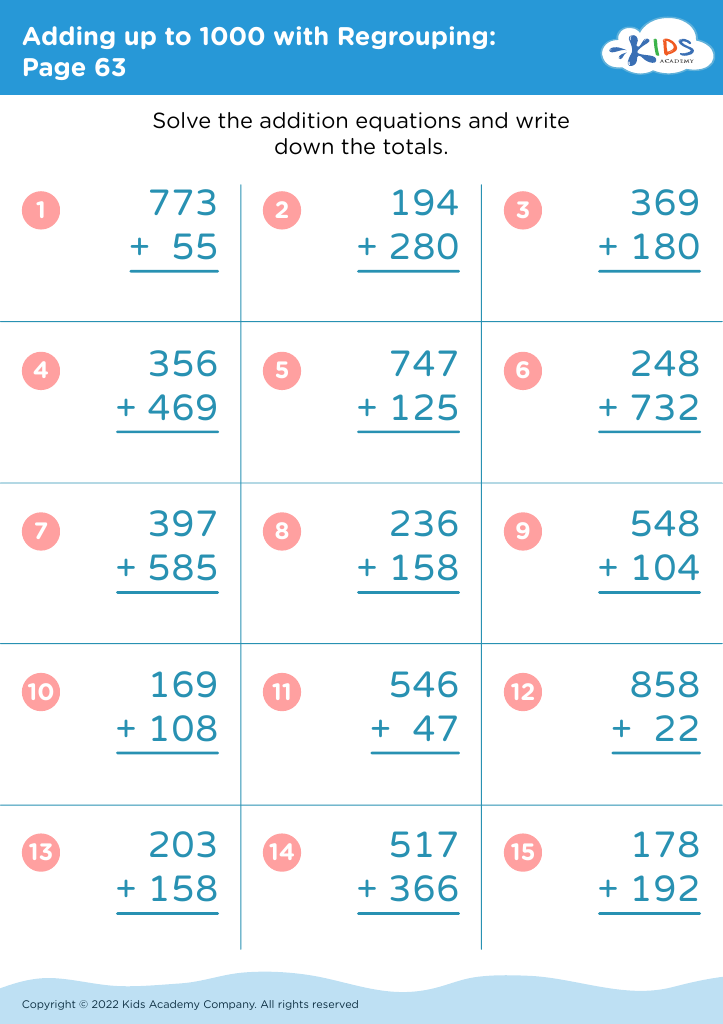
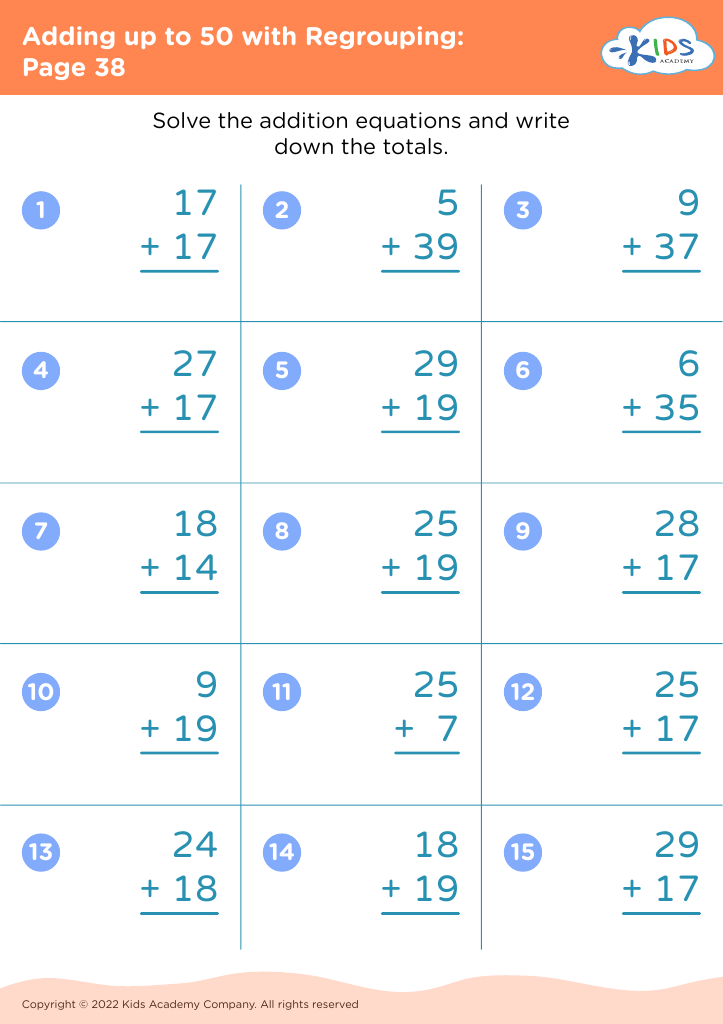
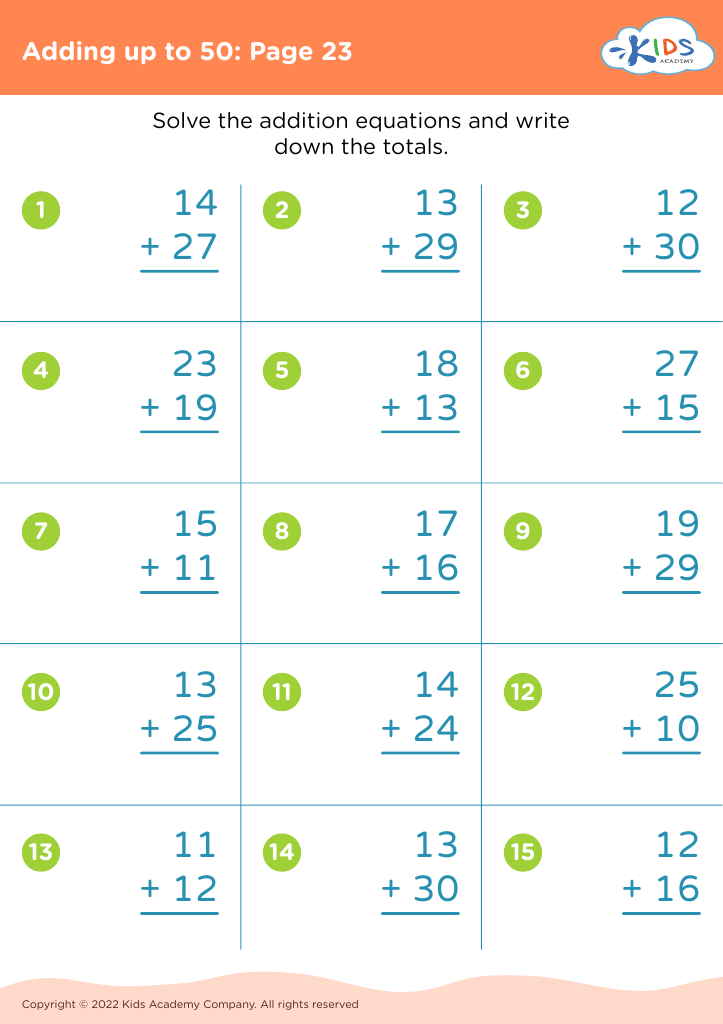
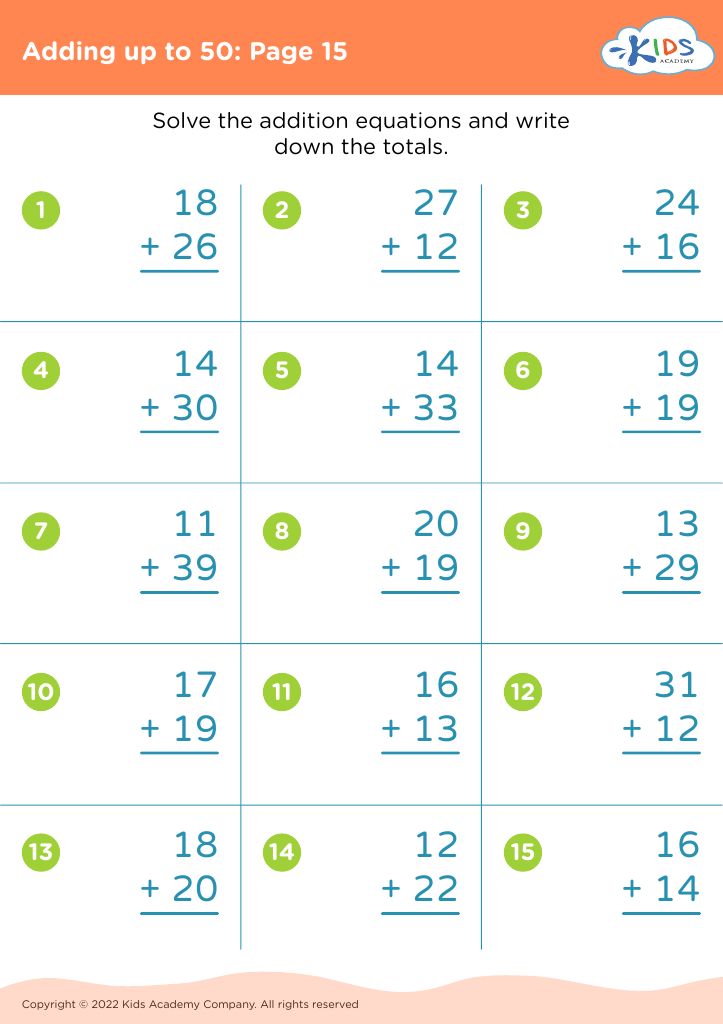
Discover our engaging Fraction Identification Addition Worksheets designed specifically for children aged 5-8. These worksheets offer a fun and interactive approach to help young learners grasp the concept of fractions while practicing addition. Each activity encourages children to identify and compare fractions, enhancing both their math skills and critical thinking. Our carefully crafted exercises promote confidence and creativity in solving problems, making math enjoyable and effective. Whether at home or in the classroom, these worksheets are an excellent resource for fostering a strong foundational understanding of fractions and addition in early learners. Start the math adventure today with our vibrant and educational materials!






.jpg)

Fraction identification and addition is a fundamental skill for children aged 5-8, as it lays the groundwork for their mathematical understanding. Early exposure to fractions gives young learners the ability to comprehend parts of a whole, which is essential for their cognitive development in mathematics and beyond. By understanding fractions, children enhance their problem-solving skills and learn to make comparisons—skills applicable in various real-world situations.
For parents and teachers, fostering an early interest in fractions can promote numerical fluency and confidence in math, which can improve overall academic performance. Engaging students with fun, hands-on activities like using fraction tiles or real-life examples (e.g., slicing pizza or dividing a cake) makes learning enjoyable and relatable.
In addition, strong foundational skills in fraction identification and addition are crucial as students progress in their education. Without these skills, they may struggle with more complex concepts in higher grades, leading to frustration and anxiety around math. By investing time in teaching fractions at an early age, parents and teachers help cultivate a positive attitude towards mathematics and prepare students for future academic challenges. In essence, early mastery of fractions can create a pathway to lifelong learning and success in mathematics.








