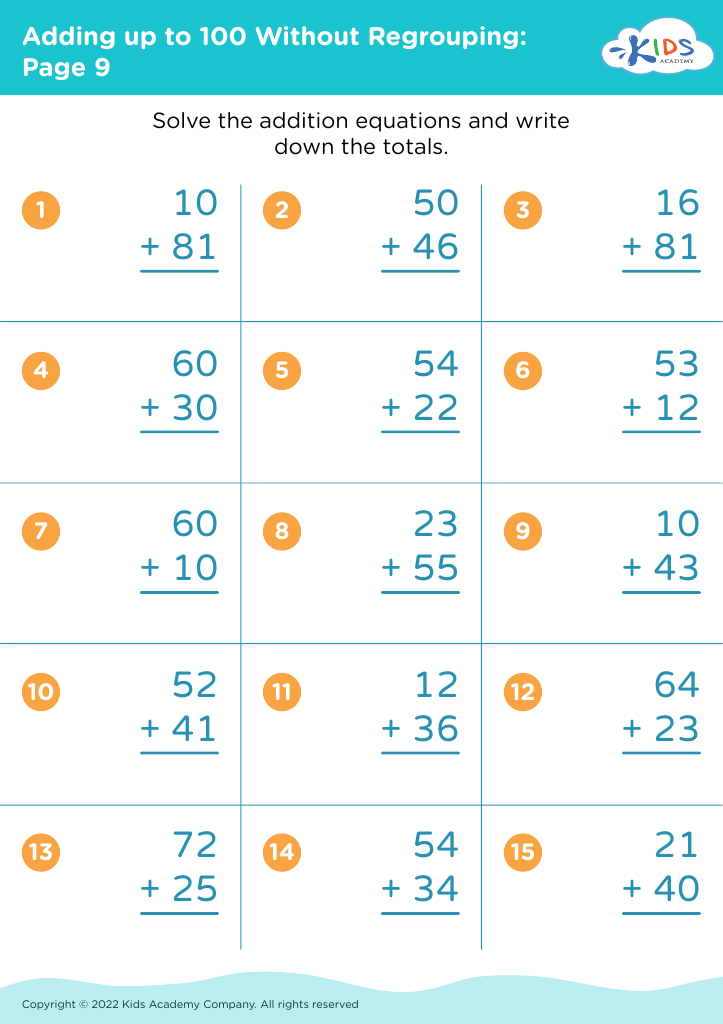








Mathematical reasoning, particularly in addition, is fundamental for young children aged 5-8 because it lays the groundwork for their overall cognitive and academic success. At this early stage, building a robust understanding of basic arithmetic like addition helps children grasp more complex mathematical concepts they will encounter in later years. It fosters critical thinking, problem-solving, and logical reasoning skills that are essential not only in math but across all subjects.
When parents and teachers emphasize addition, they contribute to a child's confidence and competence in math. Early success in mathematics can set a positive tone for a child's entire educational journey, reducing the likelihood of math anxiety and instilling a sense of accomplishment.
Additionally, addition is not just a standalone skill; it's connected to real-world applications and daily life activities. Simple tasks, such as counting objects, sharing snacks equally, and understanding time and money, all involve basic math. Encouraging proficiency in addition enables children to better navigate these everyday situations, promoting independence and self-esteem.
In fostering mathematical reasoning in young learners, parents and teachers provide them with tools to think analytically and articulate their thought processes, creating a strong foundation for future learning. Thus, investing time and effort into teaching and reinforcing addition skills is crucial for a child's holistic development and lifelong success.








