Number Recognition Addition Worksheets for Ages 5-8 - Page 22
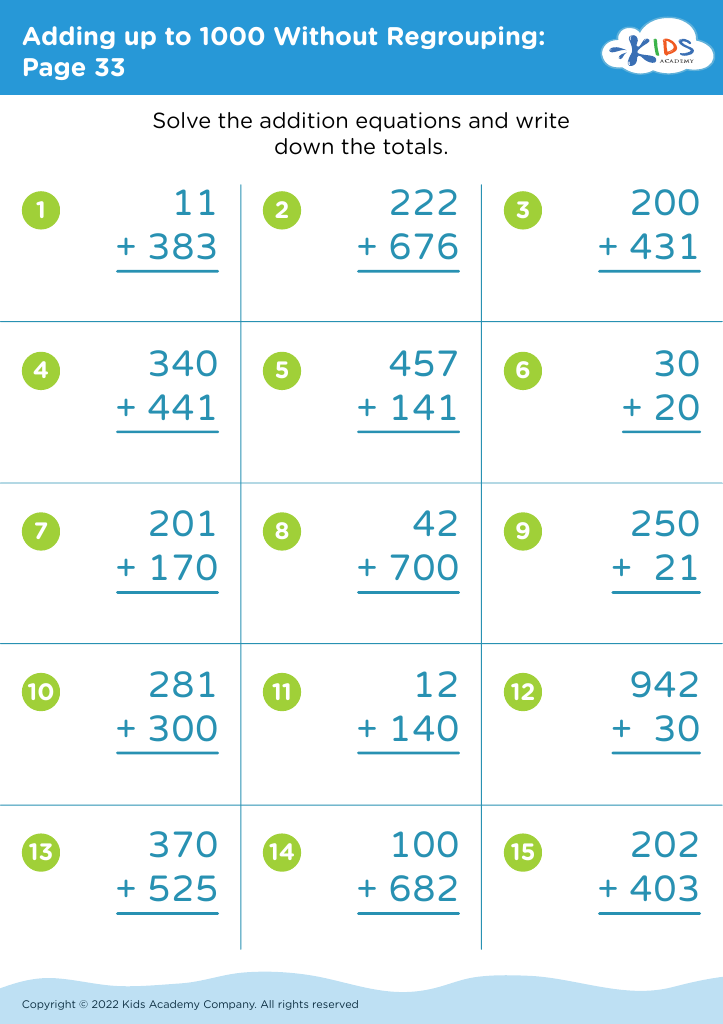
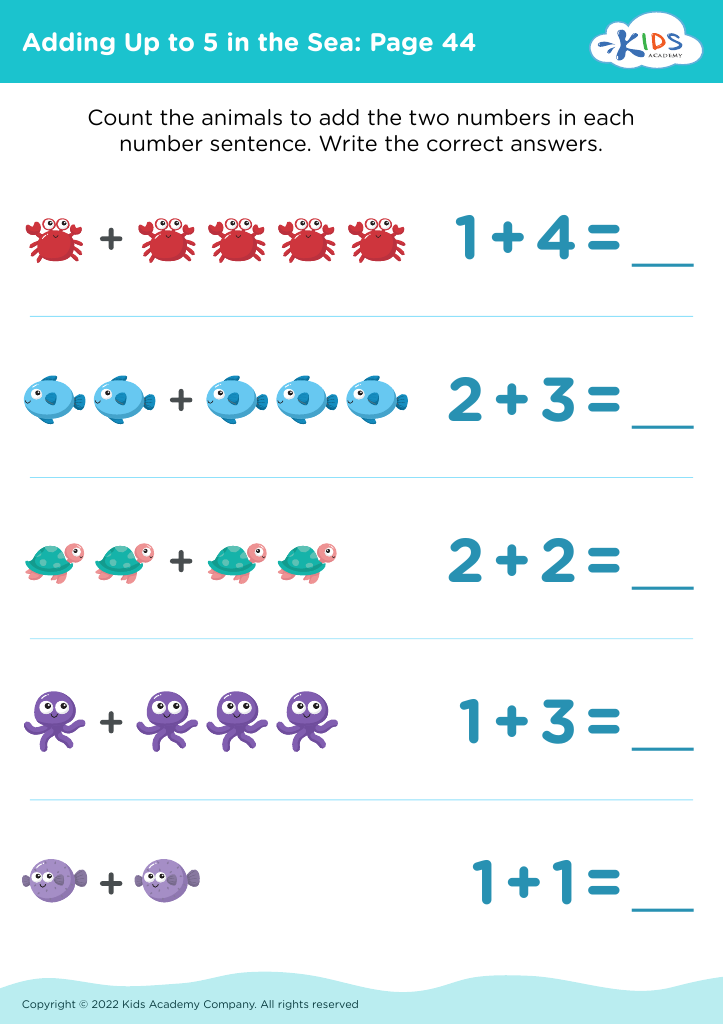
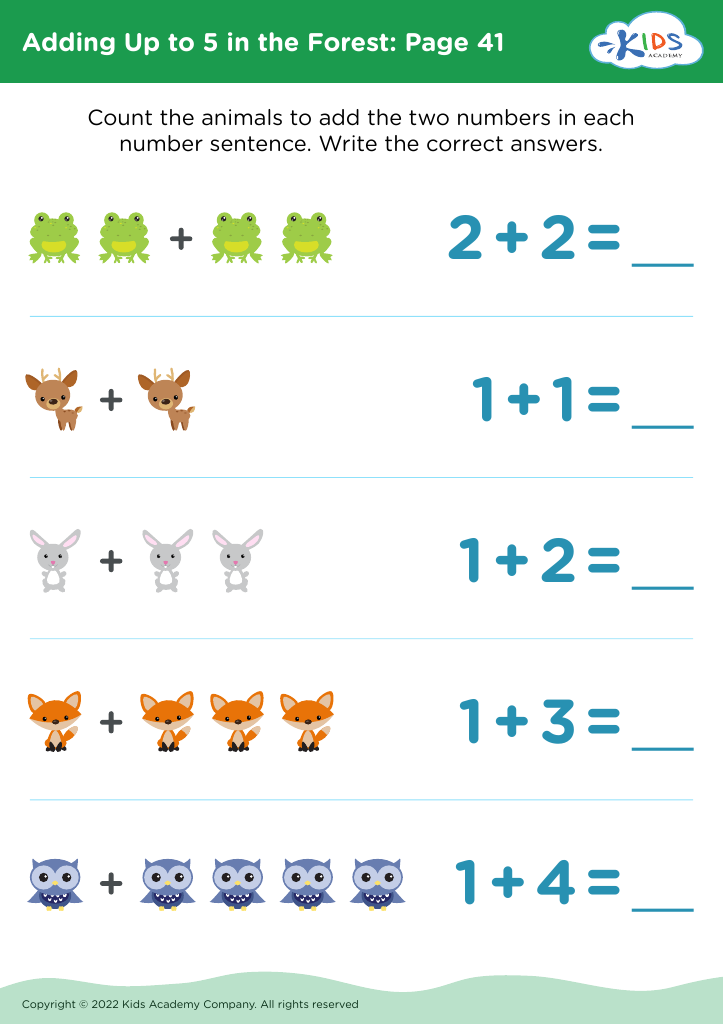
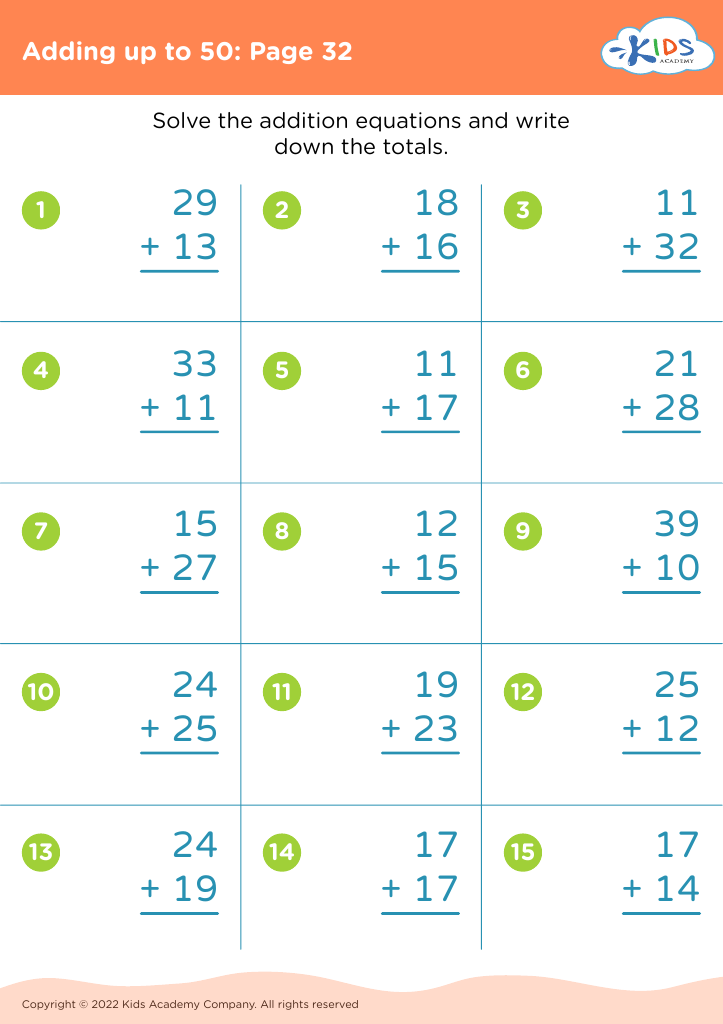
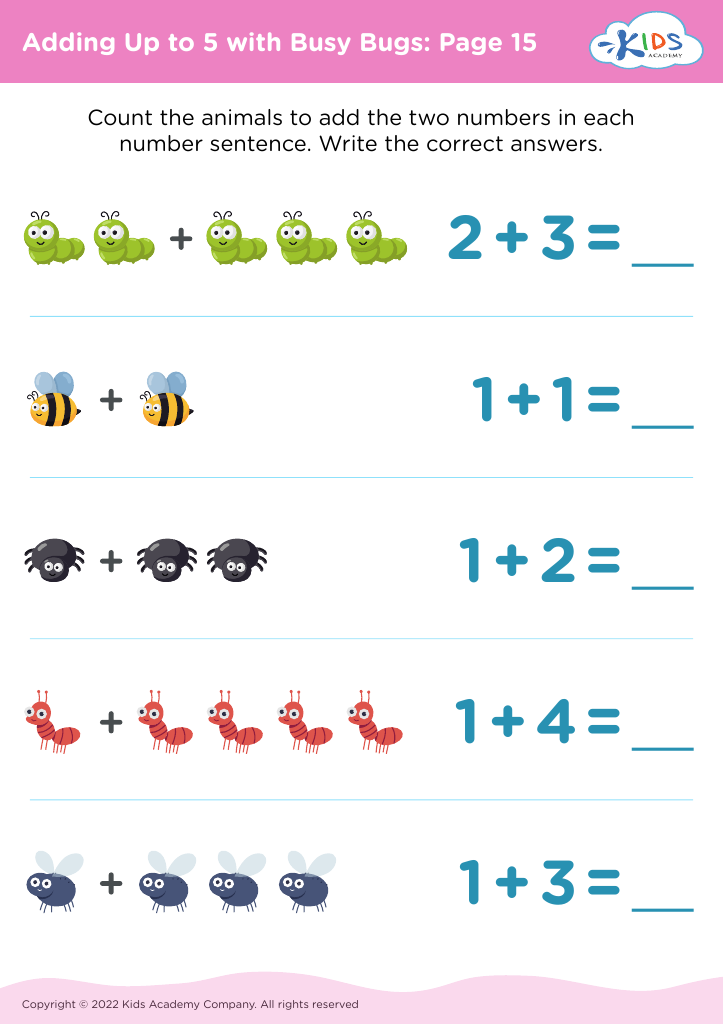








Number recognition and early addition are foundational skills for children ages 5-8, setting the stage for more advanced mathematical understanding. Parents and teachers should prioritize these skills because they underpin future academic success and practical daily functioning.
Understanding numbers and beginning addition at an early age boosts cognitive development. Recognizing numbers helps children understand order, quantity, and patterns, which are vital in problem-solving and logical thinking. Addition introduces basic arithmetical concepts and showcases the magical worlds of counting and quantifying objects.
Early mastery of these skills builds confidence. Children feel a sense of achievement, motivating them to engage further in mathematical activities. This enjoyment and confidence decrease math anxiety and lay a positive groundwork for future educational experiences.
Furthermore, number recognition and addition are critical in everyday situations. Children use these skills for basic tasks like counting objects, understanding dates and times, and handling money. Practical skills combined with academic achievement create well-rounded individuals capable of facing various real-life challenges.
Investing time and resources into teaching these fundamental math skills ensures that children not only excel academically but also grow into adept individuals capable of navigating the world with confidence and competence.








