Problem-solving abilities Addition Worksheets for Ages 5-8 - Page 2
29 filtered results
-
From - To
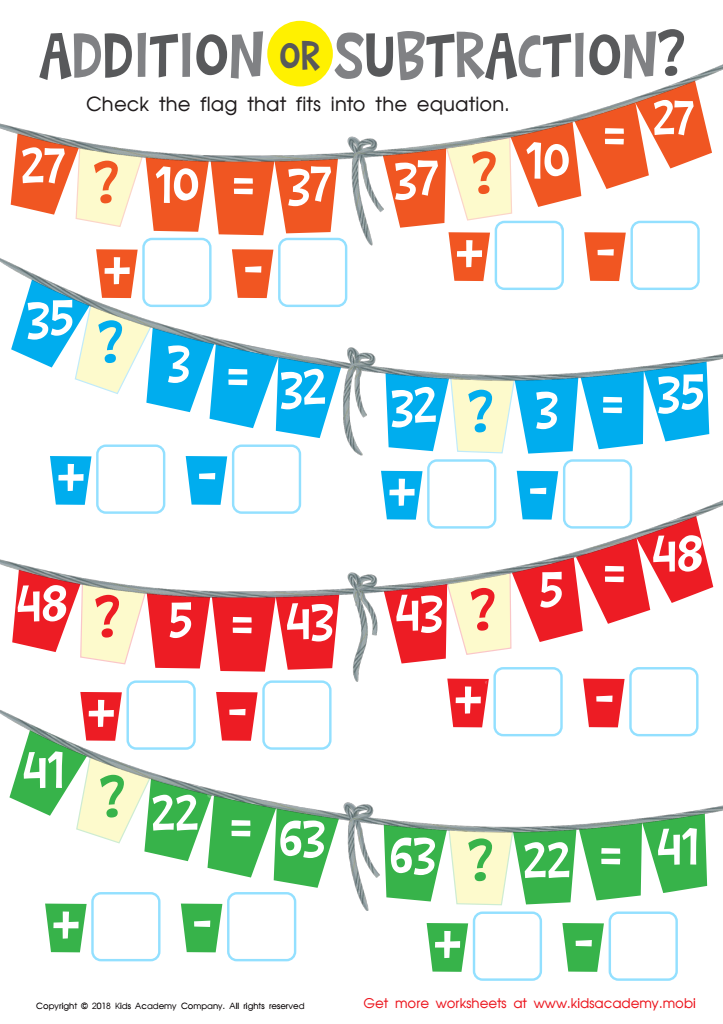
Addition or Subtraction? Worksheet
 Assign to My Students
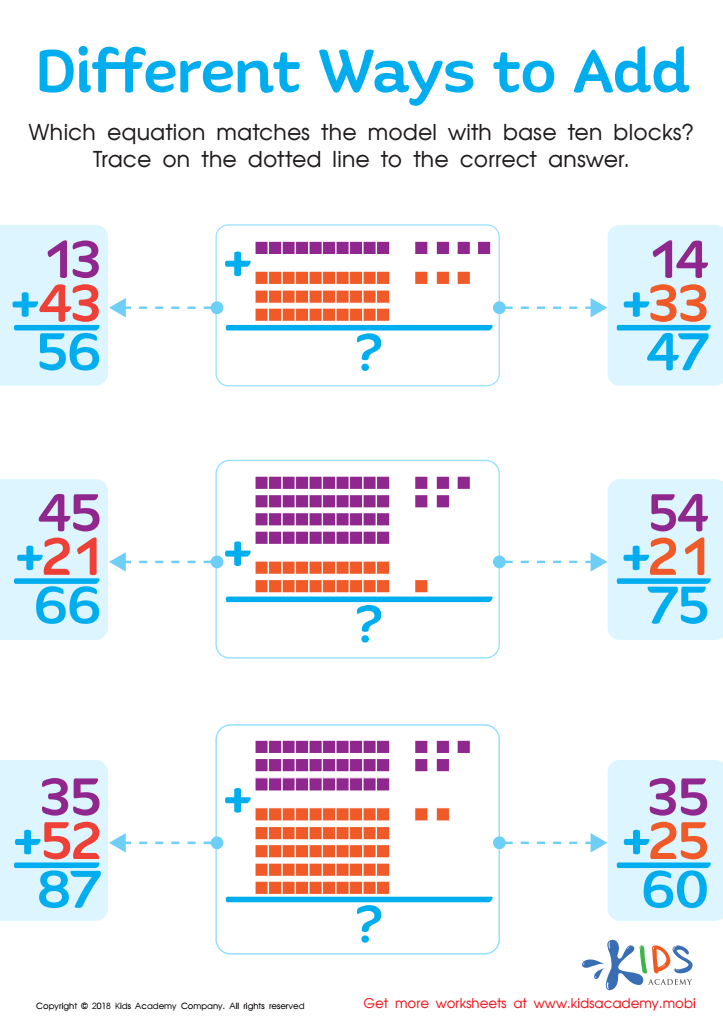
Different Ways to Add Worksheet
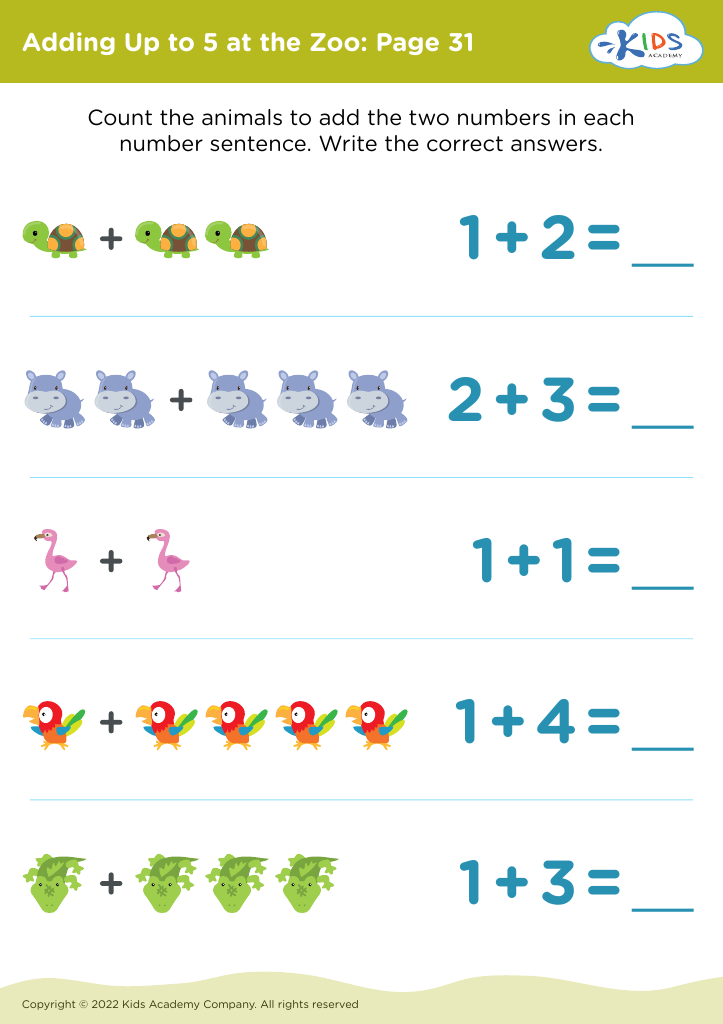
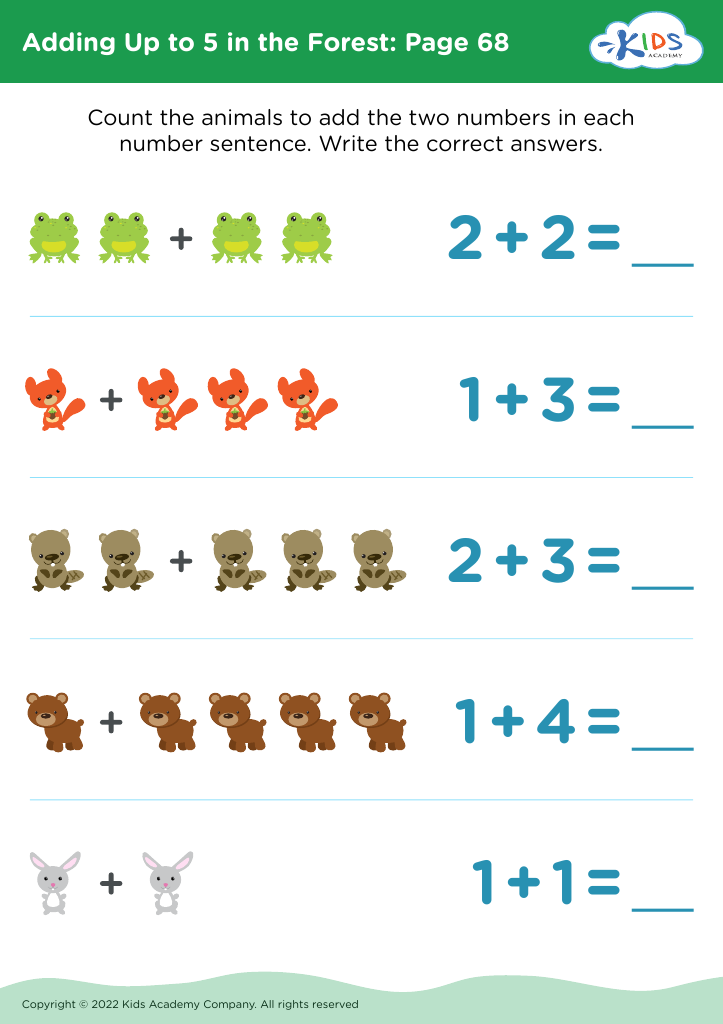
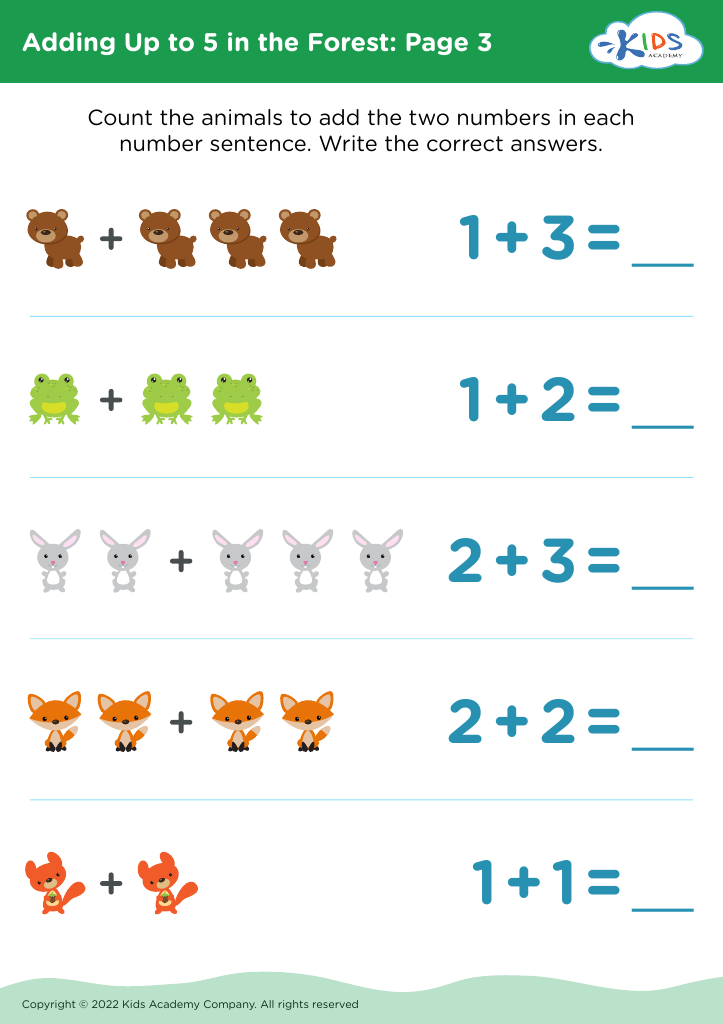








Problem-solving abilities in addition are critical for children aged 5-8 because they lay the groundwork for future mathematical understanding and cognitive development. When children engage in addition problems, they learn not only numerical processing but also fundamental skills such as logical reasoning, pattern recognition, and decision-making. These skills extend beyond math, contributing to problem-solving capabilities in everyday life, fostering independent thinking and boosting confidence.
Understanding addition at an early age fosters a positive mathematical mindset. When children encounter success in solving addition problems, they develop a sense of accomplishment and are more likely to approach future mathematical challenges with confidence rather than fear. This creates a solid foundation for advanced mathematical concepts like subtraction, multiplication, and division.
Moreover, addition problem-solving promotes cognitive functions like memory and attention. For instance, figuring out problems helps improve working memory as children need to retain intermediate steps in their minds to reach a solution. This sharpening of memory and attention is beneficial academically and in various everyday tasks.
Engaging in problem-solving activities also enhances social skills. Strategies like collaborative problem-solving help children learn to work with peers, improving communication and teamwork. Therefore, nurturing these abilities at a young age equips children with essential life skills, opening doors to educational and personal growth.








