
Spatial awareness Addition Worksheets for Ages 5-8
5 filtered results
Difficulty Level
Grade
Age
-
From - To
Subject
Activity
Standards
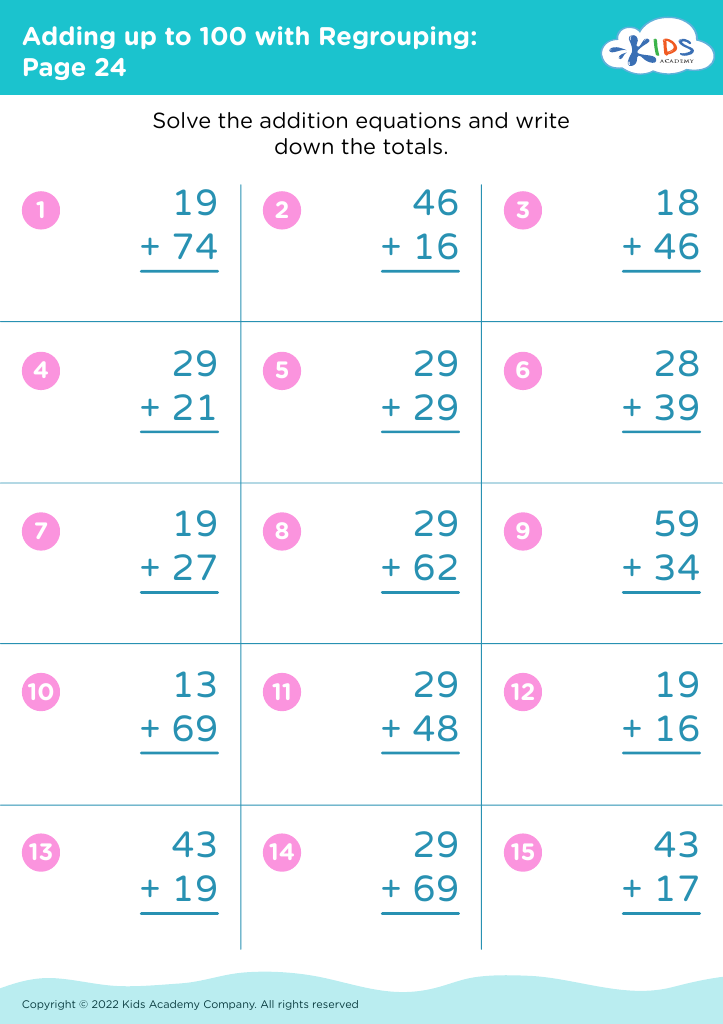
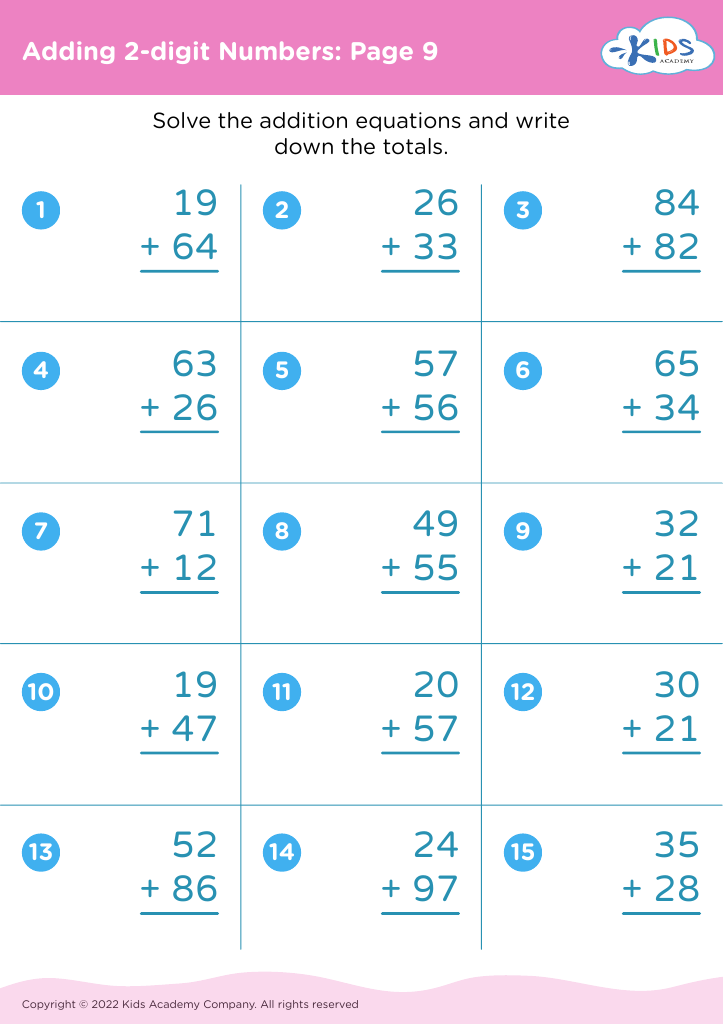
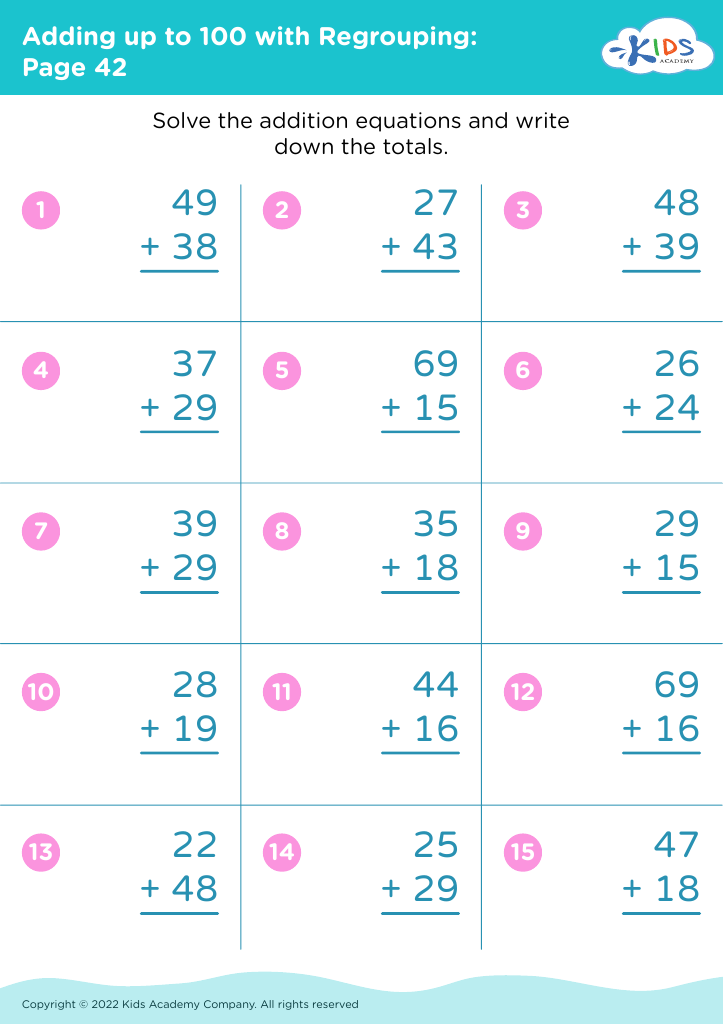
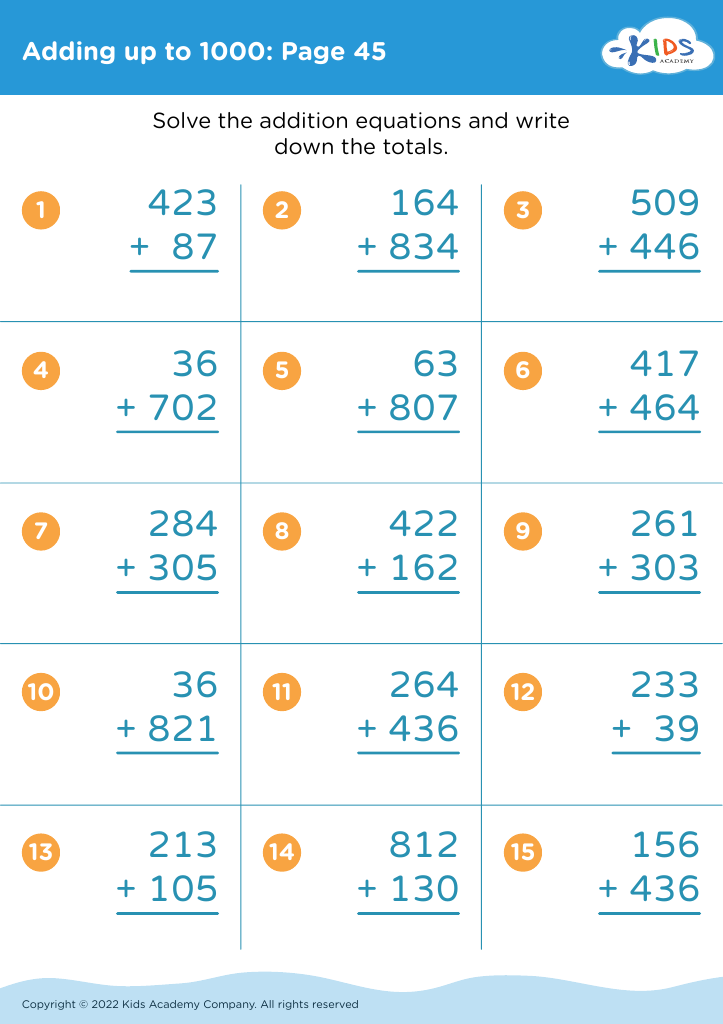
Enhance your child's mathematical aptitude with our engaging Spatial Awareness Addition Worksheets for ages 5-8. Designed to develop both addition skills and spatial awareness, these printable worksheets transform learning into a fun and interactive experience. Kids will not only practice basic addition but also improve their ability to visualize and manipulate objects in space, fostering better problem-solving skills and cognitive growth. Perfect for children of varying learning styles, our worksheets make the complex simple through colorful graphics and step-by-step instructions. Unlock your child's potential and set them up for academic success with our comprehensive resources.
Favorites
With answer key
Interactive
Join Kids Academy for Free
Who is primarily going to use this learning content?





.jpg)


Spatial awareness in young children, particularly in ages 5-8, is a crucial aspect of their overall cognitive development. As parents and teachers, nurturing spatial awareness through activities that develop this skill is essential for several reasons.
Firstly, spatial reasoning forms the foundation for success in STEM (Science, Technology, Engineering, and Mathematics) subjects. Engaging kids in activities that boost spatial awareness, such as building blocks, puzzles, and drawing, directly supports their ability to understand mathematical concepts like geometry and measurement.
Secondly, fostering spatial awareness also enhances their everyday problem-solving skills. They become better at navigating physical spaces, understanding how objects relate to one another, and interpreting directions, all of which are vital in daily life.
Moreover, spatial skills are linked to advanced reading and handwriting abilities. When children grasp how letters and words occupy space on a page, they read more fluidly and write more legibly. These foundational literacy skills are essential for academic success across all subjects.
Additionally, improving spatial awareness helps children develop motor skills and coordination needed for physical activities and sports. This not only promotes physical health but also social skills as they engage in group sports and play.
In compelling sum, strengthening spatial awareness in young children cultivates a well-rounded foundation crucial for academic achievement, practical day-to-day functioning, and social interaction, laying a lifelong groundwork for success.








