Understand sequences Addition Worksheets for Ages 5-8
5 filtered results
-
From - To
Welcome to our "Understand Sequences Addition Worksheets" designed specifically for children aged 5-8! These engaging worksheets aim to enhance your child's mathematical understanding by teaching them about number sequences through addition. As kids practice identifying patterns and adding numbers in order, they will develop essential problem-solving skills and a solid numerical foundation. Each worksheet is designed with colorful graphics and age-appropriate challenges to keep young learners motivated and excited. Perfect for at-home learning or classroom use, our worksheets ensure your child gains confidence in math while having fun! Explore our collection today and watch your young mathematician thrive.
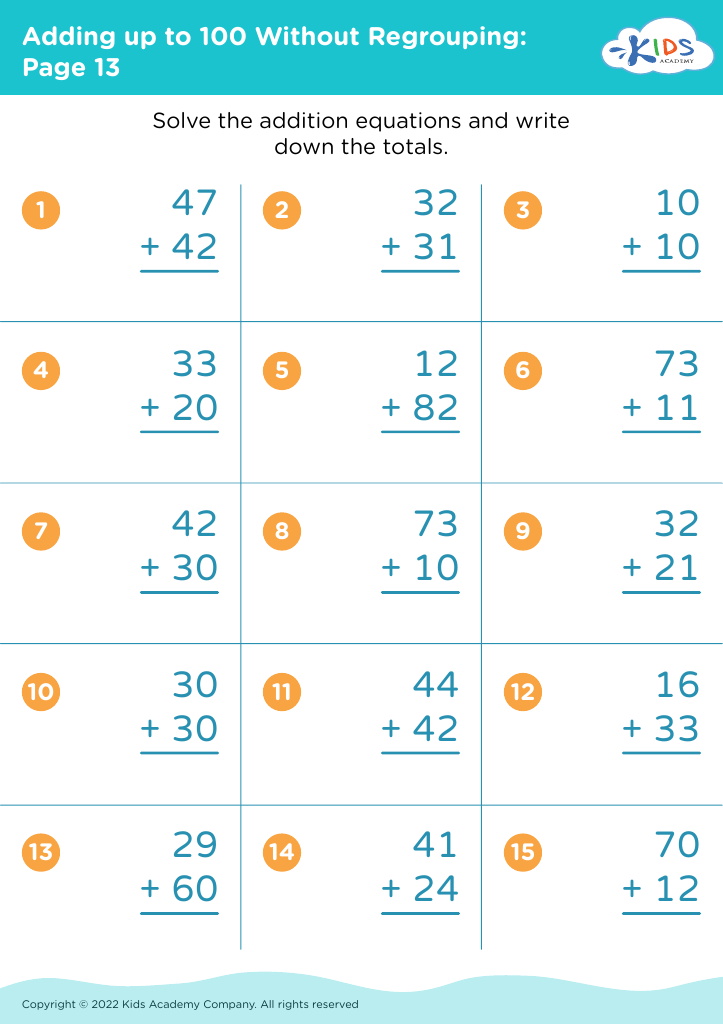
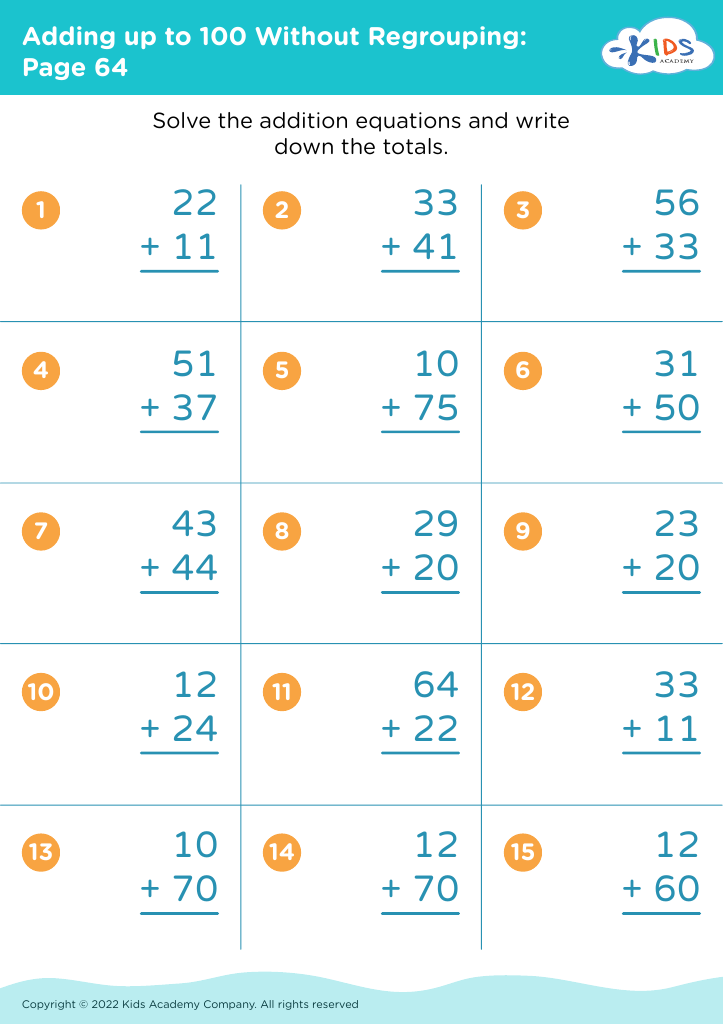
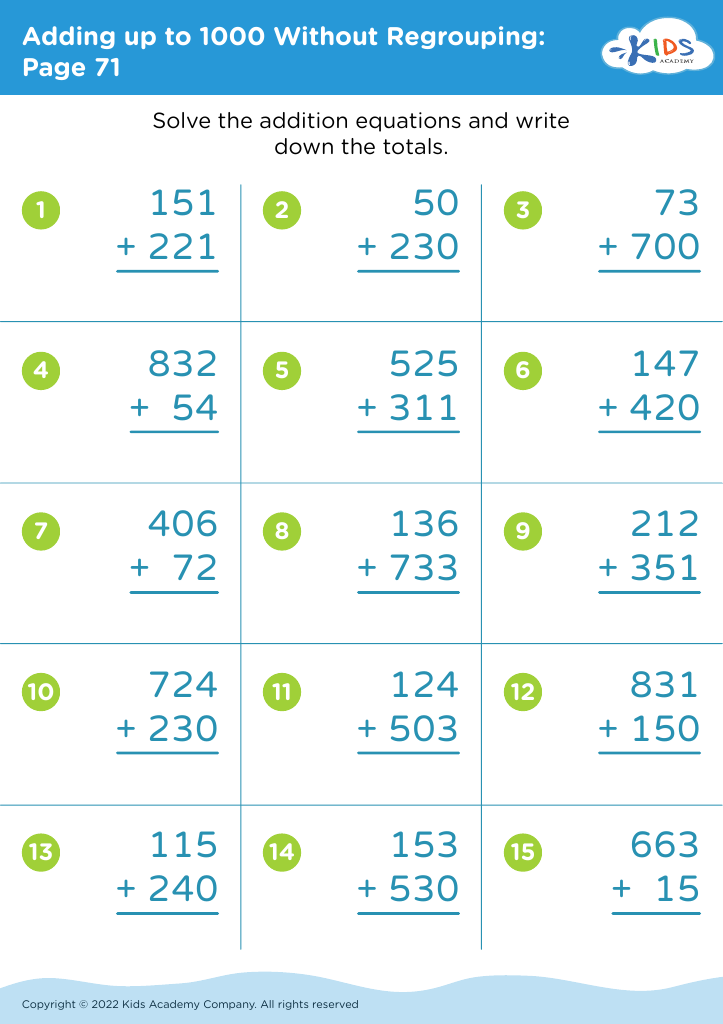
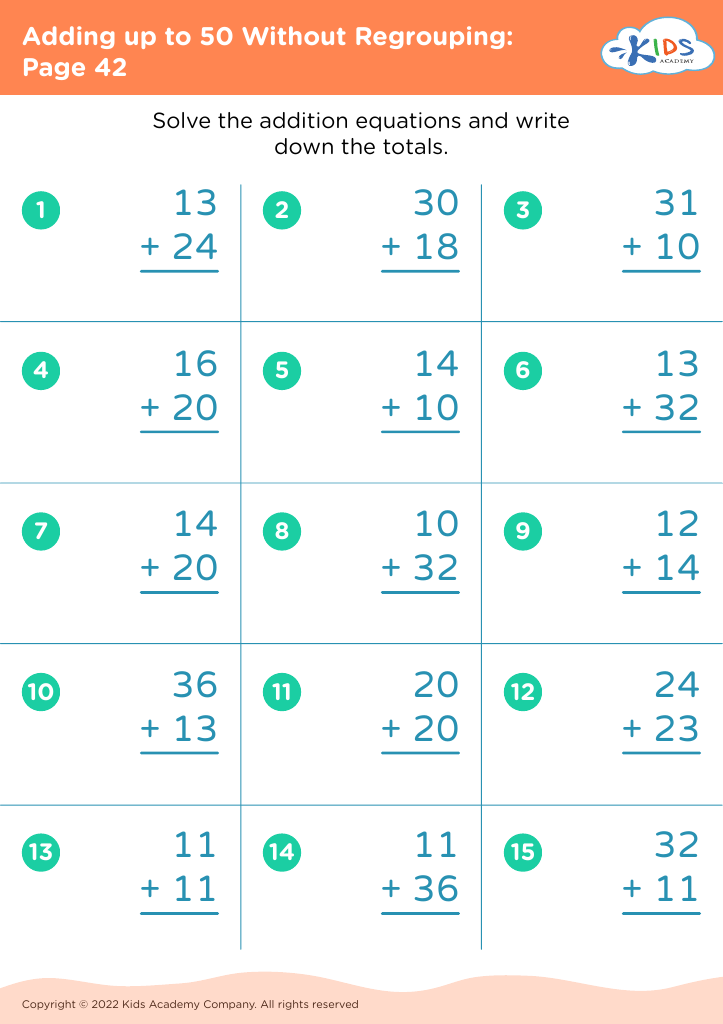
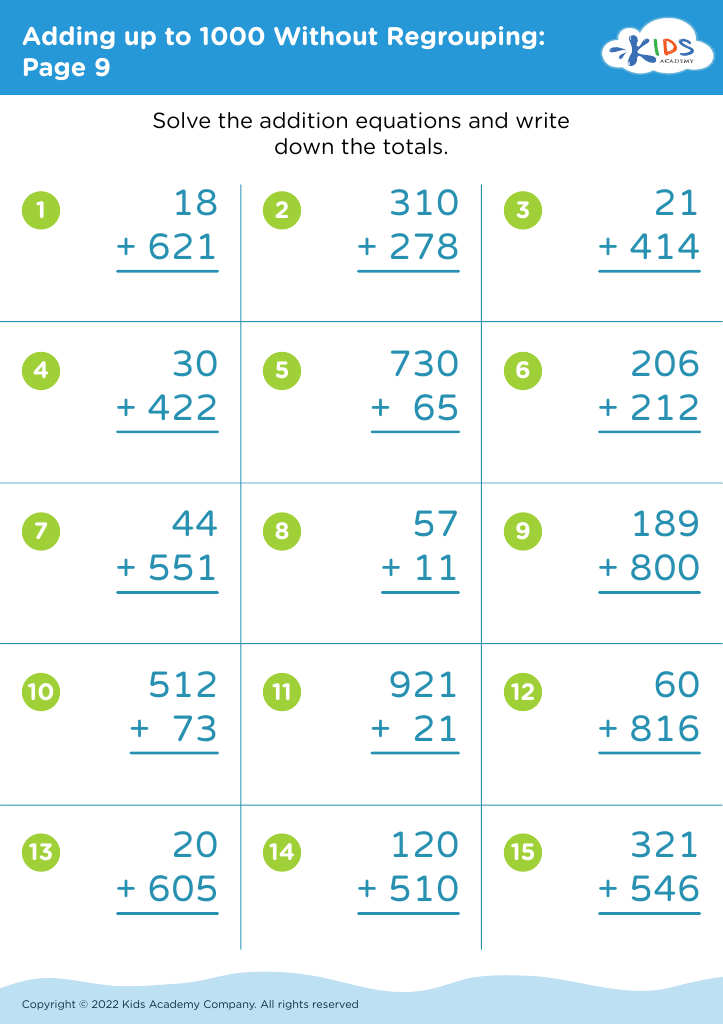








Understanding sequences in addition is critical for children aged 5-8 as it lays the foundation for their mathematical reasoning and problem-solving skills. At this developmental stage, children are forming the ability to recognize patterns and relationships, which are essential components of mathematics. Grasping sequences helps young learners see how numbers relate to each other, enabling them to predict outcomes and develop strategies for addition.
When children understand sequences, they can approach addition with greater confidence. For example, recognizing that adding two numbers can be visualized as counting in increments (like counting fingers) allows them to internalize the concept of combining quantities. This understanding cultivates numerical fluency and can ease the progression to more complex operations like subtraction, multiplication, or division later on.
Moreover, parents and teachers play a vital role in reinforcing these concepts through engaging activities and real-life applications. When adults emphasize the importance of sequences in everyday tasks—such as cooking, shopping, or playing games—they create meaningful learning experiences. By supporting their budding mathematical skills, parents and teachers not only enhance academic performance but also foster a positive attitude towards learning, encouraging children to embrace challenges enthusiastically throughout their educational journey.








