Understanding times tables Advanced Times Tables up to 12 Worksheets for Ages 5-8
3 filtered results
-
From - To
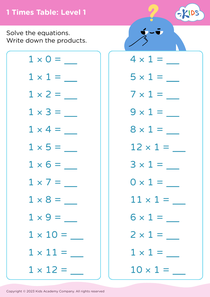
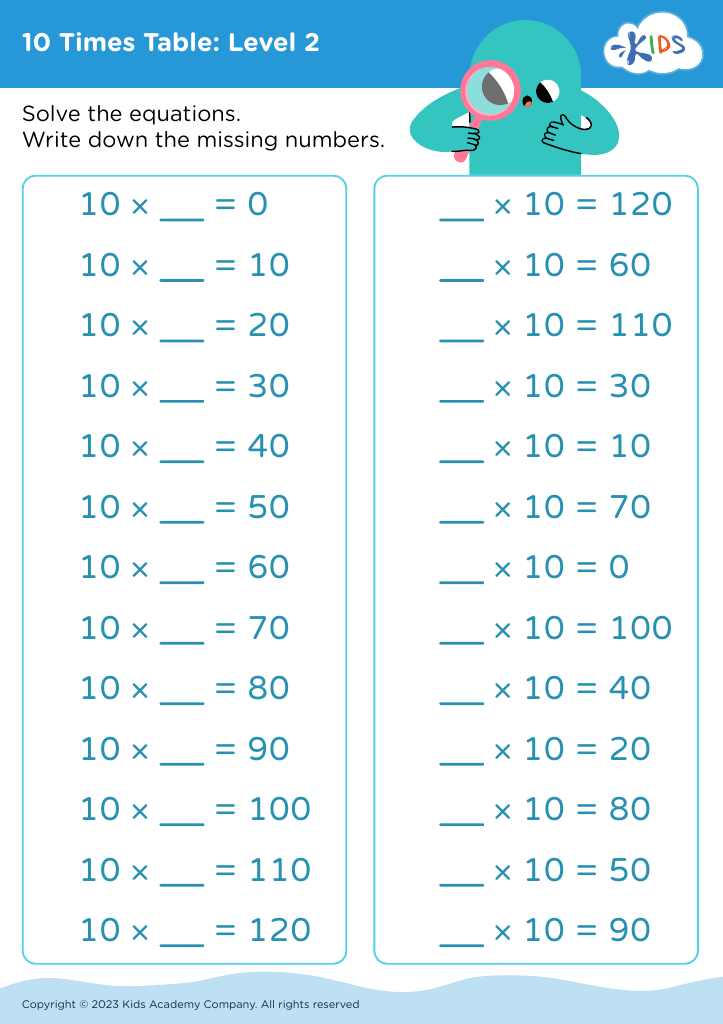
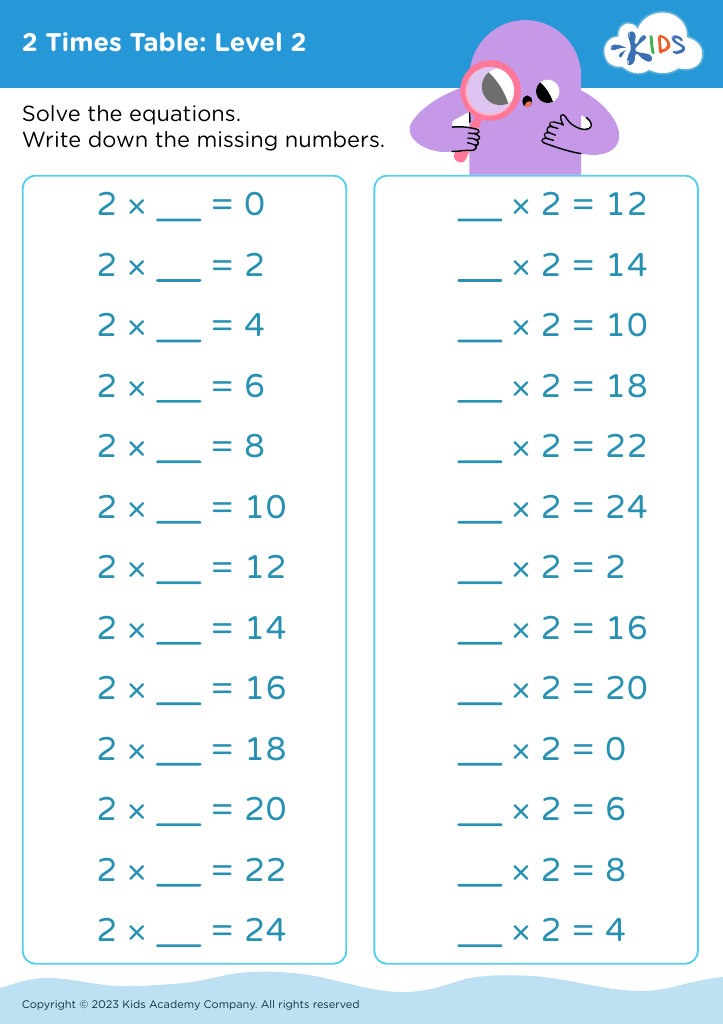
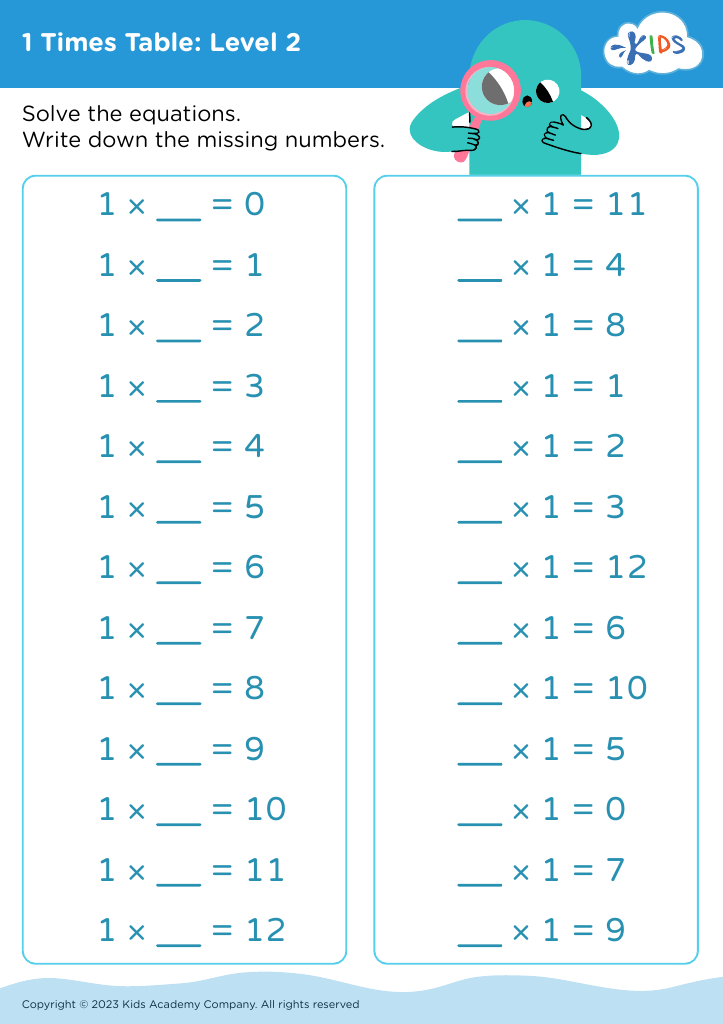
Explore our "Understanding Times Tables - Advanced Times Tables up to 12" worksheets, designed specifically for children ages 5 to 8. These engaging and interactive resources help young learners master multiplication concepts through visually appealing exercises and challenging problems. With a focus on understanding, not just memorization, our worksheets promote number sense and mathematical reasoning. Children will gain confidence as they practice multiplication up to 12, laying a strong foundation for future math skills. Bright illustrations and diverse activities make learning fun and effective. Perfect for homeschooling or supplementary classroom activities, these worksheets will enhance your child's mathematical journey!



Understanding advanced times tables, especially up to 12, is crucial for children aged 5-8 for several reasons. Firstly, mastery of multiplication sets a strong foundation for future mathematical learning. This essential skill enhances problem-solving abilities and helps children develop a number sense they will rely on in more complex operations, such as division, fractions, and mental math.
Secondly, learning times tables encourages cognitive development. It fosters memorization techniques and critical thinking, helping children to recognize patterns in numbers — a skill that extends beyond math into science and other disciplines.
Moreover, being proficient in multiplication boosts a child's confidence in their mathematical abilities, reducing anxiety around numbers and encouraging participation in class discussions. As children advance in school, having a strong grasp of times tables eases the learning of more difficult concepts, making it easier for them to excel in subjects like math.
Finally, knowing times tables increases independence in learning. When children can quickly and accurately multiply, they can tackle homework and standardized tests with greater efficiency, setting them up for lifelong success in education and beyond. Ultimately, supporting a child's understanding of times tables is investing in their overall academic growth and confidence.