Understanding times tables Basic Times Tables up to 12 Worksheets for Ages 5-8
3 filtered results
-
From - To
Enhance your child's math skills with our "Understanding Times Tables: Basic Times Tables up to 12 Worksheets" specifically designed for ages 5-8. These engaging worksheets help young learners master multiplication facts essential for their academic journey. Each worksheet combines fun activities and colorful visuals to make multiplication enjoyable and straightforward. Our comprehensive approach steadily builds understanding and confidence, ensuring your child is well-equipped for more advanced math concepts. Give your child the head start they need with our expertly crafted times tables worksheets, designed to foster lifelong math proficiency. Unlock their full potential today!
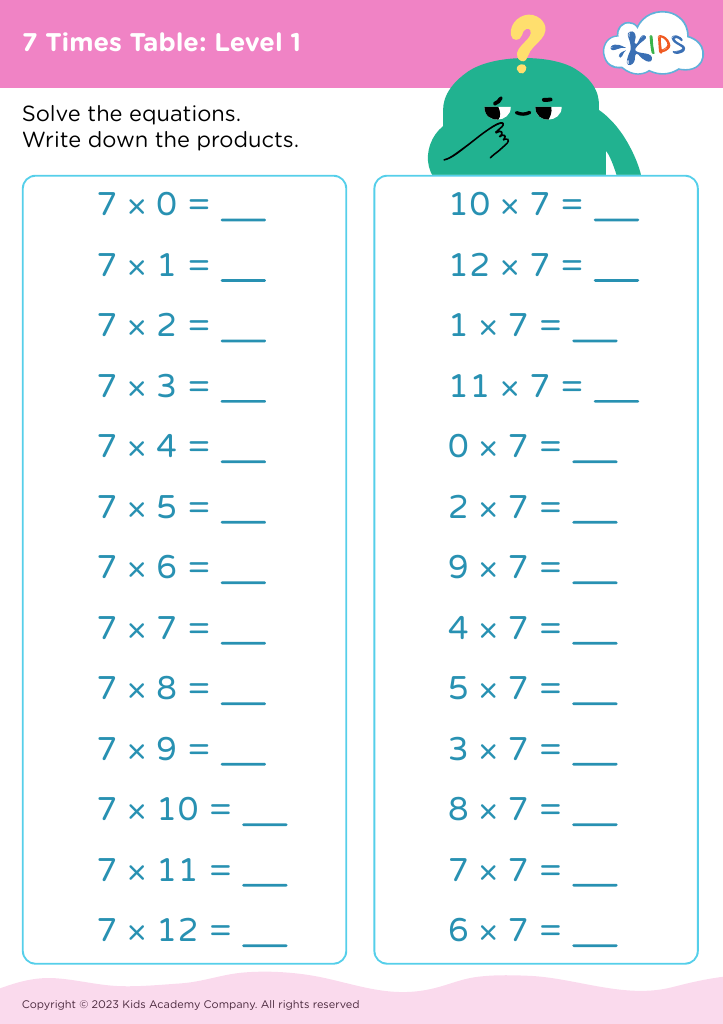
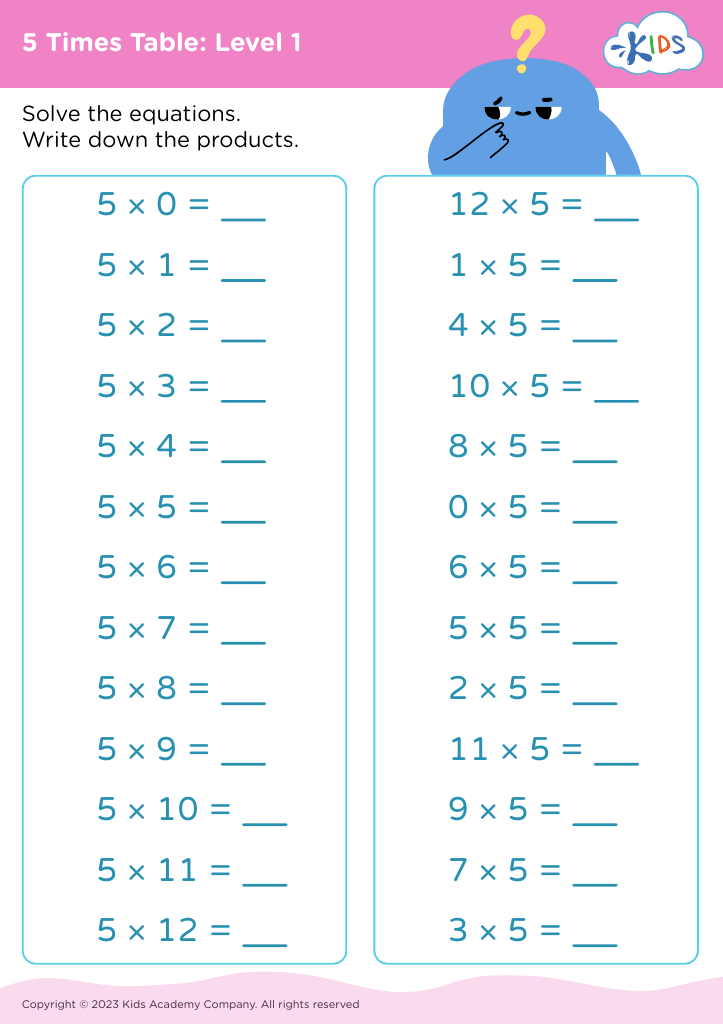
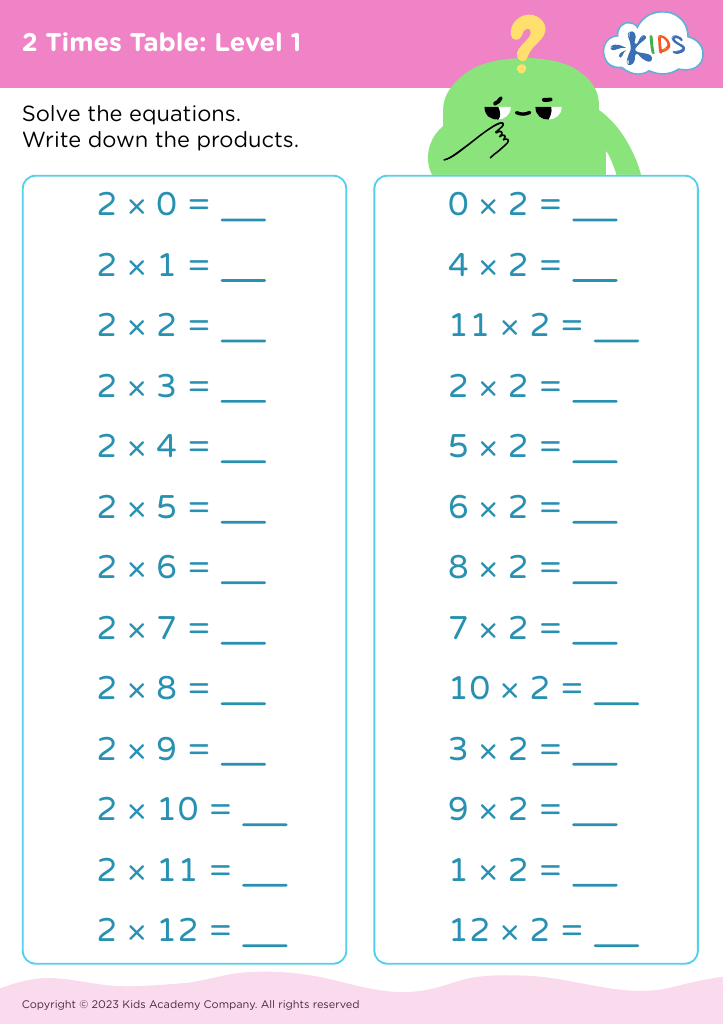


Understanding times tables is a crucial foundation for young learners, especially for ages 5-8, as it sets the stage for future success in mathematics. Mastery of basic times tables up to 12 is essential because it enhances a child's ability to perform quick and accurate mental calculations, which are integral in more complex math concepts such as division, fractions, and algebra.
From an educational perspective, knowing times tables fluently enables students to tackle various math problems with confidence and efficiency. This fluency reduces cognitive load, freeing up mental resources to solve multi-step problems and understand higher-order concepts. Additionally, a strong grasp of times tables helps in real-life applications like calculating time, managing money, and understanding patterns.
For parents and educators, investing in the early learning of times tables helps build a child’s numerical literacy. This foundational skill can foster a positive attitude towards math, reducing anxiety and increasing overall academic achievement. It also promotes logical thinking and problem-solving skills, critical for other subjects and everyday decision-making.
Ultimately, nurturing times tables proficiency in young learners enriches their educational journey and equips them with essential skills for lifelong learning and success. Parents and teachers should, therefore, prioritize and support practices that make learning times tables engaging and effective.








