Check out this FREE Trial Lesson on Math for age 5-8!

L

Favorites
With answer key
Interactive
  • 5-8
  • Basic Addition Skills
  • Math
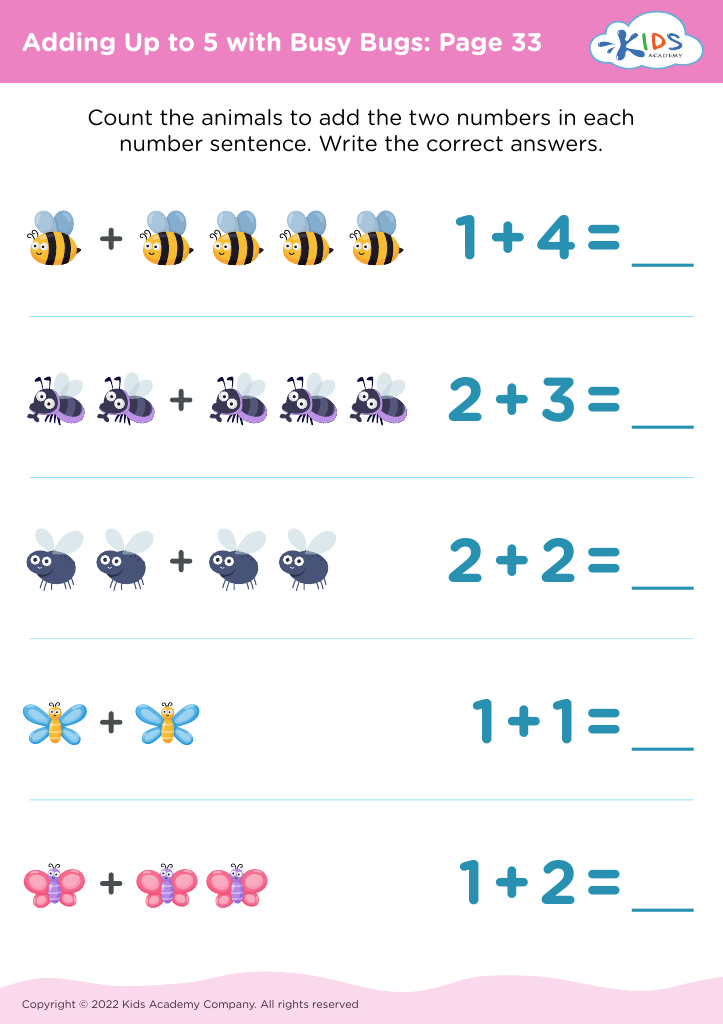
Adding Up to 5 with Busy Bugs: Page 33
Worksheet
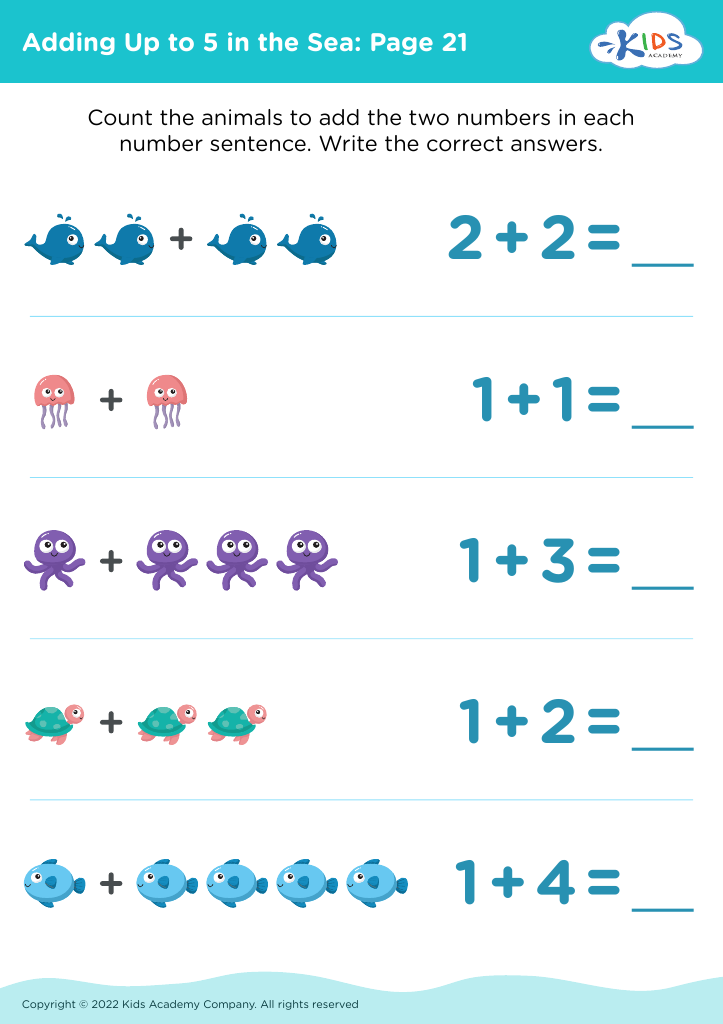
Adding Up to 5 in the Sea: Page 21
Worksheet
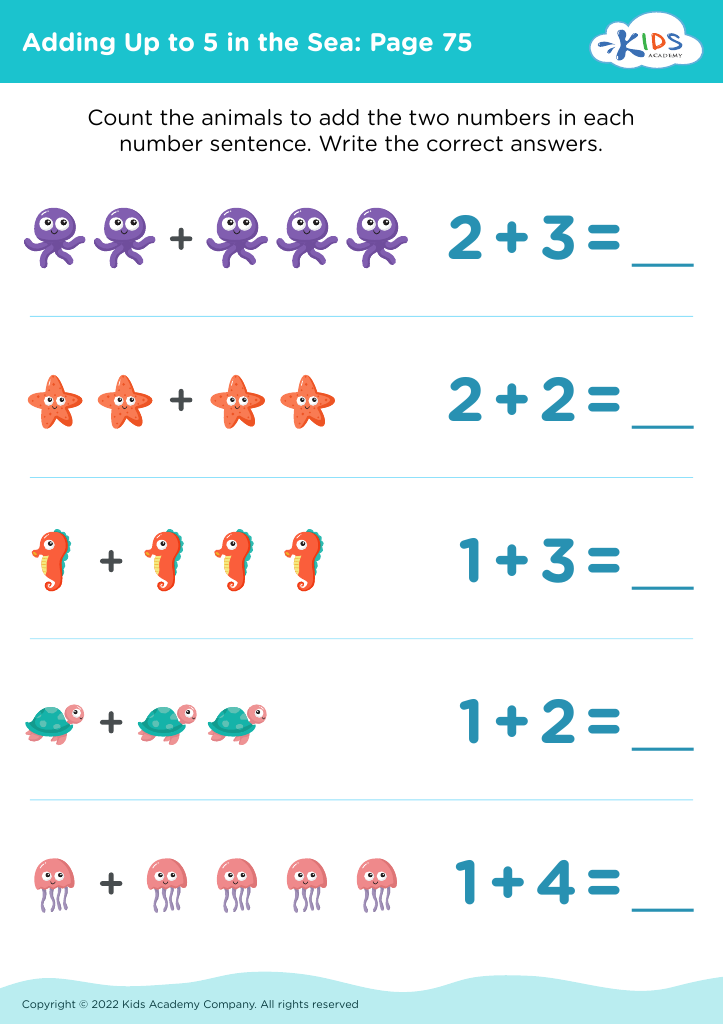
Adding Up to 5 in the Sea: Page 75
Worksheet
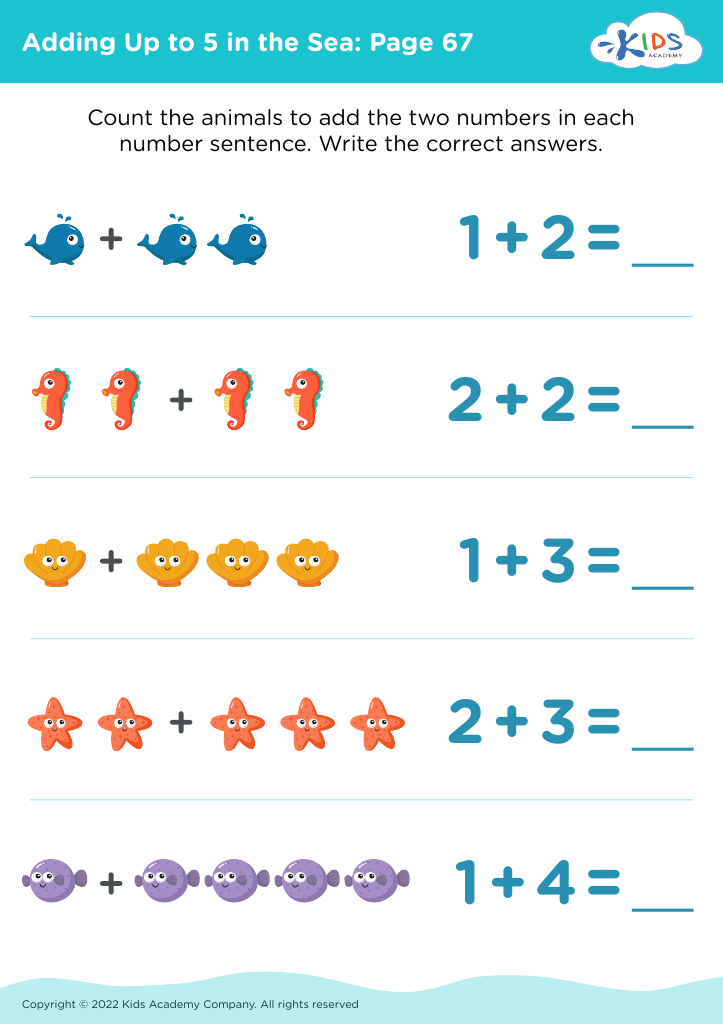
Adding Up to 5 in the Sea: Page 67
Worksheet
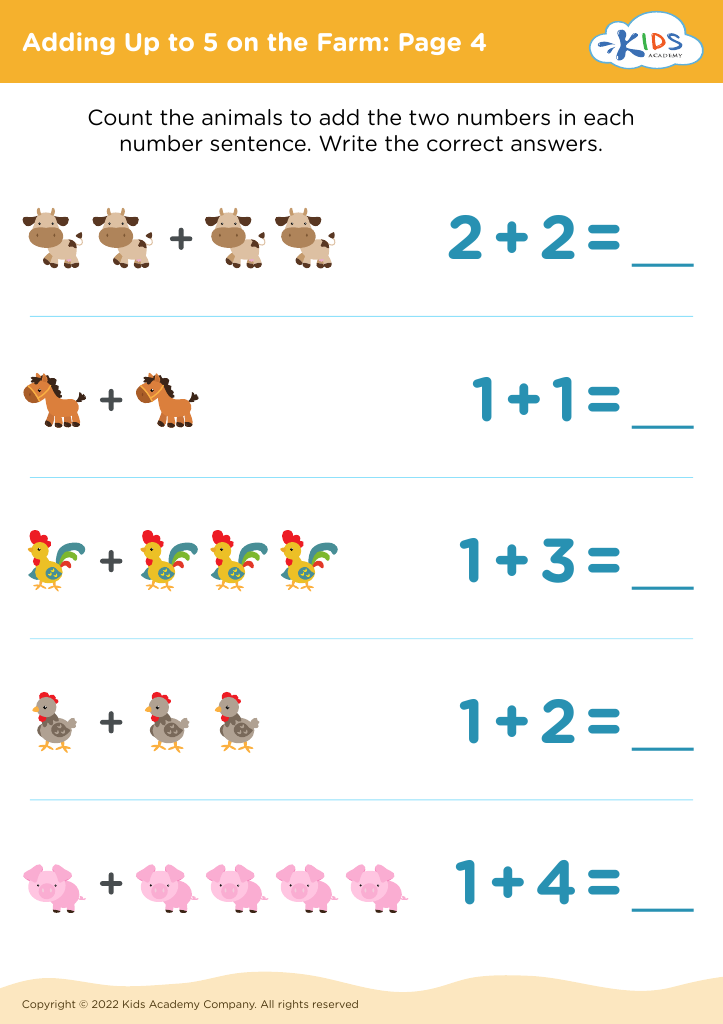
Adding Up to 5 on the Farm: Page 4
Worksheet
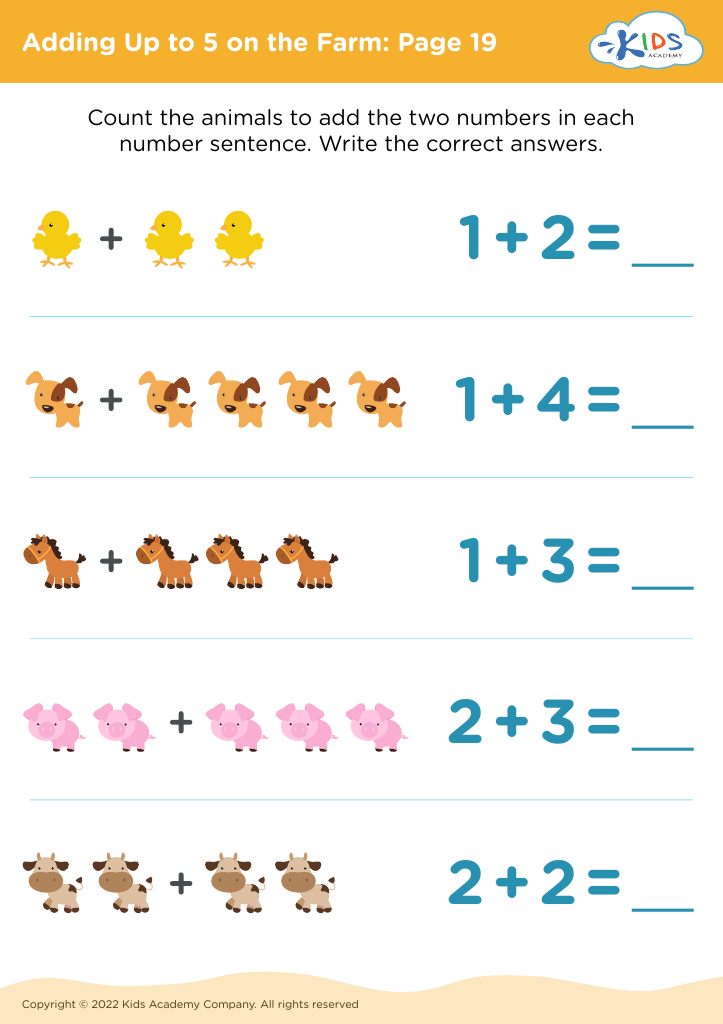
Adding Up to 5 on the Farm: Page 19
Worksheet
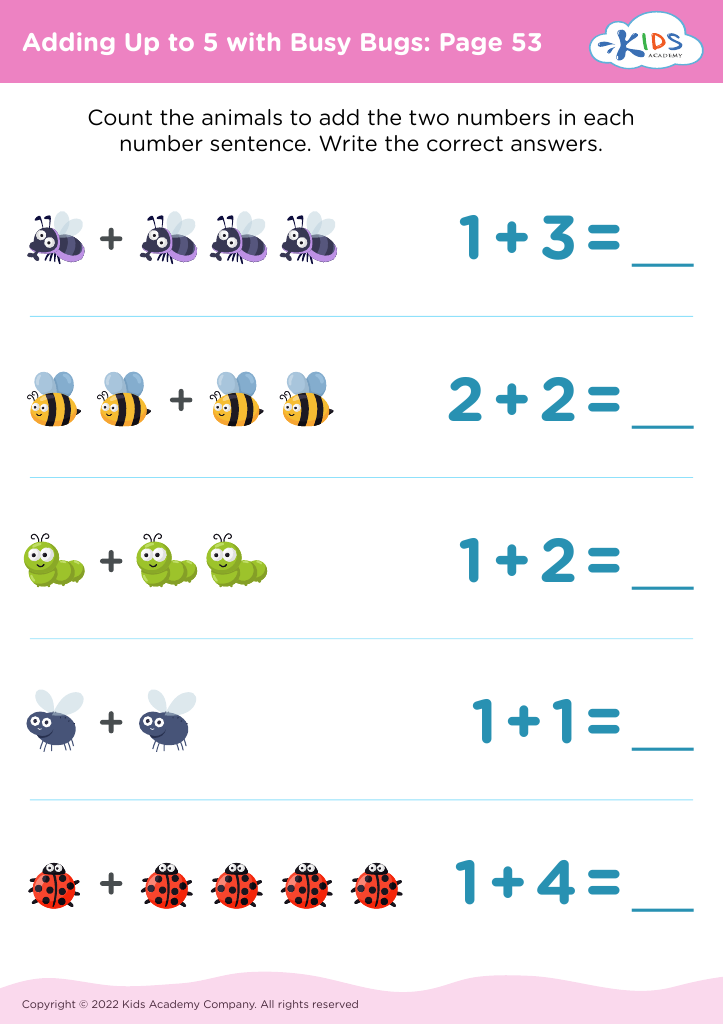
Adding Up to 5 with Busy Bugs: Page 53
Worksheet
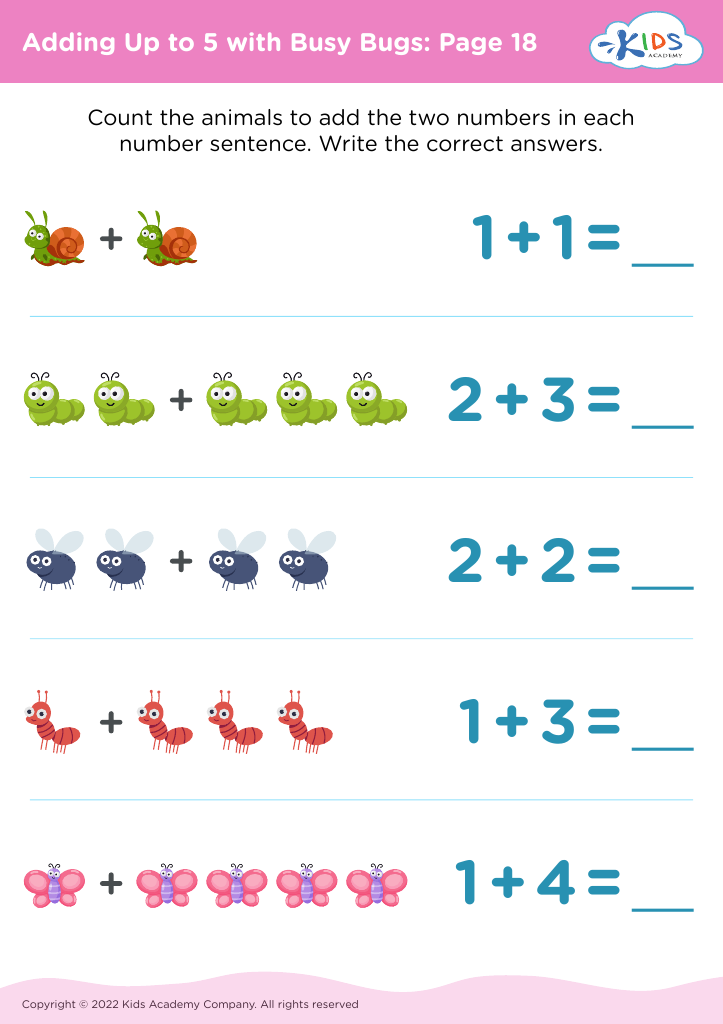
Adding Up to 5 with Busy Bugs: Page 18
Worksheet
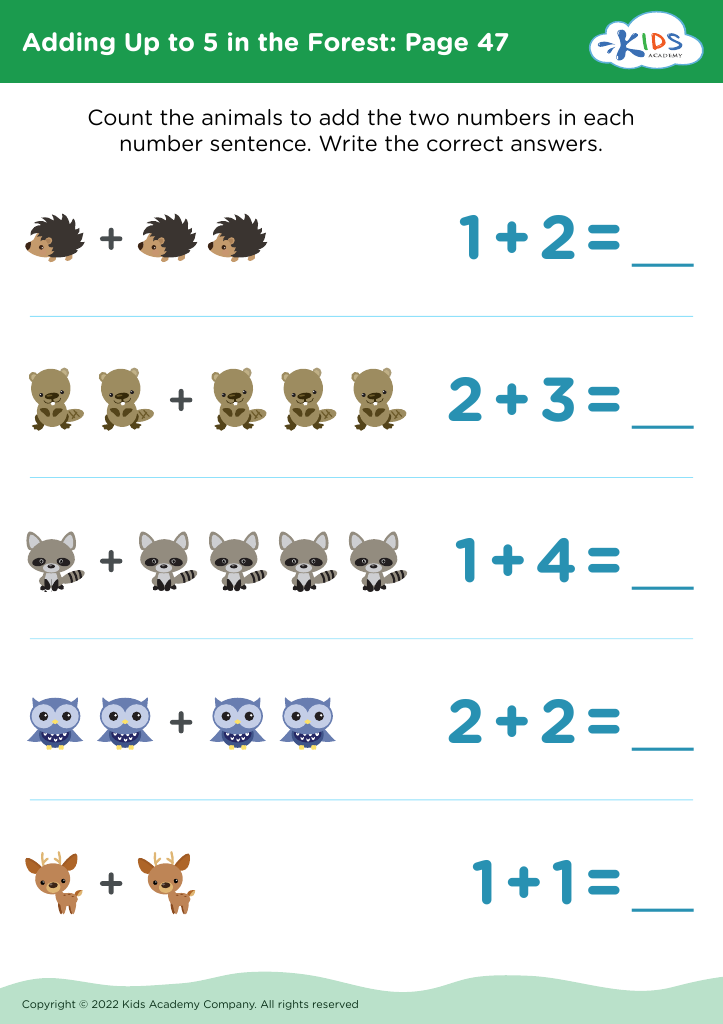
Adding Up to 5 in the Forest: Page 47
Worksheet
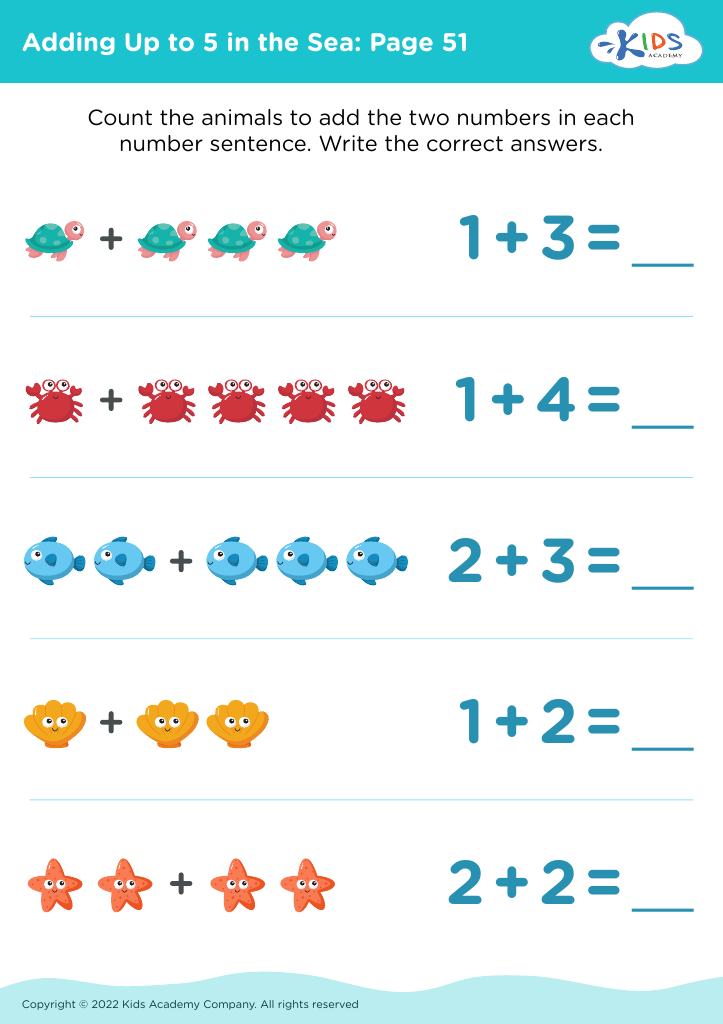
Adding Up to 5 in the Sea: Page 51
Worksheet
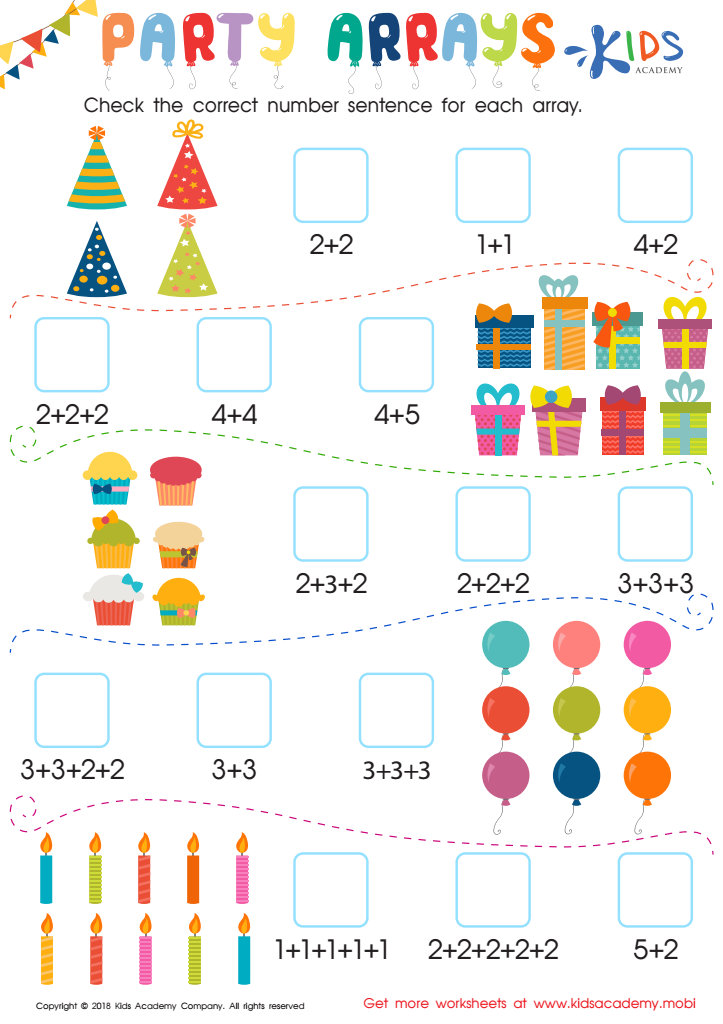
Party Arrays Worksheet

Party Arrays Worksheet

Help your child count the objects in each of the five arrays, then check the correct number sentence for each. This exercise will test their math skills and understanding of number sentences. Guide them to select the appropriate boxes.
Party Arrays Worksheet
Worksheet
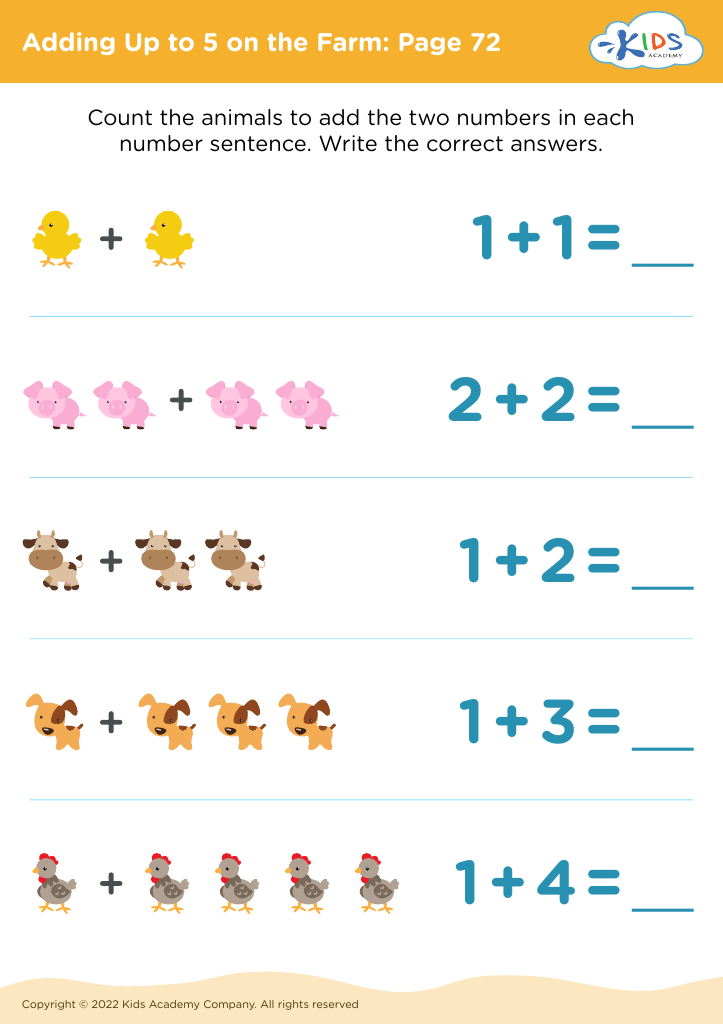
Adding Up to 5 on the Farm: Page 72
Worksheet
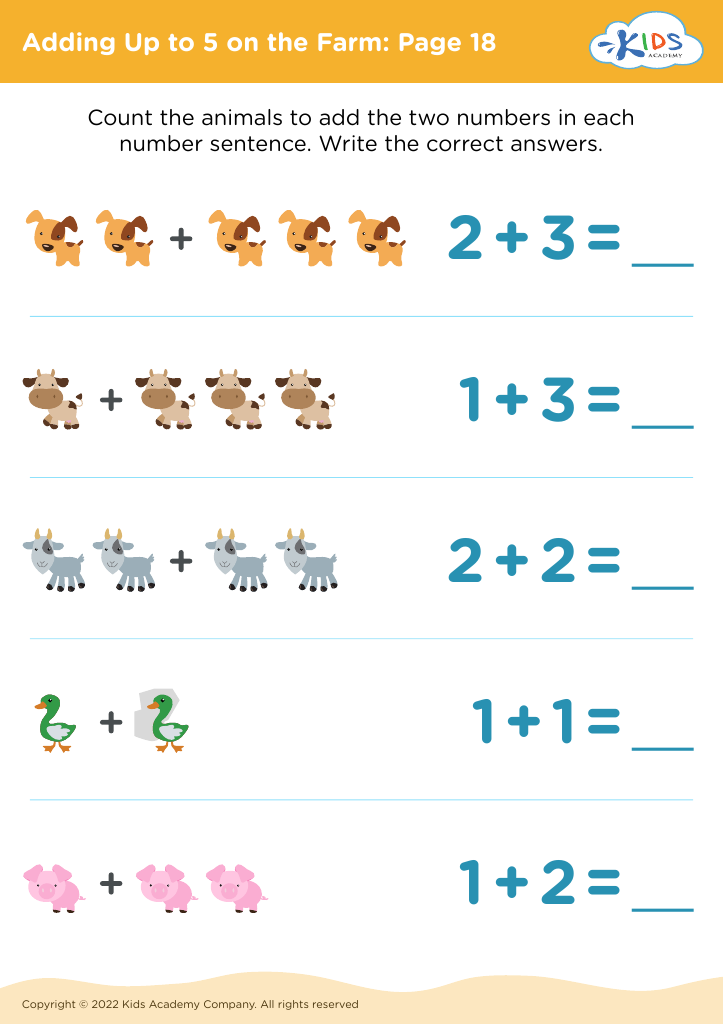
Adding Up to 5 on the Farm: Page 18
Worksheet
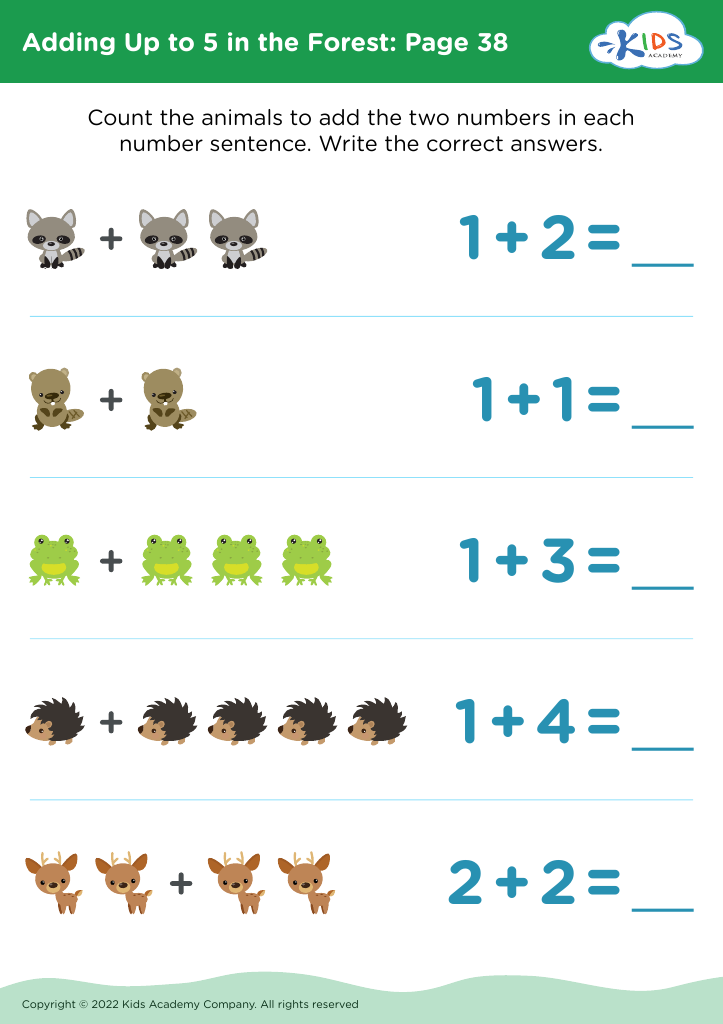
Adding Up to 5 in the Forest: Page 38
Worksheet
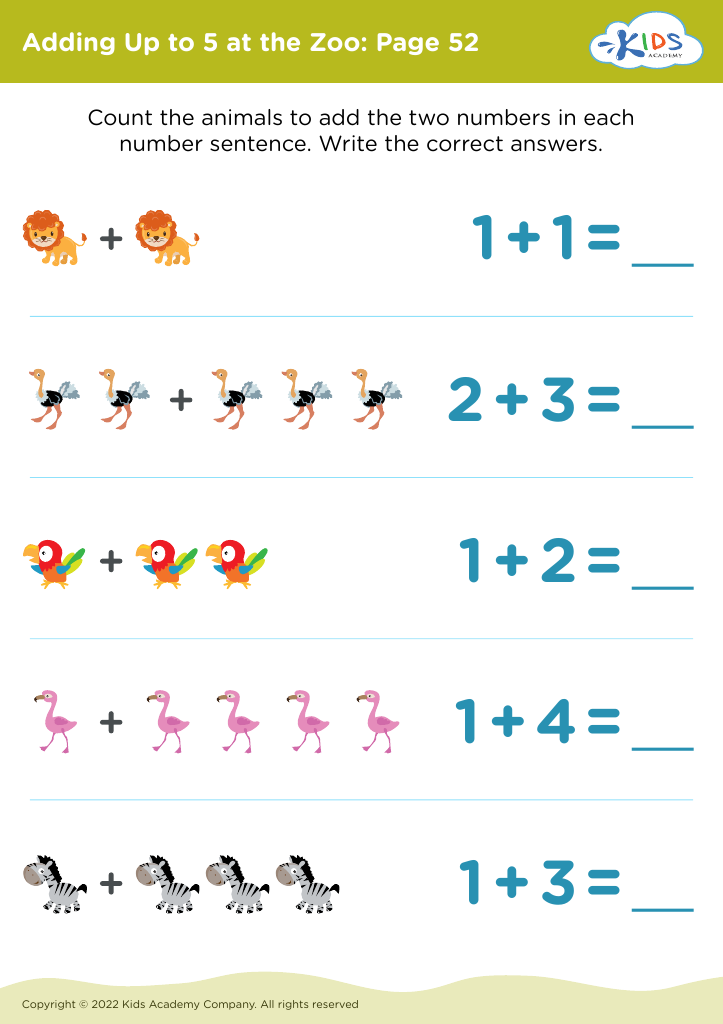
Adding Up to 5 at the Zoo: Page 52
Worksheet
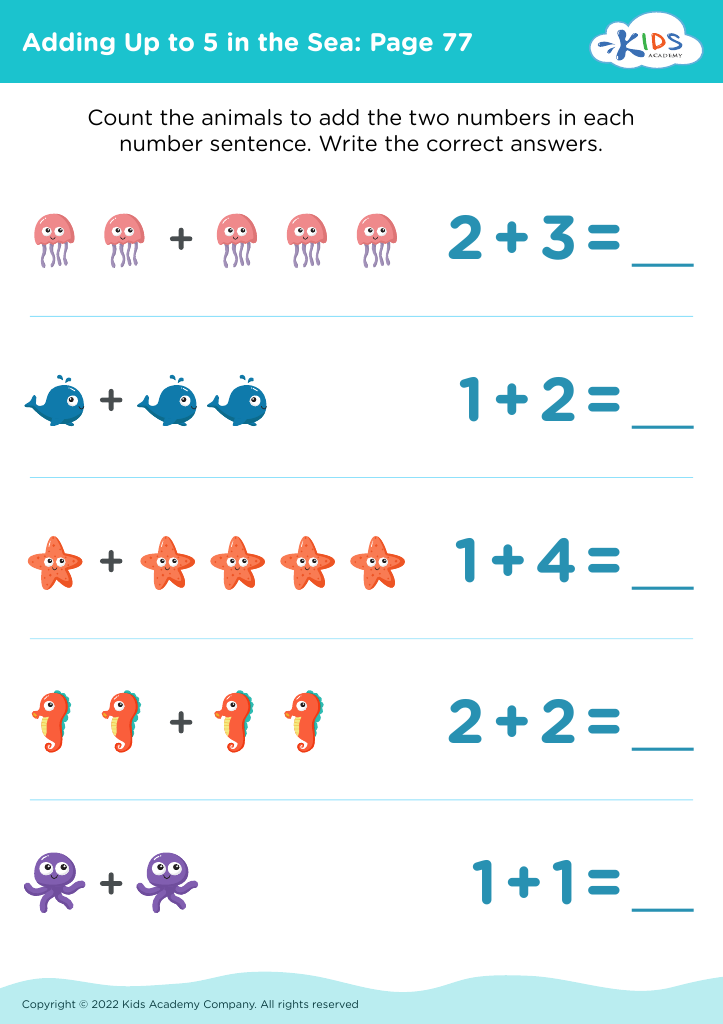
Adding Up to 5 in the Sea: Page 77
Worksheet
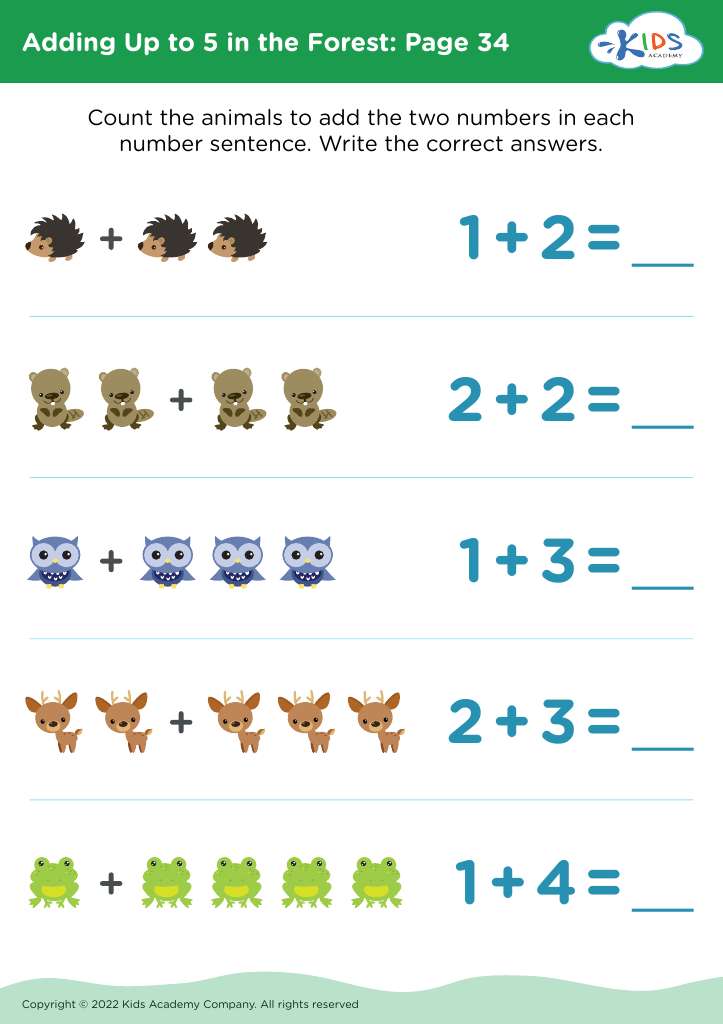
Adding Up to 5 in the Forest: Page 34
Worksheet
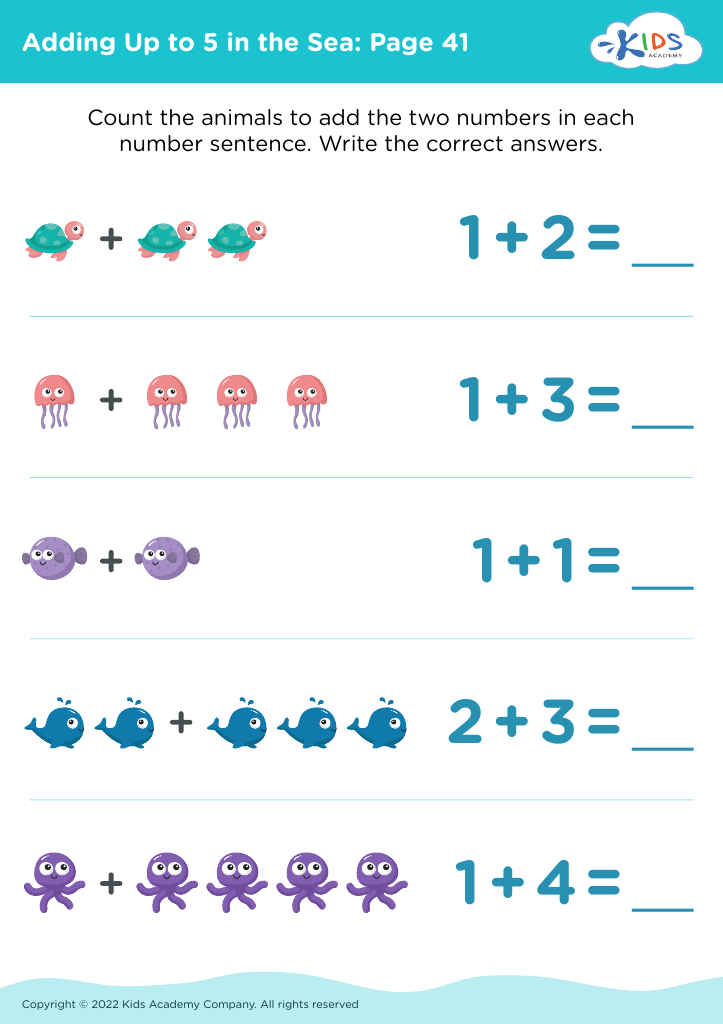
Adding Up to 5 in the Sea: Page 41
Worksheet
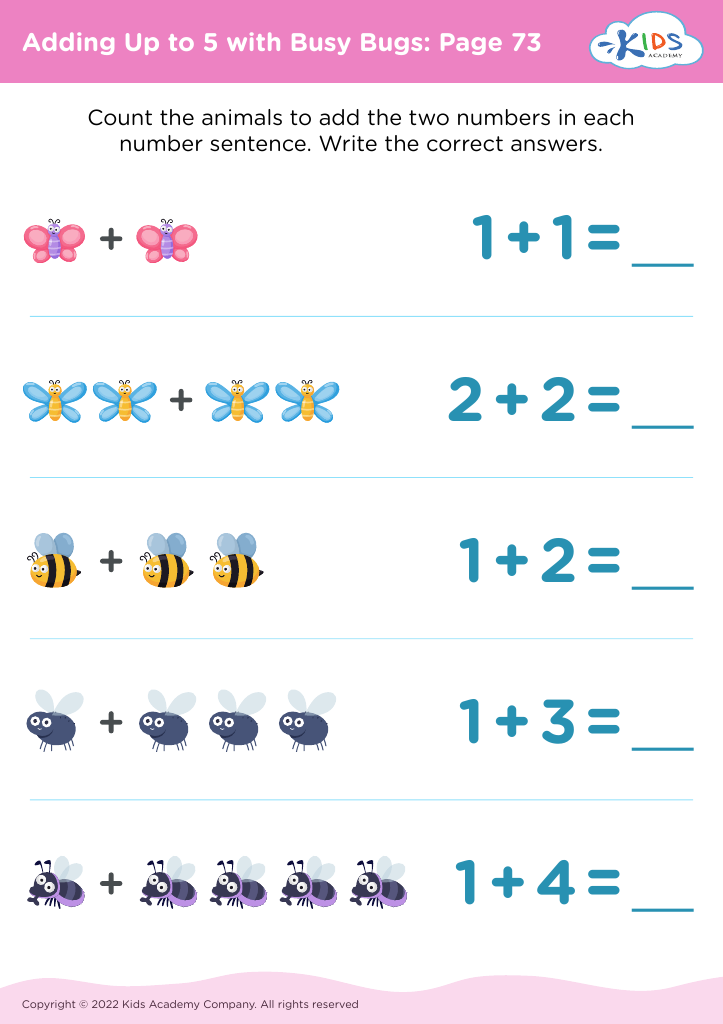
Adding Up to 5 with Busy Bugs: Page 73
Worksheet
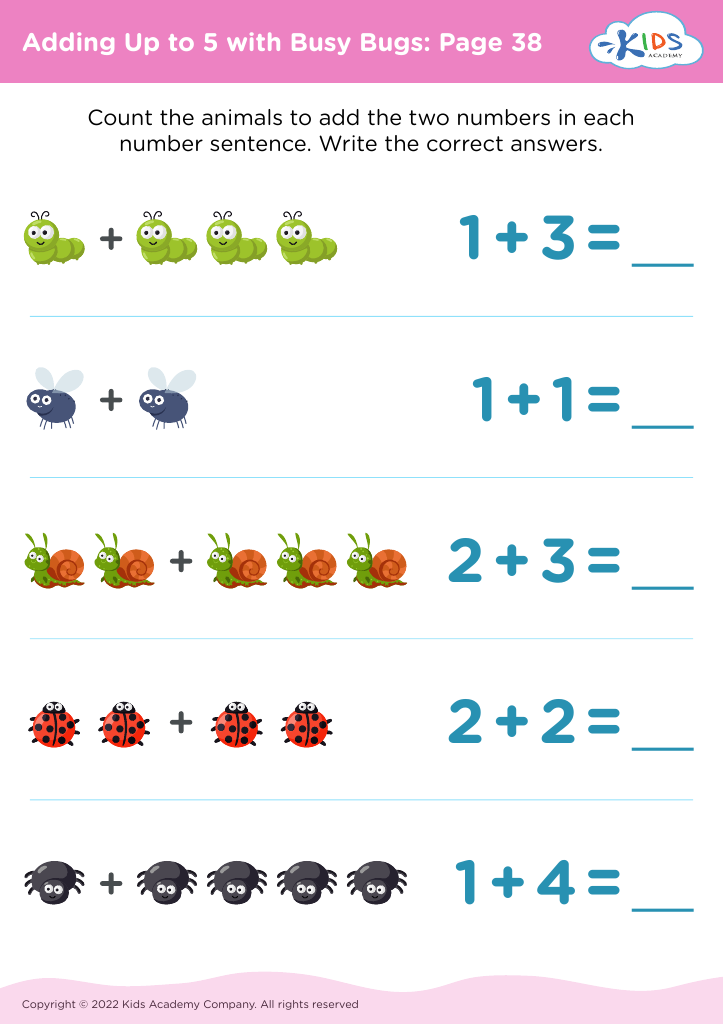
Adding Up to 5 with Busy Bugs: Page 38
Worksheet
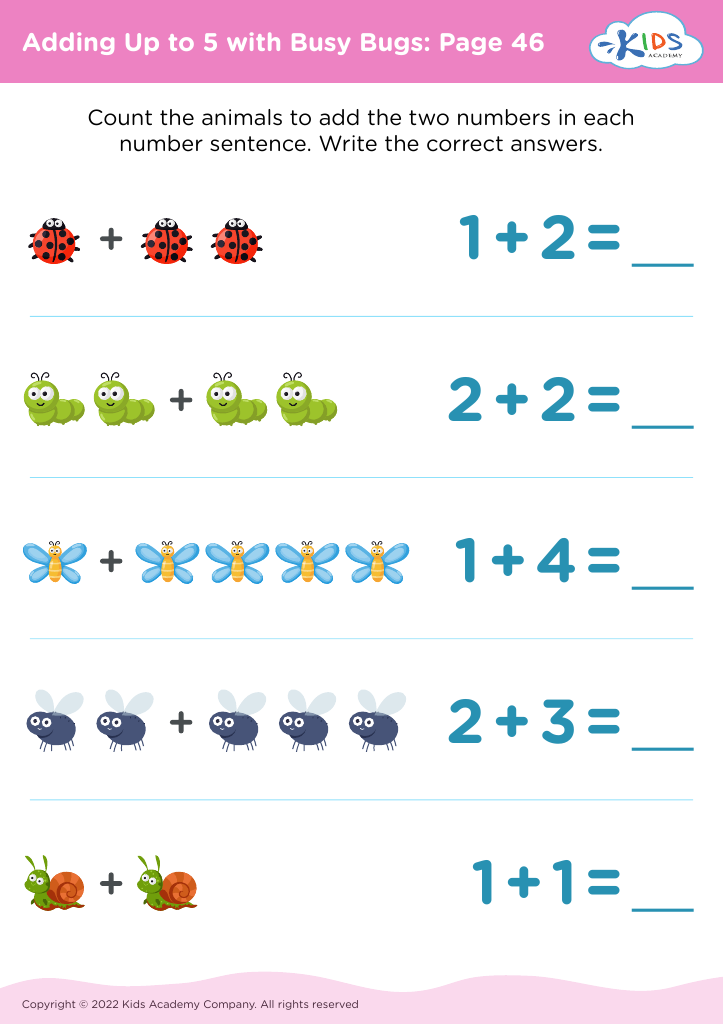
Adding Up to 5 with Busy Bugs: Page 46
Worksheet
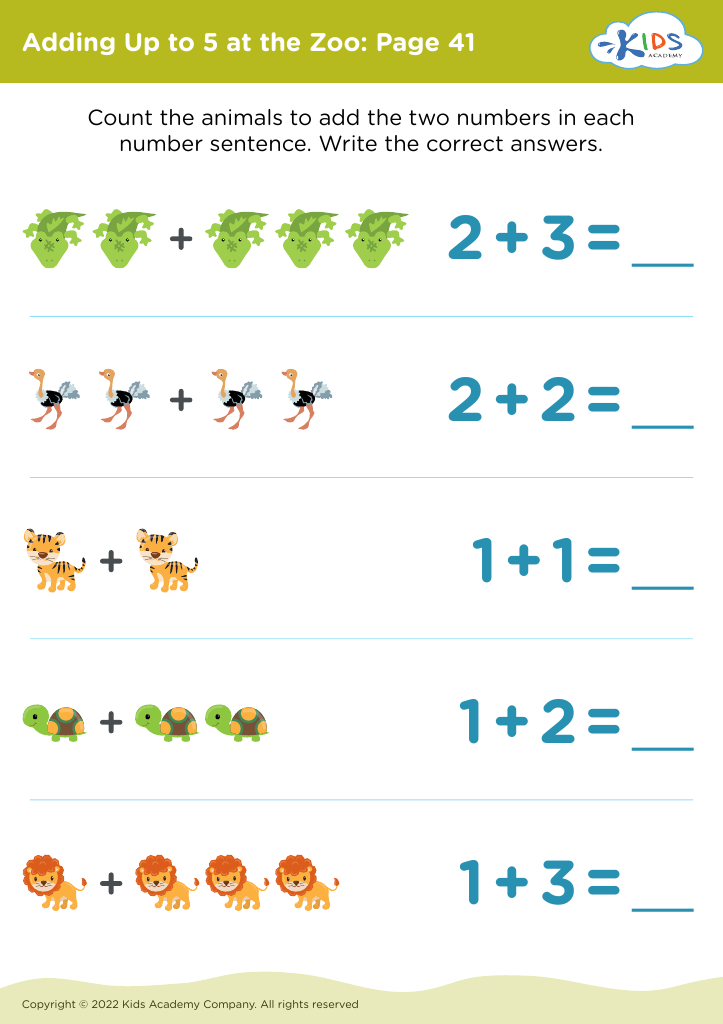
Adding Up to 5 at the Zoo: Page 41
Worksheet
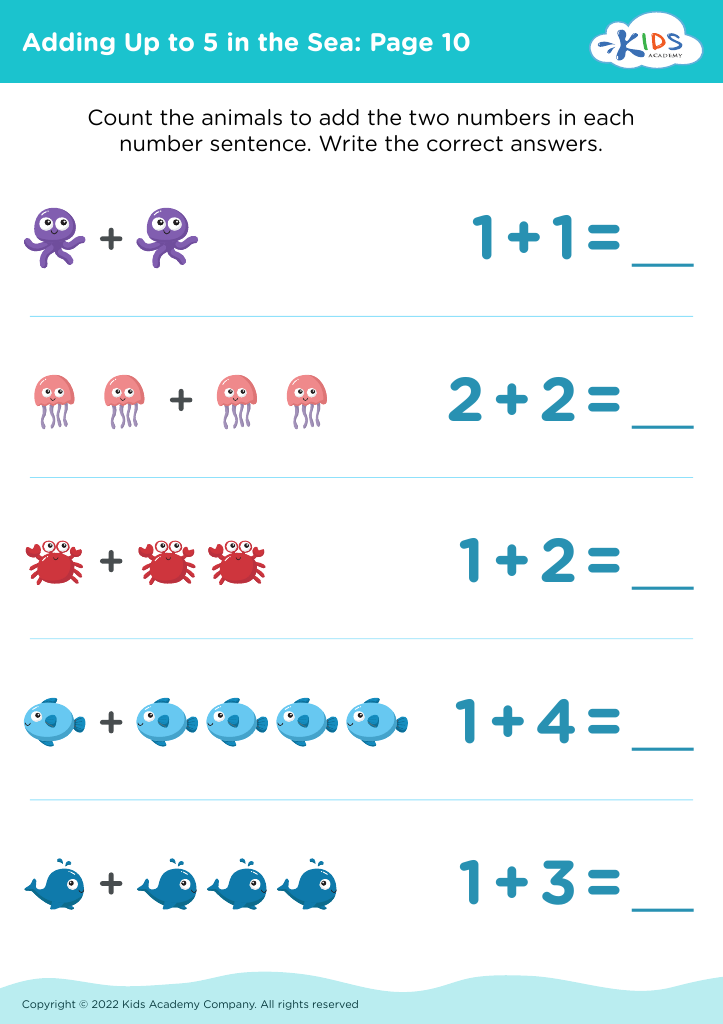
Adding Up to 5 in the Sea: Page 10
Worksheet
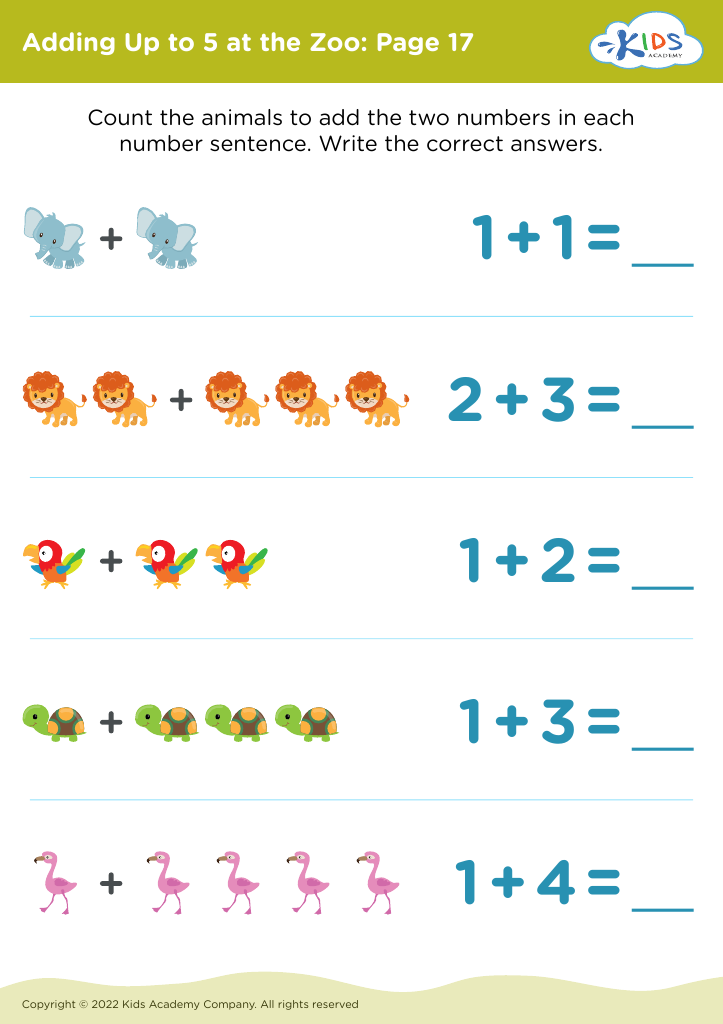
Adding Up to 5 at the Zoo: Page 17
Worksheet


Basic addition skills are foundational for a child's future academic success and everyday functioning. For children aged 5-8, mastering these early math concepts is essential as they learn to understand numbers, comprehend quantities, and develop logical reasoning.

Firstly, addition skills foster problem-solving abilities. By engaging children in simple calculations, they learn to approach tasks methodically, breaking problems down into manageable parts. This promotes critical thinking that transcends mathematics into other subjects.

Secondly, early mastery of addition builds confidence. When children successfully add numbers, they enhance their self-esteem, making them more willing to tackle more complex math concepts in the future.

Additionally, math is interwoven into daily life, from handling money to measuring ingredients in cooking. Strong addition skills equip children with the ability to navigate these tasks confidently, promoting independence.

Lastly, ensuring a solid groundwork in addition sets the stage for learning multiplication and other mathematical operations in later grades. Parents and teachers play a crucial role in encouraging playful, interactive math experiences, making learning engaging. By prioritizing basic addition, they are investing in their child's academic and personal growth, helping them build a positive relationship with math that lasts a lifetime.