Develop inference skills Math Worksheets for Ages 5-8
3 filtered results
-
From - To
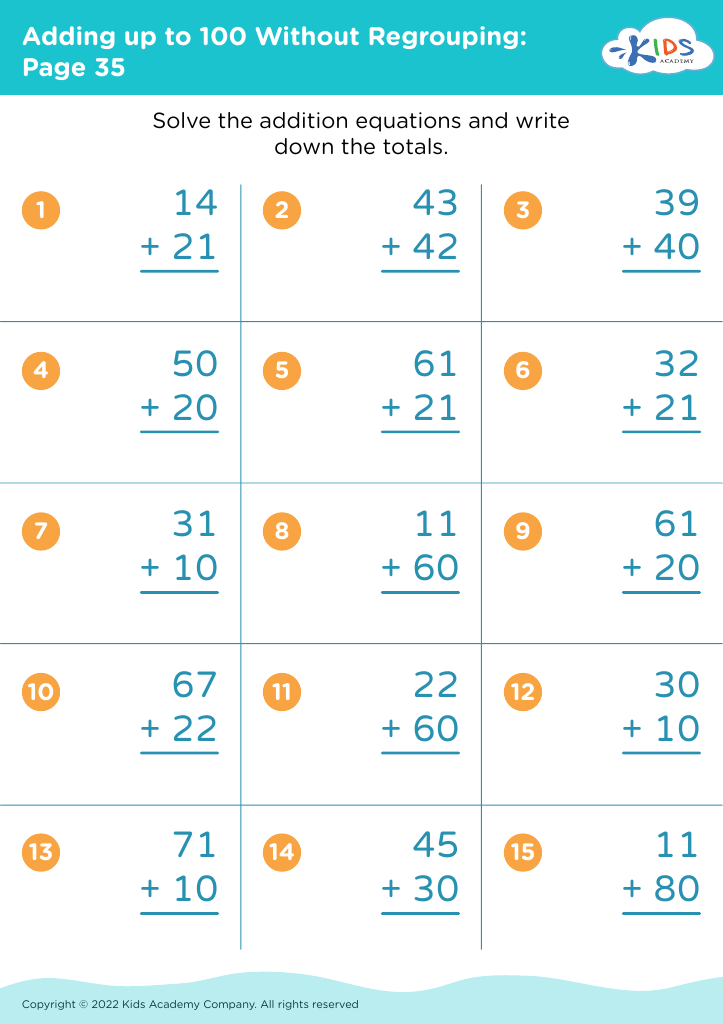
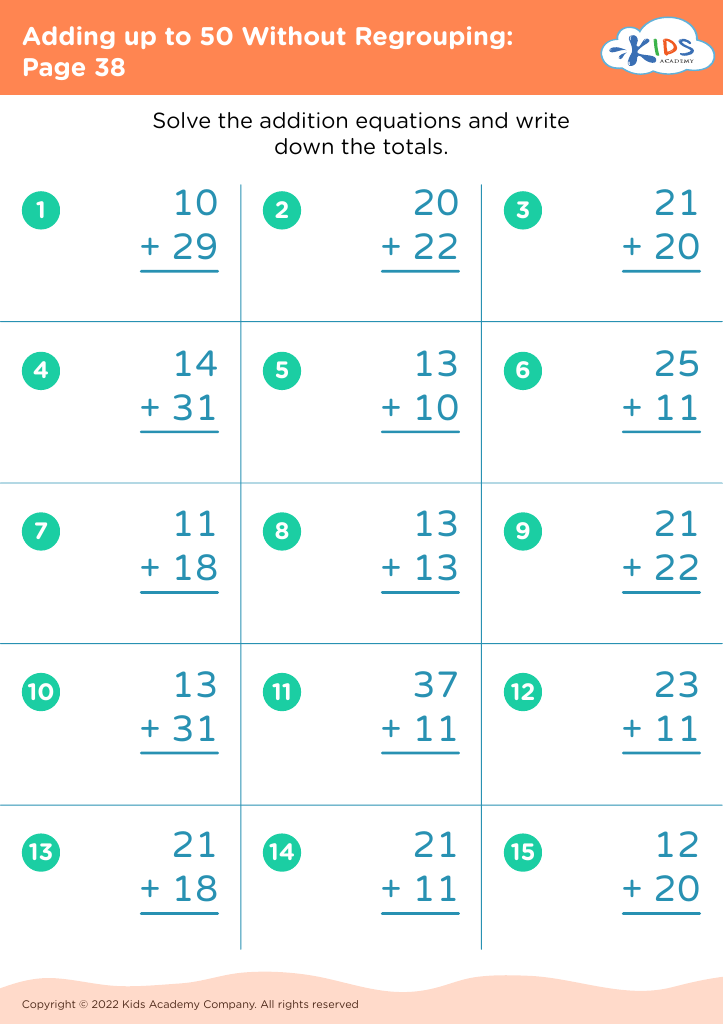
Enhance your child's mathematical thinking with our engaging "Develop Inference Skills Math Worksheets" for ages 5-8. Designed to foster critical reasoning, these worksheets focus on interpreting data, making predictions, and drawing conclusions. Each activity encourages young learners to think creatively while solving problems, promoting foundational math skills in a fun, interactive way. Ideal for both in-class learning and home practice, these resources cater to various learning styles. Support your child's academic growth and inspire a love for math with activities that build confidence and competence. Explore our collection today and watch your little ones thrive in their math abilities!








.jpg)
Developing inference skills in math for children aged 5-8 is crucial for several reasons. Firstly, inference skills enable young learners to go beyond rote memorization and engage in deeper thinking. Instead of merely recalling facts or performing calculations, children learn to make connections between concepts, draw conclusions, and solve problems creatively. This is particularly important in math, where understanding relationships and patterns lays the foundation for more advanced topics.
Moreover, strong inference skills foster critical thinking abilities—an essential competency not only in math but across all subjects and real-life situations. When children can infer information from graphs, numbers, or word problems, they become better problem solvers and decision-makers.
Parents and teachers should care about nurturing these skills because they contribute to children's overall academic success and self-confidence. Inference skills encourage curiosity, prompting children to ask questions and seek out answers independently, which can ignite a lifelong love for learning.
Lastly, as we navigate an increasingly complex world filled with data and information, equipping kids with the ability to interpret and infer meaning will empower them to thrive academically and make informed choices in their lives. Supporting the development of these skills early on sets the stage for future learning and success.








