Grammar practice Math Worksheets for Ages 5-8
3 filtered results
-
From - To
Discover engaging Grammar Practice Math Worksheets for Ages 5-8 designed to enhance your child's foundational skills. These printable resources seamlessly blend math and language, promoting a comprehensive learning experience. Tailored for young learners, our worksheets feature fun exercises that reinforce grammar concepts through interactive math problems. Whether it's identifying parts of speech, constructing sentences, or solving equations, kids will develop critical thinking and communication abilities while sharpening their math skills. Perfect for both classroom and home use, these worksheets provide a valuable and enjoyable way to support your child's educational journey. Empower their learning with practice that cultivates success in both grammar and math!
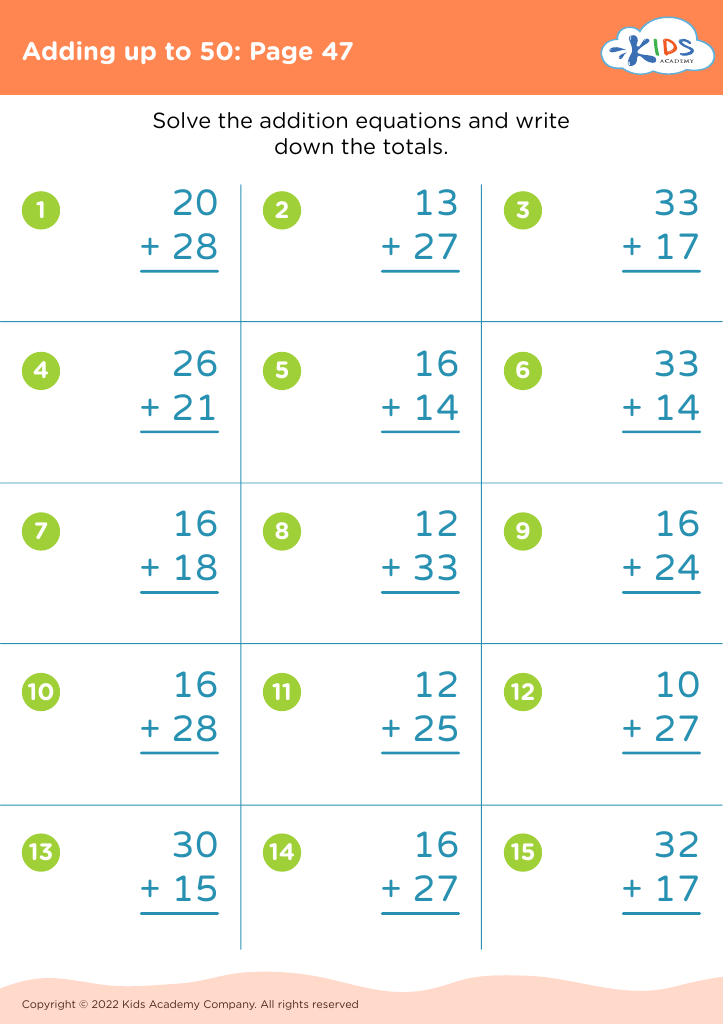
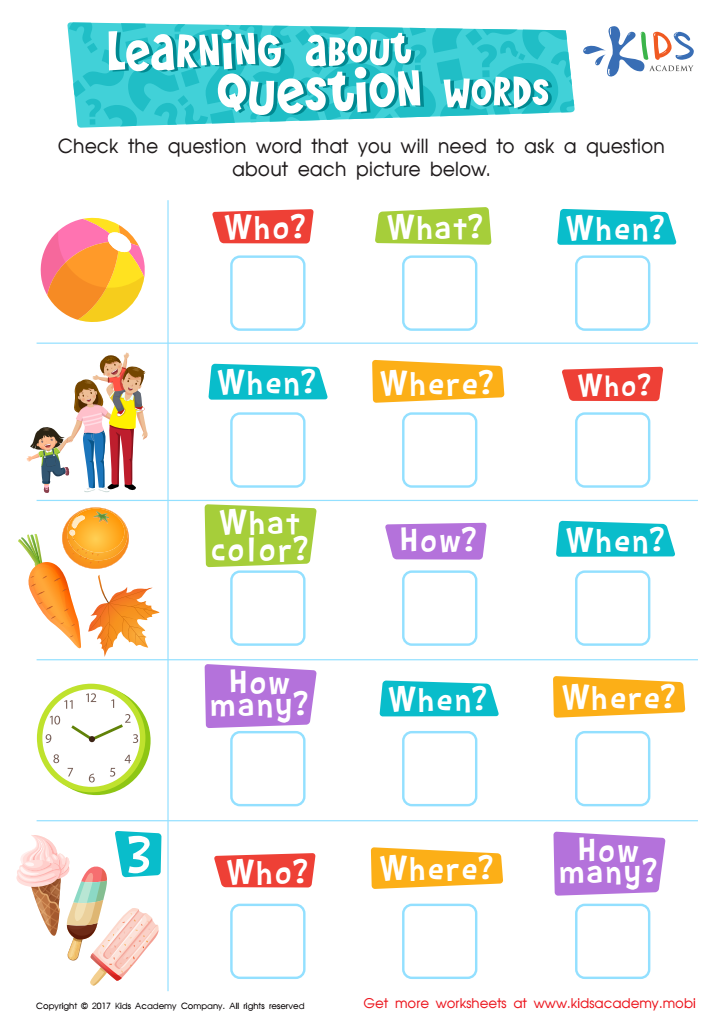
Learning about Question Words Worksheet
 Assign to My Students








Grammar practice in math for ages 5-8 is vital as it lays a foundation for effective communication and critical thinking. At this age, children are not only learning to solve math problems but also beginning to express their understanding clearly. Teaching grammar in math involves helping them articulate their thought processes, which enhances their problem-solving skills and logical reasoning. When students practice using correct terminology, it fosters comprehension and retention.
Moreover, integrating grammar into math encourages students to explain their answers, promoting a deeper understanding of concepts. By articulating their reasoning, young learners develop confidence in their abilities and become more engaged in their learning. Strong grammatical skills also empower them to ask questions and seek help when needed, creating a supportive learning environment.
Furthermore, as education increasingly emphasizes STEM fields, the ability to communicate mathematical ideas effectively is essential. Employers value individuals who can share complex information clearly. Therefore, by prioritizing grammar practice in math, parents and teachers equip children with critical skills for both academic success and future career opportunities. In short, emphasizing grammar within math helps create well-rounded, confident learners who can navigate the challenges of school and life with clarity and effectiveness.








