Improving observation Math Worksheets for Ages 5-8
3 filtered results
-
From - To
Welcome to our "Improving Observation Math Worksheets" page for children ages 5-8! Our engaging worksheets are designed to enhance young learners' observational skills through fun math activities. Each worksheet encourages critical thinking and problem-solving as kids identify patterns, analyze data, and make comparisons using colorful visuals and age-appropriate tasks. By participating in these exercises, children build foundational math concepts while boosting their observational abilities, essential for their academic success. Explore our diverse collection of worksheets that cater to various learning styles and help your child become more attentive and detail-oriented in their approach to mathematics.
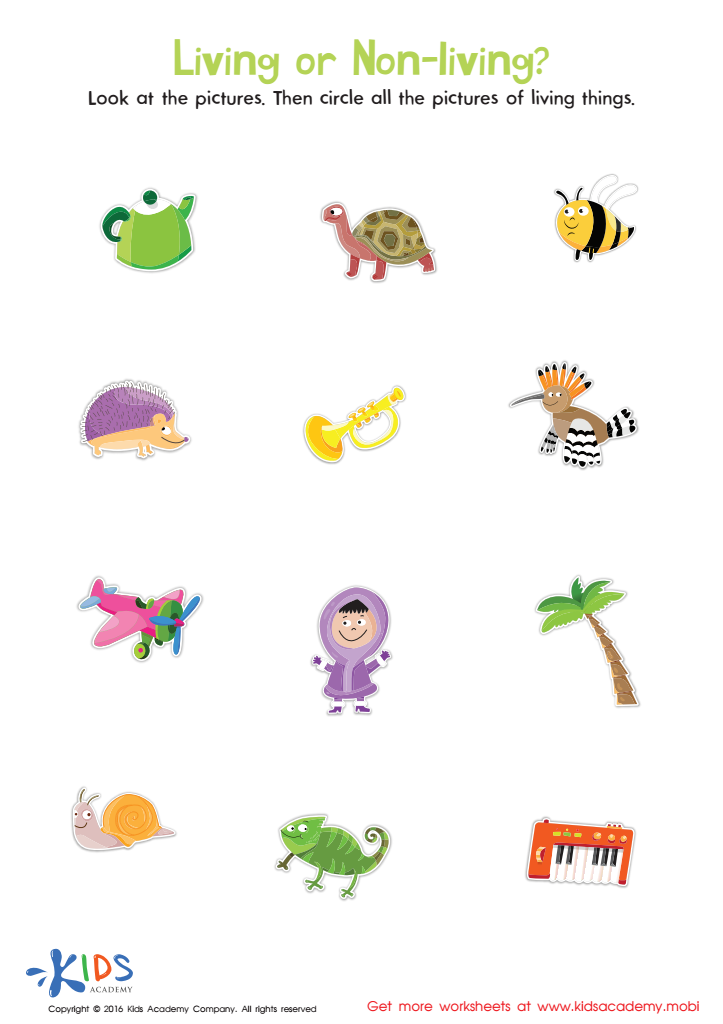
Identifying Living and Non–living Things Sorting Worksheet
 Assign to My Students
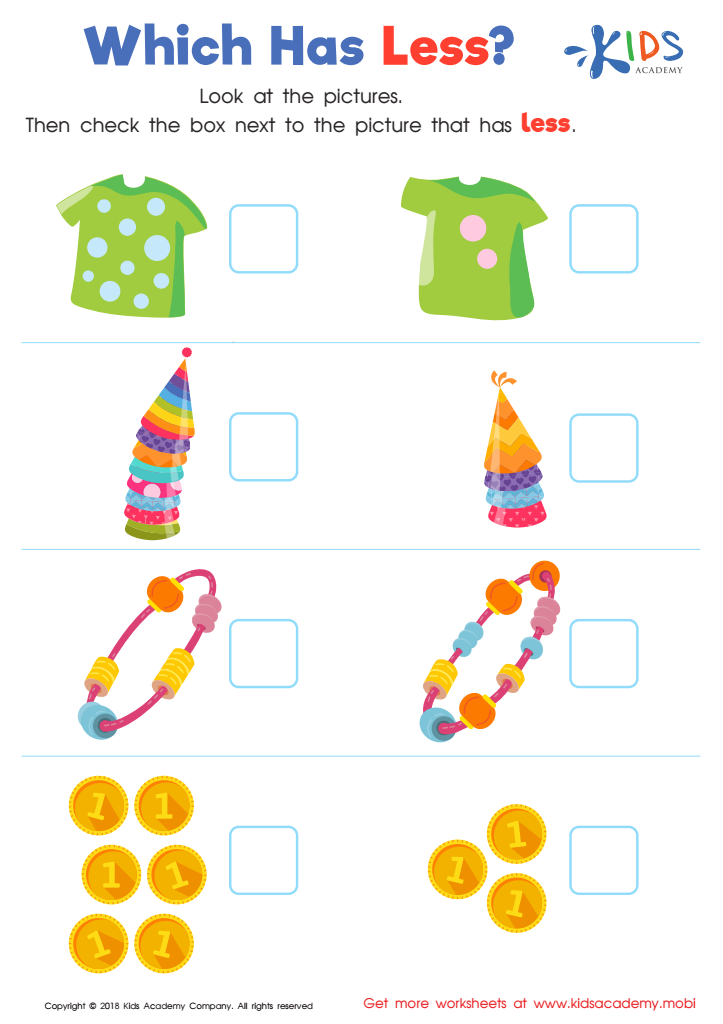
Which Has Less? Worksheet
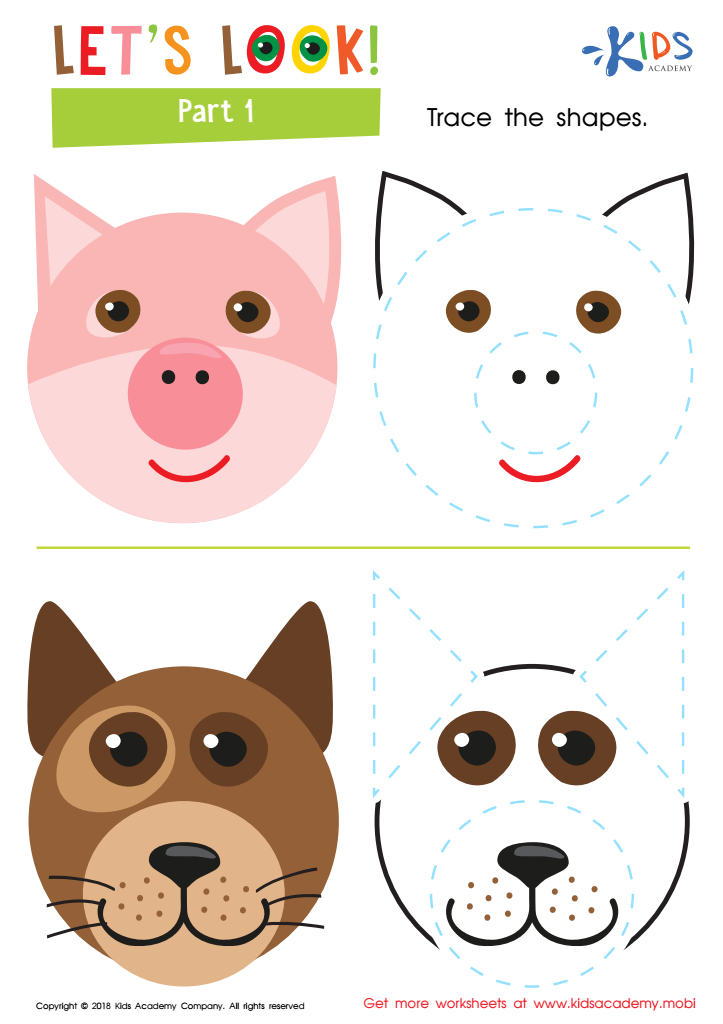
Let's Look! Part 1 Worksheet








Improving observation math skills in children aged 5-8 is essential for several reasons. This foundational period in a child's education significantly impacts their mathematical understanding and overall cognitive development. Observation math helps children recognize patterns, categorize objects, and make sense of their surroundings, building the groundwork for more complex mathematical concepts later on.
For parents and teachers, fostering strong observation math skills encourages critical thinking and problem-solving abilities. These skills empower children to make connections between what they see and the mathematical concepts they learn, facilitating a deeper understanding of mathematics as a whole. Additionally, when children engage in observational tasks, they enhance their communication skills by expressing their thoughts and reasoning, which also supports literacy development.
Moreover, observation math encourages interactive learning by promoting hands-on experiences, enabling children to learn in an engaging and meaningful manner. As students confidently navigate their environment with mathematical lenses, they build self-esteem and a positive attitude toward learning.
Ultimately, by prioritizing observation math in early education, parents and teachers can nurture curiosity and analytical skills in children. This investment not only prepares them for advanced math concepts but also equips them with essential life skills that extend beyond the classroom.








