Learn addition Math Worksheets for Ages 5-8
3 filtered results
-
From - To
Discover our engaging and educational Learn Addition Math Worksheets for kids aged 5-8! These activity sheets are designed to make learning addition fun and effortless. Our comprehensive, beginner-friendly worksheets include colorful visuals, interactive problems, and fun themes to captivate young learners. With a variety of exercises ranging from single-digit to double-digit addition, these worksheets are perfect for reinforcing basic math skills. Ideal for both classroom use and home practice, ensure your child builds a strong mathematical foundation through our meticulously crafted worksheets.
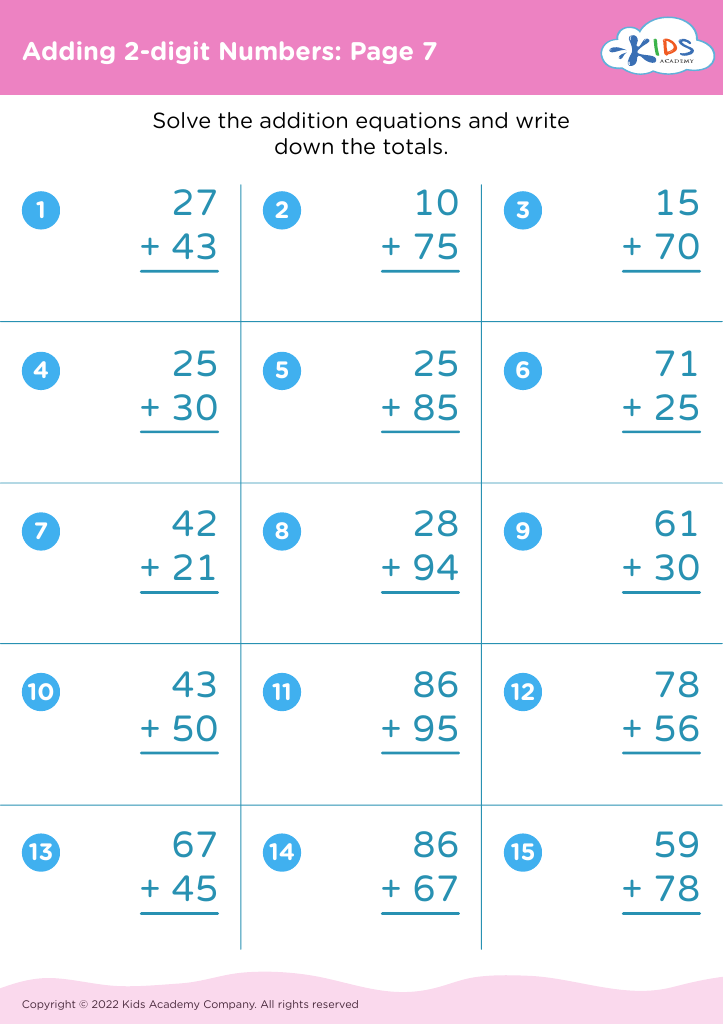
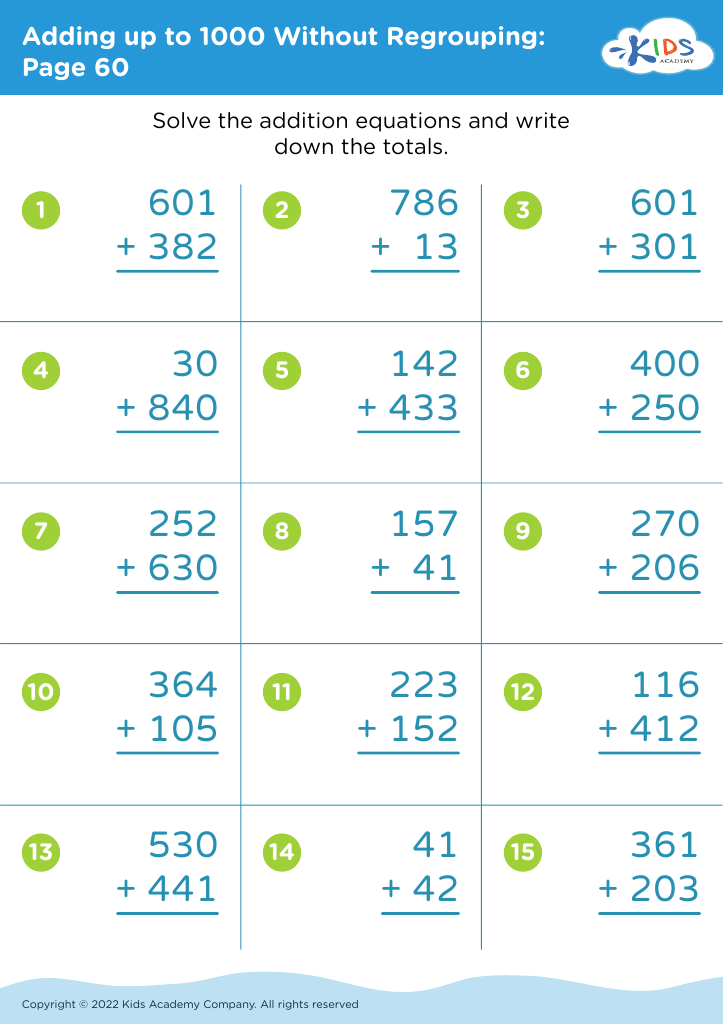
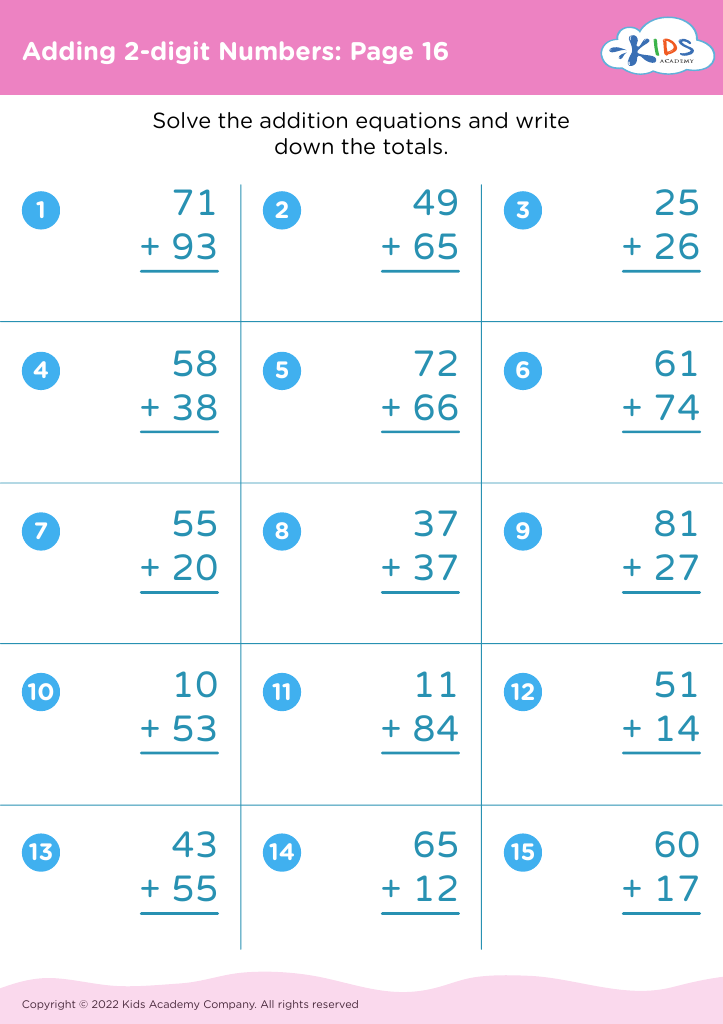








Introduction to addition math for children ages 5-8 is a critical foundation for their lifelong mathematical education. At this developmental stage, young minds are exceptionally receptive to new concepts, making it the perfect time to build a strong understanding of basic arithmetic. Learning addition helps children develop essential problem-solving skills and logical thinking, which are crucial for more advanced math subjects they will encounter later.
Moreover, mastering addition fosters confidence. When children grasp basic mathematical concepts early, they often become more enthusiastic about learning and are less likely to develop math anxiety. This can translate to a positive attitude toward math and other STEM subjects, potentially inspiring future academic and career interests.
For parents and teachers, investing time and effort into teaching addition at this age ensures that children meet educational benchmarks set by curriculum standards, leading to better performance in school. Furthermore, incorporating fun and interactive methods, such as games and hands-on activities, makes learning addition enjoyable. This engagement not only facilitates better retention of concepts but also strengthens parent-child or teacher-student relationships through collaborative learning.
Ultimately, focusing on addition math for young children lays a groundwork for academic success and nurtures critical cognitive skills, making it an essential component of early childhood education.








