Math problem-solving skills Math Worksheets for Ages 5-8
4 filtered results
-
From - To
Our Math Worksheets for Ages 5-8 are designed to develop critical math problem-solving skills in young learners. As you explore our collection, you'll find engaging activities that make learning math fun and effective. Each worksheet challenges children with problems that encourage logical thinking and creative solutions. Perfect for home or classroom use, our math worksheets cover essential topics like addition, subtraction, patterns, and more. With vibrant illustrations and age-appropriate exercises, your child will build a strong foundation in math while enjoying every step of the learning journey. Start boosting problem-solving confidence today!
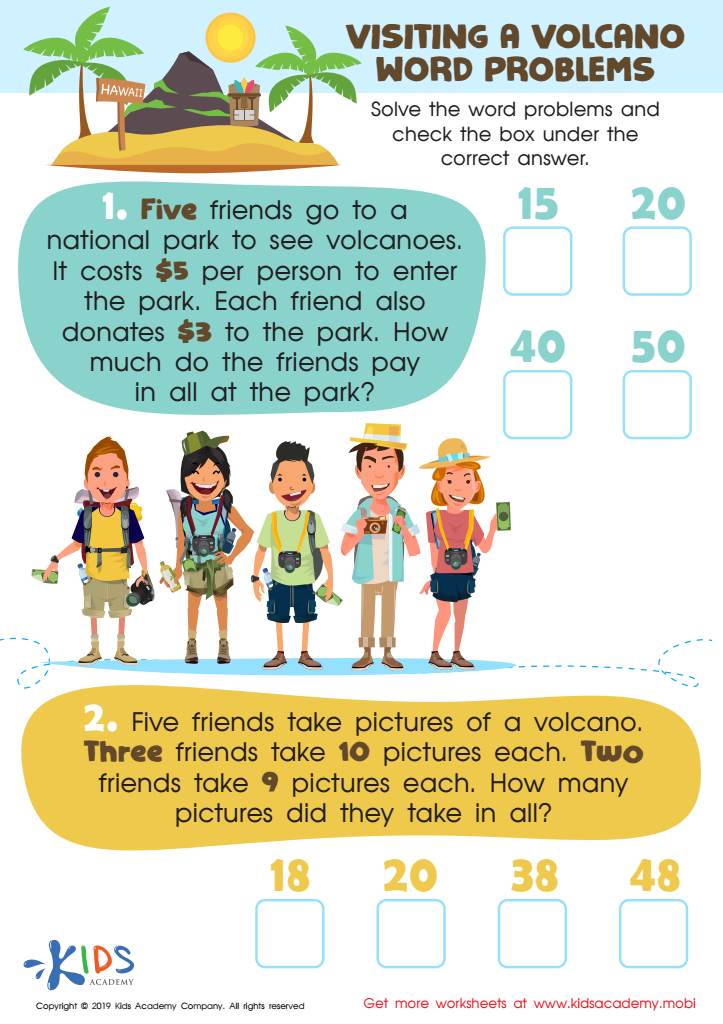
Visiting a Volcano Word Problems Worksheet
 Assign to My Students



.jpg)




Developing math problem-solving skills in children aged 5-8 is essential for several key reasons:
First, these skills cultivate critical thinking. When youngsters engage in problem-solving, they learn to analyze situations, recognize patterns, and make decisions based on logical reasoning. This foundational thinking is crucial for future academics and daily life.
Second, early mathematical skills are directly correlated with later academic achievement. Research shows that children who grasp basic math concepts early perform better in various school subjects over time. The confidence and competence built through early math problem-solving set a positive trajectory for future learning.
Additionally, math problem-solving enhances life skills. From handling money to understanding time and measurements, children benefit from an early proficiency in math, which prepares them for real-world situations. It fosters independence and practical decision-making, empowering them to tackle mundane tasks and complex challenges alike.
Furthermore, engaging in math activities can be a fun bonding experience for parents and children. Working on problems together builds communication skills and strengthens familial relationships.
In essence, nurturing math problem-solving skills in young children prepares them for academic success, equips them with vital life skills, and encourages healthy brain development, making it a critical focus for both parents and teachers.








