Number Recognition Math Worksheets for Ages 5-8 - Page 34
798 filtered results
-
From - To
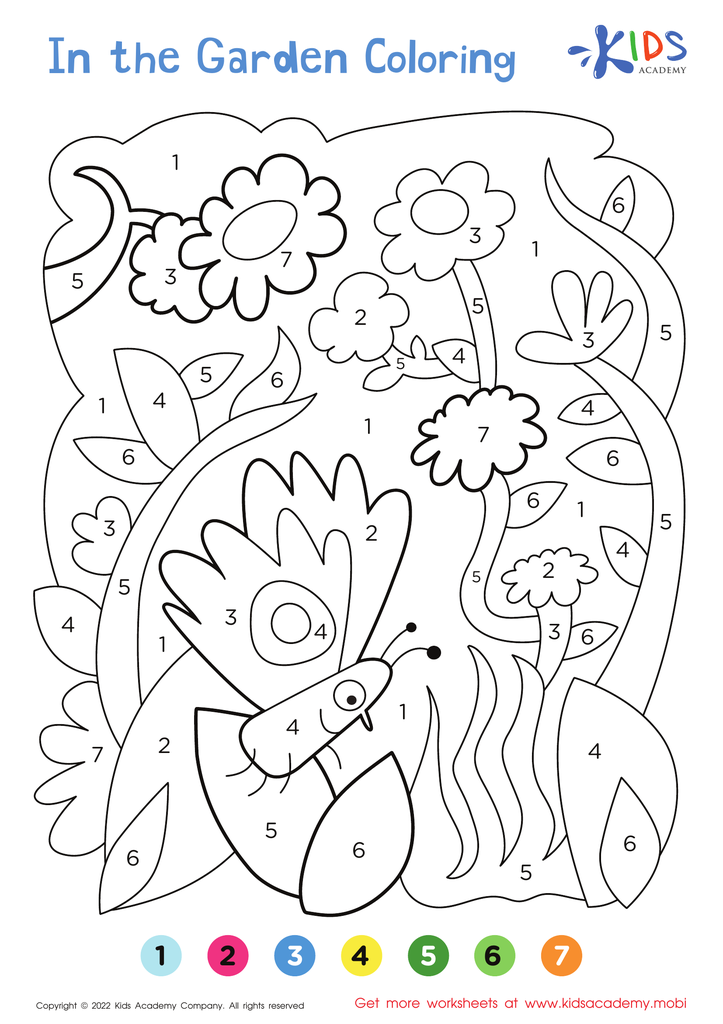
In the Garden – Coloring by Numbers








Number recognition is a foundational skill that plays a crucial role in a child's early mathematical development. For children aged 5-8, mastering number recognition is essential as it serves as the backbone for all future math skills, including counting, addition, subtraction, and more complex concepts. When children can identify and understand numbers, they build confidence and a positive attitude toward learning math.
Parents and teachers should prioritize number recognition because it directly impacts a child's academic success. Early proficiency in recognizing numbers fosters independent problem-solving skills, encourages curious exploration of mathematics, and lays the groundwork for critical thinking. Additionally, as students progress through school, their ability to recognize and manipulate numbers will influence their overall performance in subjects that rely heavily on quantitative reasoning, such as science and economics.
Moreover, early number recognition promotes engagement in learning activities and can make math more enjoyable for children. By recognizing and nurturing this skill, parents and teachers can create an enriching environment that accelerates mathematical literacy. Ultimately, equipping young learners with strong number recognition abilities ensures they have the tools necessary for both academic challenges and everyday problem-solving throughout their lives.








