Telling time Math Worksheets for Ages 5-8
4 filtered results
-
From - To
Discover our engaging Telling Time Math Worksheets tailored for children aged 5-8! These worksheets help young learners develop essential skills in reading clocks and understanding the concept of time. With a variety of fun activities, including analog and digital clock exercises, our resources make learning enjoyable and interactive. Each worksheet is designed to enhance kids' number recognition, time-telling abilities, and overall math comprehension. Suitable for home or classroom use, our printable materials support teachers and parents in guiding children through this vital life skill. Help your child master telling time with our engaging worksheets that promote learning through play!
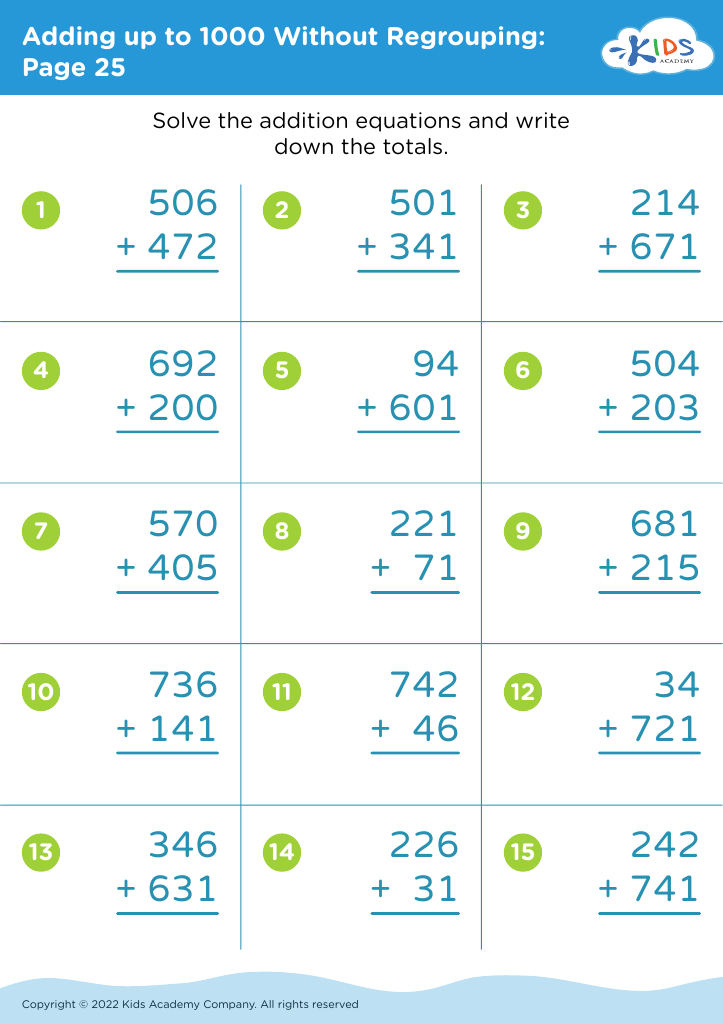
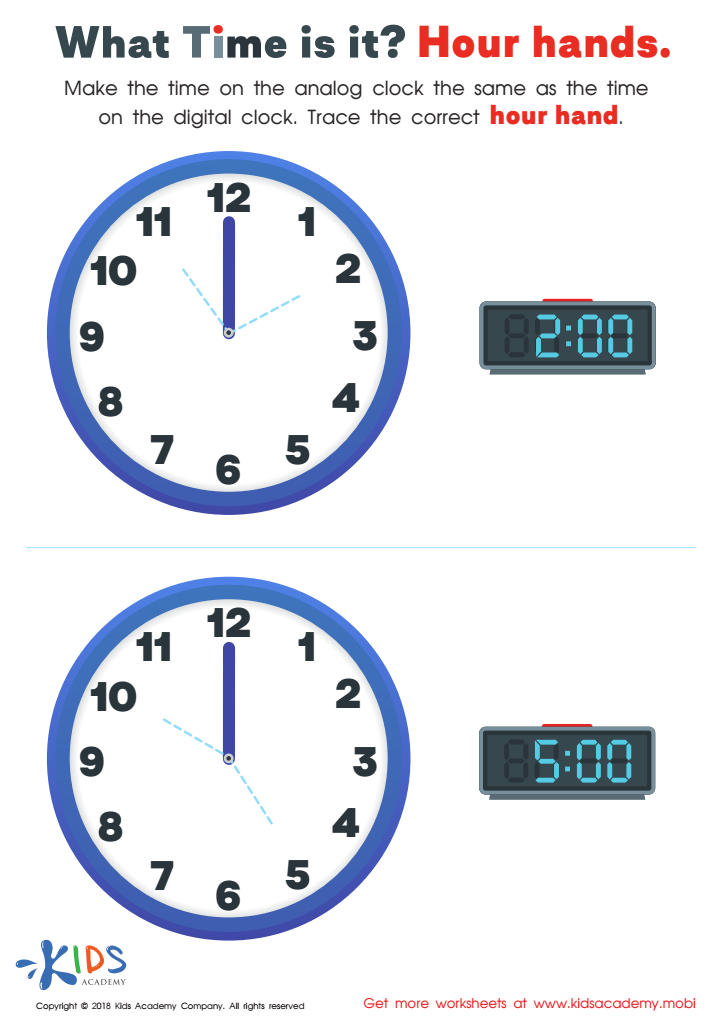
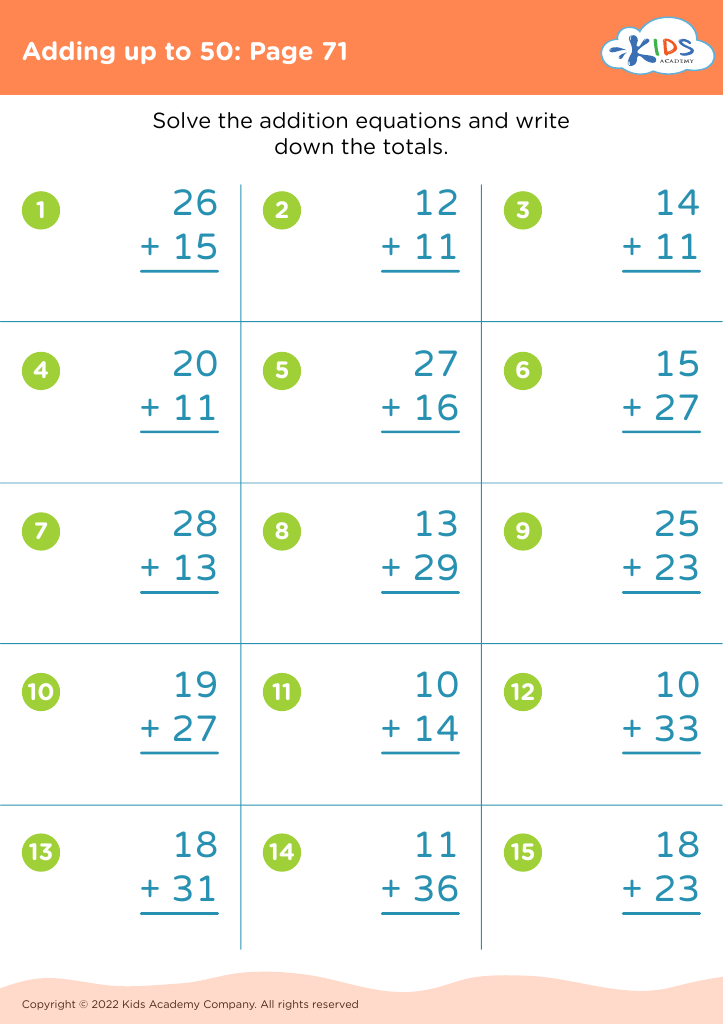
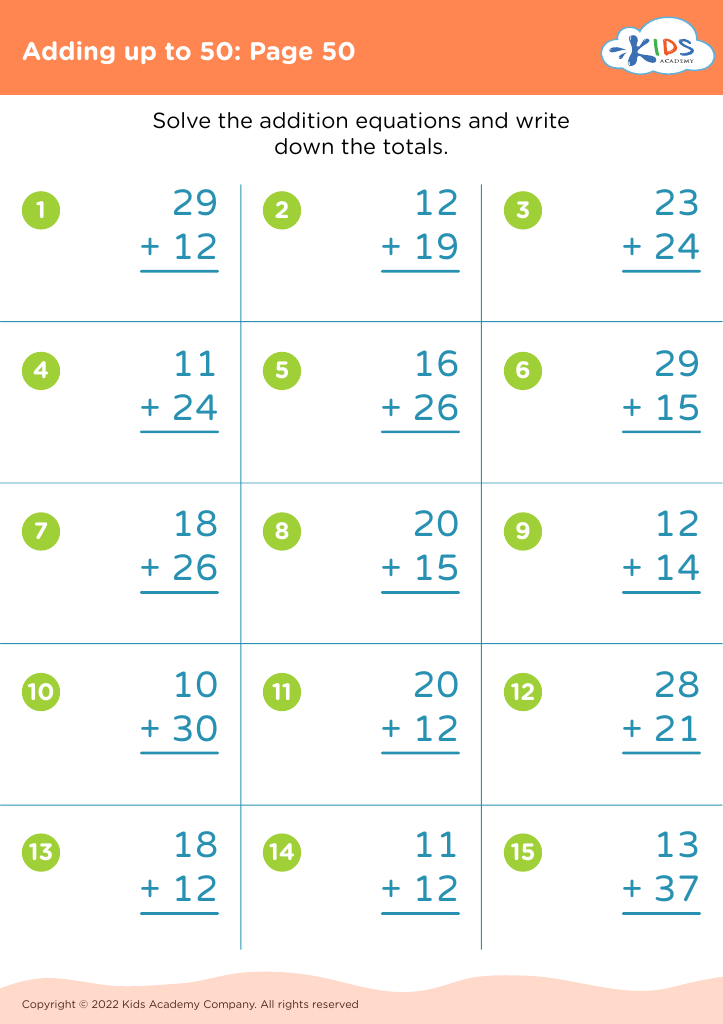
What Time Is it? Hour Hands Worksheet
 Assign to My Students



.jpg)


Teaching children to tell time is a fundamental mathematical skill that goes beyond simply learning to read clocks. For children ages 5-8, understanding time fosters crucial cognitive and analytical abilities. This skill is interconnected with various mathematics concepts, such as counting, addition, and patterns, making it a valuable component of early math education.
Parents and teachers should care about this topic because telling time helps children develop a sense of responsibility and awareness of their environment. Knowing how to read both digital and analog clocks empowers kids to manage their daily routines, including school schedules and activities, thereby promoting independence.
Moreover, learning to tell time enhances critical thinking. Children learn to make strategic decisions about time management, reflecting on what they can do within set periods. This contributes to their overall social-emotional growth, as they begin to understand concepts of past, present, and future—crucial elements for their cognitive development.
In addition, mastering this skill at an early age lays a solid foundation for more advanced mathematical concepts in the future. By engaging with time-related math, children can develop a well-rounded skill set, preparing them for academic success and everyday life challenges.








