
Understanding adjectives Math Worksheets for Ages 5-8
6 filtered results
Difficulty Level
Grade
Age
-
From - To
Subject
Activity
Standards
Unlock the power of descriptive language with our "Understanding Adjectives Math Worksheets" tailored for ages 5-8. These engaging worksheets combine fundamental math concepts with the enriching practice of identifying and using adjectives, making learning both fun and effective. Children will enhance their vocabulary while mastering essential math skills, strategically intertwined in each activity. Designed by educational experts, our resources aim to foster a deep understanding of descriptive words while building strong math foundations. Perfect for parents and teachers, these worksheets offer a dynamic and interactive approach to early childhood education. Inspire confident young learners today!
Favorites
With answer key
Interactive
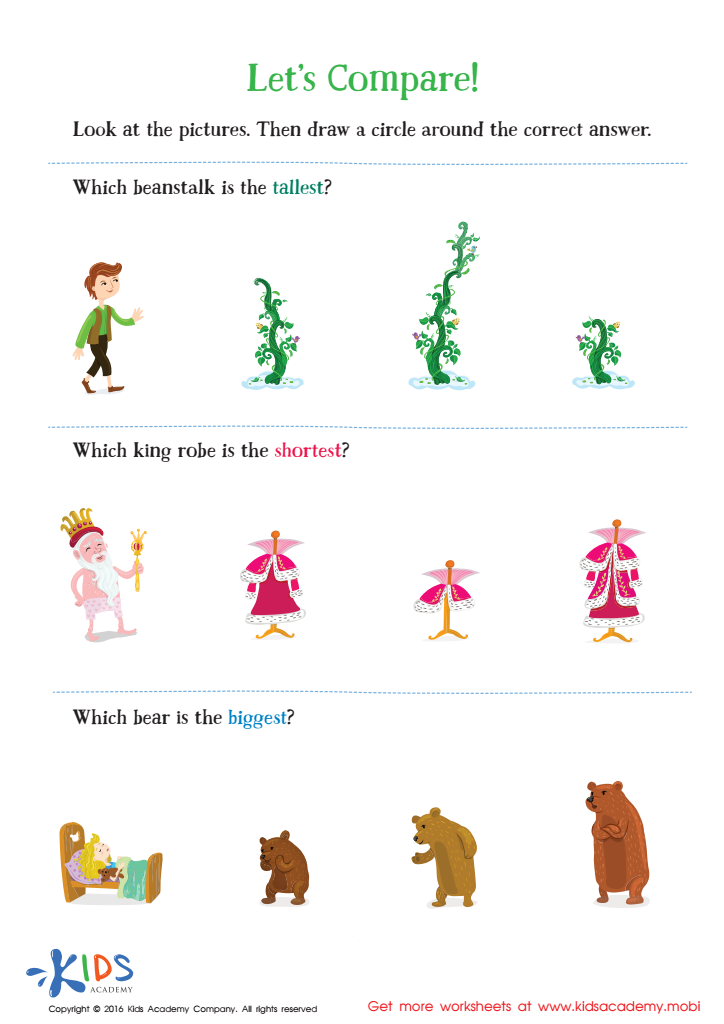
Fairy Tale Worksheet: Let's Compare
Preschoolers need to recognize different sizes of objects. This worksheet combines fun fairy tales with size practice, helping them read, problem solve, and sort through pictures. Your child will love the images and be eager to complete it. Enhance their learning by talking about the tales to build comprehension.
 Assign to My Students
Fairy Tale Worksheet: Let's Compare
Worksheet
Join Kids Academy for Free
Who is primarily going to use this learning content?





.jpg)

Understanding adjectives and math at an early age is crucial for children aged 5-8 for several reasons. Adjectives play a significant role in language development as they help children describe and differentiate objects, which enhances their vocabulary and communication skills. This is integral for reading comprehension and writing ability, as precise descriptions make storytelling and interpreting information richer and more engaging.
Similarly, math skills are foundational for cognitive development. Early exposure to math concepts such as counting, shapes, patterns, and basic arithmetic sets the stage for more advanced problem-solving and critical thinking skills. Grasping these basics early helps build confidence and a positive attitude towards math, reducing the likelihood of math anxiety later in life.
Combining adjectives with math, such as describing shapes (e.g., "a large, red circle") or using comparative language (e.g., "taller," "shorter"), enhances understanding in both areas. When parents and teachers focus on these educational components, they provide children with essential tools for academic success and everyday life. Structured activities that incorporate adjectives and math also make learning interactive and enjoyable, promoting curiosity and a love for learning. Ultimately, this integrated approach nurtures a well-rounded skill set that supports academic and personal growth.








