Understanding habitats Math Worksheets for Ages 5-8
3 filtered results
-
From - To
Discover our "Understanding Habitats Math Worksheets" designed for children ages 5-8. These engaging printables combine math skills with exciting lessons about animal habitats, making learning fun and meaningful. Kids will explore different environments while practicing counting, addition, subtraction, and pattern recognition. Perfect for classroom or home use, our worksheets foster curiosity about nature and environmental awareness, enhancing both math proficiency and scientific understanding. Encourage your child to solve puzzles, complete mazes, and more while discovering the world’s habitats. Start your educational adventure on Kids Academy today and watch your child thrive in both math and nature.
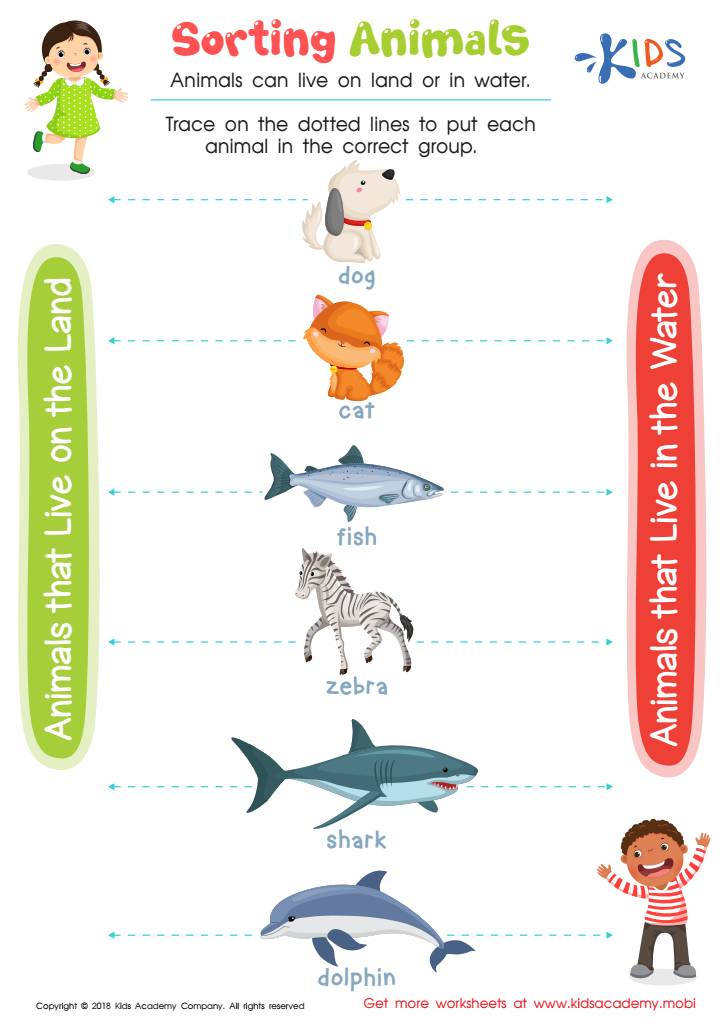
Sorting Animals Worksheet
 Assign to My Students
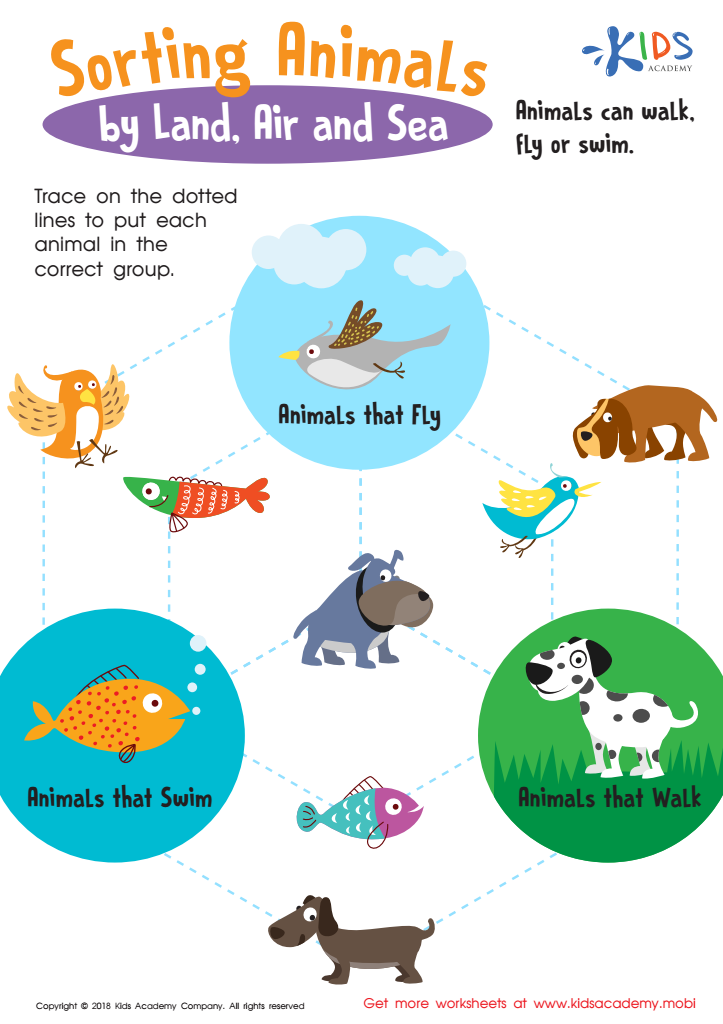
Sorting Animals by Land, Air and Sea Worksheet








Understanding habitats and basic math concepts are crucial for children aged 5-8 as they are foundational years for cognitive and academic growth. Learning about habitats introduces children to the diverse ecosystems where animals and plants live, helping them appreciate biodiversity and cultivating a sense of environmental stewardship from a young age. This knowledge fosters empathy and responsibility towards nature, promoting informed and caring future citizens.
Integrating math skills while exploring habitats can enhance educational outcomes significantly. For instance, children can count animals, measure the growth of plants, or sort different species. These activities not only solidify their understanding of habitats but also improve their numeracy and problem-solving skills. Math becomes a practical and enjoyable tool, demystifying abstract concepts through real-world applications.
Moreover, interdisciplinary learning, where subjects like science and math intersect, supports critical thinking and curiosity. Children begin to see the world as interconnected, appreciating how math is relevant in everyday life and in understanding the natural world. This holistic approach encourages active learning and engagement, laying a strong foundation for future academic success and personal development. By prioritizing this integrated learning approach, parents and teachers can set children on a path of life-long curiosity and respect for both academic and environmental pursuits.








