Visual Learning Math Worksheets for Ages 5-8 - Page 5
101 filtered results
-
From - To
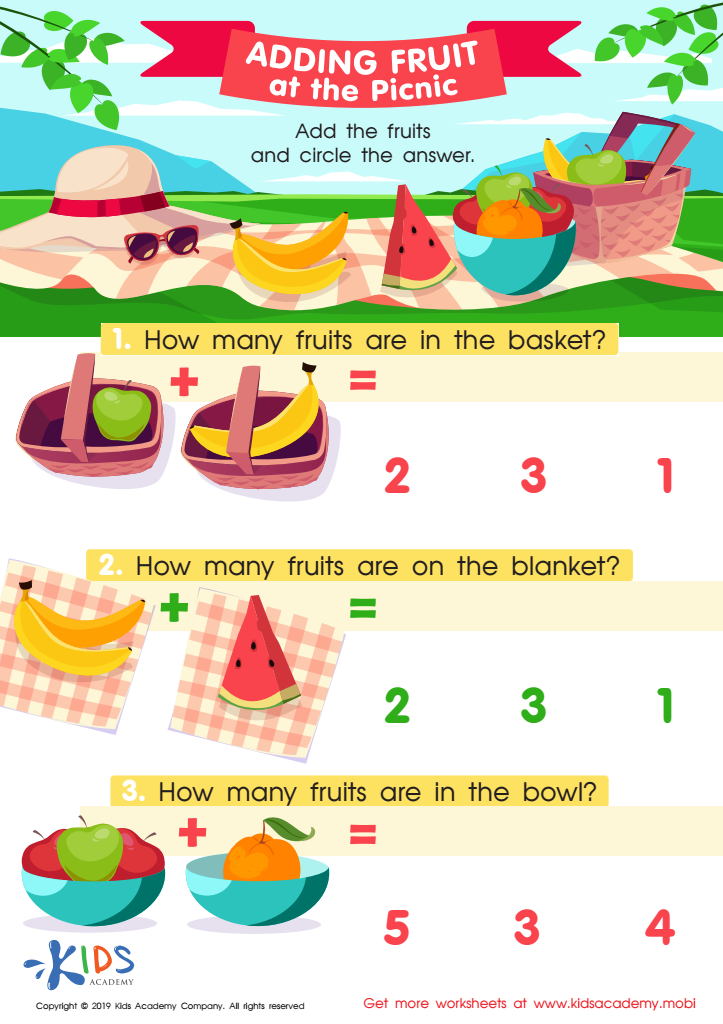
Adding Fruit at the Picnic Worksheet
 Assign to My Students
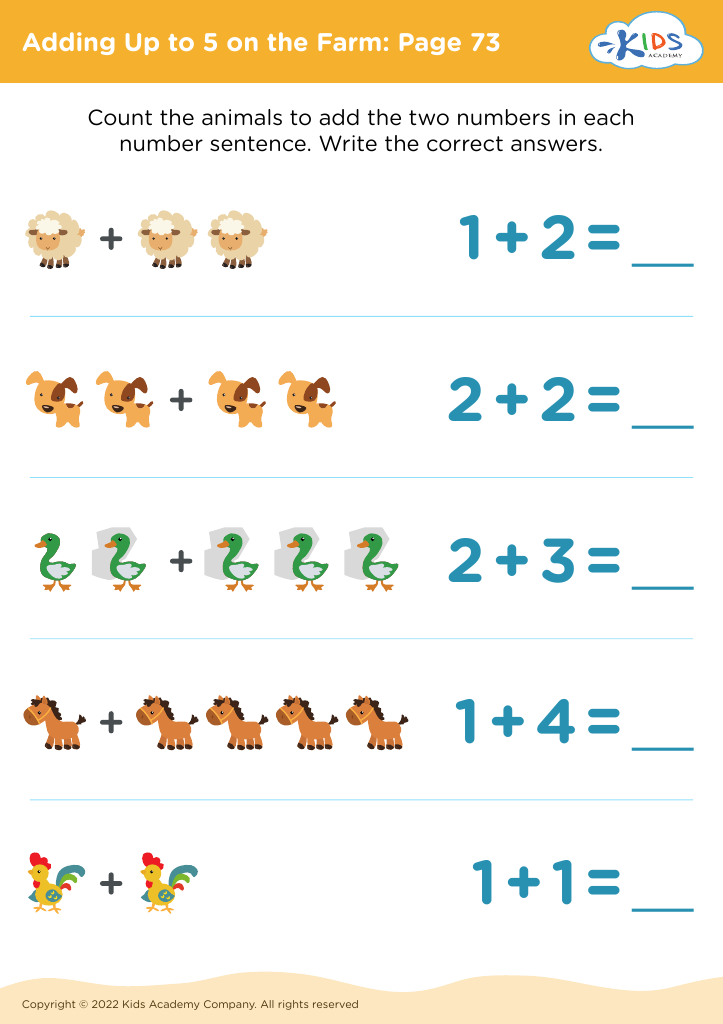
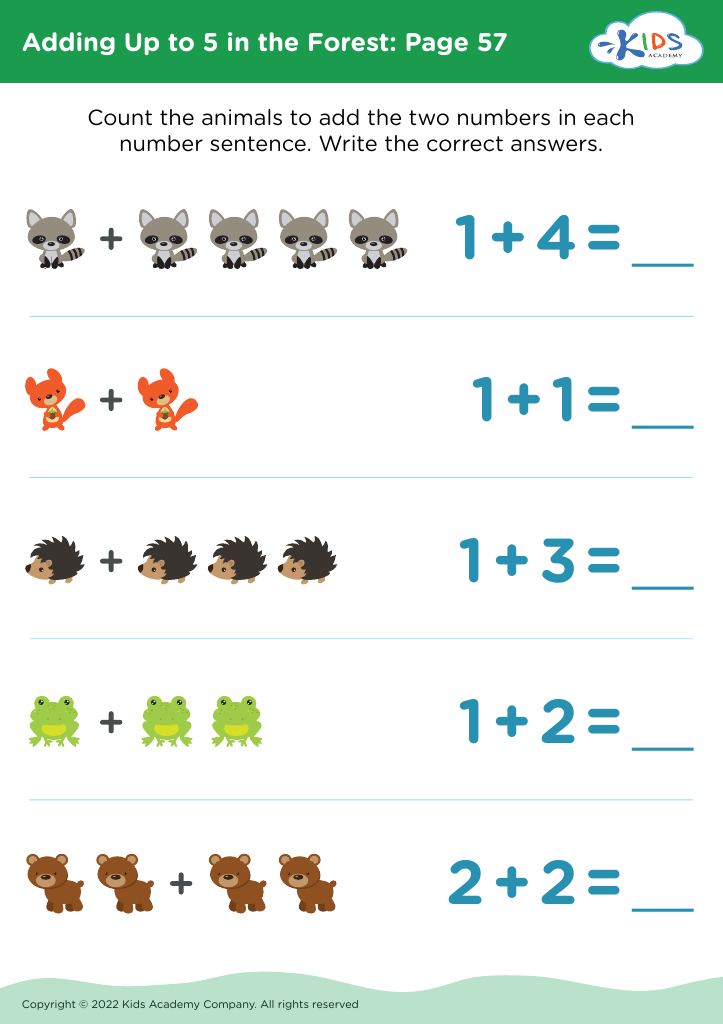
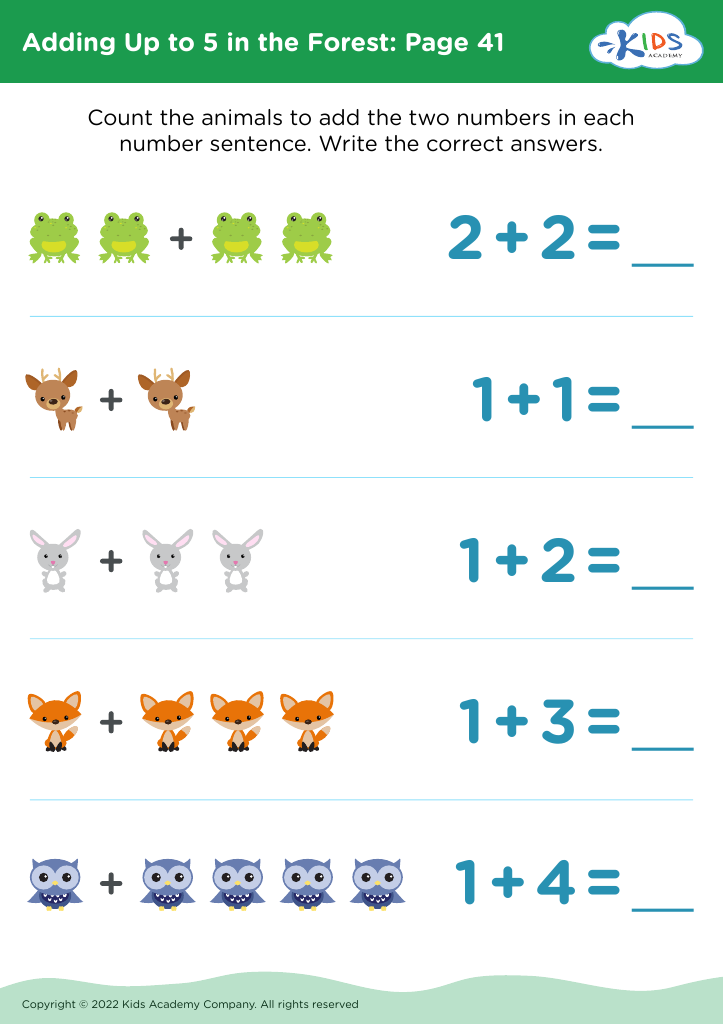








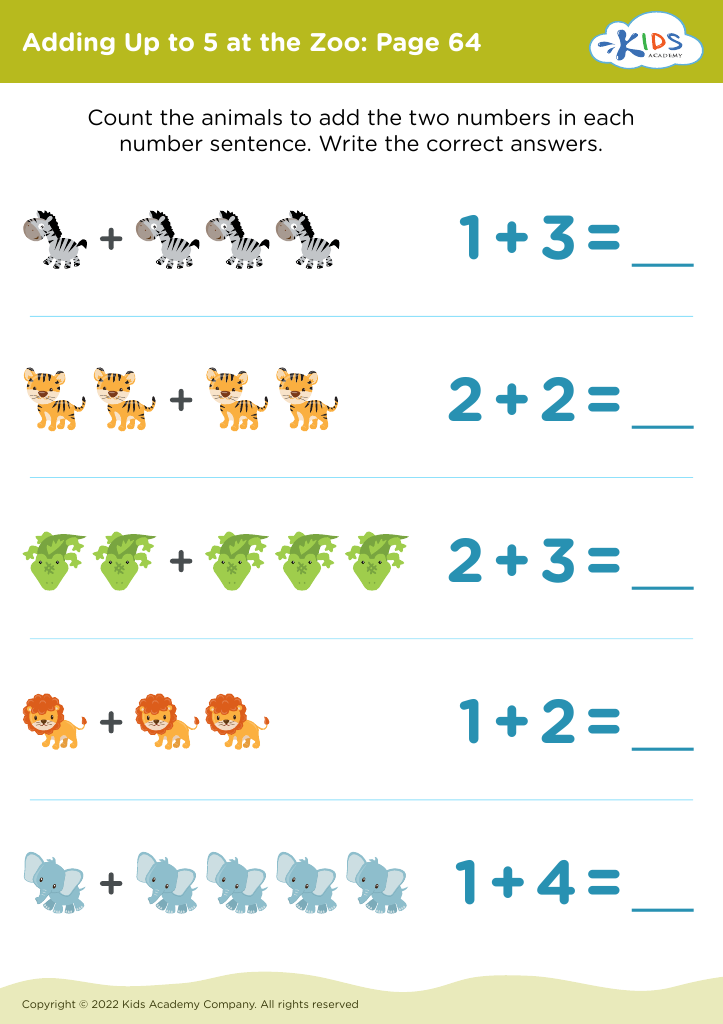
Visual learning in math for ages 5 to 8 is crucial as it aligns with children's natural developmental stages, fostering deeper understanding and retention of mathematical concepts. Young learners are often concrete thinkers, and visual strategies, such as diagrams, pictorial representations, and manipulatives, can help make abstract concepts tangible. These methods allow children to visualize math problems, enhancing engagement and reducing anxiety around mathematics.
Moreover, visual learning caters to diverse learning styles. Some children grasp information better through images and symbols rather than traditional numerical approaches. By employing visual tools, educators can accommodate various learners, fostering an inclusive environment that supports everyone.
Parents and teachers should care because visual learning approaches encourage critical thinking and problem-solving skills. They equip children with strategies to break down complex problems, preparing them for future academic challenges. Strong foundational skills in mathematics are essential, as they not only build confidence but also promote a positive attitude toward learning.
In essence, adopting visual learning methods in early math education nurtures a child's mathematical literacy, preparing them for more advanced concepts and inspiring a lifelong love for learning. Investing in these methods means investing in each child's future success.








