Counting skills Numbers 11–20 Worksheets for Ages 5-8
5 filtered results
Difficulty Level
Grade
Age
-
From - To
Subject
Activity
Standards
Enhance your child’s counting skills with our engaging "Counting Skills Numbers 11–20 Worksheets" designed for ages 5-8. These worksheets provide a fun and interactive way for young learners to master counting from 11 to 20 through a variety of exercises, including number tracing, filling in missing numbers, and matching quantities. Our easy-to-follow activities encourage children to develop their numerical understanding and boost their confidence in math. Perfect for home or classroom use, these worksheets make learning enjoyable and effective. Equip your child with essential counting skills today and watch them flourish in their mathematical journey!
Favorites
With answer key
Interactive
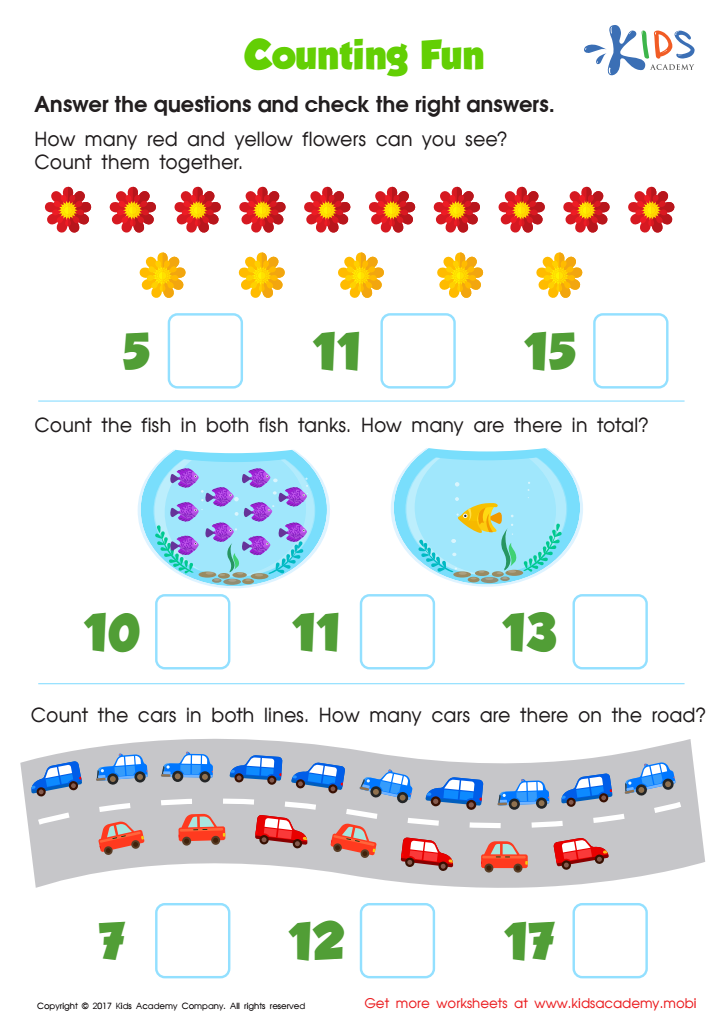
Counting Fun Worksheet
Math and fun can go hand-in-hand with this free PDF worksheet! Bright, colourful illustrations will activate your child's brain, as they count the red and yellow flowers. How many can you see? Count together and write down the total. Make learning and counting fun for your little ones!
 Assign to My Students
Counting Fun Worksheet
Worksheet
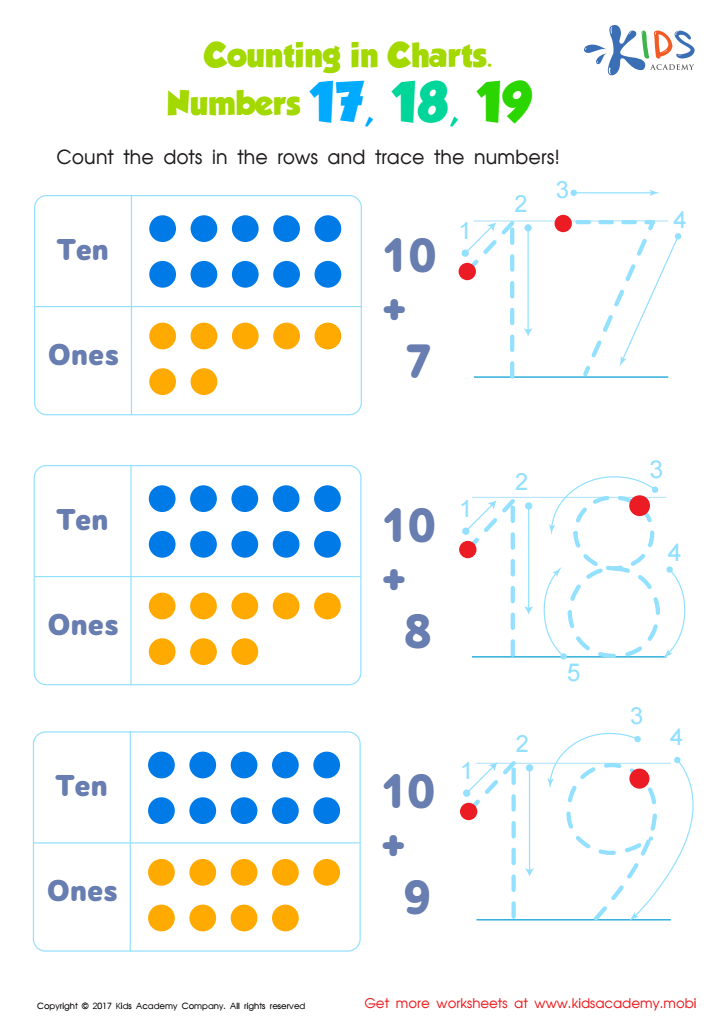
Kindergarten Number Tracing: Counting in Charts Worksheet
Little learners can find big numbers tricky! Help them practice counting and build early math skills, like place value and addition, with this kindergarten number tracing PDF worksheet. Count the dots to solve the problem and trace each answer!
Kindergarten Number Tracing: Counting in Charts Worksheet
Worksheet
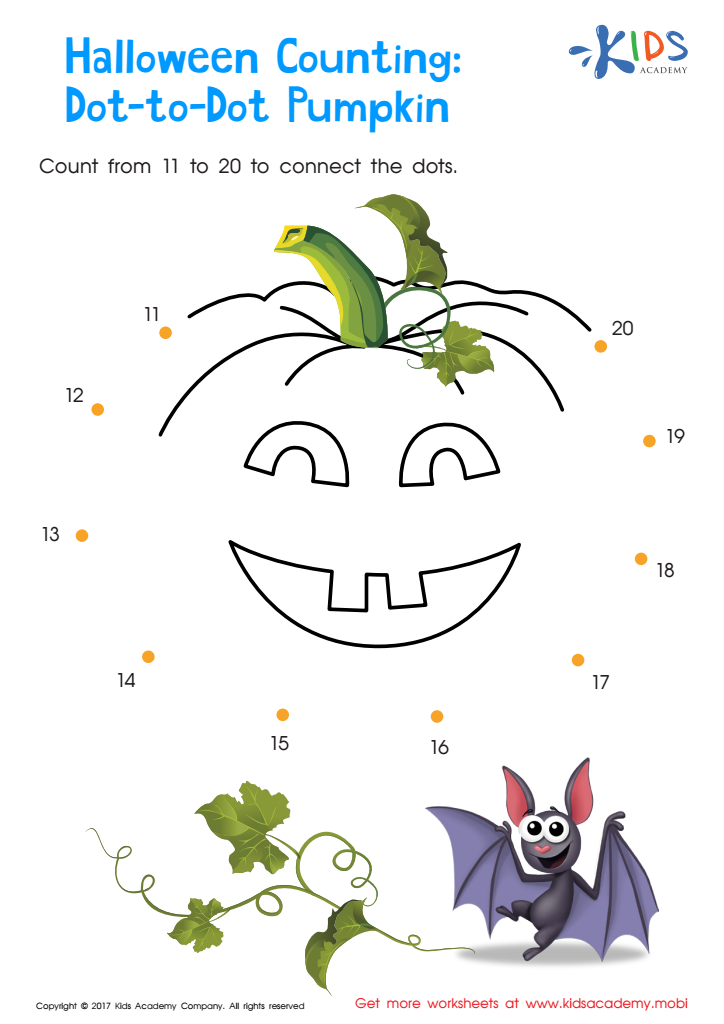
Ordering 11–20: Halloween Counting Worksheet
No matter the time of year, help your child get ready for Halloween with this worksheet. They'll practice counting from 11 to 20, recognizing numbers, and using a pencil to draw. By connecting the dots, they'll create a pumpkin picture, while unknowingly strengthening their early math skills. Print it today for an educational and fun experience!
Ordering 11–20: Halloween Counting Worksheet
Worksheet
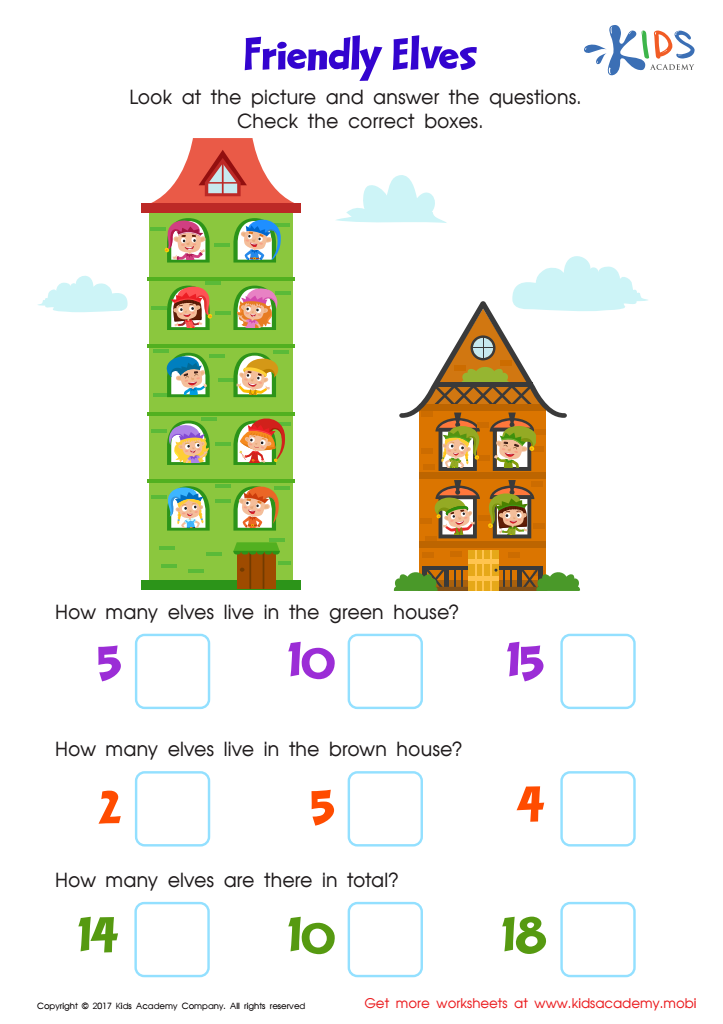
Place Value: Friendly Elves Worksheet
This fun worksheet teaches kids to count elves, answer questions about houses, and practice math! Look at the picture and count the elves in each house. How many are in the green and brown house? Tick the correct answer boxes. Perfect for young learners!
Place Value: Friendly Elves Worksheet
Worksheet
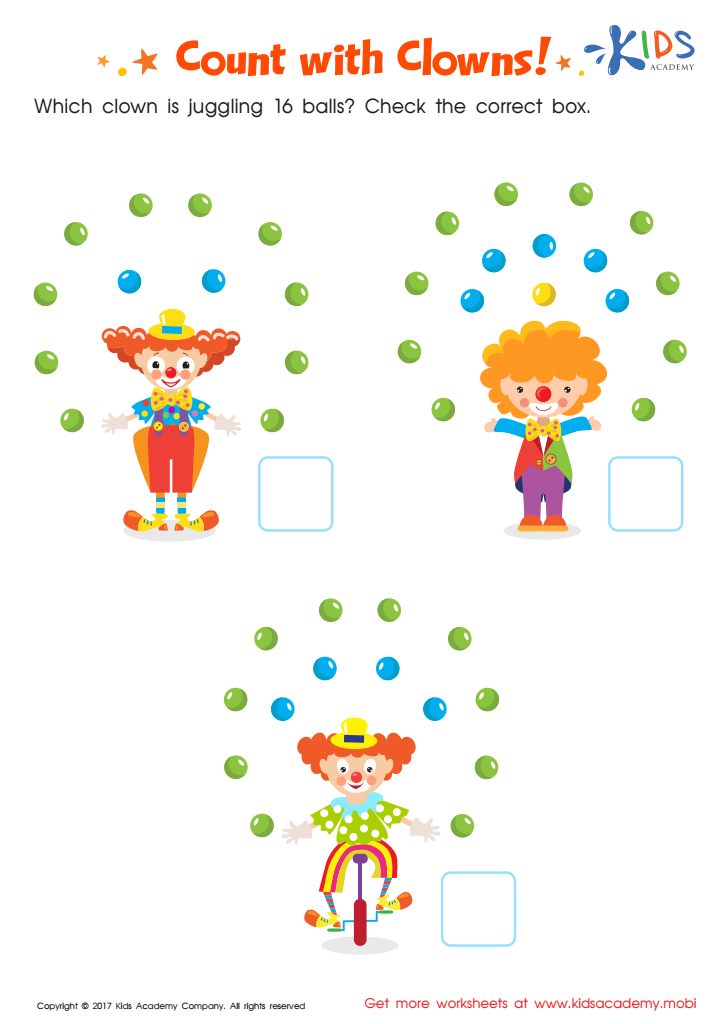
Count with Clowns Worksheet
Math may not be a laughing matter, but this worksheet sure is! Download the PDF and get ready to count balls with the clowns! Your child will have a blast and learn how to count at the same time. It's an easy, fun way to practice math!
Count with Clowns Worksheet
Worksheet
Join Kids Academy for Free
Who is primarily going to use this learning content?



Counting skills for numbers 11–20 are crucial for children aged 5-8 as they form the foundation for more advanced mathematical concepts. During this developmental stage, children are not only learning to recognize these numbers but also to understand their values and relationships. Mastery of this range helps students move beyond simple counting to incorporate addition, subtraction, and even early problem-solving skills.
Parents and teachers should prioritize these skills because they support cognitive development critical for academic success. When children can count to 20 confidently, they can engage in more complex tasks, such as comparing quantities, recognizing patterns, and understanding sequences. This lays essential groundwork for future math learning.
Moreover, fostering counting skills nurtures a child’s confidence and encourages a positive attitude towards math. When children feel capable of handling numbers, they are more likely to participate actively in math-related classroom activities and discussions. Engaging parents in counting exercises at home can reinforce school learning and create a cohesive support system. Ultimately, attention to counting skills contributes to lifelong numeracy, essential in today’s increasingly math-centric world, helping children navigate not just school subjects but real-life situations as well.