Mental math skills Times Tables Worksheets for Ages 5-8
4 filtered results
-
From - To
Enhance your child's mental math skills with our engaging Times Tables worksheets specifically designed for ages 5-8. These worksheets provide a fun and interactive way for young learners to grasp multiplication concepts, building a strong foundation for future math success. Featuring vibrant illustrations and age-appropriate exercises, they encourage kids to practice their times tables and develop quick recall abilities. Our resources promote independent learning, boost confidence, and foster a love for math in a supportive environment. Perfect for classroom use or at-home practice, these worksheets are a valuable tool in every child's educational journey. Unlock the power of mental math today!
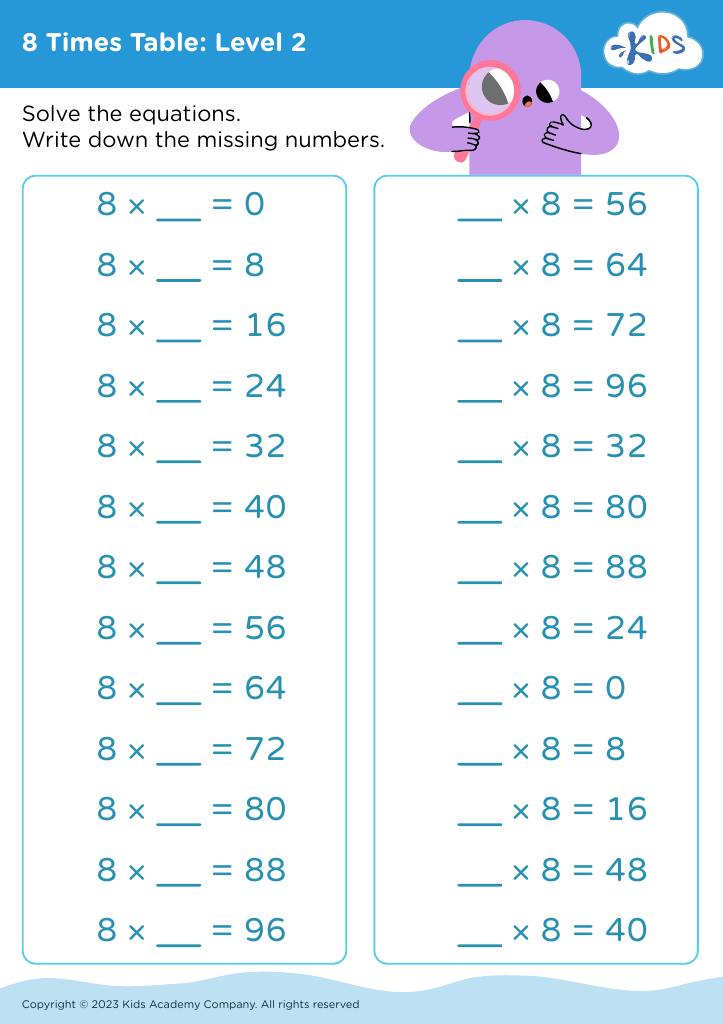
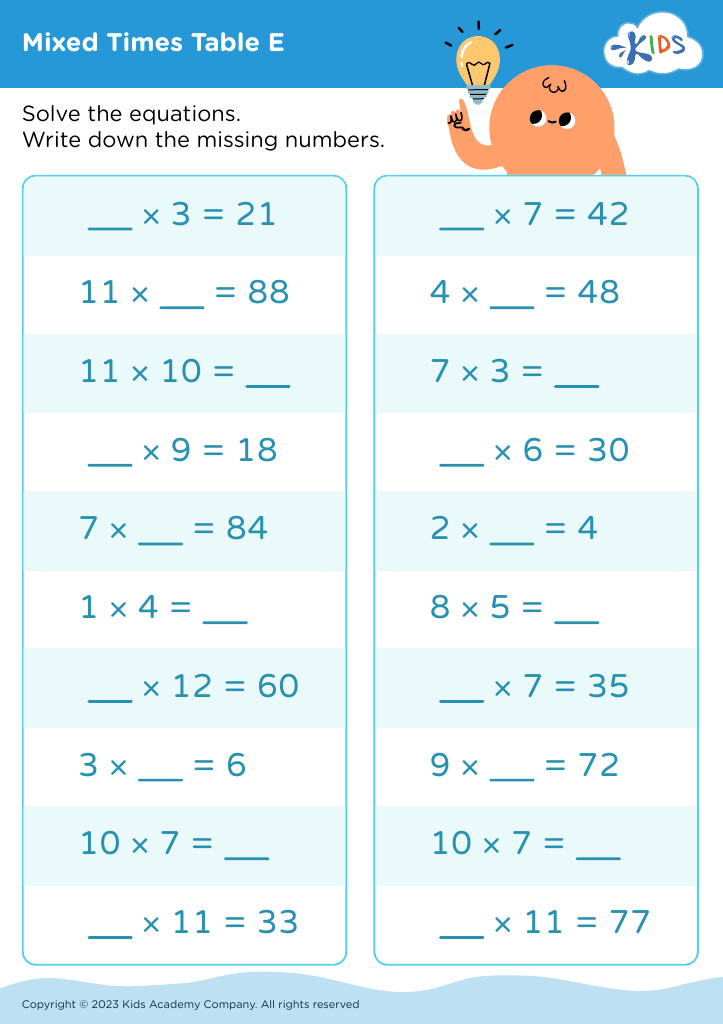
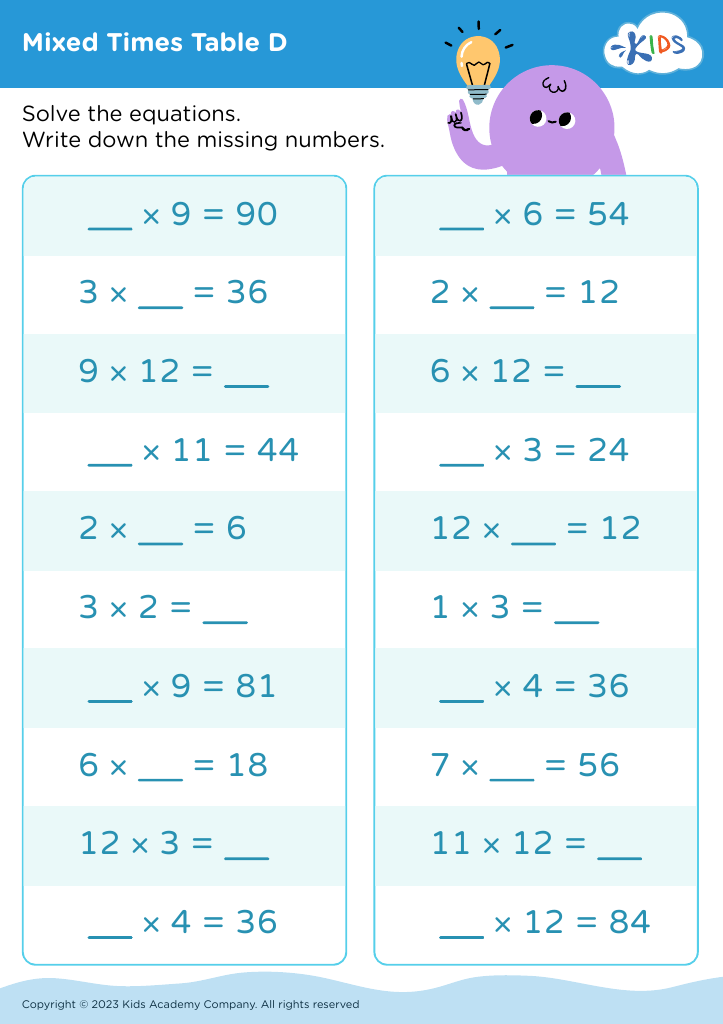
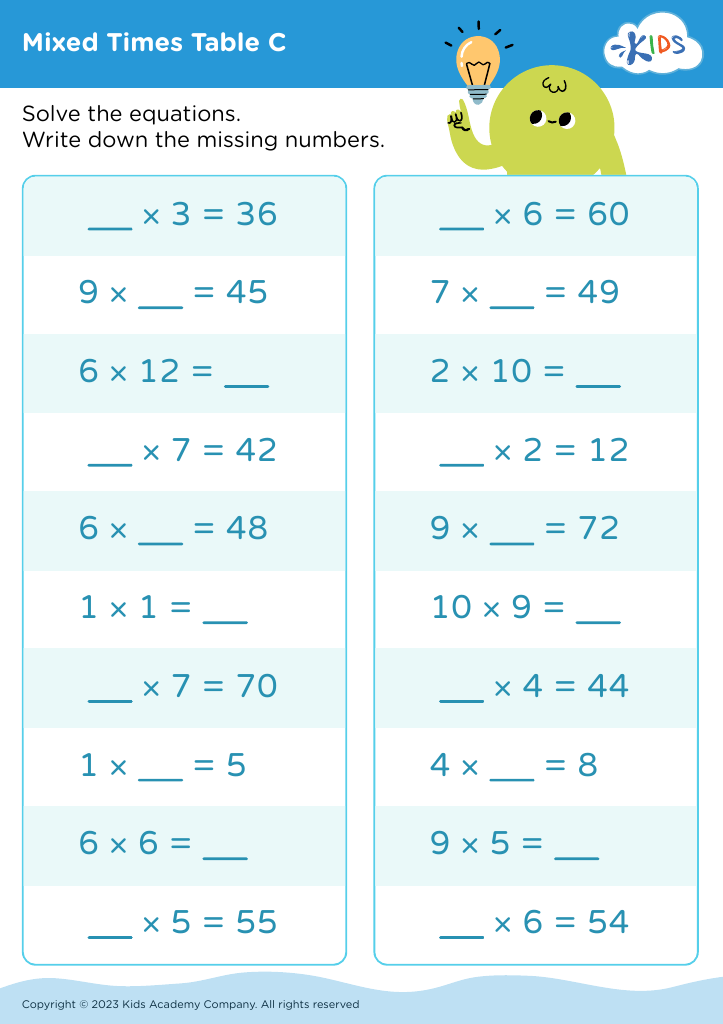




Mental math skills, particularly times tables, are crucial for children aged 5-8 for several reasons. Firstly, they form the foundation for more complex mathematical concepts. Mastering multiplication facts enhances children's problem-solving abilities, enabling them to tackle more difficult operations such as division, fractions, and basic algebra in later grades.
Moreover, developing mental math skills equips children to perform calculations quickly and accurately, fostering confidence in their numerical abilities. This confidence can significantly reduce math anxiety, which is increasingly prevalent among students. By enhancing mental math abilities, we are promoting a positive attitude towards math that can last a lifetime.
In addition, learning times tables reinforces memory and cognitive skills. The practice encourages logic and pattern recognition, which are pivotal not just in mathematics but also in other academic areas.
Finally, parents and teachers who emphasize mental math skills can create engaging environments that highlight the importance of fun in learning—using games and activities that reinforce these skills. By doing so, they contribute to developing a well-rounded, capable learner who views math as an accessible and enjoyable subject. Overall, investing in mental math equips children with lifelong skills, boosts their confidence, and enhances their overall academic success.








